Artwork
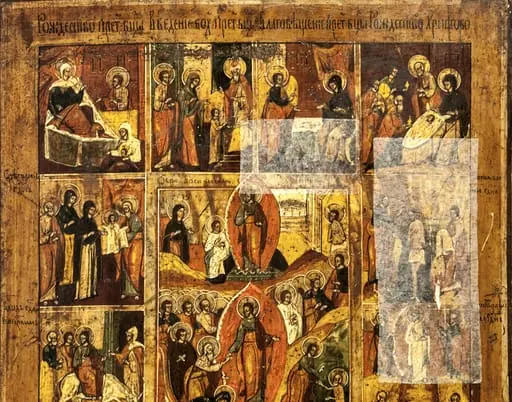
Icoana este una contemporană, fiind pictată pe lemn. În partea superioară este înscrisă, în slavonă, denumirea temei ilustrate. În registrul superior este ilustrat Dumnezeu Tatăl binecuvântând, în zona mediană este redată Sfânta Fecioară cu Pruncul Iisus în brațe, iar la stânga de sus în jos: Arhanghelul Mihail, 8 sfinți, așezați doi câte doi, la partea inferioară apostolii Pavel și Petru. În partea dreaptă îi întâlnim pe Arhanghelul Gavril, 8 sfinți așezați doi câte doi, dedesubt credincioșii Iov și Pimen. Pe versoul icoanei este înscris un text în grafie chirilică și numele localității Mahmudia. Cromatică: foiță aurie (fond și porțiuni din veșminte), roșu; maro; albastru; negru.
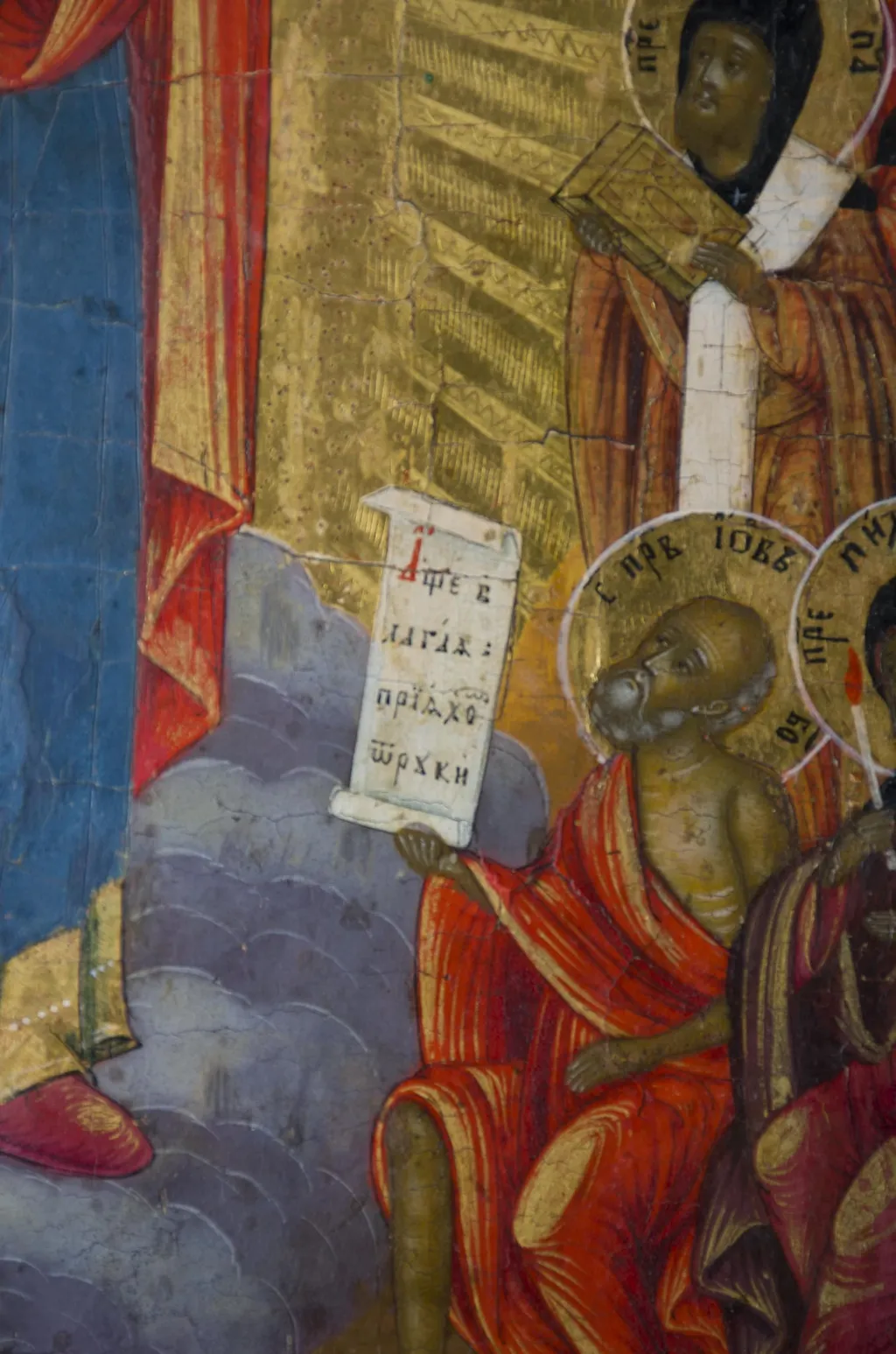
Icoana este una contemporană, fiind pictată pe lemn. În partea superioară este înscrisă, în slavonă, denumirea temei ilustrate. În registrul superior este ilustrat Dumnezeu Tatăl binecuvântând, în zona mediană este redată Sfânta Fecioară cu Pruncul Iisus în brațe, iar la stânga de sus în jos: Arhanghelul Mihail, 8 sfinți, așezați doi câte doi, la partea inferioară apostolii Pavel și Petru. În partea dreaptă îi întâlnim pe Arhanghelul Gavril, 8 sfinți așezați doi câte doi, dedesubt credincioșii Iov și Pimen. Pe versoul icoanei este înscris un text în grafie chirilică și numele localității Mahmudia. Cromatică: foiță aurie (fond și porțiuni din veșminte), roșu; maro; albastru; negru. is a drawing by Unknown. It dates from 1850 and is held in the collection of the ASTRA National Museum Complex. This wooden icon, painted in a contemporary style, presents a multi‑panel composition organized into upper, central, and lower registers.
About this work
Overview
The uppermost section depicts God the Father bestowing a blessing, while the central zone features the Virgin Mary cradling the infant Jesus.
This wooden icon, painted in a contemporary style, presents a multi‑panel composition organized into upper, central, and lower registers. The uppermost section depicts God the Father bestowing a blessing, while the central zone features the Virgin Mary cradling the infant Jesus. Flanking the central scene are two archangels—Michael on the left and Gabriel on the right—each surrounded by groups of saints.
Subject & Meaning
The icon’s iconography follows traditional Orthodox schemes: the divine hierarchy is expressed through the placement of the Father, the Theotokos, and the archangels, underscoring themes of intercession and divine protection. The surrounding saints, arranged in pairs, reinforce the communal aspect of worship, while the lower register’s apostles Paul and Peter anchor the composition in apostolic authority.
Technique & Style
Executed on a wooden panel, the work employs a gold leaf background that accentuates the figures’ robes, rendered in deep reds, blues, browns, and black. The use of gold and vivid pigments follows historic iconographic conventions, yet the overall execution reflects a modern hand, evident in the crisp delineation of the scrolls and the subtle shading of facial features.
History & Provenance
The upper register bears a Slavonic title identifying the depicted theme, while the reverse side contains a Cyrillic inscription naming the locality of Mahmudia. These texts, alongside the presence of saints such as Job and the monk Pimen, suggest the icon’s original function within a regional liturgical setting.
Context
The inclusion of both archangels, a full complement of saints, and the apostolic figures aligns the piece with the liturgical traditions of Eastern Christianity. Its contemporary creation demonstrates the continued relevance of iconographic formulas, serving both devotional purposes and as a visual link to the historic practices of the faithful in the Mahmudia area.
Artist & collection

 Domestic Scene
 Giacomo and Cardinal Marco, investing Andrea, Abbot of San Zeno, with his Benefice
 The Nymph of Fontainebleau
 Portrait of a Woman
 Madonna and Child with Saints in the Enclosed Garden
 Venus and Minerva
 Family Group of Four on Sofa
 Wall painting from Room H of the Villa of P. Fannius Synistor at Boscoreale
 Intru co
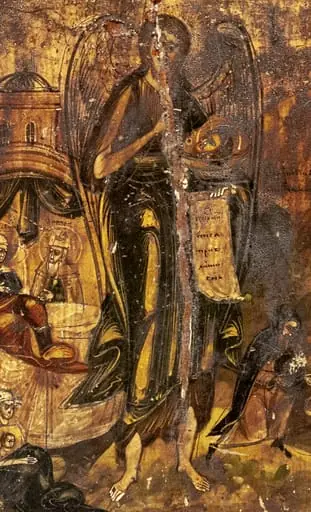 În centrul spațiului pictural, prim plan, Sfântul Ioan Îngerul Pustiului, cu aripi mari,având în mâna stângă un rotulus desfășurat, cu dreapta ținând capul său tăiat pe o tipsie. Este înveșmântat cu o mantie verde peste blana de cămilă, picioarele desculțe. În planul doi, dreapta, este redată scena aflării capului. Un călugăr îngenuncheat lângă capul aureolat al sfântului prooroc, un alt personaj în veșminte roșii(deși tot călugăr), prezentat în picioare, cu capul înclinat, indicând locul cu o săgeată (în alte icoane ambii călugări au lopeți). Este vorba de una dintre aflările capului sfântului, în zilele lui Constantin cel Mare. Aceasta s-a întâmplat în muntele Eleonului. În partea stângă a icoanei este redată nașterea sfântului Ioan. Pe un pat înalt, Elisabeta, în spatele patului, proorocul Zaharia, cu barbă lungă, albă, privind-o. În fața patului, o slujnică ținându-l în brațe pe pruncul Ioan, cu aureolă în jurul capului. Scena se petrece într-un iatac dintr-o clădire cu o turlă. În colțul din stânga sus, Iisus așa cum apare pe mahrama Veronicăi sau sfântul Keramion. Inscripții: pe chenar în partea superioară - Chipul Sfântului Ioan Înainte Mergătorul; în jurul nimburilor părinților proorocului -Elisaveta și Zaharia; în partea dreaptă a icoanei cu litere mici cursive: Aflarea capului Sfântului Ioan Botezătorul, pe rotulusul desfășurat inscripții indescifrabile.Fondul - foița aurie brunificată, (partea de sus), pe care se proiectează crestele muntoase. Cromatica specifică acestui tip de icoane, predomină culorile calde, tonurile de brun, încadrate de bordura roșiatică( galben, ocru, tonuri de verde, brun, roșu, negru.) Desenul trasat cu linie fină. Suportul prezintă o crăpătură longitudinală, lacune ale stratului pictural.
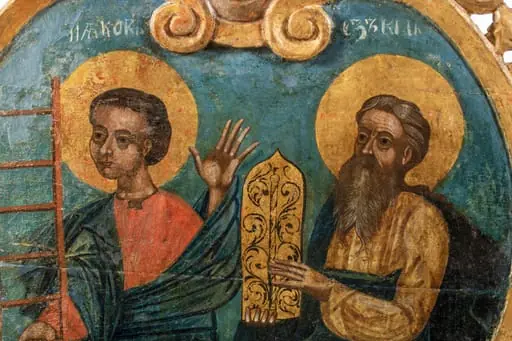 Iacov și Ezechil
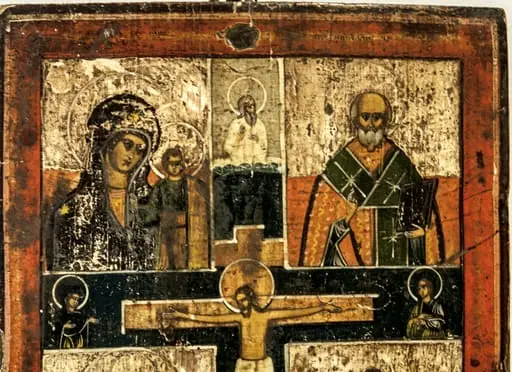 Răstshka
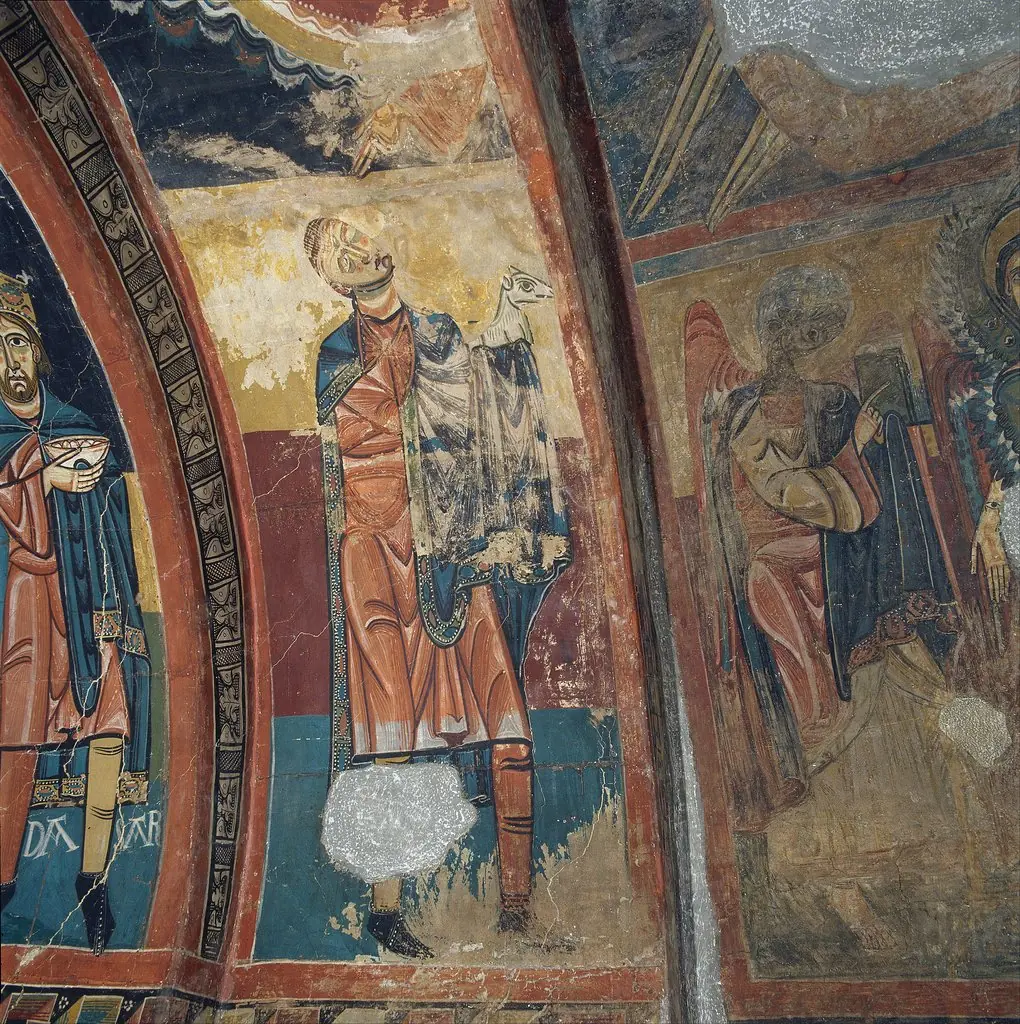 Arch of Abel's Offering from Santa Maria de Taüll
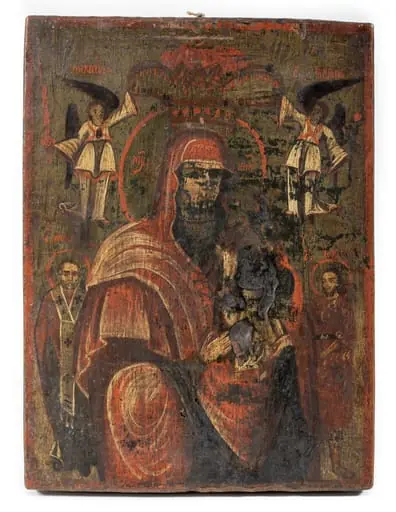 Maica Domnului cu Pruncul și Sfinții Mihail și Gavriil
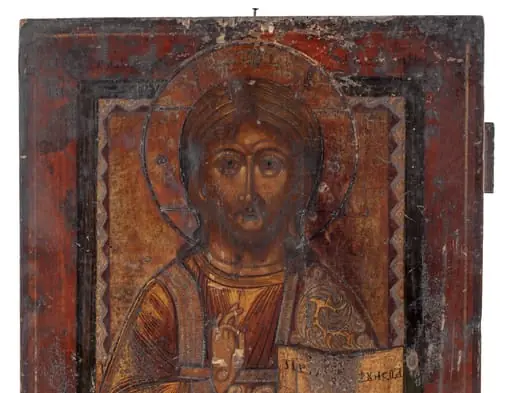 Iisus Christos (Iisus Hristos)
 Compe.
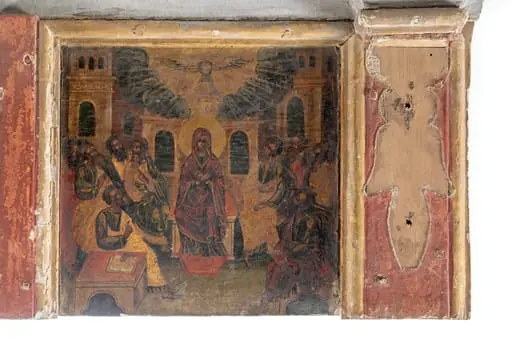 Înălțarea și pogorârea Sfântului Duh
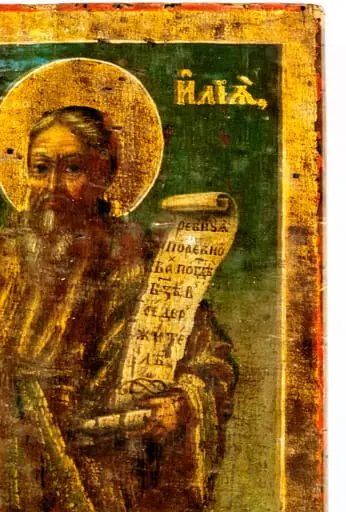 Sfăntul Ilie este redat 3/4, din semiprofil, cu un pumnal lung, ridicat în sus în mâna dreaptă, și un filacter desfășurat în stânga. Sfântul este redat bătrân, cu părul și barba albe, pictate în detaliu, ochii mari, negri, încruntat. Înveșmântat cu o tunică sărăcăciaosă cafenie peste care poartă o mantie verde prinsă la brâu.În jurul capului are un nimb aurit cu chenar alb. Fond verzui, nuanțat, mai închis în partea de sus, luminat în cea de jos Inscripția este scrisă în partea de sus, cu litere caligrafice și prescurtări. Chenar aurit, delimitat de o linie roșie la exterior și una albă la interior, Pictura a fost aplicată în zona veșmintelor peste un strat de bronz care transpare la falduri, dând luminozitate icoanei. Pe spate are bătute două pene în relief, care depășesc marginea icoanei.
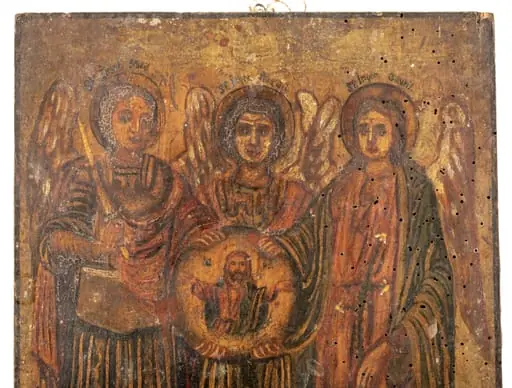 Sfinții îngeri: Mihail, Rafael, Gavril
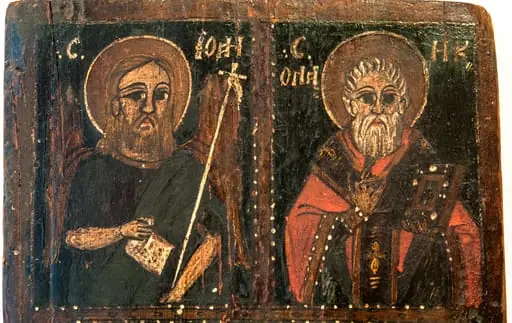 Câmpul icoanei este împărțit în patru casete dreptunghiulare în care sunt redati 3/4: Sfântul Ioan Botezătorul(ipostaza de înger al pustiului, în stânga cu o cruce, în dreapta un rotulus, mantie verde peste blana de cămilă), sfântul Nicolae ierarh(sacos roșu, capul desoperit, binecuvântând cu stânga, în dreapta Evanghelia), Arghanghelul Mihail(cu sabia de foc în stânga, în dreapta un înscris), Arhanghelul Gavriil(cu o floare în dreapta, cruce în stânga). Pictură de factură populară, naivă, fețele expresive, amintind de icoana coptă. Cromatica sobră, fond întunecat, inscripții cu alb, chenare dublate cu șiruri de puncte albe.