Artwork
Icoara d
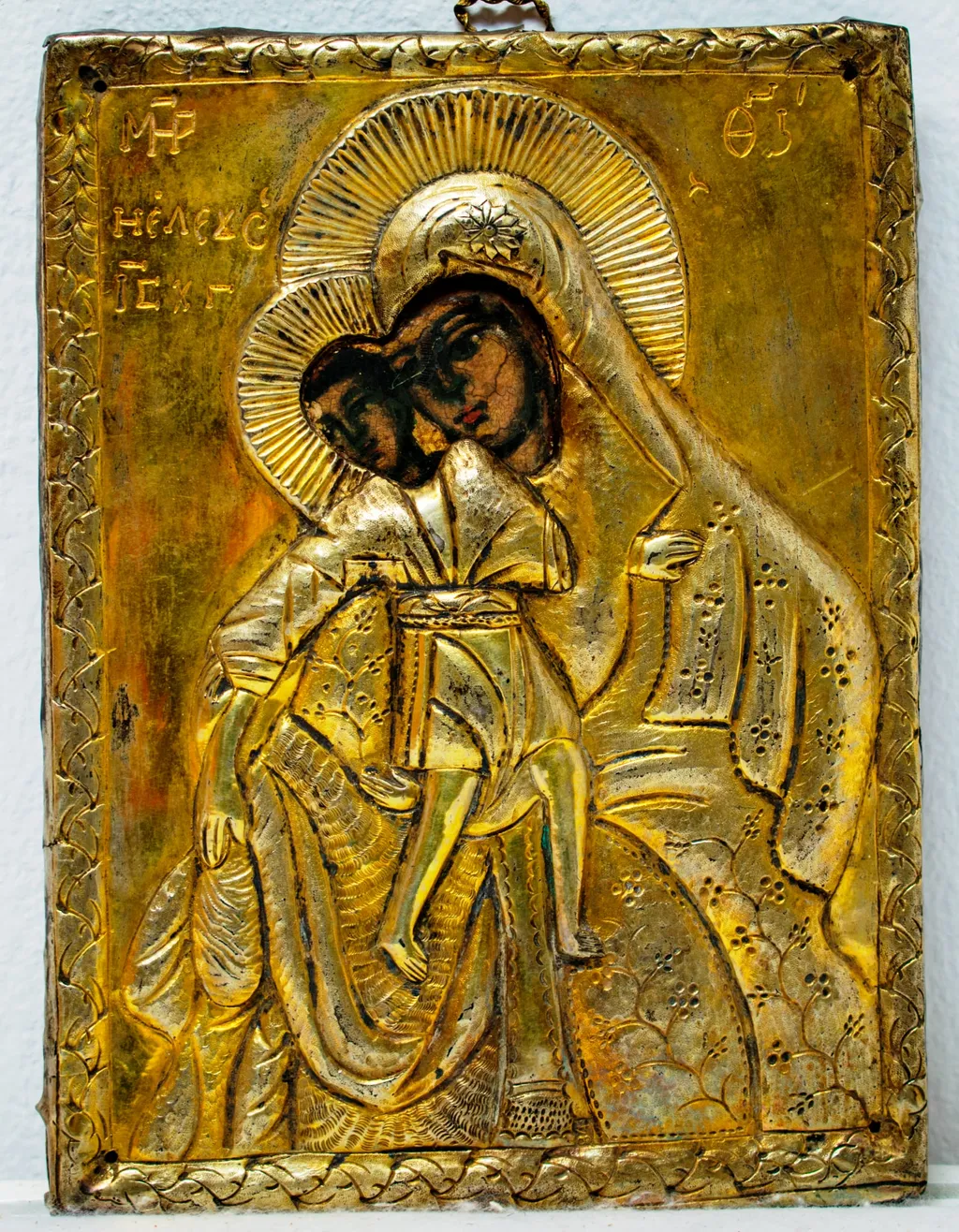
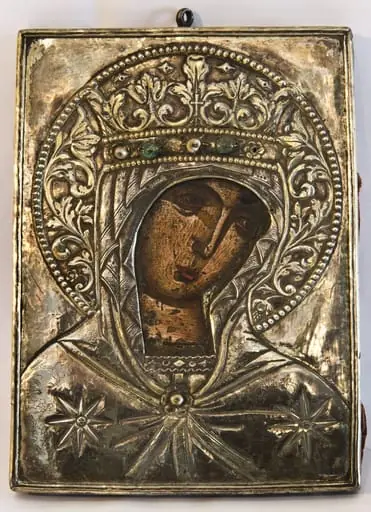
Icoara d is a drawing by Unknown. It dates from 1850 and is held in the collection of the "Dimitrie Gusti" National Village Museum. This image depicts two figures in close proximity, rendered with formal symmetry and symbolic detail.
About this work
Overview
This image depicts two figures in close proximity, rendered with formal symmetry and symbolic detail. One figure, identified by a golden halo and flowing robe, holds the hand of another clad in armored attire. The background features a richly textured gold field, faintly inscribed with legible script along the margins, suggesting a devotional or liturgical context.
Subject & Meaning
The central figures likely represent a sacred and a martial figure in union—possibly a saint and a warrior patron. The halo signifies divine status, while the armor and spear imply earthly protection or duty. Their clasped hands suggest a bond between spiritual authority and temporal power, common in medieval religious iconography where heavenly intercession was sought for earthly defense.
Technique & Style
The robe and halo are rendered with raised metal-like lines, indicating embossing or repoussé work. The armor is densely covered in fine stippled dots, a technique used to simulate texture and depth without pigment. The background’s gold leaf is textured with tooling, enhancing its luminous quality. Faded inscriptions around the edges reinforce the object’s ritual function.
History & Provenance
The work’s materials and stylistic features align with Byzantine or early medieval religious panels, possibly from a liturgical object or portable altar. The use of gold leaf, metal detailing, and inscribed script points to a production center with access to skilled metalworkers and scribes, likely in the Eastern Mediterranean or its cultural periphery during the 9th to 12th centuries.
Context
Such imagery was common in contexts where religious authority and military leadership were intertwined, such as in imperial courts or monastic communities that supported armed orders. The pairing of saint and soldier reflects a worldview in which divine favor was essential to victory, and earthly power was legitimized through sacred association.
Legacy
The use of stippling for armor texture and embossed metallic surfaces influenced later icon painting and metalwork traditions across Orthodox Christian regions. Though the specific object’s origin remains unconfirmed, its compositional logic persisted in devotional art for centuries, reinforcing the visual language of sacred authority and martial protection.
Artist & collection
Museum
"Dimitrie Gusti" National Village Museum
Continue through works from the same source collection.
 Domestic Scene
 Giacomo and Cardinal Marco, investing Andrea, Abbot of San Zeno, with his Benefice
 The Nymph of Fontainebleau
 Portrait of a Woman
 Madonna and Child with Saints in the Enclosed Garden
 Venus and Minerva
 Family Group of Four on Sofa
 Wall painting from Room H of the Villa of P. Fannius Synistor at Boscoreale
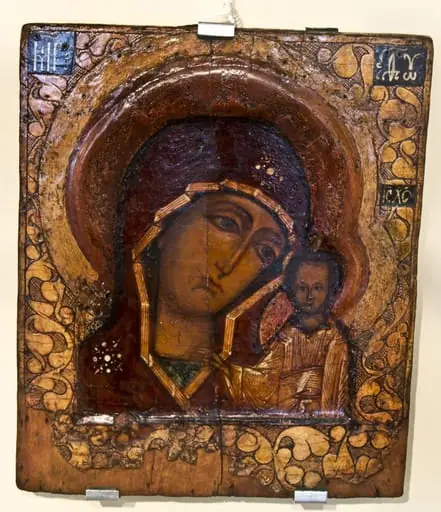 Maica Domnului cu pruncul Kazanskaia, Madona Neagră
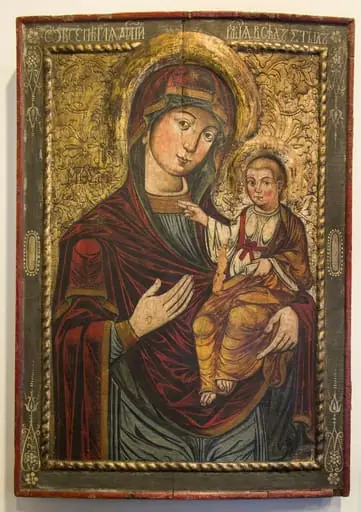 Maica Domnului cu pruncul; Icoană de catapeteasmă; Icoană împărătească
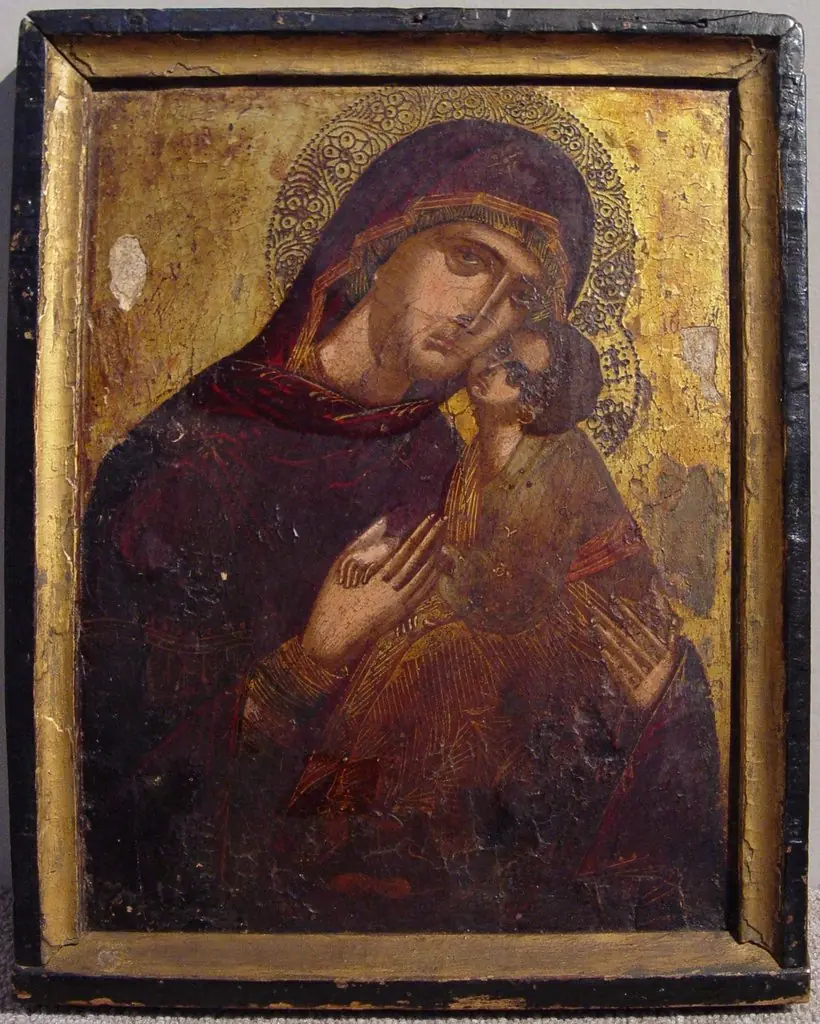 Icon with the Virgin and Child
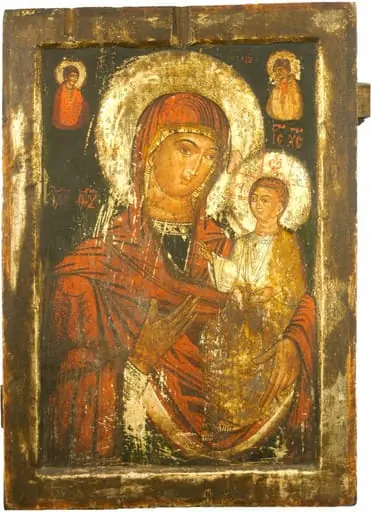 Maica Domnului cu Pruncul
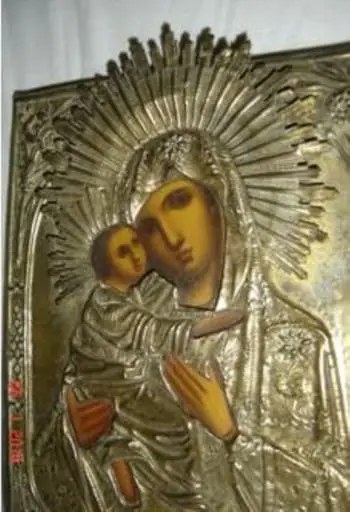 Fecioara cu Pruncul
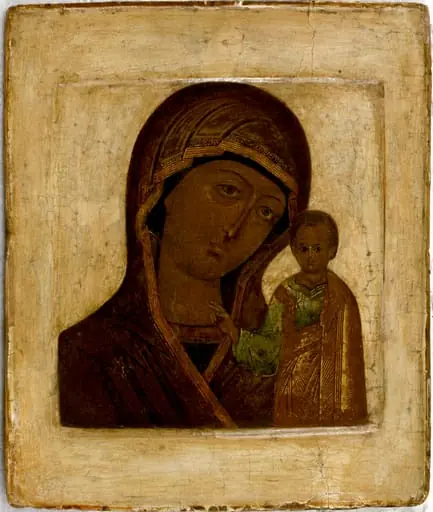 Kazanin Jumalanäiti, venäläinen ikoni
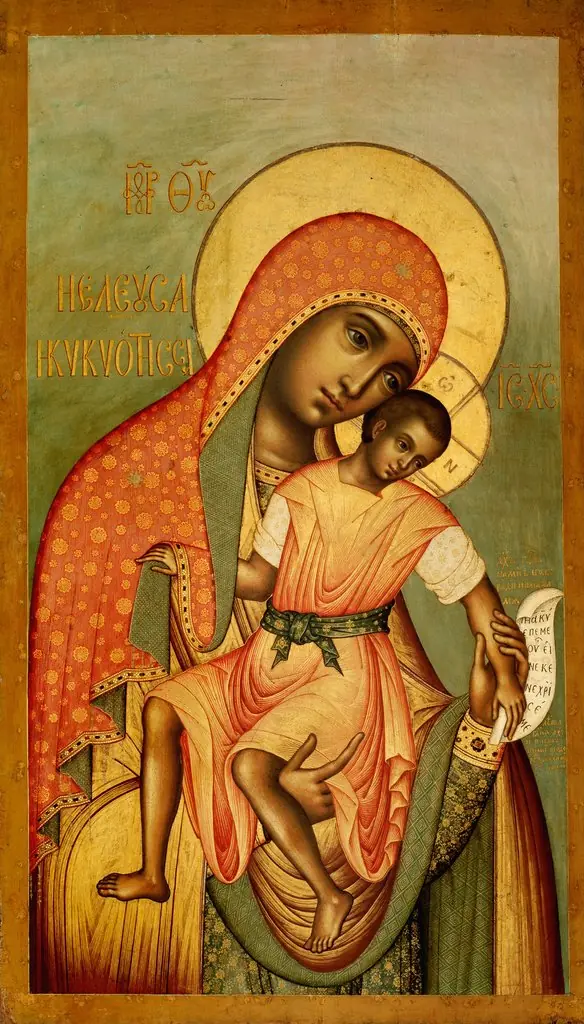 Virgin Eleousa of Kykkos
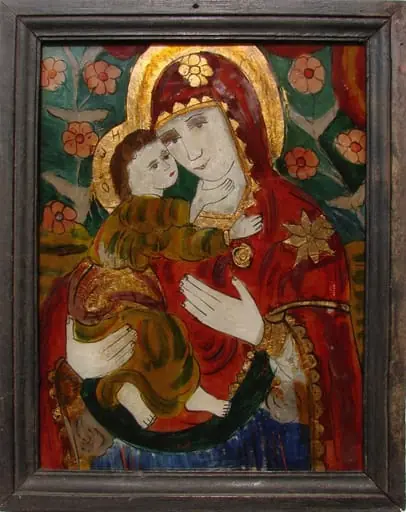 Maica Domnului cu Pruncul
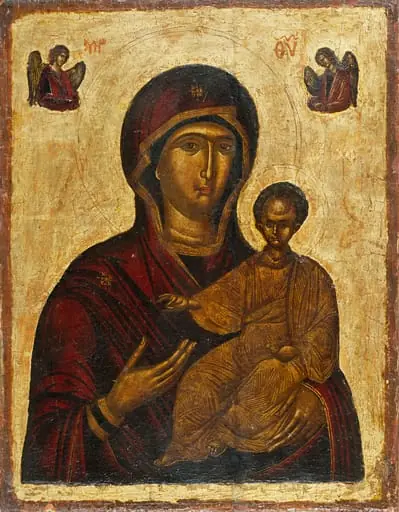 Jumalanäiti, Hodigitria - Tiennäyttäjä, bysanttilainen ikoni
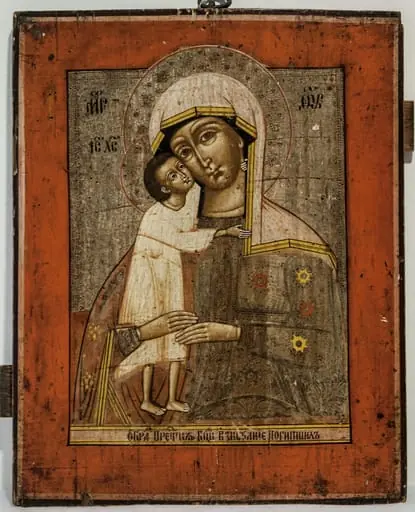 Maica Domnului, tipul Eleusa(dulcea sărutare, Mângâietoarea) îl ține strâns în brațe pe Iisus prunc, în picioare, cu obrazul lipit de cel al Maicii și o mână petrecută pe după gâtul ei. Iisus are nimbul cruciger, marcat cu motive florale punctate, Este înveșmântat într-o tunică 3/4 alb-gălbuie, care lasă să i se vadă picioarele. Maica poartă un maforion alb, bordat cu galben, partea din stânga a veșmântului din foiță metalică, decorată cu motive florale pictate cu roșu și galben, motive fitomorfe și geometrice incizate. În partea dreaptă veșmântul este roșu, decorat cu motive florale de culoare galbenă, foița fiind prezentă doar la mânecă. Nimbul decorat cu motive florale punctate în stratul de foiță metalică, Figurile modelate din culoare (alb, ocru) cu accente grafice fine, albe, sunt specifice icoanei rusești. Cromatica: alb, galben, roșu, auriu, brun, negru, foiță metalică, chenar roșu deschis, mărginit de două linii în nuanțe de roșu deschis și brun.Chenarul interior dublat de două șiruri de cercuri ștanțate în foiță. Inscripția dispusă pe o bandă dreptunghiulară în partea de jops a icoanei : Icoana Preacuratei Fecioare Prevăzând Jertfa (lui Iisus).
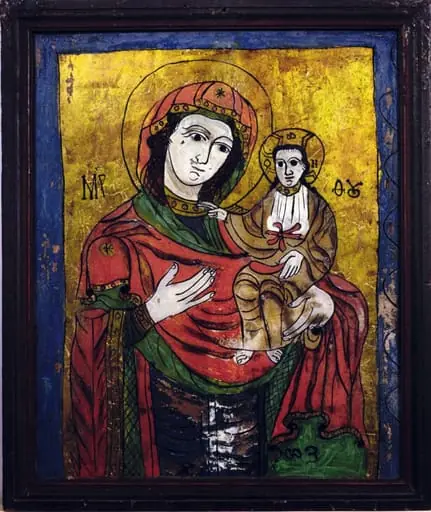 Maica Domnului cu Pruncul
 Maica Domnului; Icoană ferecată