Artwork
Iconographic Sketchbook
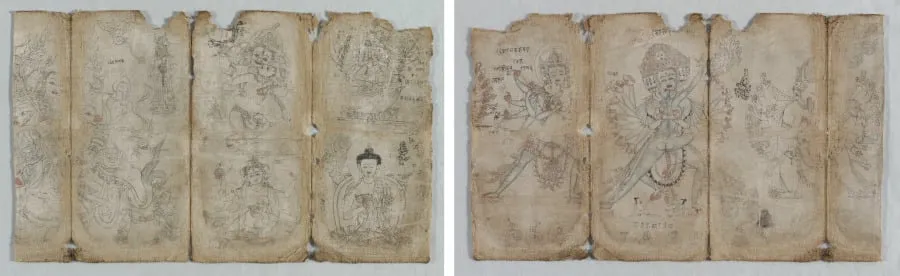
Iconographic Sketchbook is a drawing by the Renaissance artist Unknown. It dates from 1500 and is held in the collection of the Cleveland Museum of Art.
About this work
You see a thin sheet of paper filled with quick, sure lines—gods and demons in flowing robes, each holding a different ritual tool.
You see a thin sheet of paper filled with quick, sure lines—gods and demons in flowing robes, each holding a different ritual tool.
These aren’t finished paintings; they’re warm-up sketches from a Tibetan monk-artist around 1500. Every curve and flame is drawn with the same steady hand, like a musician practicing scales. The style comes from a school that loved tall, graceful figures that seem to dance even when they’re still.
To see more of this kind of work, look up Tibet.
Overview
This set of surviving sketchbook pages, dating to around 1500, contains line drawings of prominent tantric figures, characterized by confident and precise renderings of iconographic elements.
Subject & Meaning
The drawings depict various gods and demons in flowing robes, each holding distinct ritual tools, reflecting the tantric iconography prevalent in Tibetan Buddhist art of the time.
Technique & Style
Executed with a steady, sure hand, the drawings exhibit svelte figure proportions and energetic lines, aligning with the Khyenri school's style, known for its elegant and dynamic depictions of enlightened beings' fierce manifestations.
History & Provenance
Attributed to a Tibetan monk-artist circa 1500, the style traces back to the Khyenri school, founded by Khyentse Wangchuk (c. 1420-1500) in the 15th century's second half.
Context
These sketches, akin to practice exercises, demonstrate the artist's familiarity with and adherence to the Khyenri school's aesthetic, reflecting the broader artistic and religious practices of 15th-century Tibet.
Legacy
As rare surviving practice pages, they offer insight into the artistic training and stylistic evolution of Tibetan Buddhist art, particularly the Khyenri school's influence on subsequent generations.
Artist & collection

 Domestic Scene
 Giacomo and Cardinal Marco, investing Andrea, Abbot of San Zeno, with his Benefice
 The Nymph of Fontainebleau
 Portrait of a Woman
 Madonna and Child with Saints in the Enclosed Garden
 Venus and Minerva
 Family Group of Four on Sofa
 Wall painting from Room H of the Villa of P. Fannius Synistor at Boscoreale
 Prajnaparamita flanked by two female figures, folio 1 (verso), from a Manuscript of the Perfection of Wisdom in Eight Thousand Lines (Ashtasahasrika Prajnaparamita-sutra)
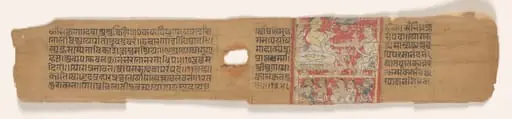 Jain monk with disciple and two laymen, two nuns, and a laywoman, folio 22 (recto) from a Yoga-shastra of Hemachandra
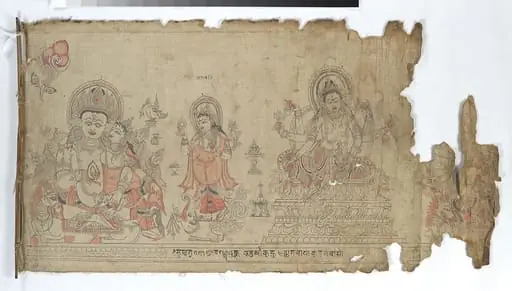 Untitled
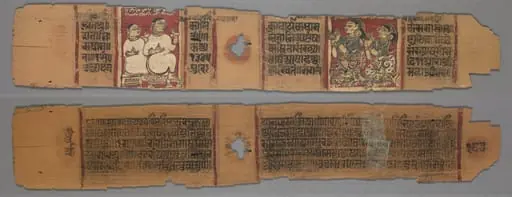 Folio 167, from a Kalpa-sutra and Story of Kalakacharya: two nuns teaching lay women (recto); genealogical text (verso)
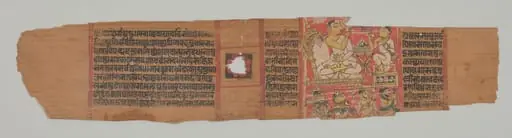 Monk preaching to a disciple with a lay audience, folio 2 (recto) from a Parshvanatha Charitra (Life and Stories of Lord Parshva) of Bhavadeva-suri
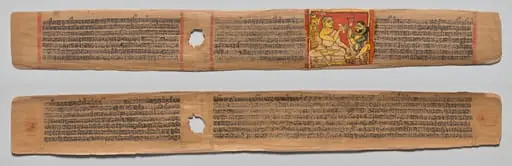 Folio 2, from a Great Poem about Twos (Dvyashraya Mahakavya) of Hemachandra with Commentary by Abhayatilaka
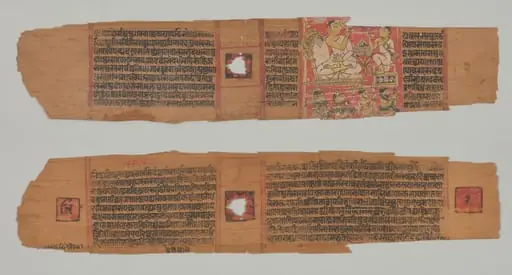 Folio 2 from a Parshvanatha Charitra (Life and Stories of Lord Parshva) of Bhavadeva-suri: Monk preaching to a disciple with a lay audience (recto); Text (verso)
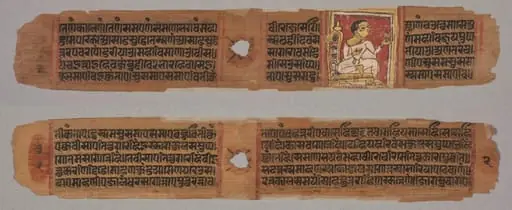 Folio 2, from a Kalpa-sutra and Story of Kalakacharya: Monk Holding a Flower (recto); text (verso)
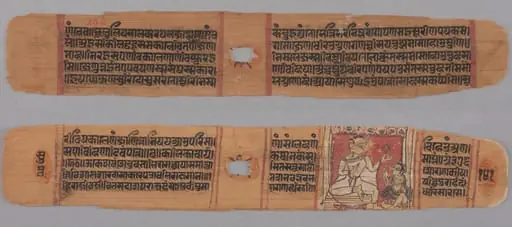 Folio 141, from a Kalpa-sutra and Story of Kalakacharya: Text (recto); Monk Holding a Flower Venerated by a Lay disciple (verso)
 Genealogical text, folio 167 (verso) from a Kalpa-sutra and Story of Kalakacharya
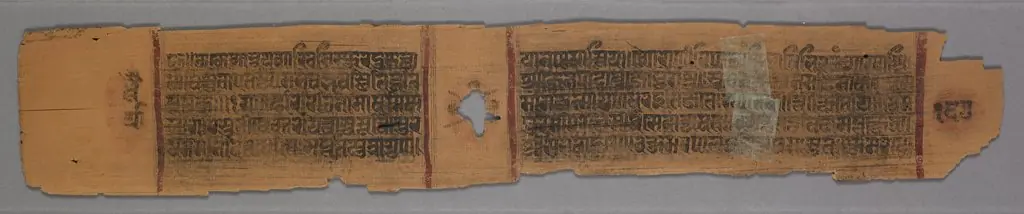 Two nuns teaching lay women, colophon page of folio 167 (recto) from a Kalpa-sutra and Story of Kalakacharya
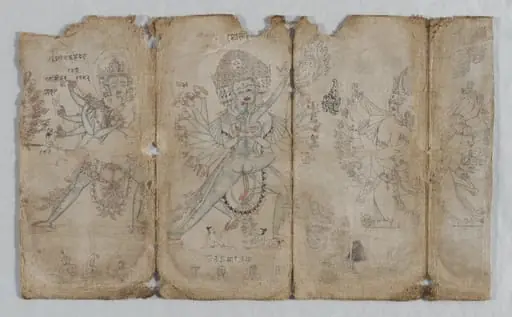 Iconographic Drawings: Chakrashamvara with Vajravarahi, Hevajra with Nairatmya, and Yamantaka (verso)