Artwork
Iisus viță de vie
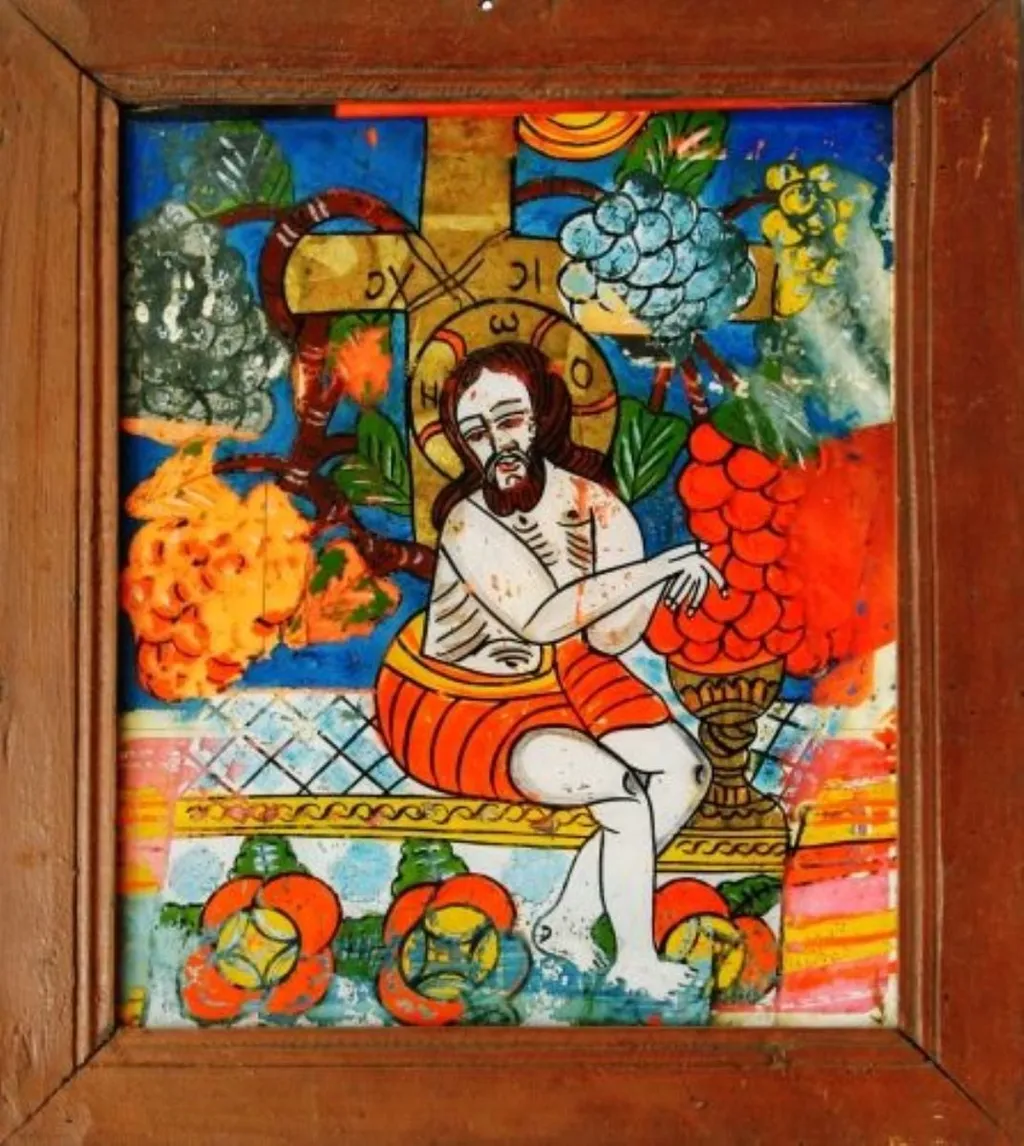
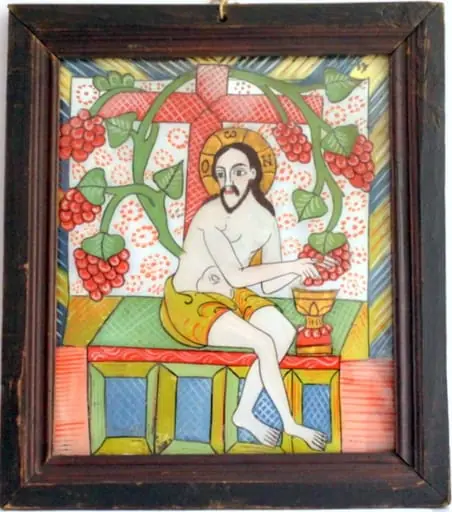
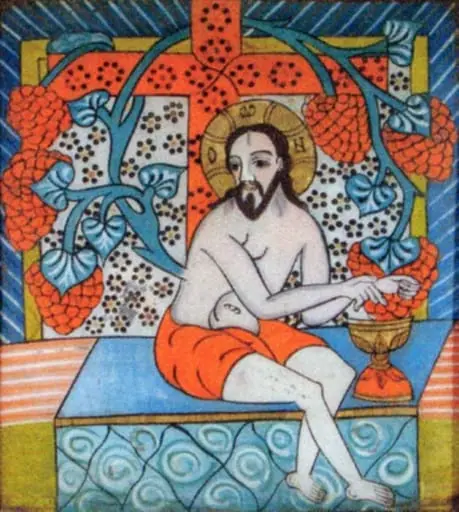
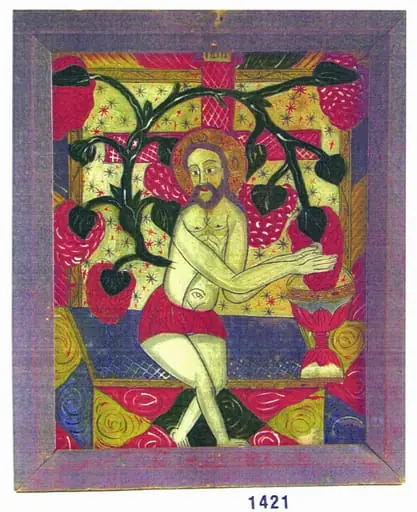
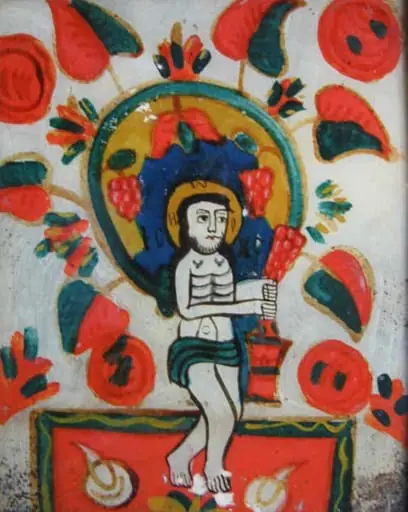
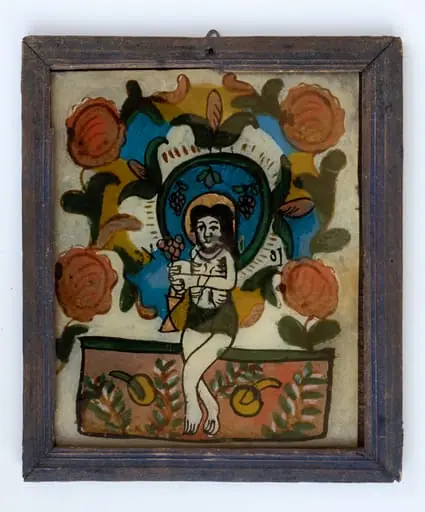
Iisus viță de vie is a drawing by Unknown. It dates from 1850 and is held in the collection of the Romanian Peasant Museum. The work depicts a bearded figure crowned with a halo, seated upon a rock and cradling a bunch of grapes.
About this work
Overview
The composition is set against a vivid sky of blue, punctuated by a rainbow, while red grapes and yellow foliage add chromatic contrast.
The work depicts a bearded figure crowned with a halo, seated upon a rock and cradling a bunch of grapes. Behind him a cross rises, its central circle marked by three dots. The composition is set against a vivid sky of blue, punctuated by a rainbow, while red grapes and yellow foliage add chromatic contrast. Beneath the figure, a sinuous line suggests water, from which smaller faces emerge, appearing to observe the scene.
Subject & Meaning
The central figure is presented as a serene, possibly Christological, presence, the halo and cross reinforcing a sacred identity. The grapes he holds allude to the Eucharistic symbolism of wine, while the surrounding faces emerging from the watery line may represent believers or souls drawn to the divine source. The three‑dot motif within the cross’s circle could signify the Holy Trinity, further embedding theological references within the visual narrative.
Technique & Style
The artist employs a hand‑drawn aesthetic, characterized by visible cross‑hatching and uneven line work that creates texture and depth. Color is applied in bold, flat areas—bright reds, yellows, and blues—contrasting with the more subdued rock and figure. The rough shading and irregular contours lend the piece a tactile, almost folk‑art quality, emphasizing the materiality of the medium over polished finish.
Context
Although the precise date and origin are unspecified, the work aligns with traditions that merge religious iconography with folk‑art conventions, a synthesis common in regional devotional paintings. The inclusion of everyday elements such as grapes and a simple landscape situates the sacred figure within a familiar, accessible setting, reflecting a didactic intent to communicate spiritual themes to a broad audience.
Artist & collection

 Domestic Scene
 Giacomo and Cardinal Marco, investing Andrea, Abbot of San Zeno, with his Benefice
 The Nymph of Fontainebleau
 Portrait of a Woman
 Madonna and Child with Saints in the Enclosed Garden
 Venus and Minerva
 Family Group of Four on Sofa
 Wall painting from Room H of the Villa of P. Fannius Synistor at Boscoreale