Artwork
Interior of a Gothic Church
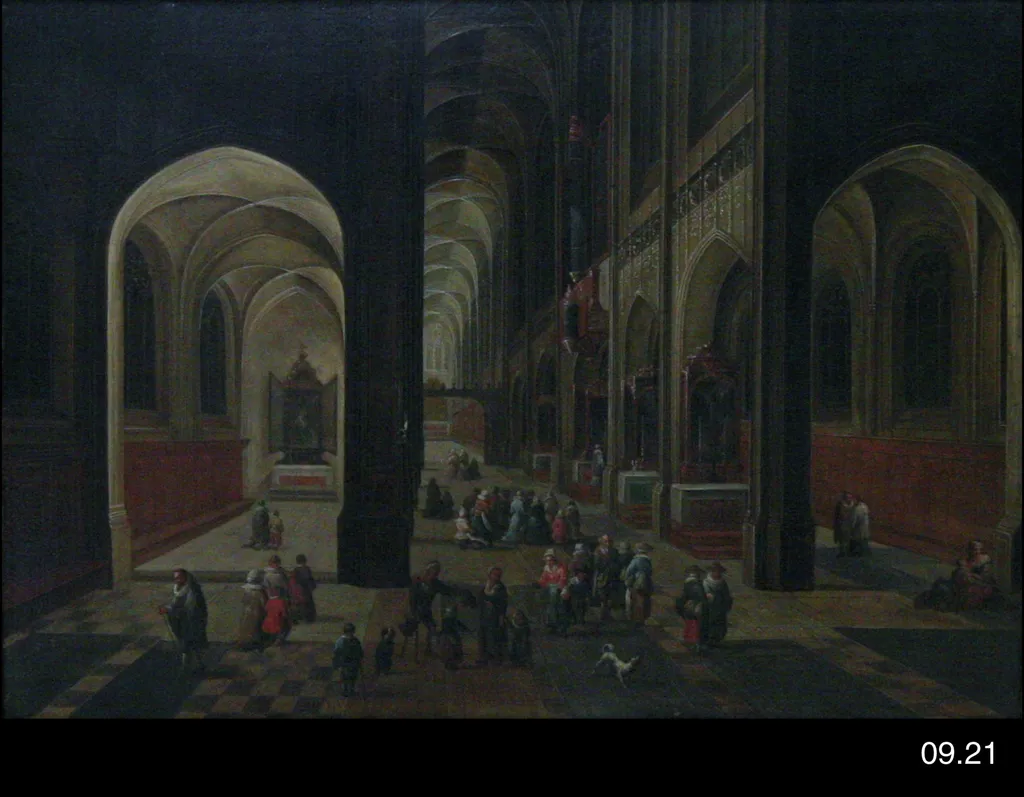
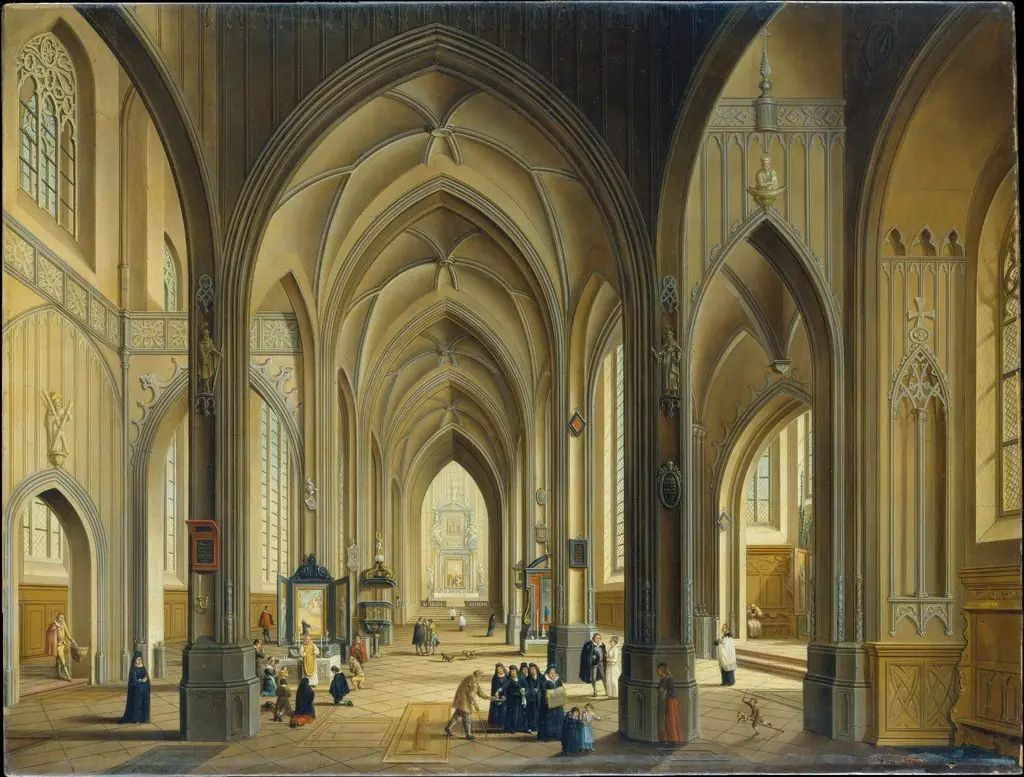
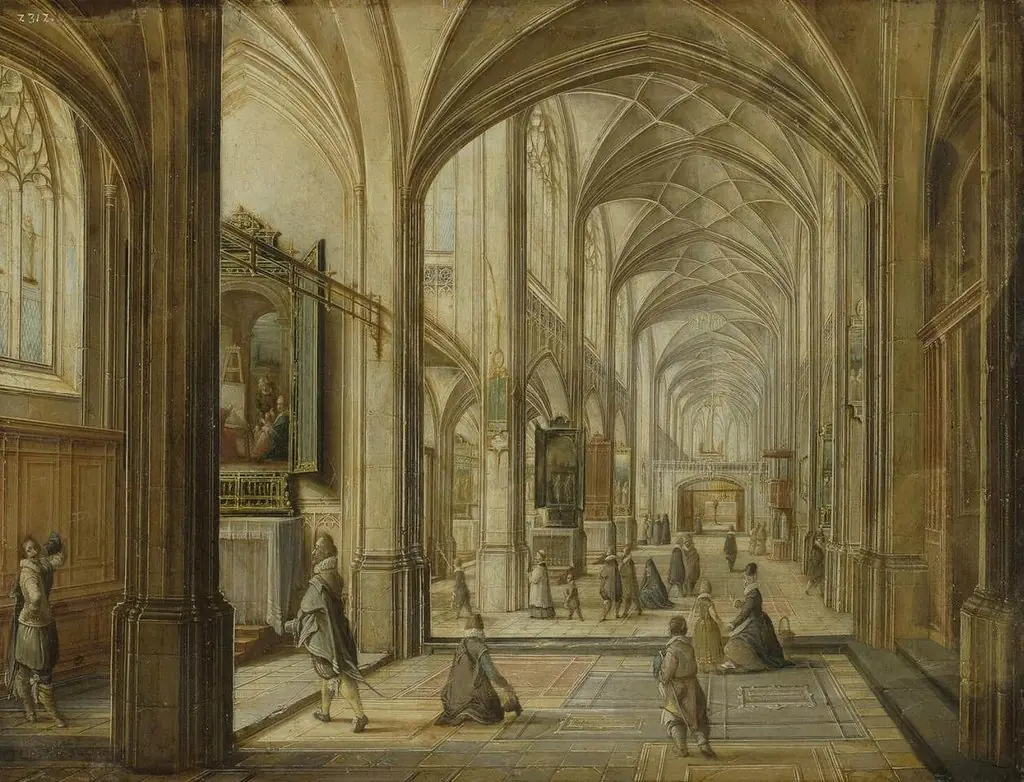
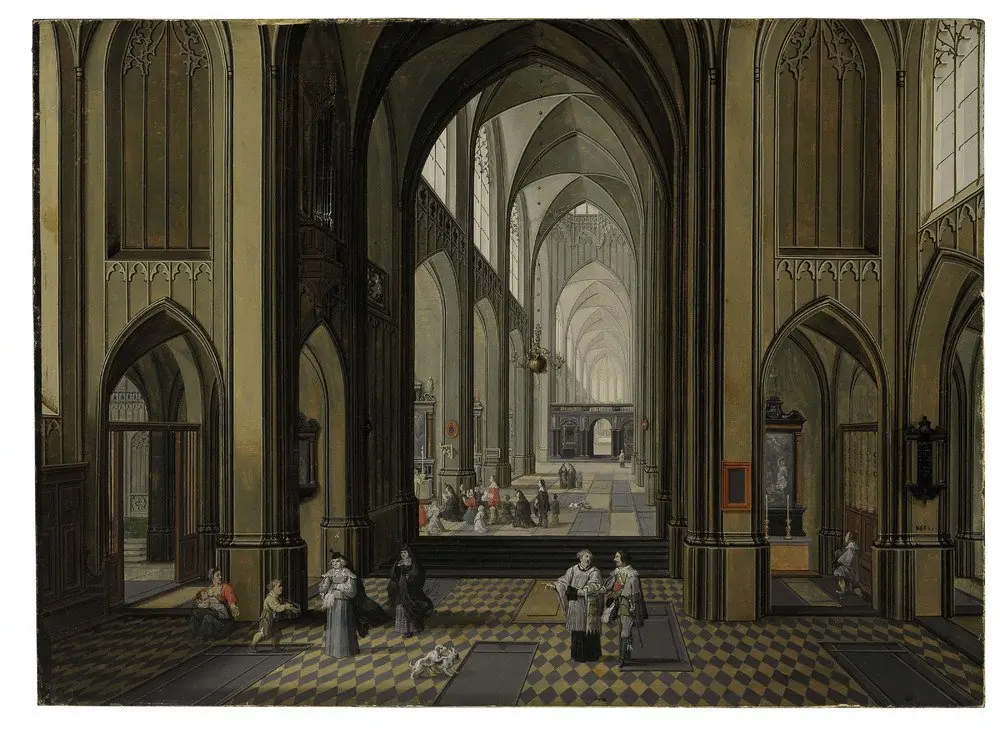
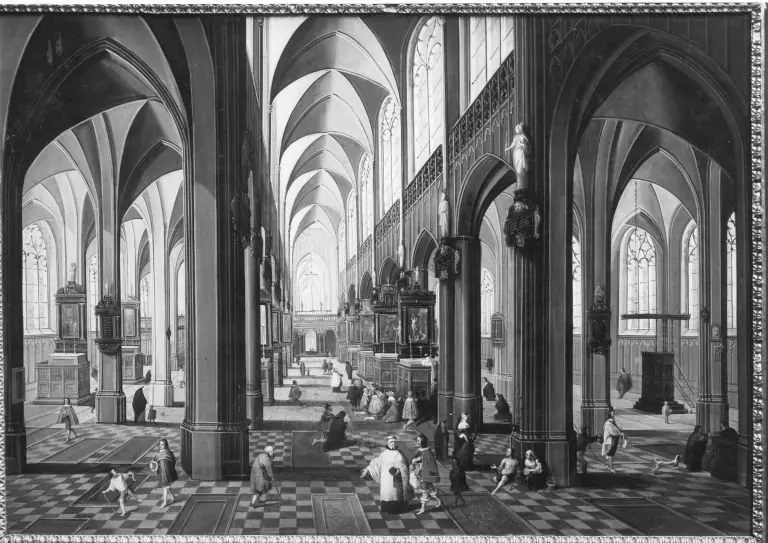
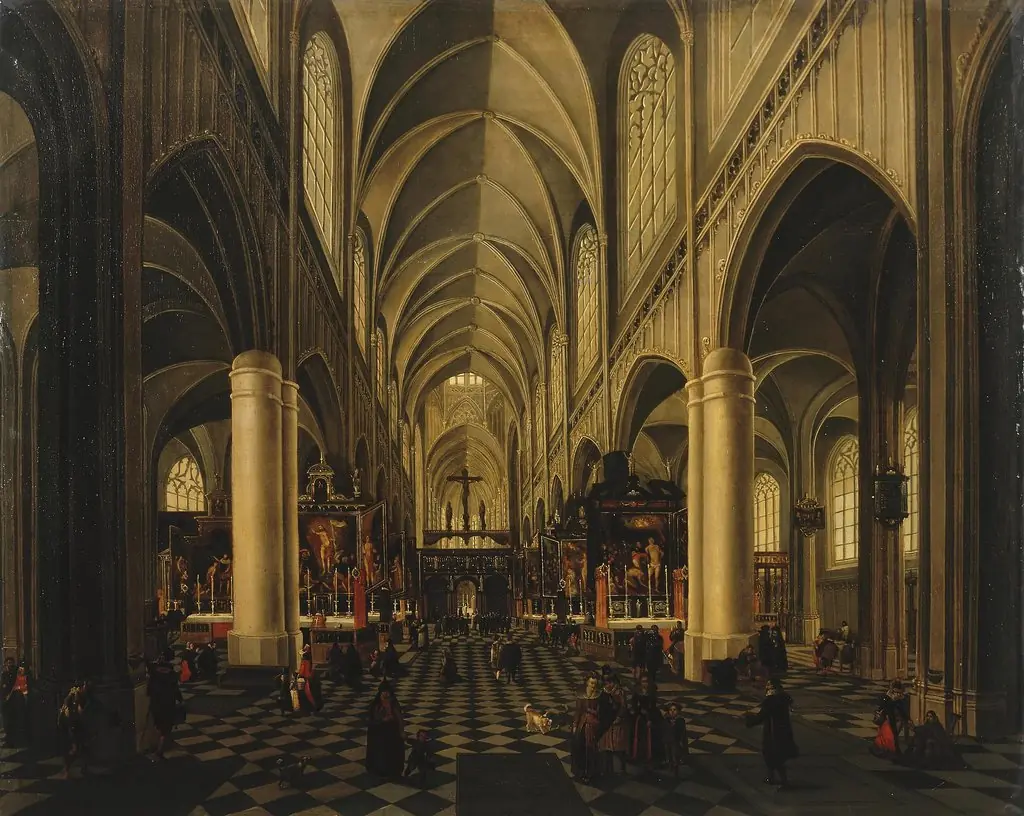
Interior of a Gothic Church is an unspecified painting by the Dutch Golden Age artist Unknown. It dates from 1630 and is held in the collection of the Detroit Institute of Arts. The canvas presents the interior of a vast Gothic church, its soaring arches and clustered columns framing a dimly lit nave.
About this work
Overview
The canvas presents the interior of a vast Gothic church, its soaring arches and clustered columns framing a dimly lit nave.
The canvas presents the interior of a vast Gothic church, its soaring arches and clustered columns framing a dimly lit nave. Stone flooring stretches forward toward a raised platform at the rear, while numerous figures populate the space—some seated, others standing or moving along the aisles. The composition emphasizes the monumental scale of the architecture and the collective presence of worshippers within it.
Subject & Meaning
The work captures a moment of communal gathering within a sacred setting, highlighting the interplay between individual devotion and the grandeur of the surrounding structure. By populating the nave with a variety of postures—sitting, standing, walking—the artist suggests a spectrum of engagement, from contemplation to procession, underscoring the church’s role as both a spiritual haven and a social gathering place.
Technique & Style
A restrained palette of deep, muted tones dominates the scene, allowing chiaroscuro to model the architectural forms and figures. Strong contrasts between illuminated areas and deep shadows create a dramatic atmosphere, reinforcing the sense of mystery and reverence. The brushwork delineates the stone texture and the weight of the columns, while the figures are rendered with enough detail to convey movement without detracting from the overall spatial harmony.
Context
The painting reflects a 19th‑century fascination with medieval architecture and the spiritual ambiance of Gothic interiors. Such works often served both as documentary records of historic churches and as visual meditations on the solemnity of religious spaces, aligning with contemporary interests in historic preservation and the romanticization of the past.
Artist & collection

 Domestic Scene
 Giacomo and Cardinal Marco, investing Andrea, Abbot of San Zeno, with his Benefice
 The Nymph of Fontainebleau
 Portrait of a Woman
 Madonna and Child with Saints in the Enclosed Garden
 Venus and Minerva
 Family Group of Four on Sofa
 Wall painting from Room H of the Villa of P. Fannius Synistor at Boscoreale