Artwork
Js H D'Egville, Esqr. Director of the King's Theatre
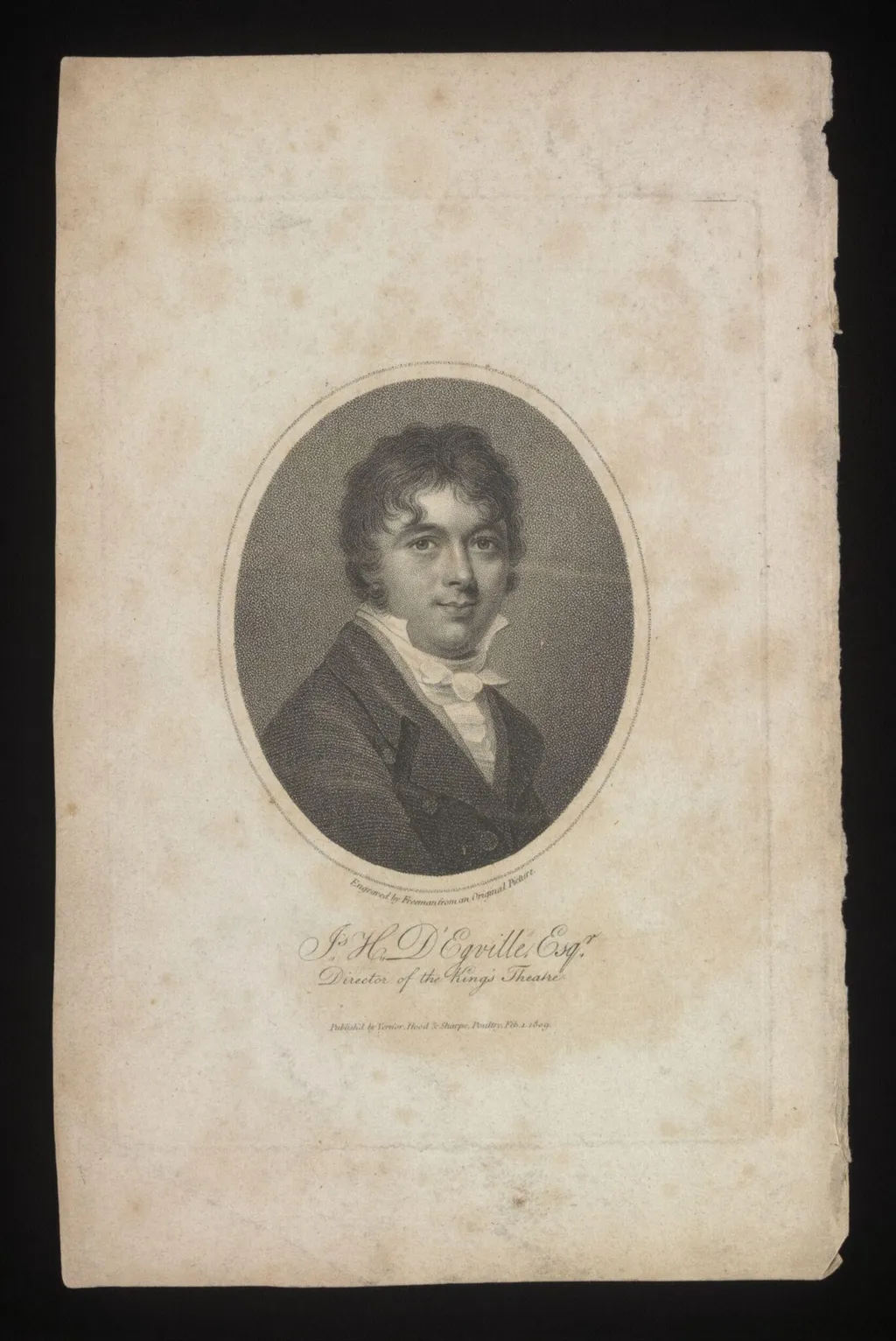
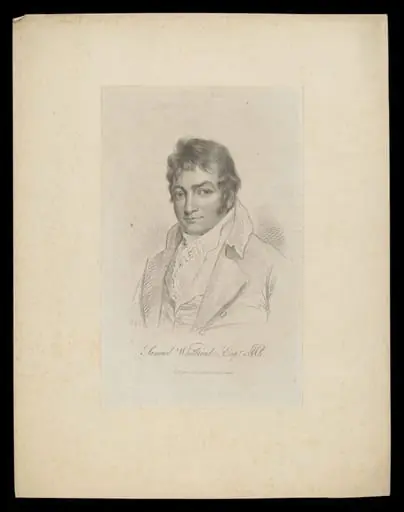
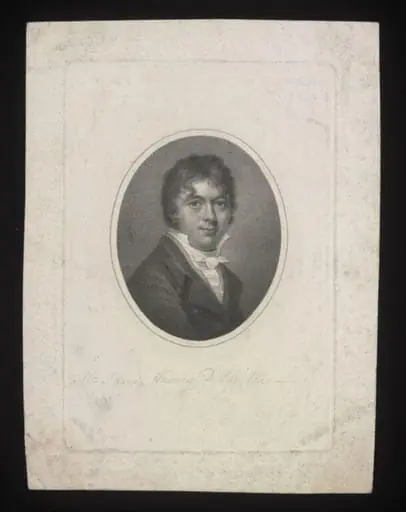
Js H D'Egville, Esqr. Director of the King's Theatre is a print by the Romanticist artist Unknown. It dates from 1809 and is held in the collection of the Victoria and Albert Museum. This stipple engraving portrays Jean-Henri D'Egville, a prominent figure in London’s early 19th-century theatrical world.
About this work
Overview
The oval format and precise engraving technique reflect the conventions of portraiture used for cultural administrators of the period.
This stipple engraving portrays Jean-Henri D'Egville, a prominent figure in London’s early 19th-century theatrical world. Executed by Freeman after a painted original, the portrait presents him in formal attire against a softly lit, neutral background. The oval format and precise engraving technique reflect the conventions of portraiture used for cultural administrators of the period. Published in 1809 by Vernor, Hood & Sharpe, the print was later acquired by the museum through the Cyril Beaumont Bequest.
Subject & Meaning
Jean-Henri D'Egville served as director of the King’s Theatre, London’s principal venue for opera and ballet. The portrait emphasizes his professional stature rather than personal expression, with formal dress and composed gaze signaling authority. His title and role are explicitly stated in the surrounding inscription, reinforcing the print’s function as a record of institutional leadership. The image conveys respectability and cultural responsibility, typical of portraits commissioned by or for arts administrators of the era.
Technique & Style
The portrait employs stipple engraving, a method using fine dots to model tone and texture, allowing subtle gradations of light and shadow. This technique, popular for reproducing painted likenesses, renders the texture of fabric and skin with quiet precision. The composition is tightly framed within an oval, directing focus to the sitter’s face and upper torso. The background is deliberately muted, enhancing the contrast between the dark coat and pale collar, a restrained use of chiaroscuro common in academic portraiture of the time.
History & Provenance
The print was published in 1809 by Vernor, Hood & Sharpe, a London firm known for distributing engraved portraits of cultural figures. It derives from an earlier painting, now unlocated, suggesting the image was circulated to affirm D'Egville’s public role. The work entered the museum’s collection through the Cyril Beaumont Bequest, a significant donation of materials related to dance and theatre history, underscoring its value as a document of performance culture in Regency England.
Context
D'Egville’s directorship coincided with a period of growth in London’s operatic scene, as French and Italian traditions merged under British patronage. Portraits like this were often commissioned to legitimize cultural leadership and were distributed among patrons and institutions. The print’s formal tone reflects the era’s emphasis on order and decorum in the arts, even as Romantic ideals began to influence broader aesthetic sensibilities. Its production aligns with the rise of print culture as a tool for public recognition.
Legacy
As a preserved artifact of early 19th-century theatre administration, the print offers insight into how cultural authority was visually constructed. Though D'Egville is no longer widely remembered, this image remains a tangible link to the institutional frameworks that shaped London’s performance landscape. Its inclusion in the museum’s collection ensures its continued role as a historical reference for scholars of theatre, print, and Regency-era cultural life.
Artist & collection

 Domestic Scene
 Giacomo and Cardinal Marco, investing Andrea, Abbot of San Zeno, with his Benefice
 The Nymph of Fontainebleau
 Portrait of a Woman
 Madonna and Child with Saints in the Enclosed Garden
 Venus and Minerva
 Family Group of Four on Sofa
 Wall painting from Room H of the Villa of P. Fannius Synistor at Boscoreale