Artwork
Kakubha Ragini
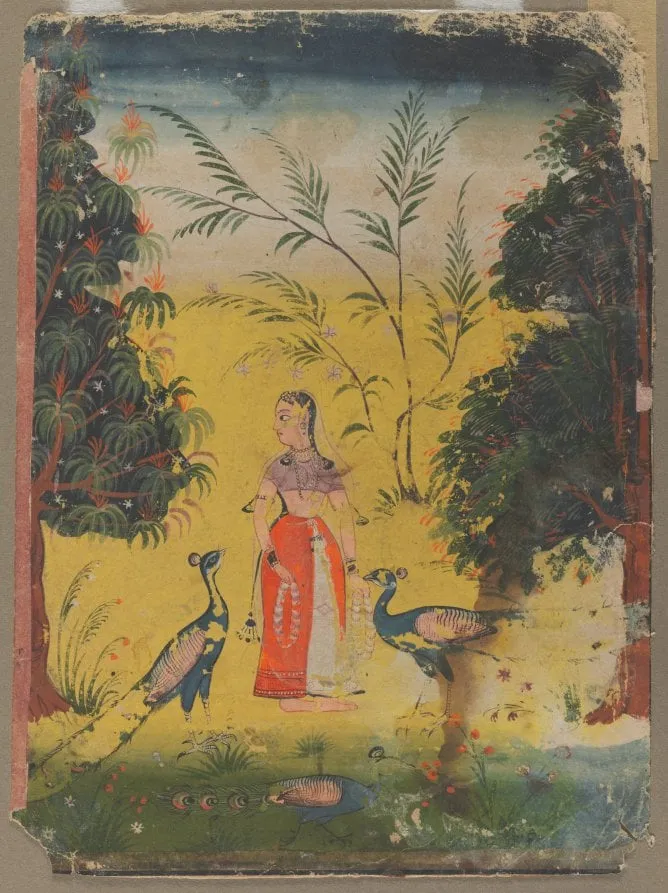
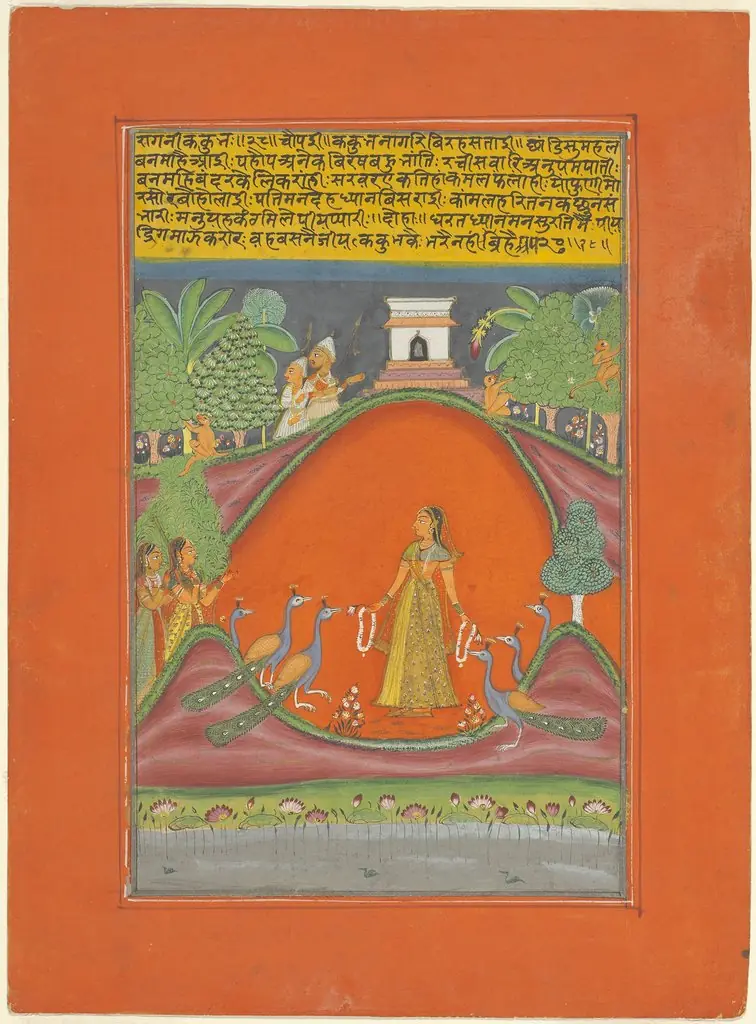
Kakubha Ragini is an unspecified painting by the Baroque artist Unknown. It dates from 1610 and is held in the collection of the Cleveland Museum of Art.
About this work
Overview
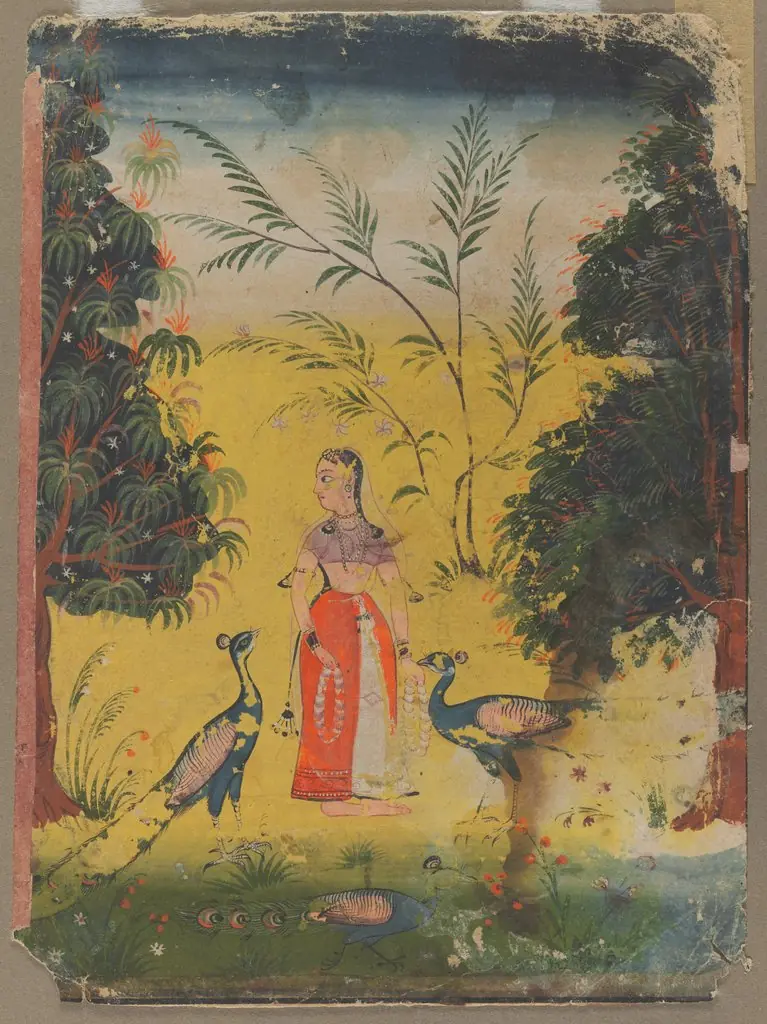
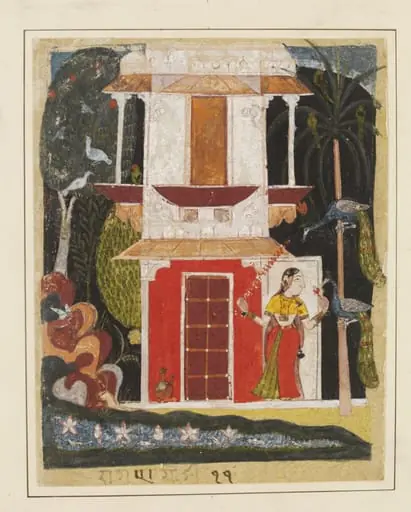
Her posture and gaze suggest quiet contemplation, while the surrounding flora and fauna—peacocks, berries, a small bird—create a serene, symbolic environment.
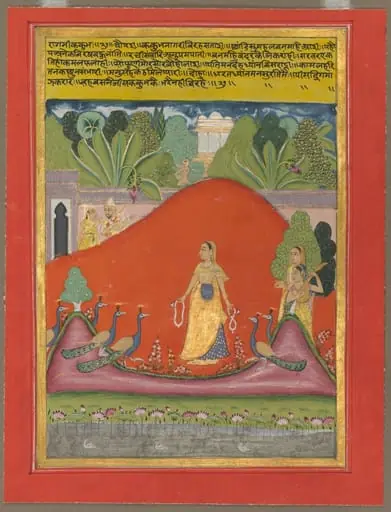
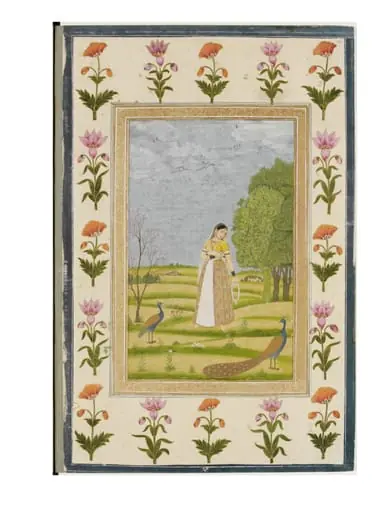
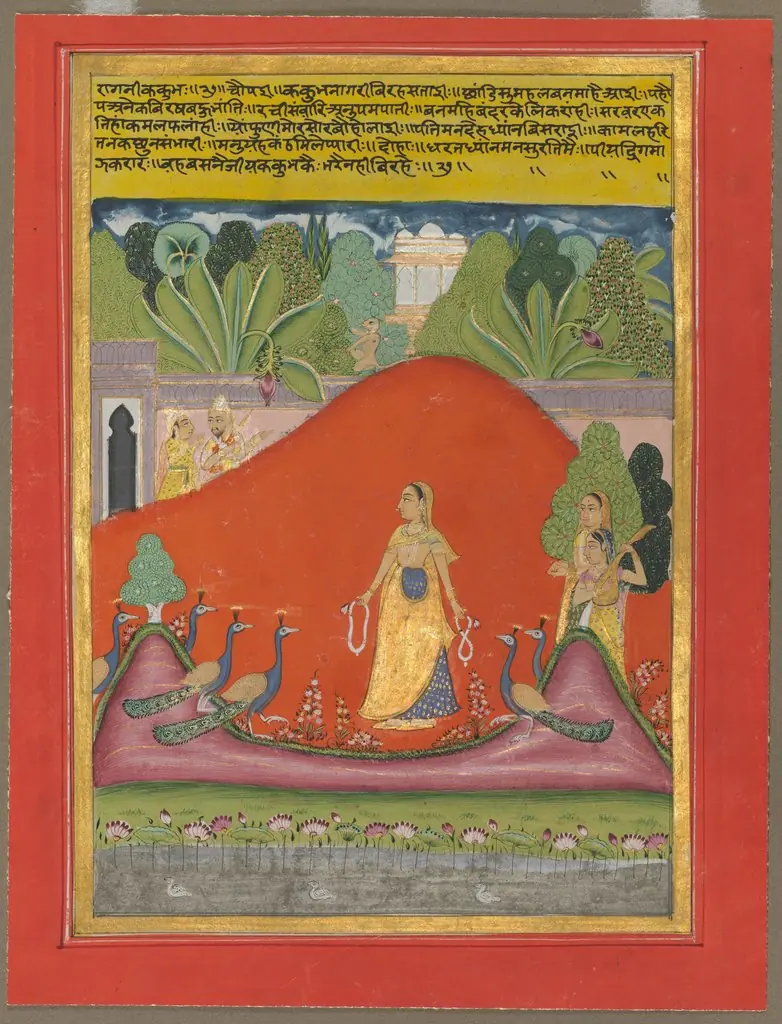
This painting belongs to the Kakubha Ragini series, a subset of Rajput miniature art tied to musical modes. It depicts a solitary woman in a vivid red garment, standing in a cultivated garden. Her posture and gaze suggest quiet contemplation, while the surrounding flora and fauna—peacocks, berries, a small bird—create a serene, symbolic environment. The palette is rich but shows signs of age, with pigments faded along the edges.
Subject & Meaning
The woman is likely an embodiment of the Kakubha raga, traditionally associated with late afternoon and a mood of longing. Her fan, a symbol of grace and cooling repose, complements the tranquil setting. Peacocks, often linked to beauty and seasonal cycles, and the red berries may allude to ripeness and fleeting time. The scene evokes emotional resonance rather than narrative action, aligning with the raga’s introspective character.
Technique & Style
Executed in opaque watercolor on paper, the work uses bold, flat areas of color with fine linear detailing, especially in the dress patterns and peacock feathers. The background employs a simplified landscape of yellow, green, and blue, typical of Rajput conventions. Though the pigments have faded, the original vibrancy is evident in the deep blues and greens of the birds’ plumage and the intensity of the red dress.
History & Provenance
The painting likely originated in a Rajput court workshop during the late 17th or early 18th century, possibly in Rajasthan or the Punjab Hills. Such ragini illustrations were compiled into albums for royal collections, used for both aesthetic and spiritual contemplation. Its current condition suggests it has been handled and displayed over centuries, with pigment loss common in works of this era.
Context
Ragini paintings emerged from the fusion of Indian musical theory and visual art, where each raga was personified through a scene or figure. Unlike European Baroque drama, Rajput miniatures favored stillness and symbolic detail. This work reflects a devotional and poetic tradition, where nature and human form harmonize to evoke a specific emotional state tied to time and music.
Legacy
The Kakubha Ragini series remains a key example of how Indian miniature painting translated abstract musical concepts into visual form. These works influenced later regional styles and are now studied for their nuanced expression of emotion through composition and symbolism. Their preservation offers insight into pre-colonial Indian aesthetics and the role of art in spiritual practice.
Artist & collection

 Domestic Scene
 Giacomo and Cardinal Marco, investing Andrea, Abbot of San Zeno, with his Benefice
 The Nymph of Fontainebleau
 Portrait of a Woman
 Madonna and Child with Saints in the Enclosed Garden
 Venus and Minerva
 Family Group of Four on Sofa
 Wall painting from Room H of the Villa of P. Fannius Synistor at Boscoreale