Artwork
Kali puja
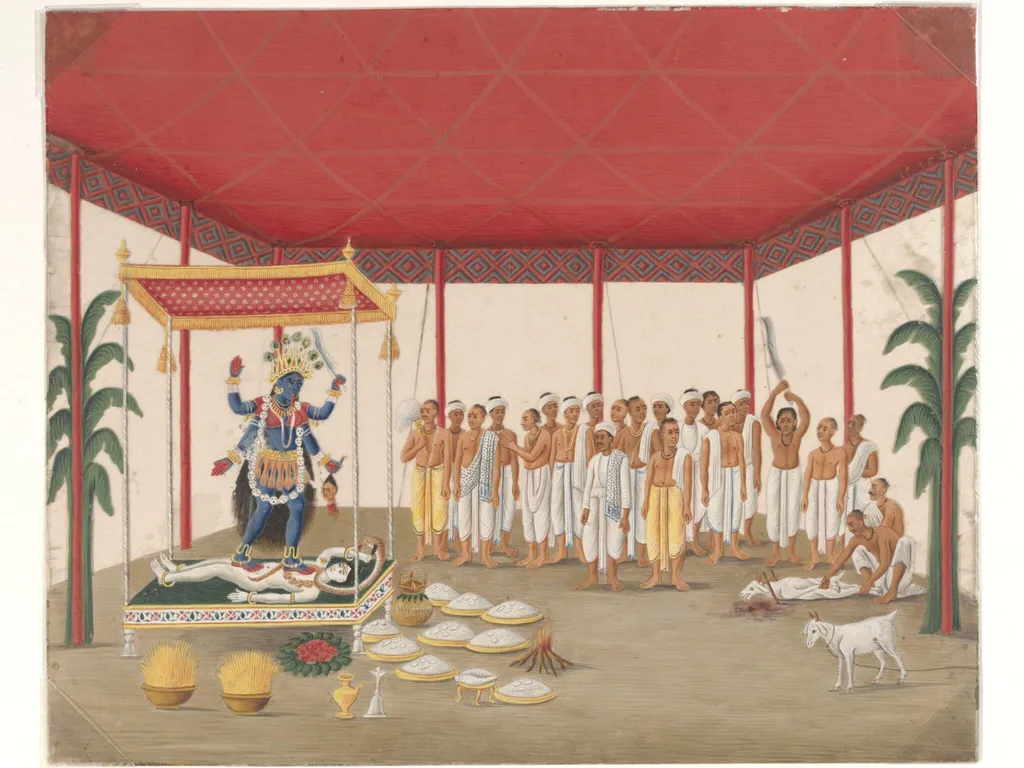
Kali puja is a paint painting by the Impressionist artist Unknown. It dates from 1860 and is held in the collection of the Victoria and Albert Museum.
About this work
Overview
The composition is structured yet lively, with figures arranged in attentive postures, suggesting a moment of communal worship.
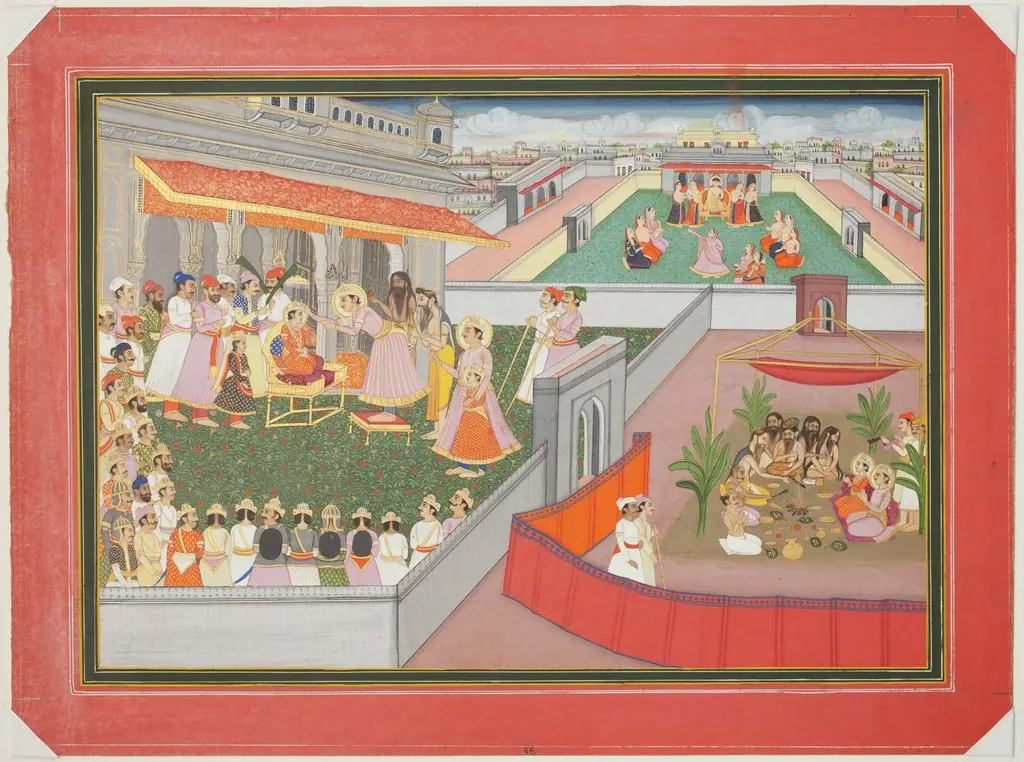
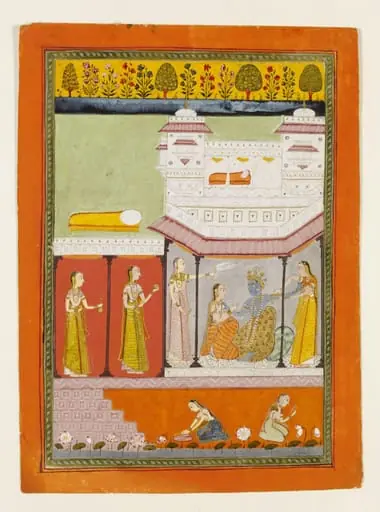
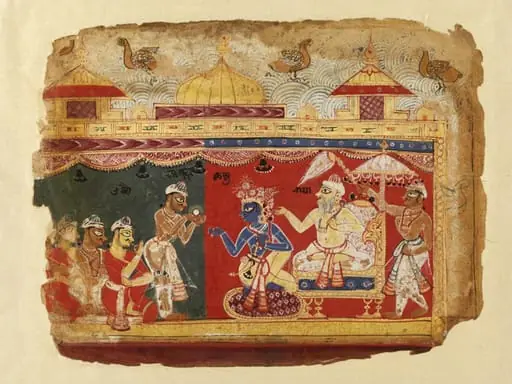
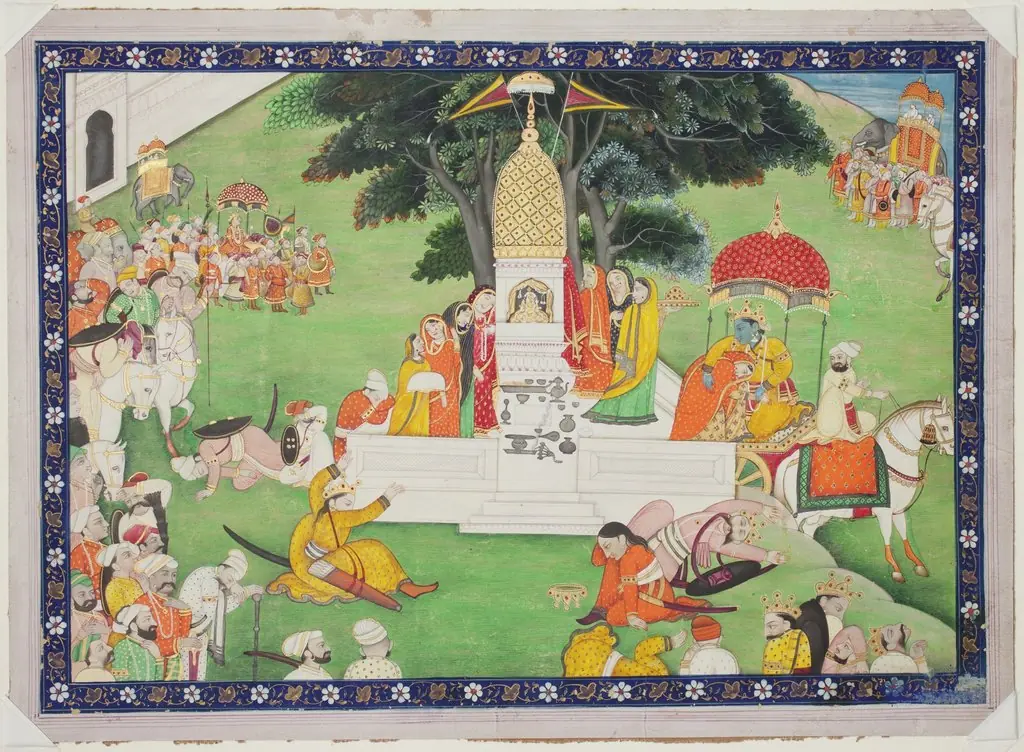
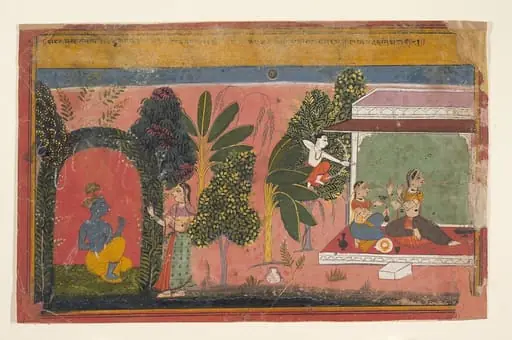
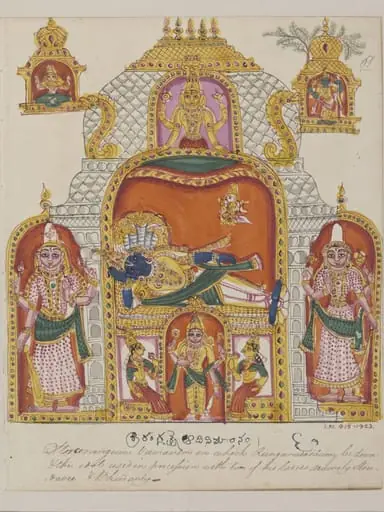
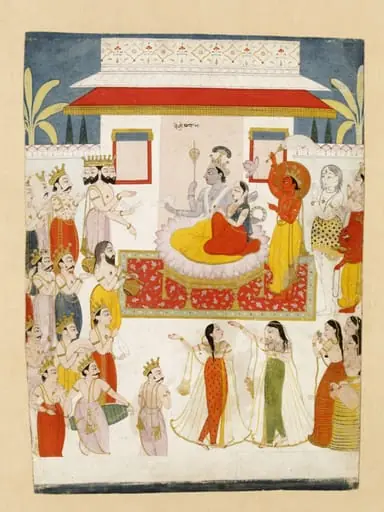
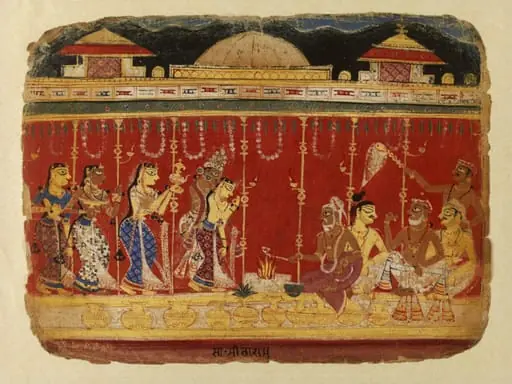
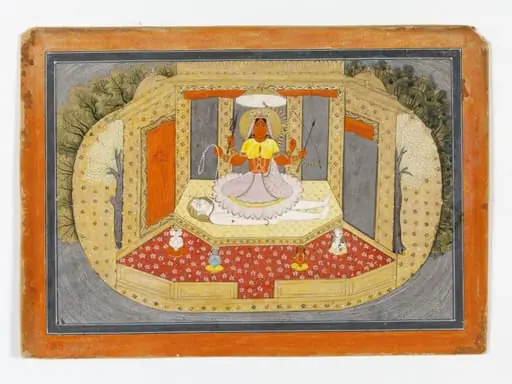
This painting captures a ritual observance of Kali Puja, a Hindu devotional practice honoring the goddess Kali. The scene unfolds within a vividly colored pavilion, where devotees gather around a central image of the deity. The composition is structured yet lively, with figures arranged in attentive postures, suggesting a moment of communal worship. Bold outlines and saturated hues define the space, emphasizing the sacred nature of the event without ornamental excess.
Subject & Meaning
The central figure is Kali, depicted with multiple arms and a dark blue complexion, standing atop the recumbent form of Shiva, symbolizing the triumph of dynamic energy over passive consciousness. A goat, positioned nearby, awaits ritual sacrifice, a traditional offering meant to appease the goddess. The devotees, dressed in simple white and yellow garments, engage in quiet reverence, reflecting the solemnity and spiritual focus of the ceremony.
Technique & Style
The artist employs flat planes of intense color and strong, clean contours to define forms, characteristic of regional Indian painting traditions. There is no attempt at perspective or naturalistic shading; instead, spatial depth is suggested through layered placement of figures and objects. The use of red for the pavilion, blue for the deity, and white for garments creates a symbolic palette, reinforcing spiritual contrasts and ritual clarity.
History & Provenance
This work likely originates from eastern India, where Kali worship is especially prominent, possibly from Bengal or Odisha during the 19th century. It was collected by British colonial officials or missionaries and later entered the Victoria and Albert Museum’s holdings, where it remains part of a broader archive of South Asian religious art. Its preservation reflects early efforts to document indigenous devotional practices.
Context
Kali Puja, often celebrated during Diwali or in autumn, is a time when devotees seek protection and spiritual power through ritual offerings. This painting reflects local practices where temples or home altars become focal points for communal worship. The inclusion of sacrificial animals and specific ritual objects aligns with textual and oral traditions of Tantric Hinduism, emphasizing devotion through action and symbolism.
Legacy
The painting serves as a visual record of a living religious tradition, preserving the aesthetics and rituals of 19th-century Hindu devotion. It contributes to scholarly understanding of how regional art forms conveyed theological concepts without textual reliance. Today, it remains a reference point in museum collections for studying the intersection of faith, performance, and visual culture in South Asia.
Artist & collection

 Domestic Scene
 Giacomo and Cardinal Marco, investing Andrea, Abbot of San Zeno, with his Benefice
 The Nymph of Fontainebleau
 Portrait of a Woman
 Madonna and Child with Saints in the Enclosed Garden
 Venus and Minerva
 Family Group of Four on Sofa
 Wall painting from Room H of the Villa of P. Fannius Synistor at Boscoreale