Artwork
Kalki, the tenth and last avatara of Vishnu
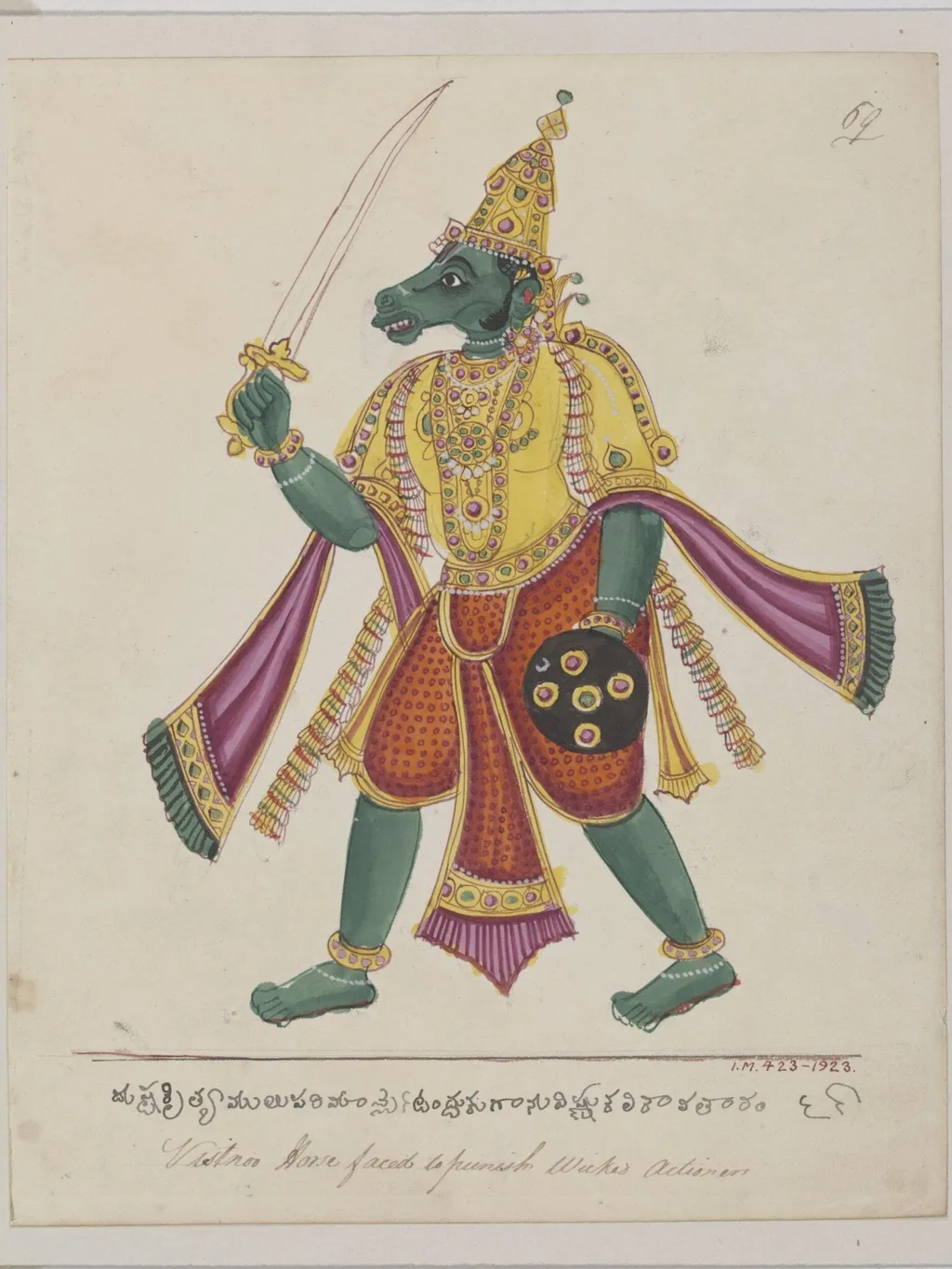
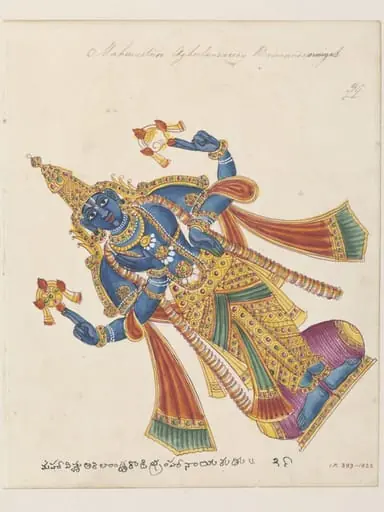
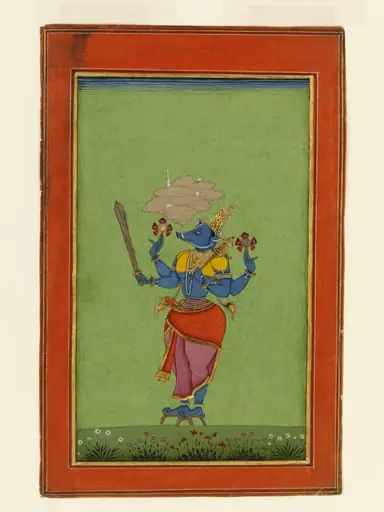
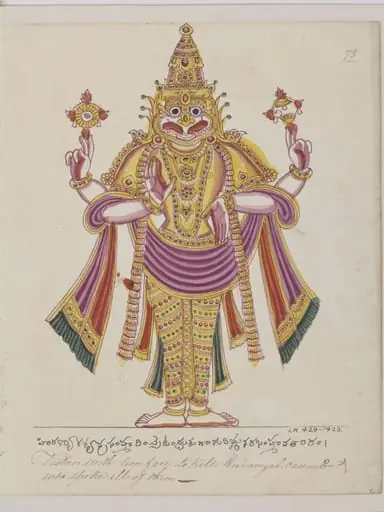
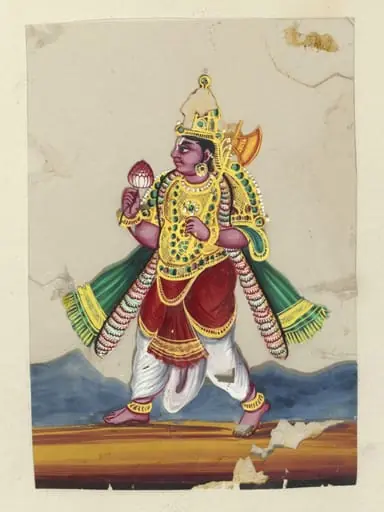
Kalki, the tenth and last avatara of Vishnu is a paint painting by the Romanticist artist Unknown. It dates from 1825 and is held in the collection of the Victoria and Albert Museum. This painting portrays Kalki, the final incarnation of the Hindu deity Vishnu, as envisioned in eschatological tradition.
About this work
Overview
This painting portrays Kalki, the final incarnation of the Hindu deity Vishnu, as envisioned in eschatological tradition.
This painting portrays Kalki, the final incarnation of the Hindu deity Vishnu, as envisioned in eschatological tradition. The figure is rendered with vivid color and ornate adornment, standing out against a minimal background. Though stylistically rich, the work diverges from classical iconography by depicting Kalki with a horse’s head rather than a human form mounted on a horse, suggesting a symbolic or regional reinterpretation.
Subject & Meaning
Kalki is prophesied to arrive at the end of the Kali Yuga, the current age of moral decline, to restore dharma through decisive action. In this depiction, the sword signifies the destruction of corruption, while the round object in the left hand may represent a discus or cosmic wheel, symbols of divine order. The hybrid horse-headed form emphasizes the fusion of animal power and divine authority, reinforcing the theme of renewal through force.
Technique & Style
The figure is rendered with meticulous attention to textile detail and jewel-like embellishments, using bold, saturated hues. The green skin and vivid clothing contrast sharply with the plain background, directing focus to the figure. The horse’s head, elongated with a bit in its mouth, is rendered with a degree of naturalism unusual in traditional iconography, suggesting a blend of folk aesthetics and possibly colonial-era artistic influences.
History & Provenance
The painting’s origin and maker are undocumented, but its stylistic choices indicate it likely emerged from a regional Indian atelier in the 19th century. The Romanticism label appears inaccurate; the work aligns more closely with late Pahari or Rajasthani miniature traditions, which often incorporated symbolic hybridity. Its survival suggests it was commissioned for private devotion or courtly display rather than public worship.
Context
During the 18th and 19th centuries, Hindu iconography in courtly art increasingly absorbed local visual vocabularies, sometimes departing from textual norms. This depiction of Kalki reflects a period when regional artists reimagined divine figures through personal or communal lenses, blending myth with emerging aesthetic sensibilities. The plain background may reflect a shift toward portraiture-like presentation, common in patron-driven works of the era.
Legacy
This painting stands as a rare visual variant of Kalki, offering insight into how divine archetypes were adapted beyond canonical descriptions. It contributes to the broader understanding of how religious imagery evolved under changing patronage and cultural exchange. While not widely known, it remains a valuable artifact for studying the flexibility of Hindu iconography in pre-modern India.
Artist & collection

 Domestic Scene
 Giacomo and Cardinal Marco, investing Andrea, Abbot of San Zeno, with his Benefice
 The Nymph of Fontainebleau
 Portrait of a Woman
 Madonna and Child with Saints in the Enclosed Garden
 Venus and Minerva
 Family Group of Four on Sofa
 Wall painting from Room H of the Villa of P. Fannius Synistor at Boscoreale