Artwork
Vishnu and Laksmi
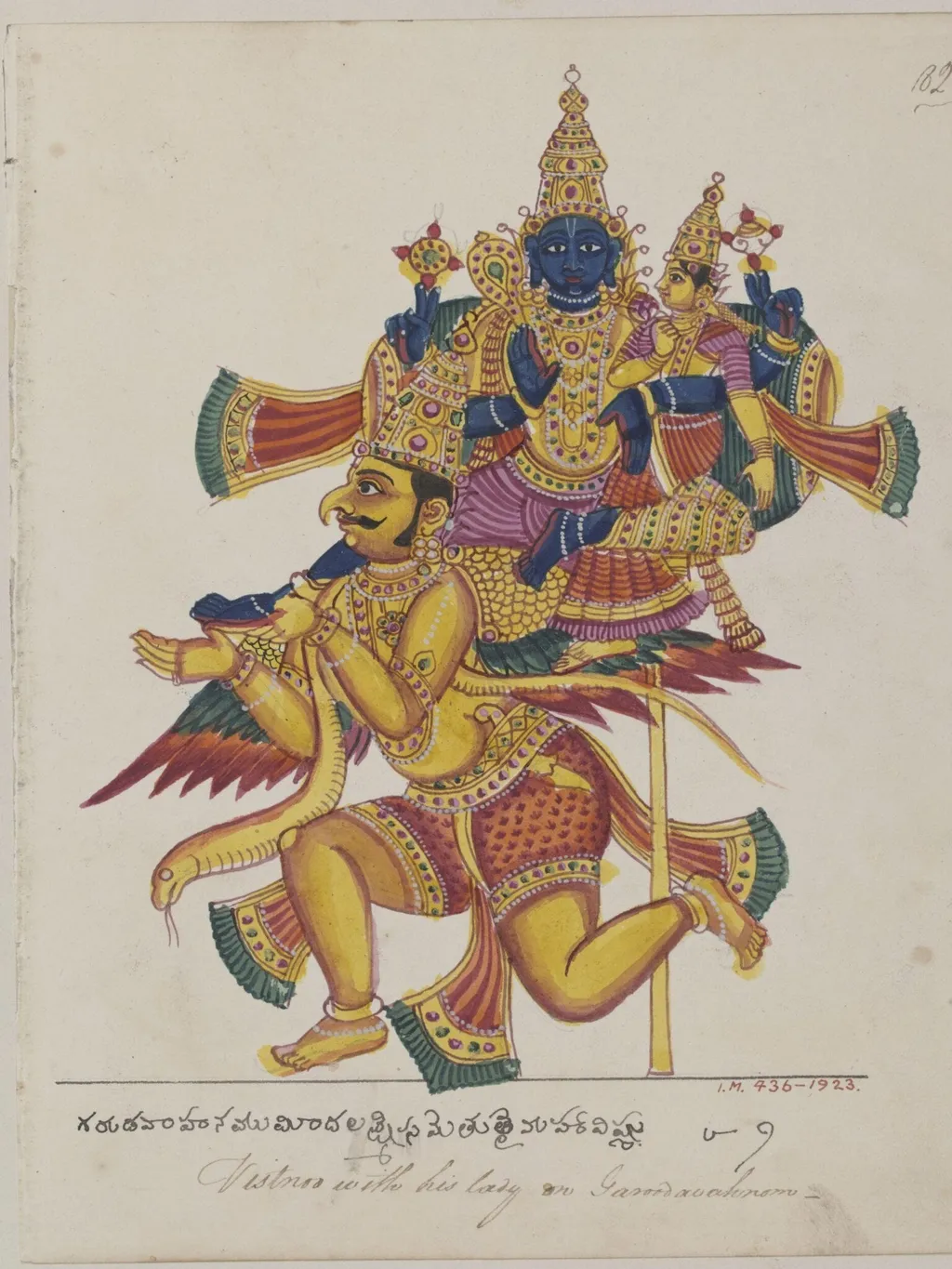
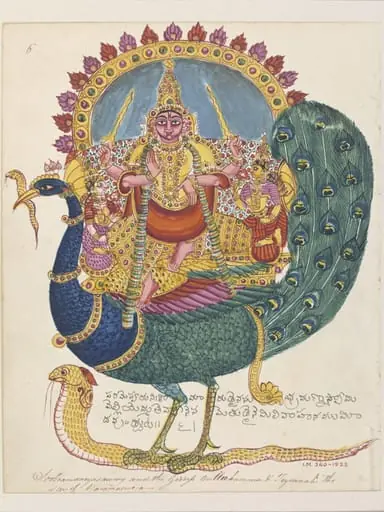
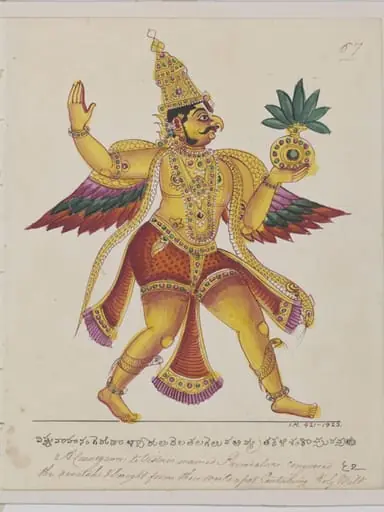
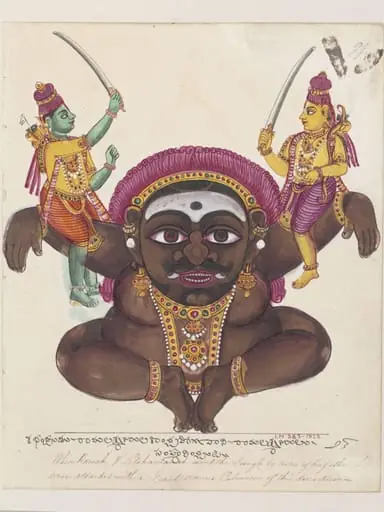
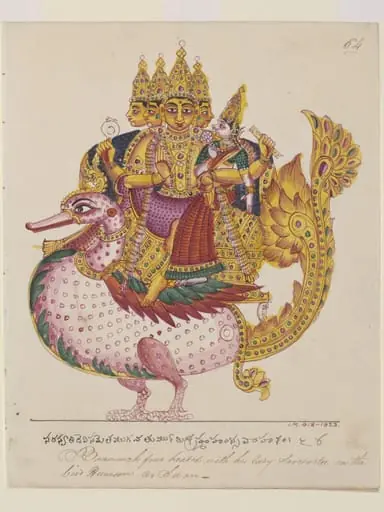
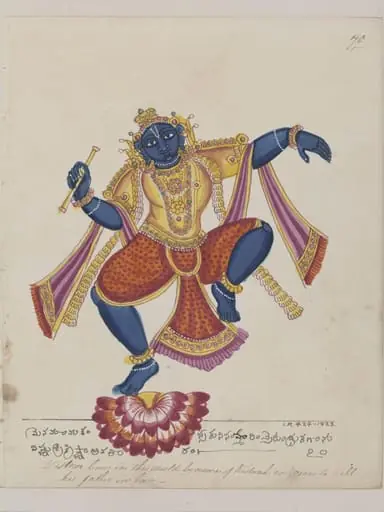
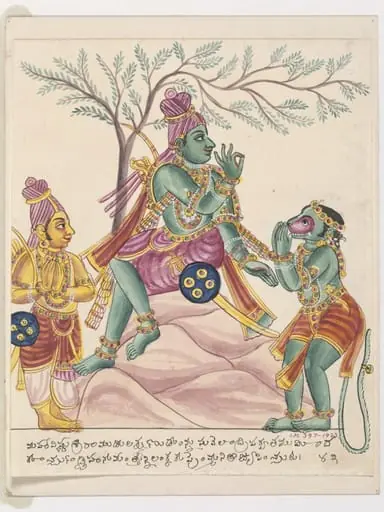
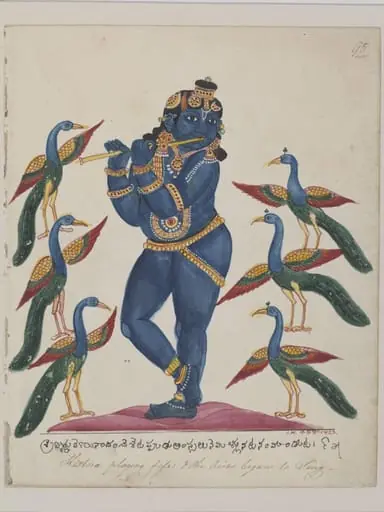
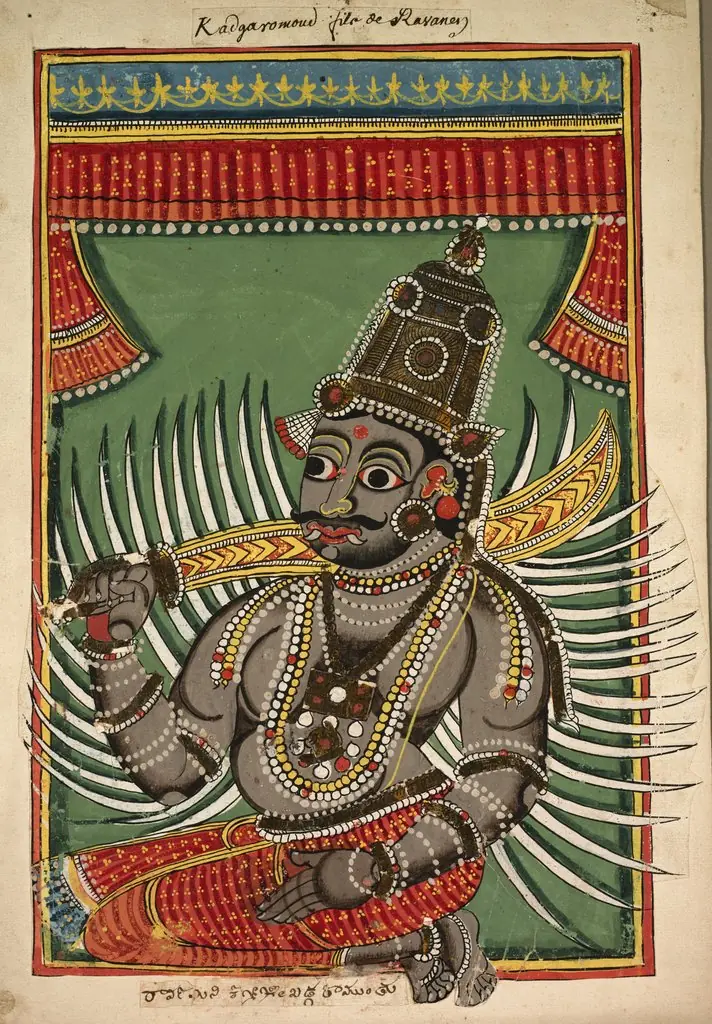
Vishnu and Laksmi is a paint painting by the Patna School of Painting artist Unknown. It dates from 1820 and is held in the collection of the Victoria and Albert Museum. This 1820 South Indian painting depicts three key figures from Hindu mythology: Vishnu, Lakshmi, and Garuda.
About this work
Overview
This 1820 South Indian painting depicts three key figures from Hindu mythology: Vishnu, Lakshmi, and Garuda. The scene shows them in a mounted pose, with distinctive visual attributes and symbolic objects.
Subject & Meaning
Vishnu, the preserver deity, is centrally positioned with four arms, holding unidentified objects that likely represent his powers. Lakshmi, the goddess of prosperity, accompanies him, while Garuda, the mythical eagle, serves as their mount, signifying swiftness and divine transport.
Technique & Style
Executed in a style characteristic of early 19th-century South Indian religious art, the painting features vibrant, patterned clothing with gold and red accents against a plain background. The use of bright yellow for Garuda’s feathers adds visual prominence.
History & Provenance
Created as part of a larger series of 100 Hindu deity depictions in 1820, the painting’s specific provenance before public collection is not detailed here. It is now associated with the Victoria and Albert Museum’s holdings.
Context
This work reflects the religious and artistic traditions of South India during the early 19th century, where such depictions were likely used for devotion or educational purposes within Hindu communities.
Legacy
As part of a comprehensive series, the painting contributes to the understanding and visualization of Hindu mythology in art historical and religious studies, accessible through institutions like the Victoria and Albert Museum.
Artist & collection

 Domestic Scene
 Giacomo and Cardinal Marco, investing Andrea, Abbot of San Zeno, with his Benefice
 The Nymph of Fontainebleau
 Portrait of a Woman
 Madonna and Child with Saints in the Enclosed Garden
 Venus and Minerva
 Family Group of Four on Sofa
 Wall painting from Room H of the Villa of P. Fannius Synistor at Boscoreale