Artwork
Preparation for the marriage of Mahmuda to the Young Vizier, from a Tuti-nama (Tales of a Parrot): Thirty-third Night
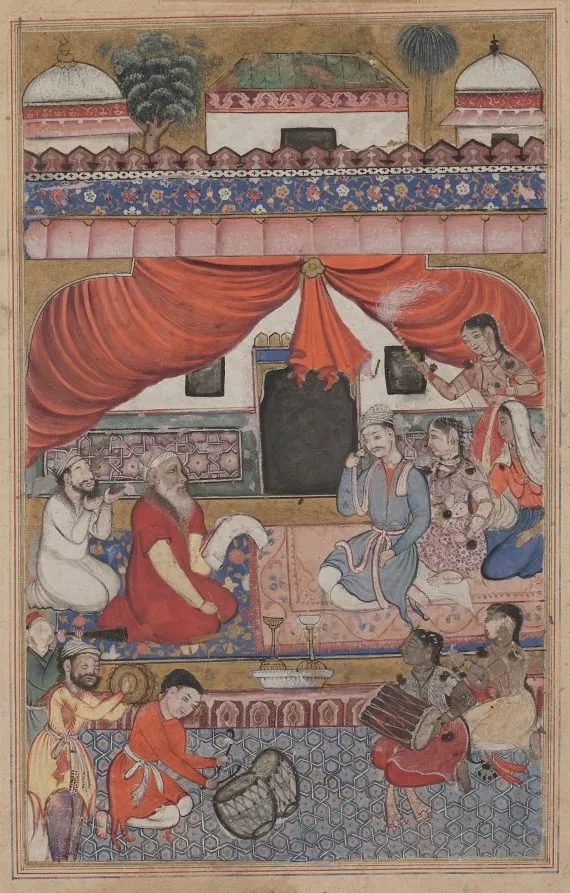
Preparation for the marriage of Mahmuda to the Young Vizier, from a Tuti-nama (Tales of a Parrot): Thirty-third Night is an unspecified painting by the Mughal Painting artist Unknown. It dates from 1560 and is held in the collection of the Cleveland Museum of Art.
About this work
The story here is bittersweet—Mahmuda is forced to marry someone she doesn’t love, while her sweetheart watches, heartbroken.
You see a busy palace scene: musicians at the bottom, a couple sitting under a canopy, and servants carrying gifts.
This painting comes from a book of parrot tales told to Emperor Akbar. The story here is bittersweet—Mahmuda is forced to marry someone she doesn’t love, while her sweetheart watches, heartbroken. The artist packed the scene with tiny details, like the patterns on the carpets and the expressions on the faces.
To see more art from this time, look up *Mughal India, court of Akbar (reigned 1556–1605)*.
Overview
The work illustrates a palace ceremony preparing for the union of Mahmuda and a young vizier, drawn from the thirty‑third night of the Tuti‑nama, a collection of parrot‑told stories for Emperor Akbar. The composition is divided into a bustling lower level of musicians and a higher tier where the betrothed couple sit beneath a decorative canopy, surrounded by attendants bearing gifts.
Subject & Meaning
The narrative captures a moment of forced marriage: Mahmuda, originally promised to her childhood lover Ayaz, is being wed to the vizier after her father, the grand vizier, consents to the political match. Ayaz watches from the sidelines, his expression conveying loss and sorrow, underscoring the tension between personal affection and courtly duty.
Technique & Style
The artist employs a densely populated scene, rendering intricate carpet patterns, elaborate costumes, and nuanced facial expressions with fine brushwork typical of Mughal court painting. The layered arrangement guides the eye from the lively musicians at the foreground to the solemn figures above, creating a narrative depth within a compact pictorial space.
History & Provenance
Created as an illustration for a manuscript of the Tuti‑nama, the painting was produced during the reign of Akbar (1556–1605), a period noted for the synthesis of Persian and Indian artistic traditions in imperial workshops. The manuscript was intended for royal consumption, reflecting the emperor’s interest in moral tales conveyed through vivid visual storytelling.
Context
The scene reflects the Mughal court’s preoccupation with arranged alliances and the role of marriage as a political instrument. By embedding a personal tragedy within a ceremonial setting, the image illustrates contemporary attitudes toward loyalty, authority, and the often‑tragic consequences of dynastic negotiations.
Artist & collection

 Domestic Scene
 Giacomo and Cardinal Marco, investing Andrea, Abbot of San Zeno, with his Benefice
 The Nymph of Fontainebleau
 Portrait of a Woman
 Madonna and Child with Saints in the Enclosed Garden
 Venus and Minerva
 Family Group of Four on Sofa
 Wall painting from Room H of the Villa of P. Fannius Synistor at Boscoreale
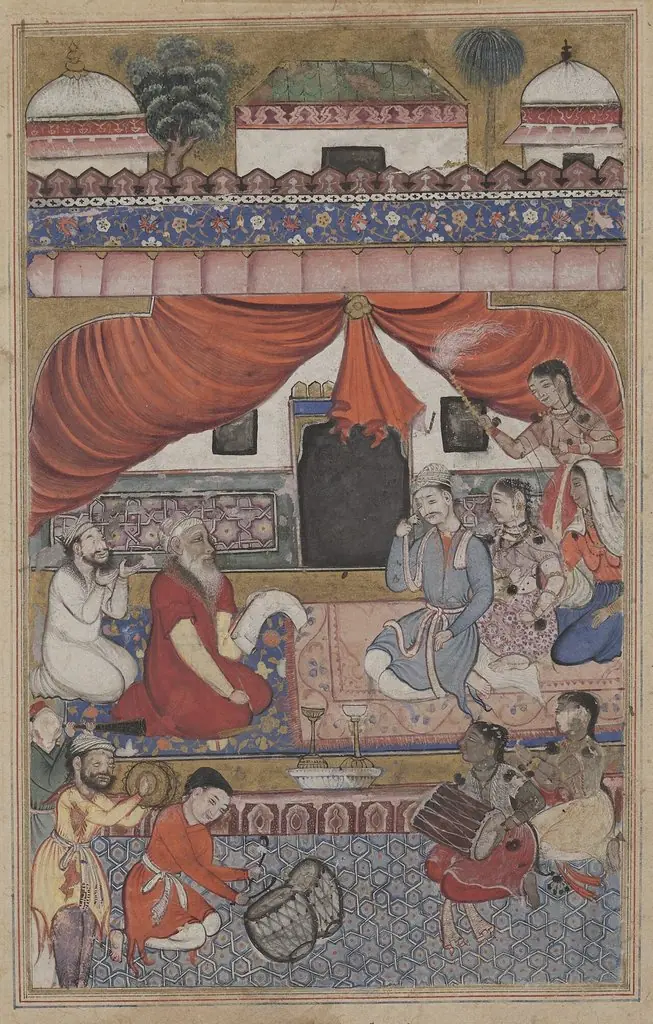 Preparation for the marriage of Mahmuda to the Young Vizier, from a Tuti-nama (Tales of a Parrot): Thirty-third Night
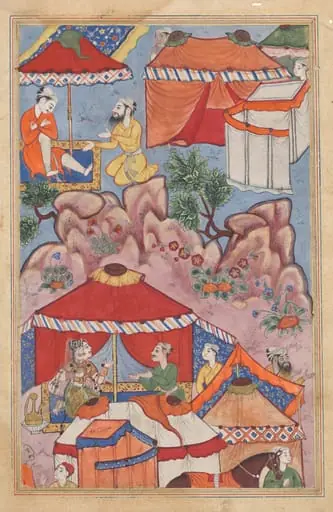 Bashir confides his love for Habbaza to an Arab friend, and sends him to her with a message, from a Tuti-nama (Tales of a Parrot): Twenty-fourth Night
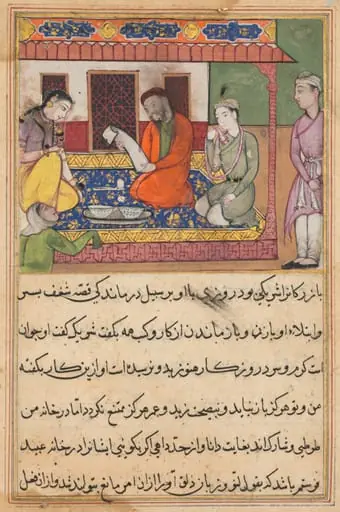 The marriage of ‘Ubaid, son of a merchant of Tirmiz, from a Tuti-nama (Tales of a Parrot): Forty-second Night
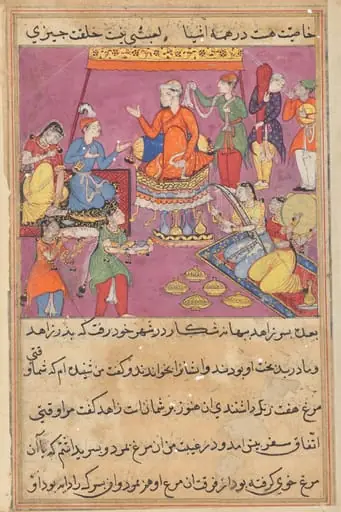 The king gives his daughter in marriage to the pious man’s son, from a Tuti-nama (Tales of a Parrot): Fifty-second Night
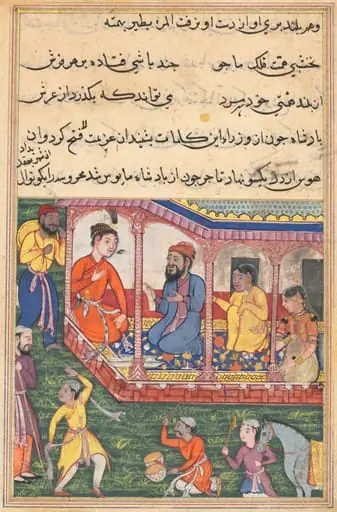 Mahrusa’s marriage to the prefect of the city, from a Tuti-nama (Tales of a Parrot): Thirty-sixth Night
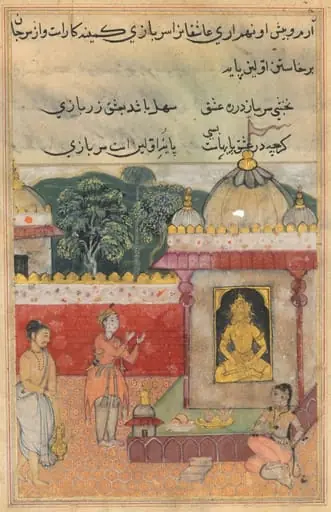 The Raja’s son vows to sever his head and offer it to the image if he is united with the princess he has seen in the temple, from a Tuti-nama (Tales of a Parrot): Thirty-fourth Night
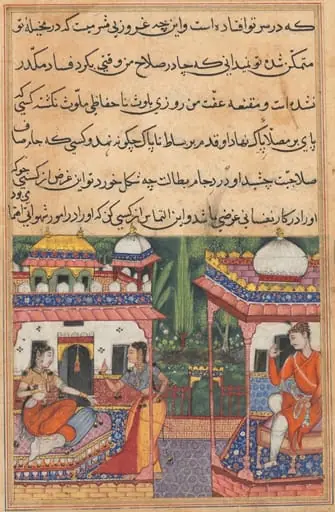 Kaiwan sends a message of love to Khurshid, wife of his brother Utarid who is away on a journey, from a Tuti-nama (Tales of a Parrot): Thirty-second Night