Artwork
Amitābha Triad
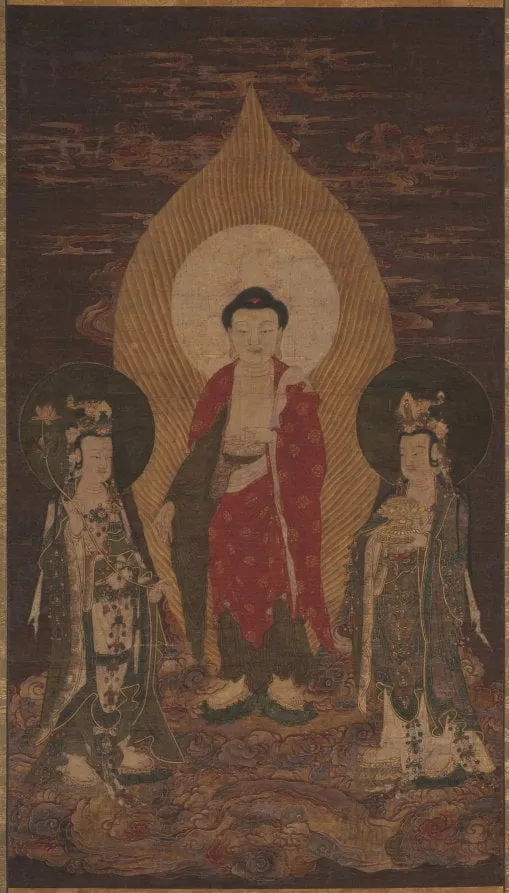
Amitābha Triad is an unspecified painting by the Ming dynasty painting artist Unknown. It dates from 1404 and is held in the collection of the Cleveland Museum of Art.
About this work
You see a tall hanging scroll: a golden Buddha floats on clouds, flanked by two holy figures in flowing robes.
The painting was once thought to be Korean, but scholars now believe it’s Chinese. The colors are still bright after 600 years, and the tiny Buddha in the crown is a clue—it’s a signature detail of Avalokiteśvara.
Look up china, ming dynasty (1368–1644) to see more scrolls like this.
Overview
Amitābha Triad is a Buddhist painting on a hanging scroll, depicting a celestial scene with Buddha Amitābha and two attendant bodhisattvas amidst clouds and light.
Subject & Meaning
The central figure is Amitābha, flanked by Avalokiteśvara, identifiable by a miniature Amitābha in their crown, and Mahāsthāmaprāpta, holding a flower vase. The figures are surrounded by swirling clouds and colorful light, evoking a divine apparition.
Technique & Style
The painting features fine details, firm red lines defining facial features, and flowing garments. A striped almond-shaped halo encircles Amitābha, contributing to the work's distinctive style.
History & Provenance
Initially thought to be a Korean Buddhist painting from the early Joseon period, the work is now believed to be Chinese, likely from the early Ming period, based on stylistic elements.
Artist & collection

 Domestic Scene
 Giacomo and Cardinal Marco, investing Andrea, Abbot of San Zeno, with his Benefice
 The Nymph of Fontainebleau
 Portrait of a Woman
 Madonna and Child with Saints in the Enclosed Garden
 Venus and Minerva
 Family Group of Four on Sofa
 Wall painting from Room H of the Villa of P. Fannius Synistor at Boscoreale
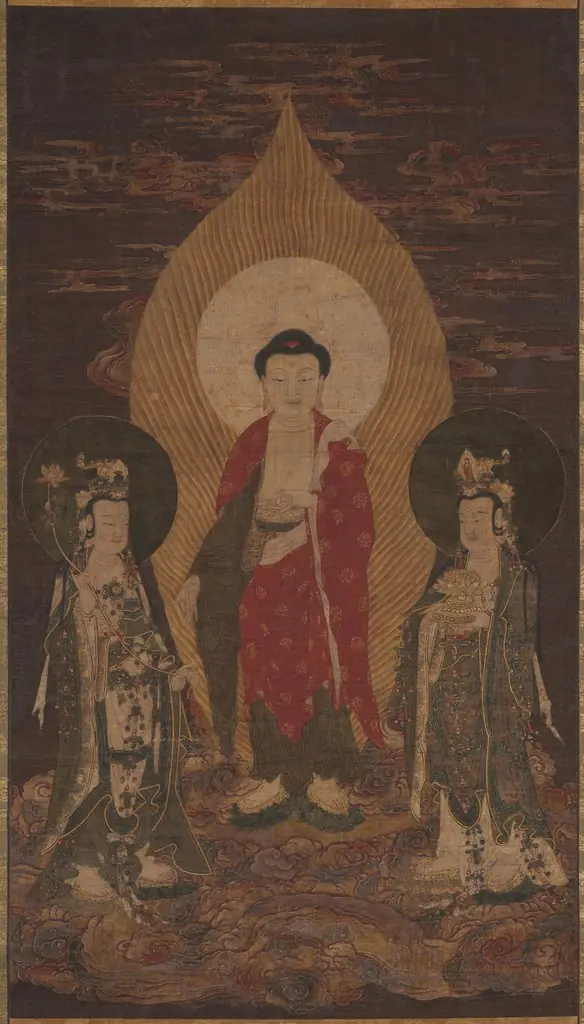 Amitābha Triad
 Kannon
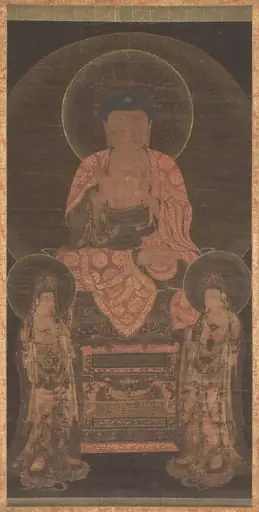 아미타삼존도 고려|阿彌陀三尊圖 高麗|Amitabha triad
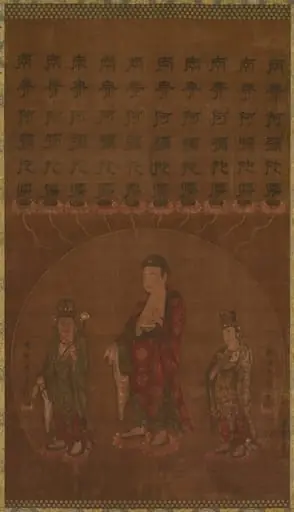 Buddha Amitābha with Two Attending Bodhisattvas
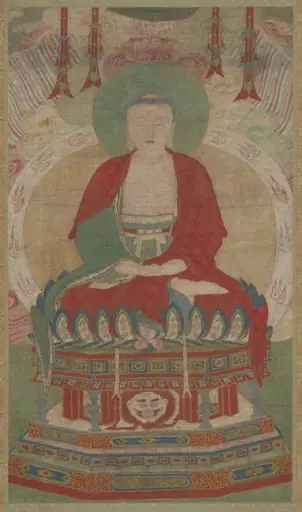 Seated Amitābha
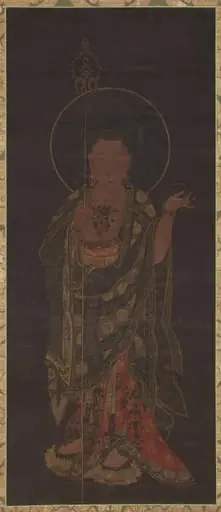 Standing Ksitigarbha
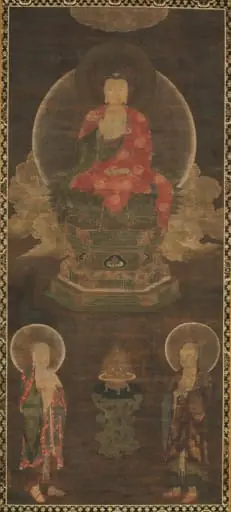 Shakyamuni Triad: Buddha Attended by Manjushri and Samantabhadra (Buddha)
 Shakyamuni Triad: Buddha Attended by Manjushri and Samantabhadra
 The Bodhisattvas of the Ten Stages in Attaining the Most Perfect Knowledge