Artwork
Kartikeya, from a Kalighat album
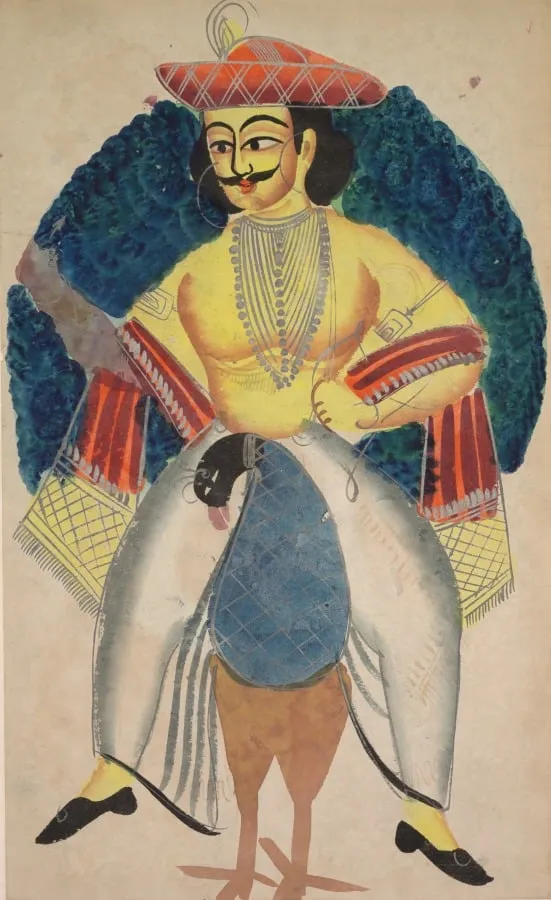
Kartikeya, from a Kalighat album is an unspecified painting by the Patna School of Painting artist Unknown. It dates from 1890 and is held in the collection of the Cleveland Museum of Art.
About this work
Overview
The work portrays the Hindu deity Kartikeya, traditionally the god of war and son of Shiva and Parvati, seated upon his emblematic mount, a peacock. The figure is rendered with a relaxed pose, one leg crossed over the other, and is surrounded by the fan of the bird’s plumage, which forms a luminous backdrop.
Subject & Meaning
While Kartikeya is historically associated with martial triumph over the demon Taraka, this image recasts him as a fashionable urban figure. The deity’s trimmed moustache, neatly arranged hair, and the draped shawl suggest a genteel, almost aristocratic bearing, blending mythic authority with contemporary notions of elegance.
Technique & Style
Executed in the characteristic Kalighat school of 19th‑century Kolkata, the painting combines bold outlines with flat areas of colour. The figure’s European‑style buckled shoes and the stylised halo created by the peacock’s tail illustrate the hybrid visual language that merged indigenous iconography with colonial aesthetic cues.
Historical Context
Produced in a period when Bengali artists responded to British presence by adapting traditional religious subjects to modern dress, the piece reflects the cultural syncretism of colonial Calcutta. By dressing a mythic warrior in Western attire, the work comments on the shifting social mores and the interplay between local devotion and imported fashion.
Artist & collection

 Domestic Scene
 Giacomo and Cardinal Marco, investing Andrea, Abbot of San Zeno, with his Benefice
 The Nymph of Fontainebleau
 Portrait of a Woman
 Madonna and Child with Saints in the Enclosed Garden
 Venus and Minerva
 Family Group of Four on Sofa
 Wall painting from Room H of the Villa of P. Fannius Synistor at Boscoreale
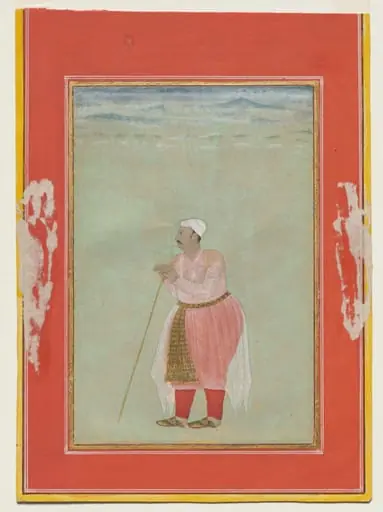 Portrait of Maharaja Rai Singh of Bikaner (reigned 1574–1612)
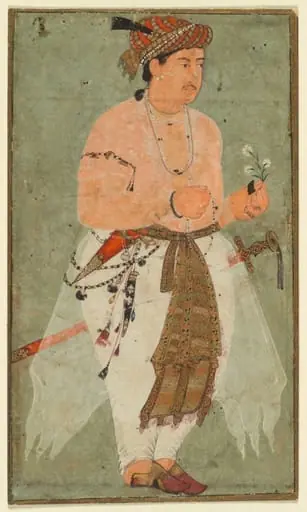 A Mughal Prince, Perhaps Danyal, Holding a Sprig of Flowers
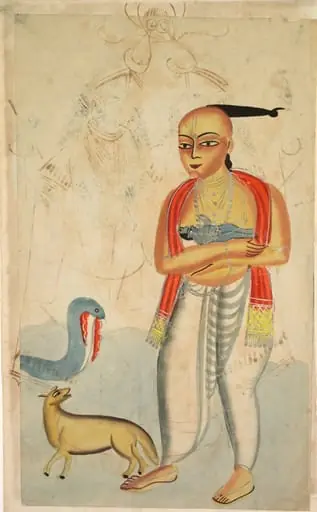 Vasudeva (Krishna's Father) Fleeing with Krishna Encounters a Cobra and a Jackal (verso), from a Kalighat album
 English Babu (Native Indian Clerk) Holding a Hookah
 Portrait of a man
 Portrait of Suraj Singh Rathor, Raja of Marwar and Maternal Uncle of Shah Jahan: A Page from the Prince Khurram Album
 Untitled
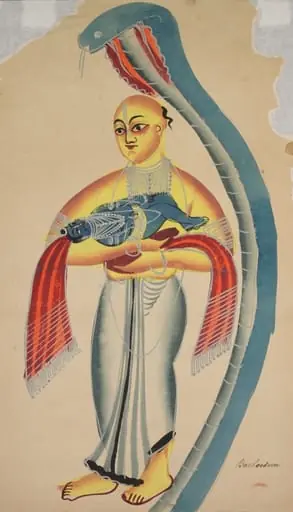 A Serpent Protects Vasudeva Taking His Infant Son Krishna to Safety