Artwork
Portrait of Suraj Singh Rathor, Raja of Marwar and Maternal Uncle of Shah Jahan: A Page from the Prince Khurram Album
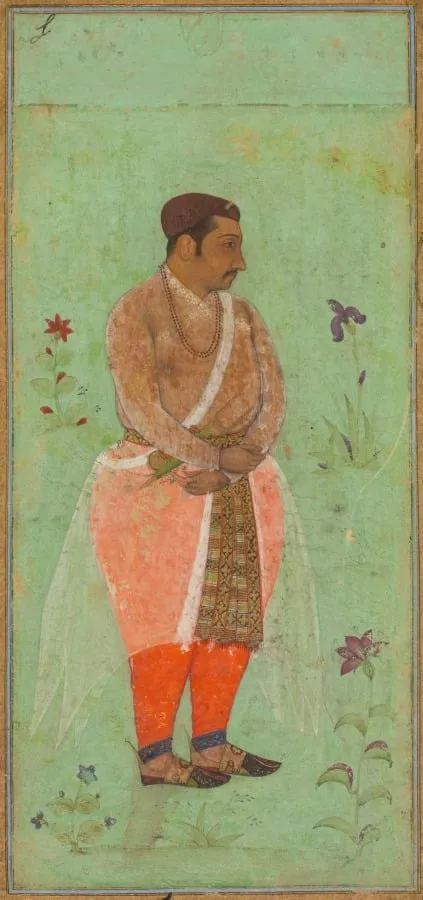
Portrait of Suraj Singh Rathor, Raja of Marwar and Maternal Uncle of Shah Jahan: A Page from the Prince Khurram Album is an unspecified painting by the Mughal Painting artist Bishandas. It dates from 1600 and is held in the collection of the Cleveland Museum of Art. The miniature portrays Suraj Singh Rathor, the maternal uncle of Prince Khurram—later Emperor Shah Jahan—rendered in a realistic manner.
About this work
The artist painted him so carefully that you can almost feel the soft muslin fabric and see the tired look in his eyes.
You see a man in a fine white tunic, gold jewelry, and a red turban, sitting cross-legged on a carpet.
This is Suraj Singh, uncle to the future Mughal emperor Shah Jahan. The artist painted him so carefully that you can almost feel the soft muslin fabric and see the tired look in his eyes. The portrait was chosen by Shah Jahan himself for a special album in 1612.
To see more portraits like this, look up Mughal court.
Overview
The miniature portrays Suraj Singh Rathor, the maternal uncle of Prince Khurram—later Emperor Shah Jahan—rendered in a realistic manner. He is seated cross‑legged on a carpet, dressed in a white, six‑pointed tunic of sheer muslin, a red turban, and gold ornaments that signal his high rank within the Mughal court.
Subject & Meaning
Suraj Singh was a Rajput prince from Marwar, linked to the Mughal dynasty through his sister, the third wife of Emperor Jahangir. His depiction underscores the political alliances forged by intermarriage between Hindu Rajput families and the Mughal imperial family, reflecting the early Mughal policy of religious tolerance and diplomatic integration.
Technique & Style
The artist employs delicate brushwork to differentiate the translucency of the muslin tunic from the sheen of gold jewelry, achieving a tactile illusion of fabric texture. Subtle modeling of the face captures a weary, contemplative expression, while the composition balances fine detail with a restrained background, characteristic of early 17th‑century Mughal portraiture.
Context
Created around 1612, the portrait was selected by Prince Khurram for inclusion in a personal album, a common practice among Mughal elites to document notable figures. Suraj Singh later died of natural causes during a Deccan campaign with Khurram in 1619, illustrating the martial responsibilities shared by Mughal and allied Rajput nobles.
History & Provenance
The miniature remained within the royal collection, passing from Prince Khurram’s album to later Mughal archives. Its survival offers insight into the visual culture of the period and the personal networks that shaped the empire’s political landscape.
Artist & collection
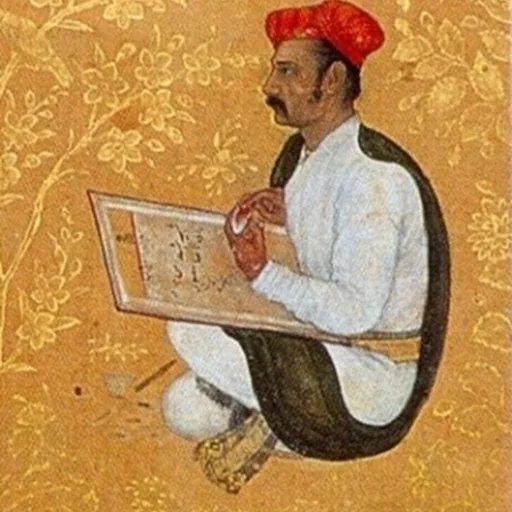
Artist
Bishandas, also Bishan Das or Bishn Das, was an Indian painter during the Mughal era.

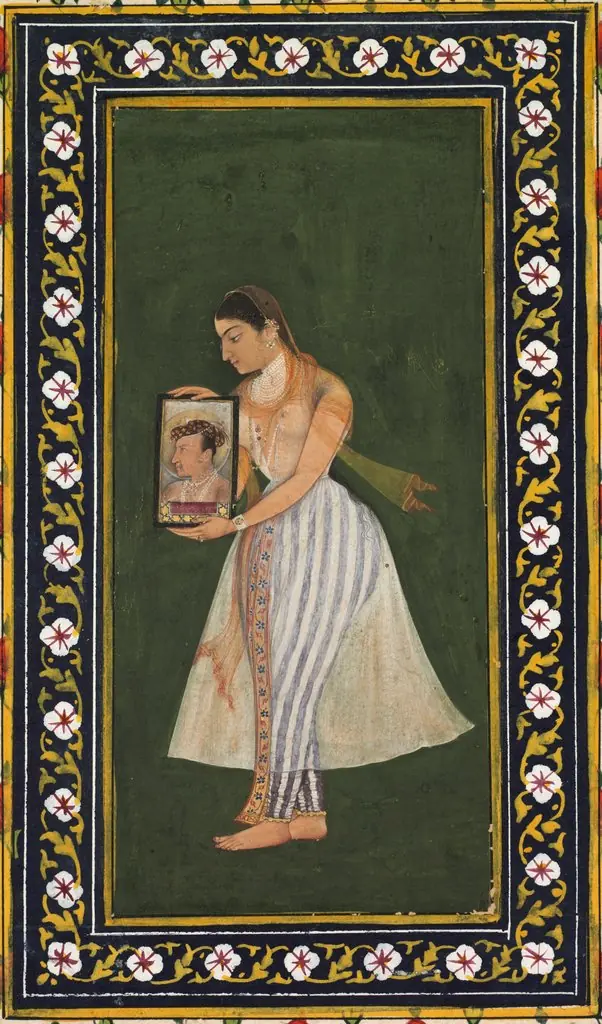
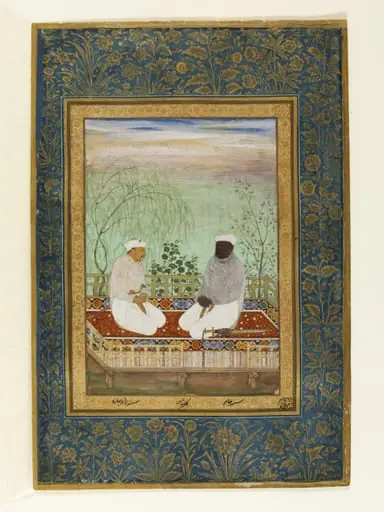
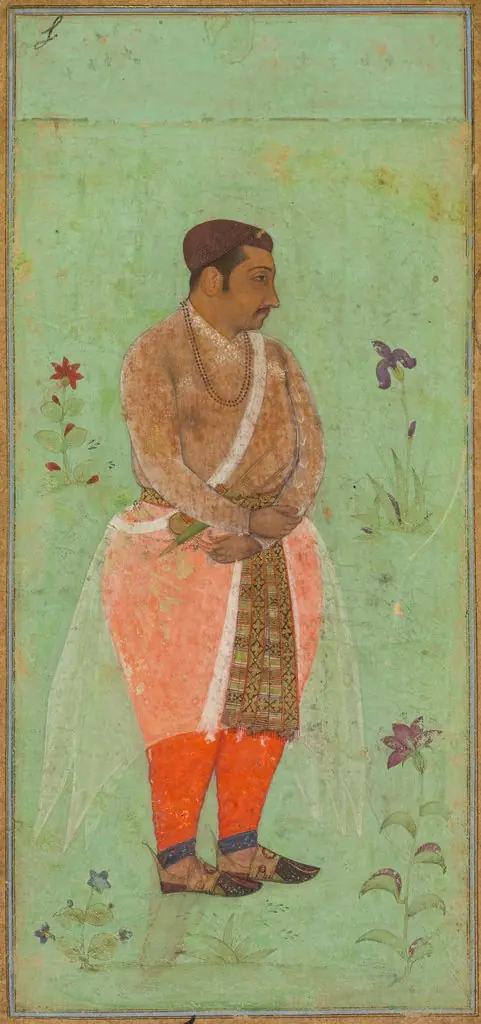 Portrait of Suraj Singh Rathor, Raja of Marwar and Maternal Uncle of Shah Jahan: A Page from the Prince Khurram Album
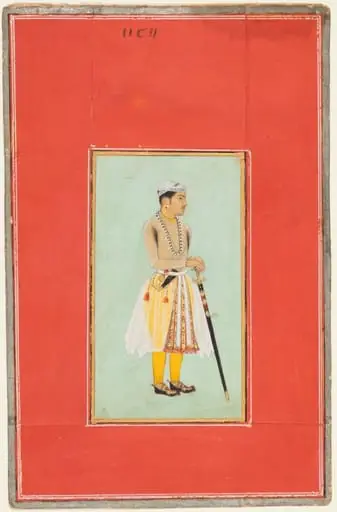 Portrait of Prince Sur Singh Rathor of Bikaner (1594–1631)
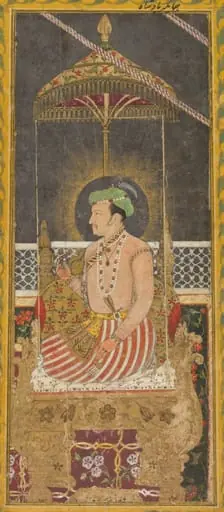 Posthumous portrait of Emperor Jahangir under a canopy (recto)
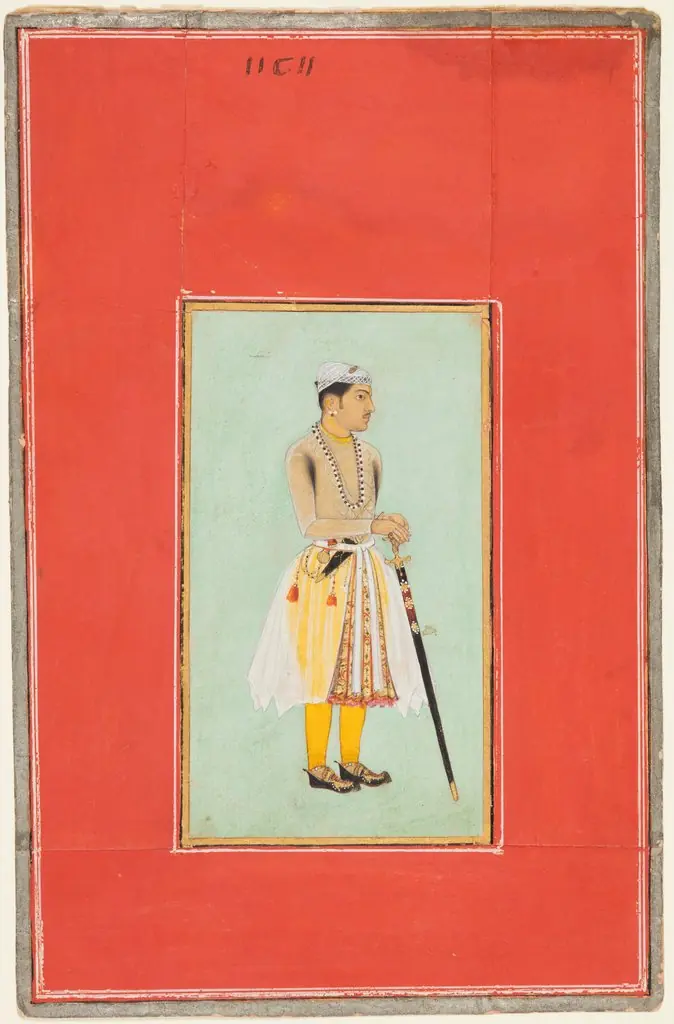 Portrait of Prince Sur Singh Rathor of Bikaner (1594–1631)
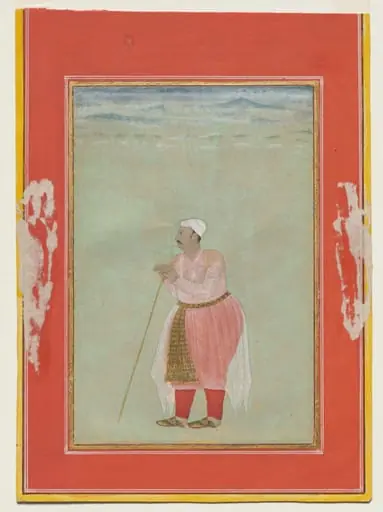 Portrait of Maharaja Rai Singh of Bikaner (reigned 1574–1612)
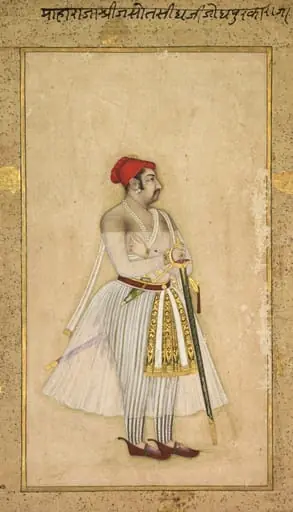 Jaswant Singh of Jodhpur (reigned 1635–1678)
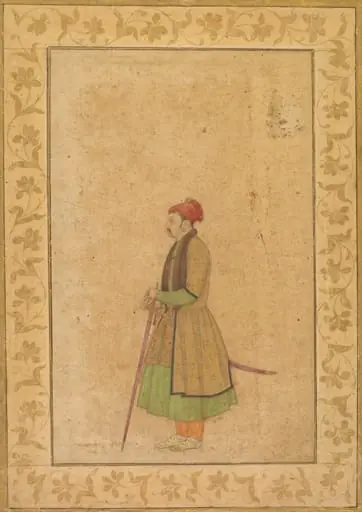 Portrait of Raja Ram Singh of Amber (r. 1667-1688) with a Deccan Sword (recto)
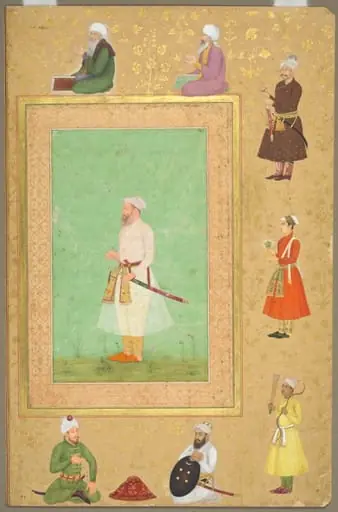 Portrait of Asaf Khan (1569–1641), from the Late Shah Jahan Album
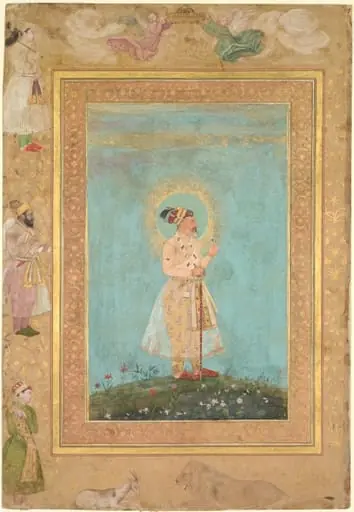 Shah Jahan holding a spinel and a long Deccan sword, from the Late Shah Jahan Album
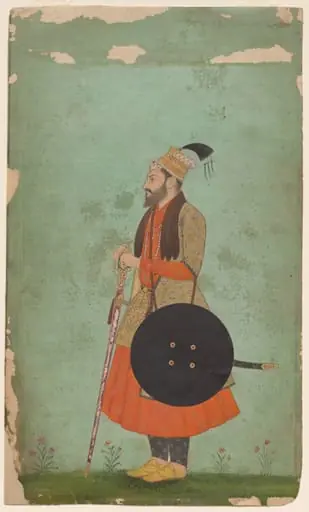 Portrait of Prince Murad Baksh (1624–1661)