Artwork
Kharak Singh
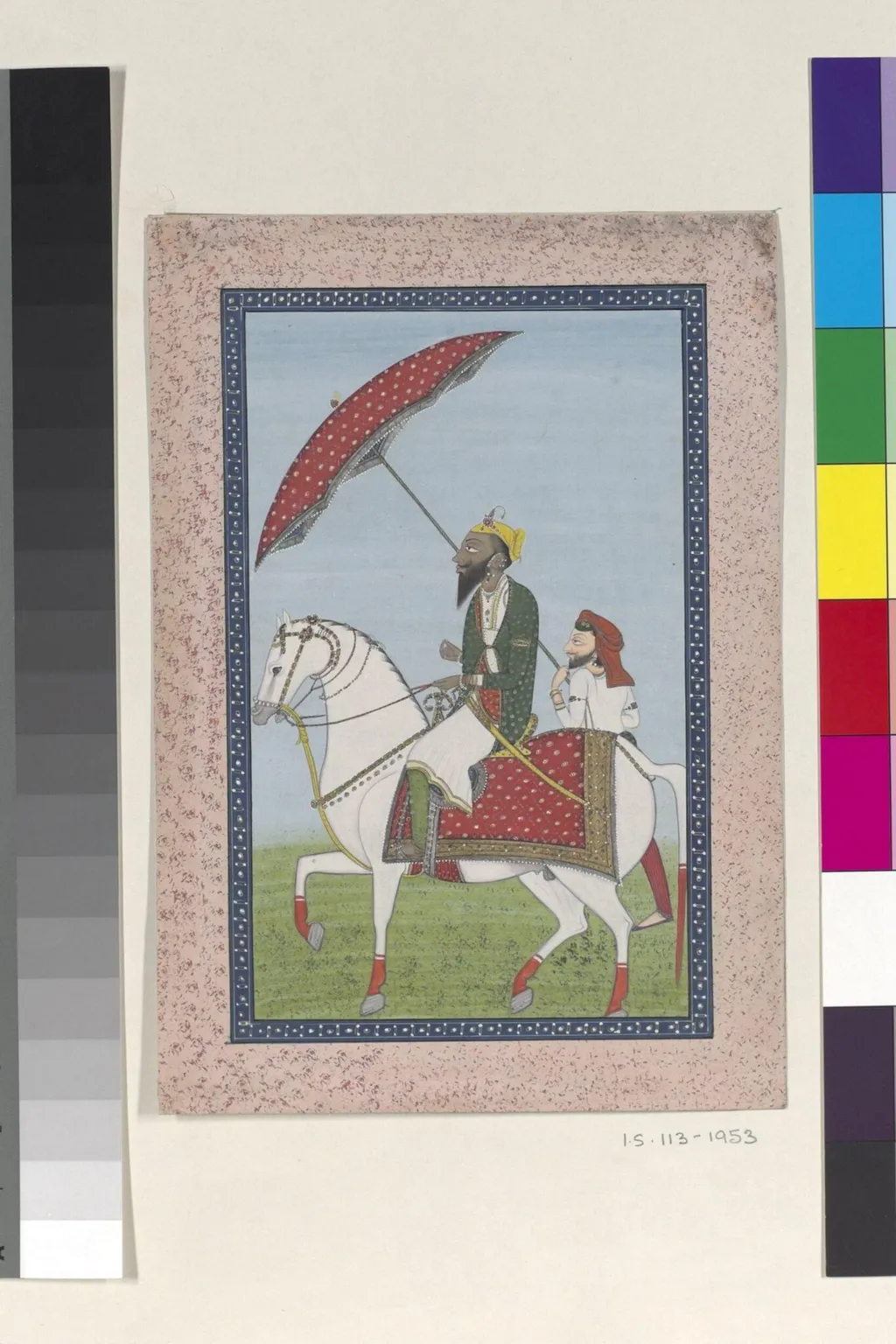
Kharak Singh is a paint painting by the Patna School of Painting artist Unknown. It dates from 1838 and is held in the collection of the Victoria and Albert Museum.
About this work
Overview
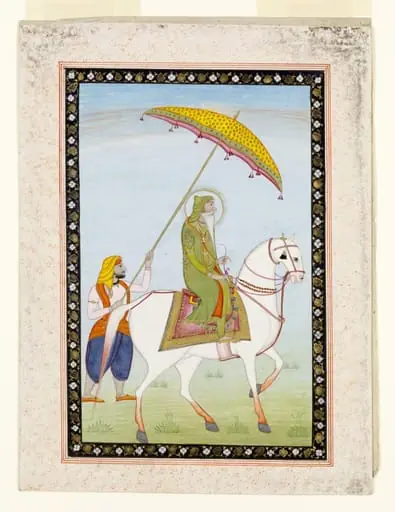
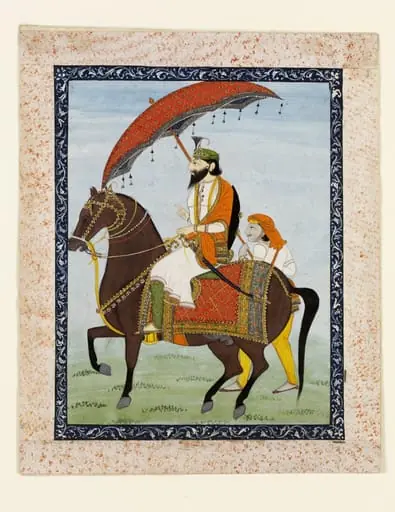
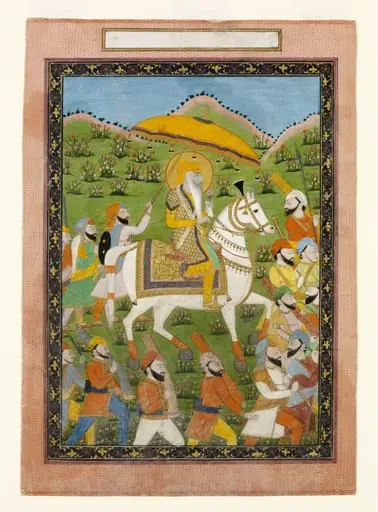
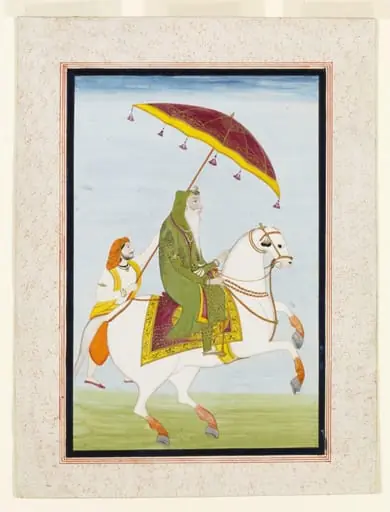
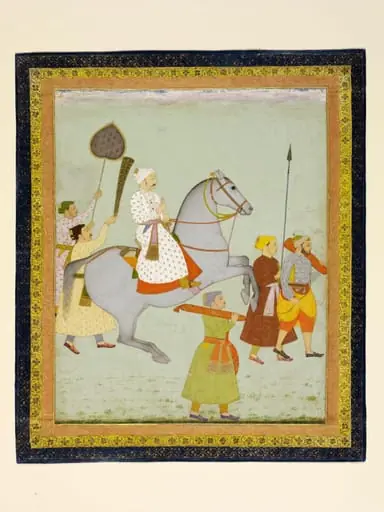
This portrait depicts Maharaja Kharak Singh, the eldest son of Ranjit Singh and brief successor to the Sikh Empire’s throne.
This portrait depicts Maharaja Kharak Singh, the eldest son of Ranjit Singh and brief successor to the Sikh Empire’s throne. Painted during or shortly after his reign, it captures him in formal attire befitting his status. The work entered the Victoria and Albert Museum’s collection in 1953, having previously belonged to Lord Auckland, Governor-General of India, who held office during Kharak Singh’s turbulent rule.
Subject & Meaning
Kharak Singh is portrayed with regal adornments, reflecting his position as ruler, yet his frail physical presence subtly underscores his historical vulnerability. Though raised in a martial environment and given early military responsibilities, his reign was overshadowed by court intrigue and declining health. The portrait thus serves as both a symbol of sovereignty and a quiet testament to his constrained authority under the influence of powerful ministers.
Technique & Style
The painting employs a refined, detailed style typical of Punjabi court art of the early 19th century. Rich pigments highlight the textures of silk, embroidery, and jewelry, while the background remains subdued to focus attention on the figure. The composition follows traditional portraiture conventions, emphasizing status through costume and posture rather than narrative context, aligning with regional conventions of royal representation.
History & Provenance
The painting was once owned by Lord Auckland, who served as Governor-General of India during Kharak Singh’s reign and the subsequent instability. Its presence in his collection suggests it may have been acquired during diplomatic exchanges or as a gift from the Sikh court. It passed through his family until 1953, when his great-nephew O.E. Dickinson donated it to the Victoria and Albert Museum, preserving its link to colonial-era South Asian history.
Context
Kharak Singh’s rule occurred amid the fragmentation of the Sikh Empire following Ranjit Singh’s death. Court factions, particularly the Dogra ministers led by Dhian Singh, manipulated succession and weakened royal authority. This portrait, created in a period of political decay, reflects the tension between the ceremonial role of the maharaja and the reality of his diminished power, illustrating how art could mask underlying instability.
Legacy
As one of the few surviving portraits of Kharak Singh, the painting offers a visual anchor to a reign marked by short-lived authority and internal strife. It contributes to the historical record of Sikh court culture during a transitional phase before British annexation. Its preservation in a major British institution underscores its role as a material witness to the complex interplay of Indian royalty and colonial administration.
Artist & collection

 Domestic Scene
 Giacomo and Cardinal Marco, investing Andrea, Abbot of San Zeno, with his Benefice
 The Nymph of Fontainebleau
 Portrait of a Woman
 Madonna and Child with Saints in the Enclosed Garden
 Venus and Minerva
 Family Group of Four on Sofa
 Wall painting from Room H of the Villa of P. Fannius Synistor at Boscoreale