Artwork
Khwaja Khizr
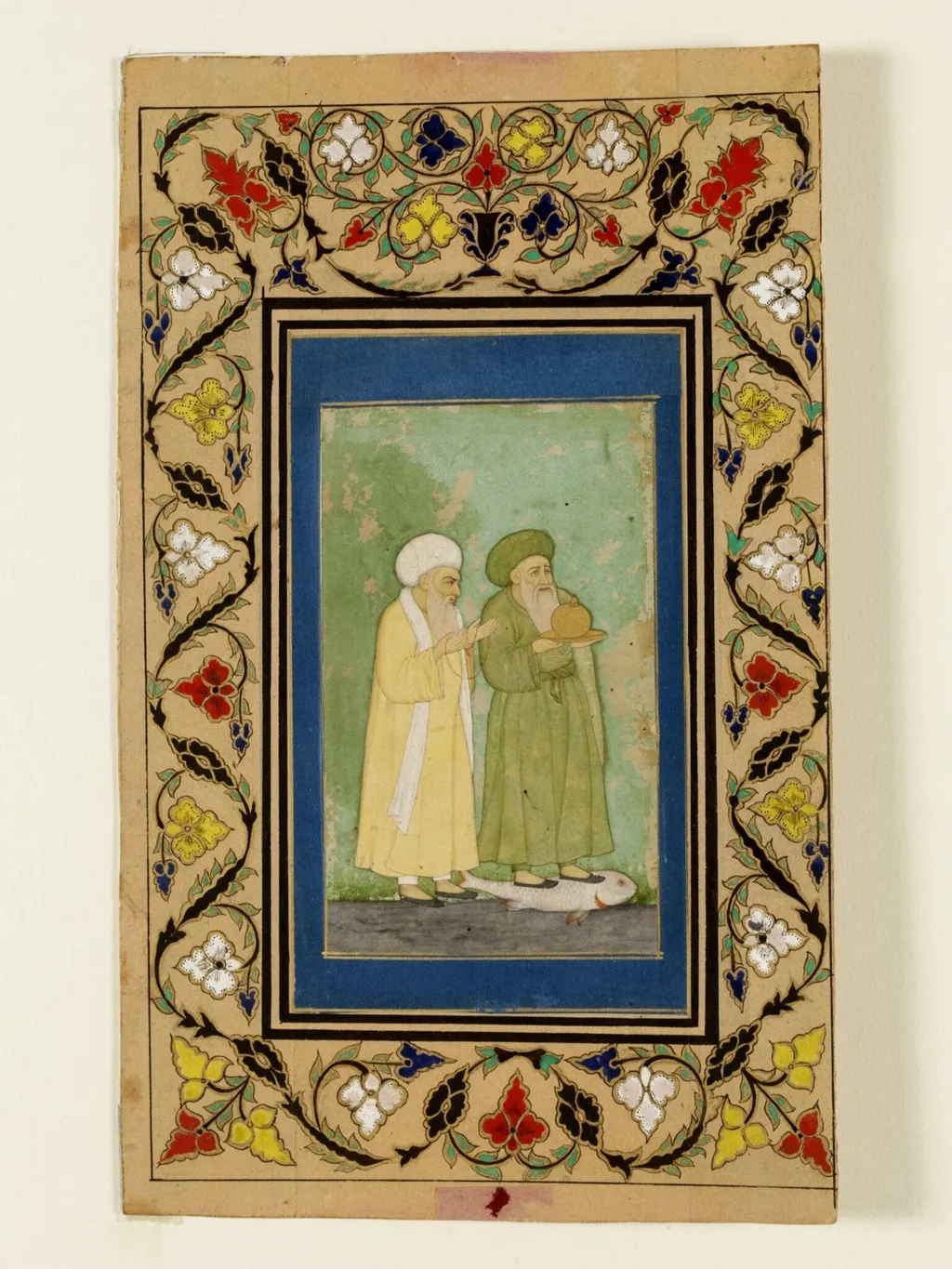
Khwaja Khizr is a paint painting by Unknown. It dates from 1750 and is held in the collection of the Victoria and Albert Museum.
About this work
Overview
This small-scale painting, created around 1750 using opaque watercolor and gold on paper, portrays two figures associated with Islamic tradition.
This small-scale painting, created around 1750 using opaque watercolor and gold on paper, portrays two figures associated with Islamic tradition. The composition is restrained, set against a minimal background, with emphasis on the figures and an ornate decorative border. The artist remains unidentified, and the work reflects the refined aesthetic of late Mughal or regional Indo-Persian manuscript illustration.
Subject & Meaning
The two figures are understood to represent Khwaja Khizr, a mystical guide often linked to water and immortality, and the prophet Elias. Khizr is traditionally shown seated on a fish, though here both stand side by side, engaged in quiet conversation. Their presence together suggests a spiritual encounter, possibly symbolizing divine guidance or the meeting of sacred lineages within Sufi lore.
Technique & Style
The figures are rendered in fine, precise brushwork with opaque pigments and touches of gold leaf, typical of manuscript illumination. Robes are defined by subtle tonal shifts rather than heavy modeling. The background is left largely unadorned, directing focus to the figures and the intricate border. The decorative frame features stylized floral vines in red, blue, and yellow, characteristic of Indo-Islamic manuscript decoration.
History & Provenance
The painting’s origin is undocumented, with no record of its commission or early ownership. It likely originated in a regional atelier in northern India during the 18th century, a period when devotional and mystical themes were commonly illustrated in portable formats. Its survival suggests it was valued as a devotional or collector’s object, though its path to institutional preservation is unknown.
Context
During the 18th century, as Mughal imperial patronage waned, regional courts and private collectors sustained the tradition of illustrated manuscripts. Works like this one, blending Persian iconography with Indian decorative sensibilities, reflect a continuing interest in spiritual narratives. Such images were often kept in personal albums, used for contemplation rather than public display.
Legacy
This painting contributes to a broader corpus of Indo-Islamic devotional art that preserved mystical themes through visual symbolism. Though not widely known outside specialized collections, it exemplifies the quiet endurance of manuscript traditions beyond imperial centers. Similar works can be found in institutions such as the Victoria and Albert Museum, where they inform ongoing studies of regional artistic exchange.
Artist & collection

 Domestic Scene
 Giacomo and Cardinal Marco, investing Andrea, Abbot of San Zeno, with his Benefice
 The Nymph of Fontainebleau
 Portrait of a Woman
 Madonna and Child with Saints in the Enclosed Garden
 Venus and Minerva
 Family Group of Four on Sofa
 Wall painting from Room H of the Villa of P. Fannius Synistor at Boscoreale
 Saint Cecilia
 A mendicant bowing before a holy man, from the Prince Salim Album
 Jehovah
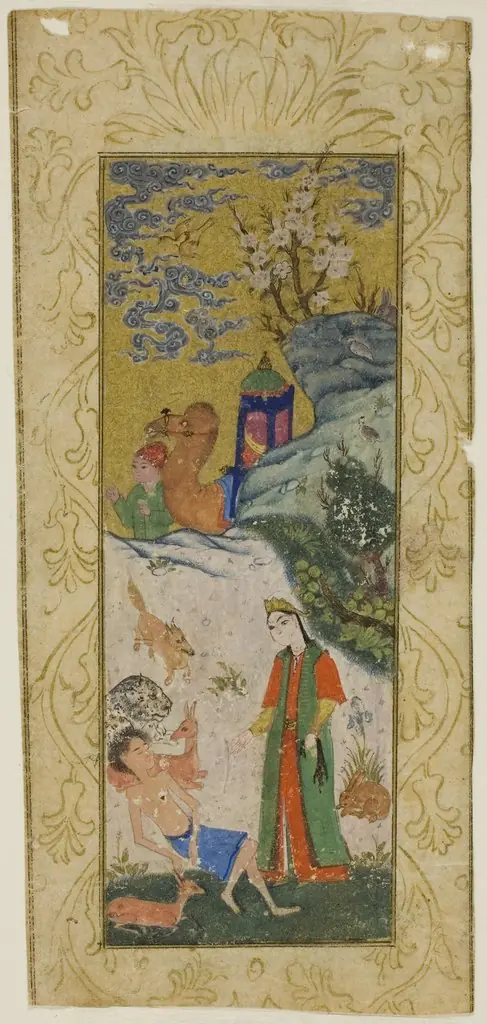 Layla Visiting Majnun in the Desert, page from a copy of the Khamsa of Nizami
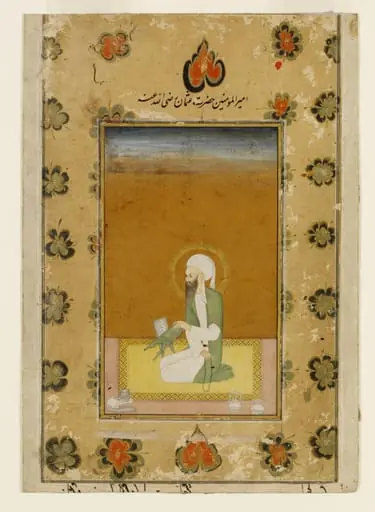 Khalif Uthman
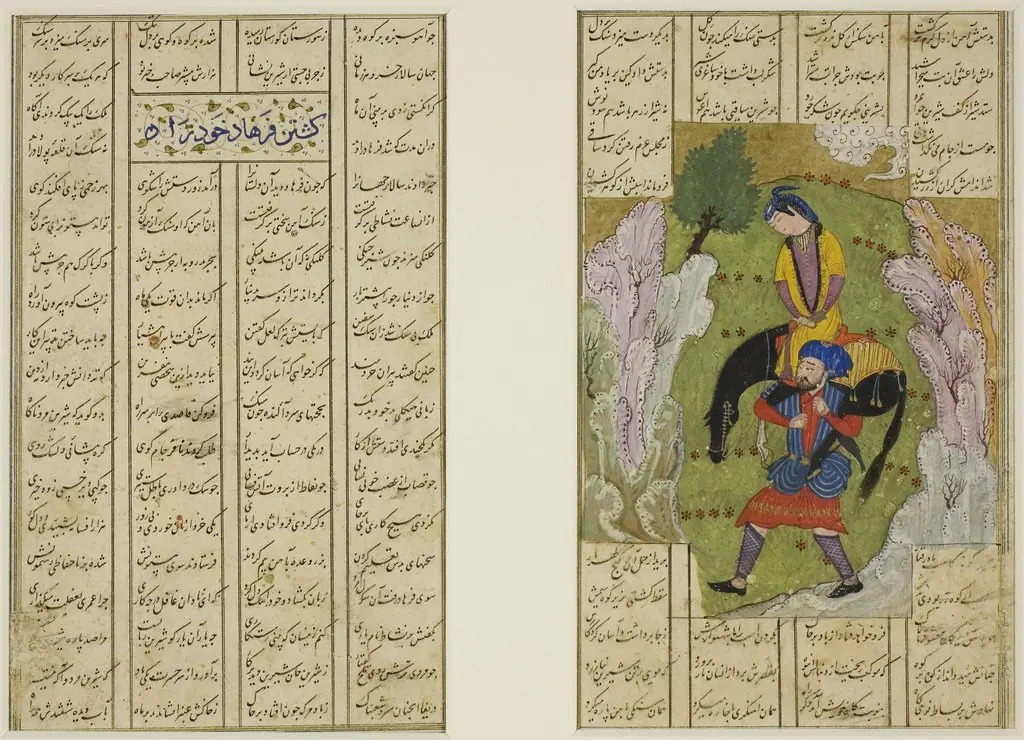 Farhad Carrying Shirin and Her Horse, from a copy of the Khamsa of Nizami
 Farhad Carrying Shirin and Her Horse, from a copy of the Khamsa of Nizami
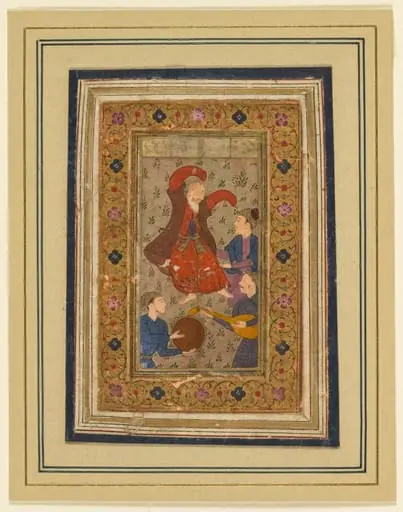 A dancing dervish and three musicians, from a Divan (Collected Poems) of Urfi (Persian, 1555–1591)
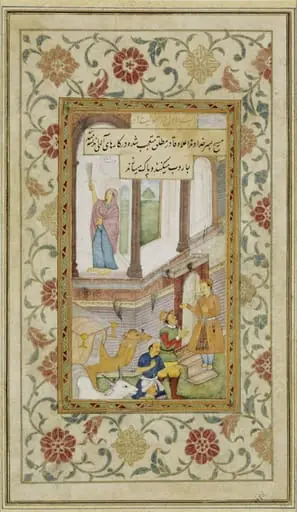 The Inn at Bethlehem
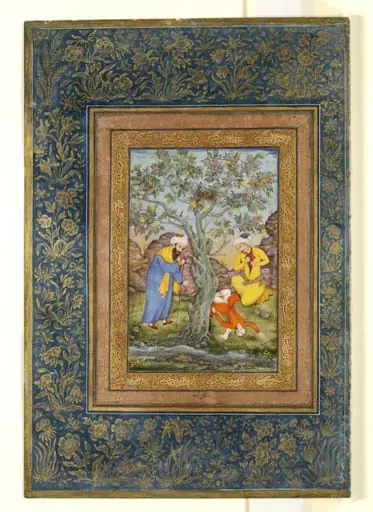 Khwaja Jahan