Artwork
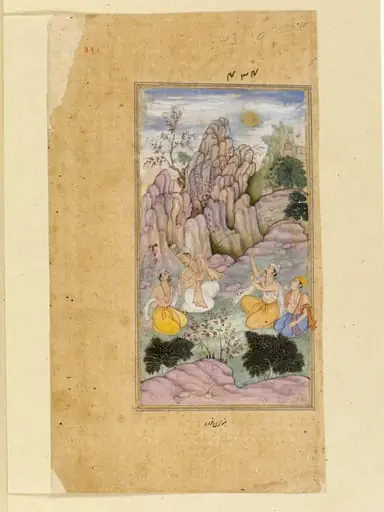
Layla Visiting Majnun in the Desert, page from a copy of the Khamsa of Nizami
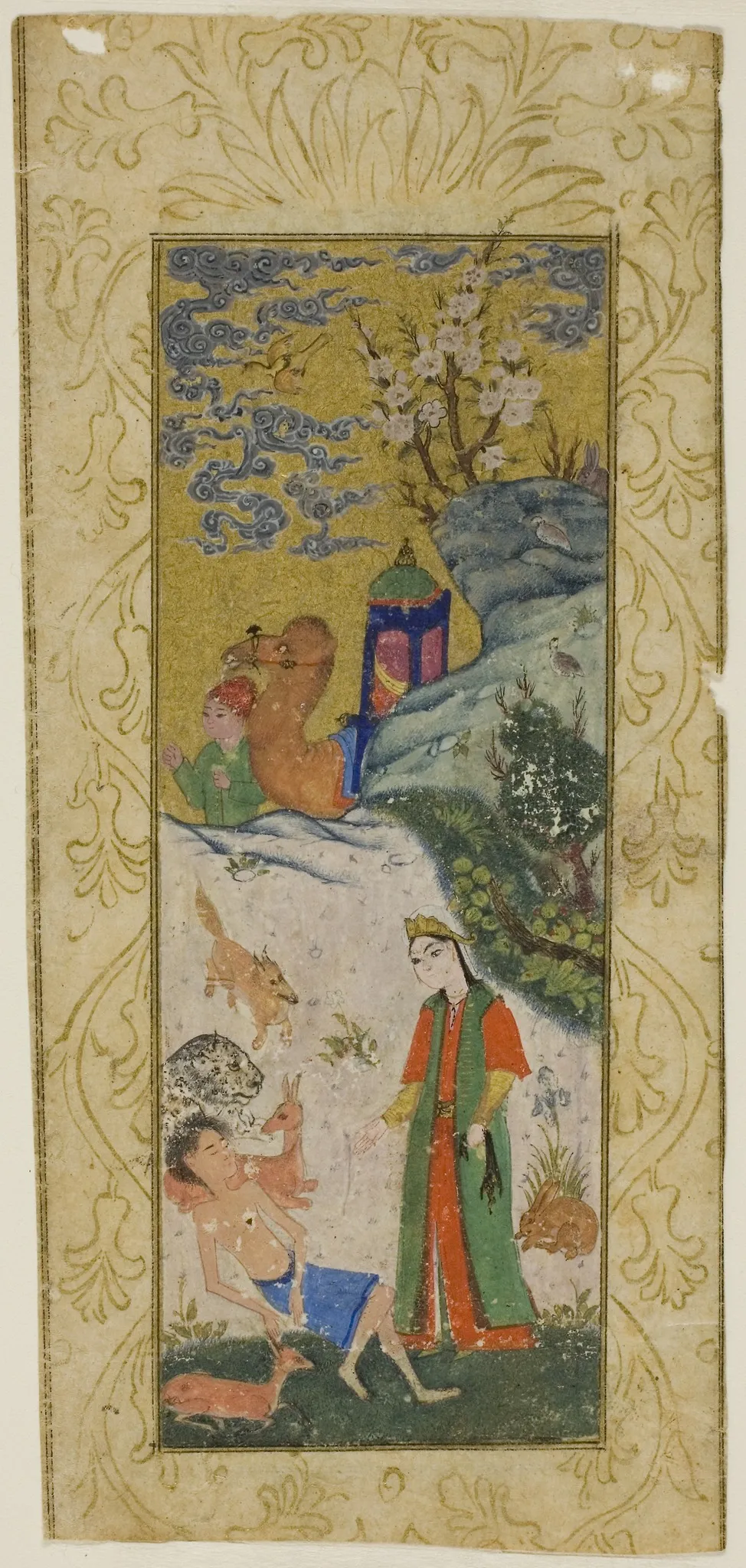
Layla Visiting Majnun in the Desert, page from a copy of the Khamsa of Nizami is an unspecified painting by the Mughal Painting artist Unknown. It dates from 1550 and is held in the collection of the Art Institute of Chicago. This painting is a folio from a manuscript copy of the Khamsa, a quintessential Persian poetic collection by Nizami.
About this work
Overview
It illustrates a moment from the tragic love story of Layla and Majnun, rendered in the detailed, luminous style of Persian miniature painting.
This painting is a folio from a manuscript copy of the Khamsa, a quintessential Persian poetic collection by Nizami. It illustrates a moment from the tragic love story of Layla and Majnun, rendered in the detailed, luminous style of Persian miniature painting. The scene is contained within a richly decorated border, typical of illustrated manuscripts produced for elite patrons in the Safavid court during the late 16th century.
Subject & Meaning
Layla, dressed in a vivid red and green robe, visits Majnun, who has withdrawn from society in grief-stricken madness after their separation. The animals gathered around—deer, rabbit, and bird—symbolize nature’s empathy for his suffering, reflecting a Sufi interpretation of love as a spiritual trial. Their stillness underscores the quiet intensity of the moment, emphasizing emotional isolation over physical action.
Technique & Style
The artist employs fine brushwork and mineral pigments to achieve delicate color transitions and intricate detail. Figures are rendered with elongated proportions and expressive gestures, characteristic of Persian miniatures. While not using Western chiaroscuro, the painting achieves depth through layered washes and atmospheric perspective, with the distant hills rendered in softer blues to suggest recession.
History & Provenance
This folio likely originated in a royal workshop in Safavid Iran, possibly Tabriz or Qazvin, around 1590. It was part of a commissioned manuscript intended for a noble patron, reflecting the court’s patronage of literary and artistic traditions. The manuscript’s journey through private collections and eventual institutional acquisition reflects the broader dispersal of Persian manuscripts in the 19th and 20th centuries.
Context
The Khamsa was a favored text among Persian-speaking courts, admired for its moral and mystical themes. Illustrated copies were status symbols, blending poetry with visual art to elevate literary culture. This scene, drawn from the tale of Layla and Majnun, resonated with audiences familiar with Sufi allegories of divine love and human longing, making it a popular subject for manuscript illumination.
Legacy
The painting exemplifies the enduring influence of Nizami’s poetry on Islamic visual culture. Its preservation in museum collections allows continued study of Persian artistic conventions and narrative illustration. Though later artistic movements shifted toward realism, this work remains a key reference for understanding how literature and painting intertwined in pre-modern Iran.
Artist & collection

 Domestic Scene
 Giacomo and Cardinal Marco, investing Andrea, Abbot of San Zeno, with his Benefice
 The Nymph of Fontainebleau
 Portrait of a Woman
 Madonna and Child with Saints in the Enclosed Garden
 Venus and Minerva
 Family Group of Four on Sofa
 Wall painting from Room H of the Villa of P. Fannius Synistor at Boscoreale
 King Anushirwan and the Owls, from the Khamsa of Nizami
 Folios A and B from the "Five Treasures" (Panj Ganj) of Jami
 Folios A and B from the "Five Treasures" (Panj Ganj) of Jami
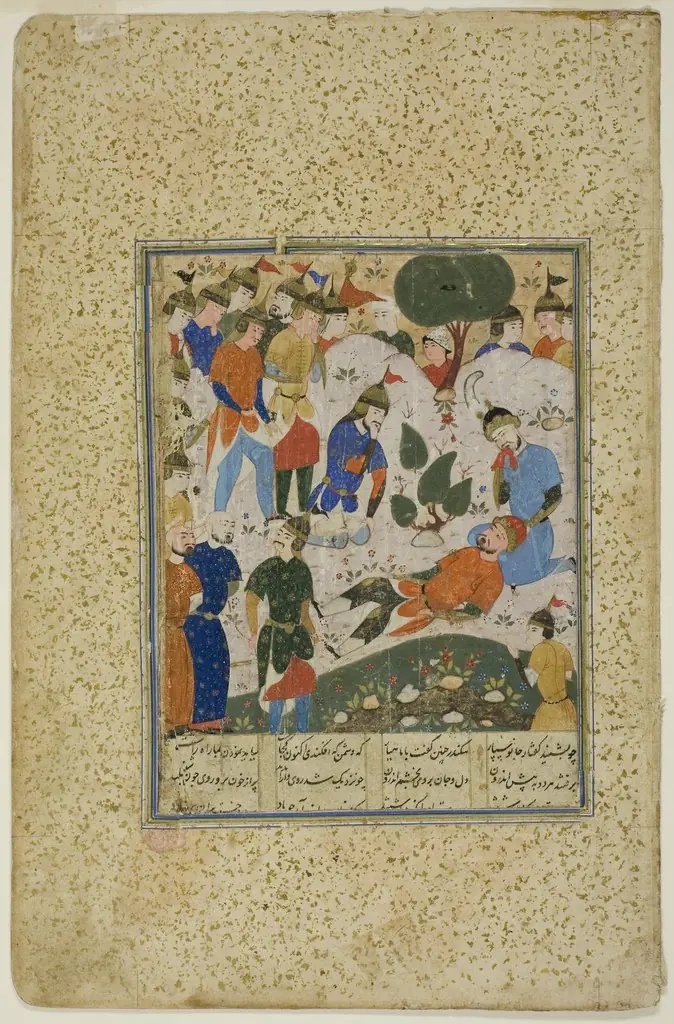 Iskander Comforts the Dying Darius
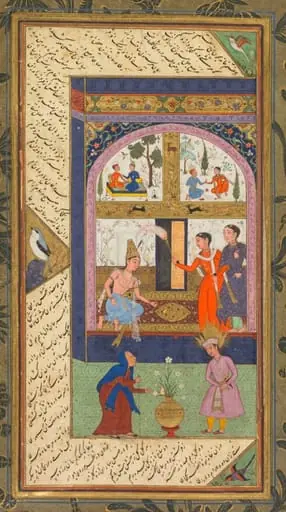 Zulaykha in her palace and as an old woman with Joseph, from a Panj Ganj (Five Treasures) of Abd al-Rahman Jami (Persian, 1414–1492); verso from a Panj Ganj of Abd al-Rahman Jami (Persian, 1414–1492), with two masnavis: Yusuf va Zulaykha (Joseph and Zulaykha) and Khirad-nama-i Iskandari (Alexander’s Book of Wisdom)
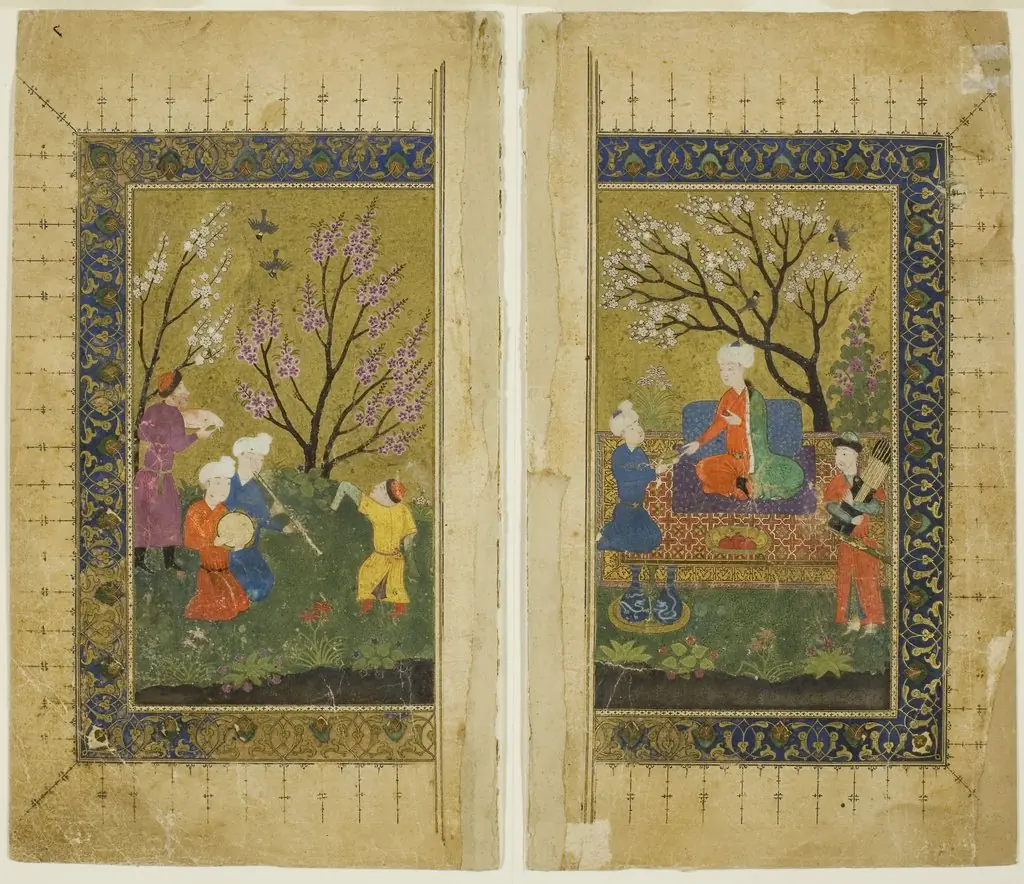 Garden Scene
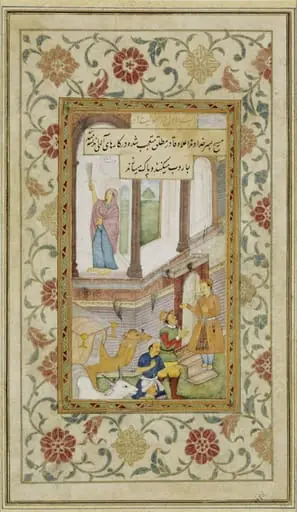 The Inn at Bethlehem
 Untitled