Artwork
Krishna
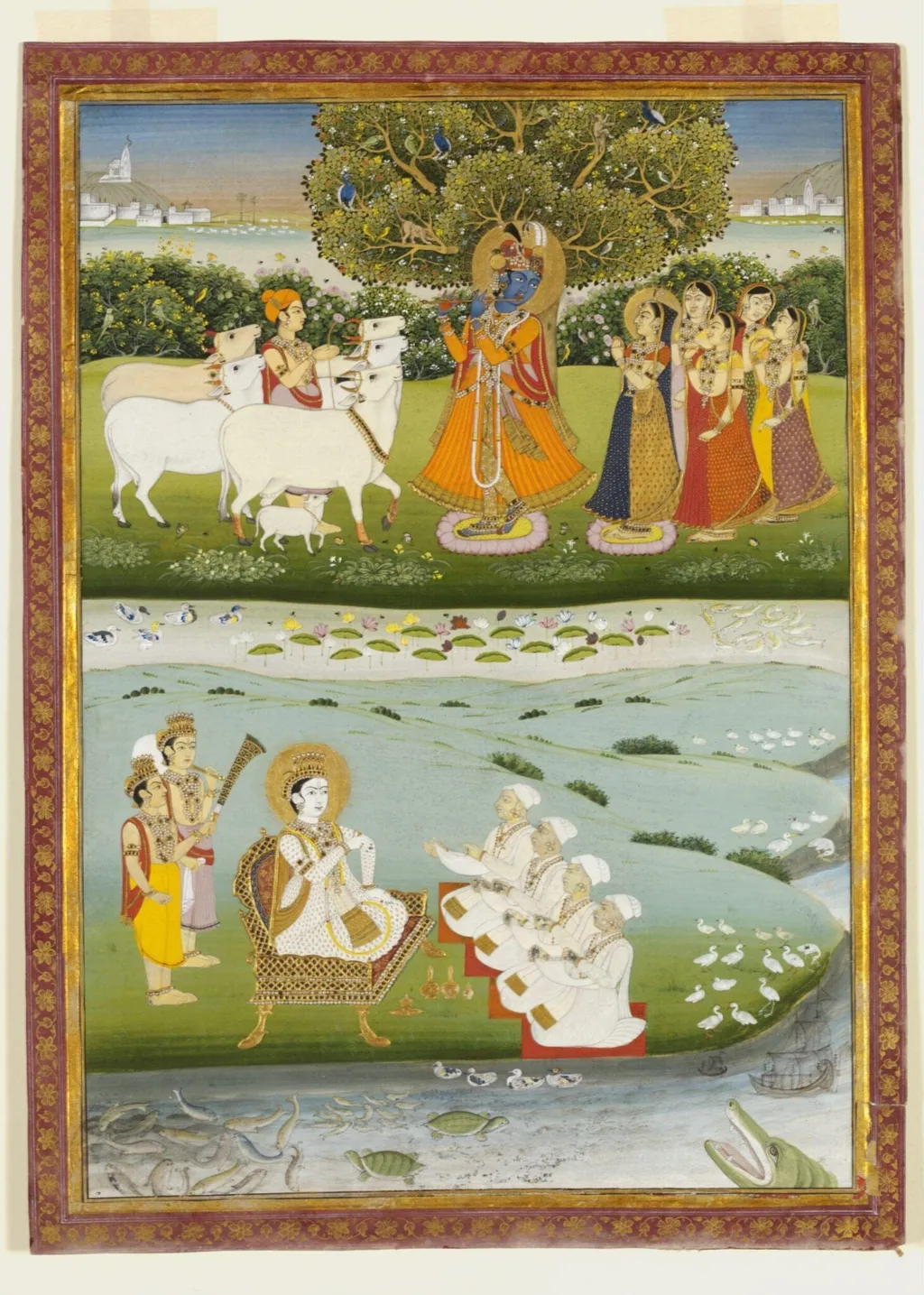
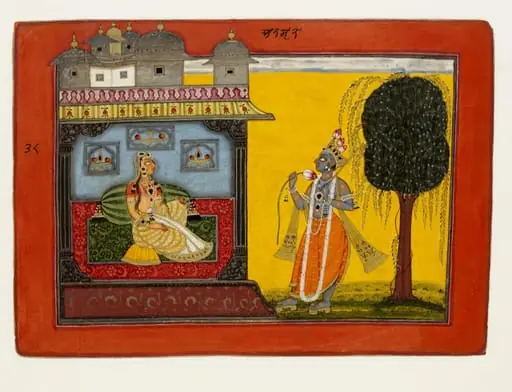
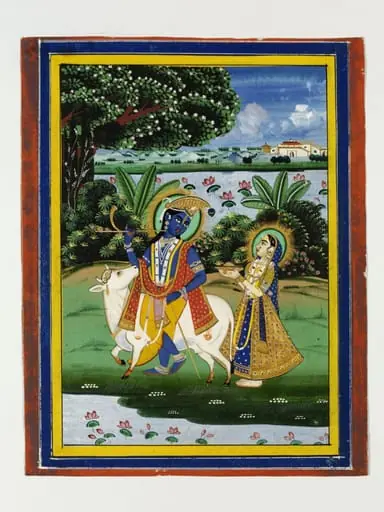
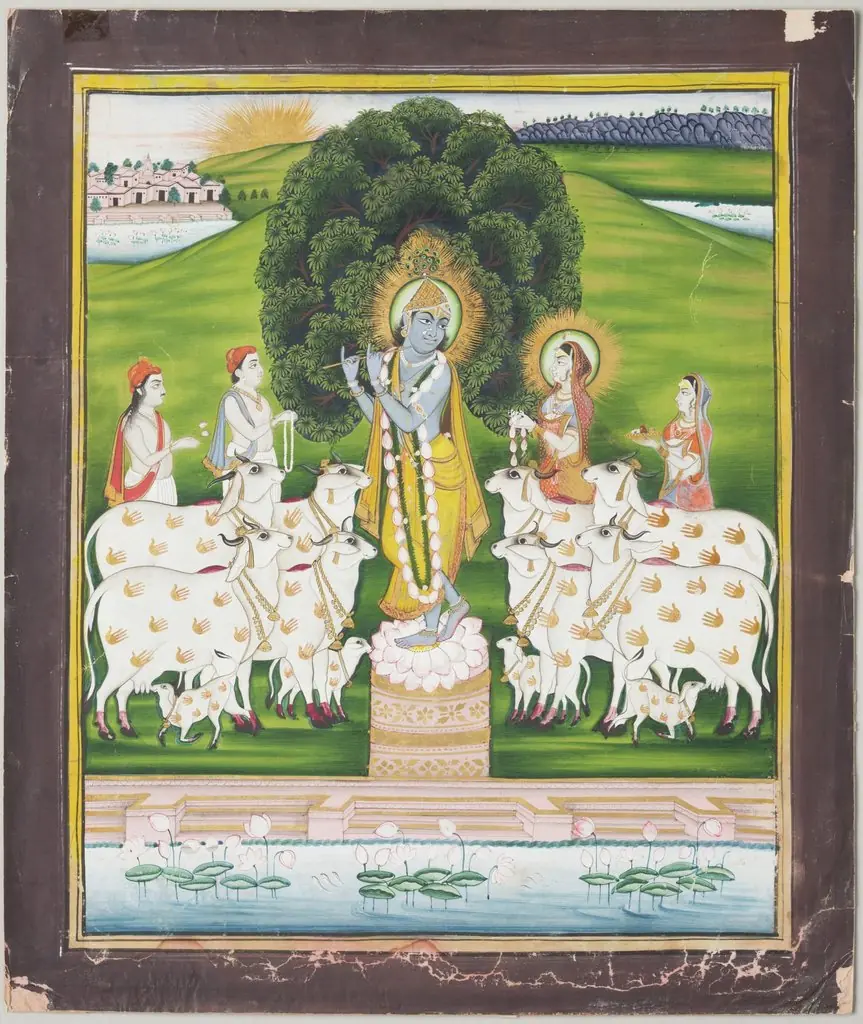
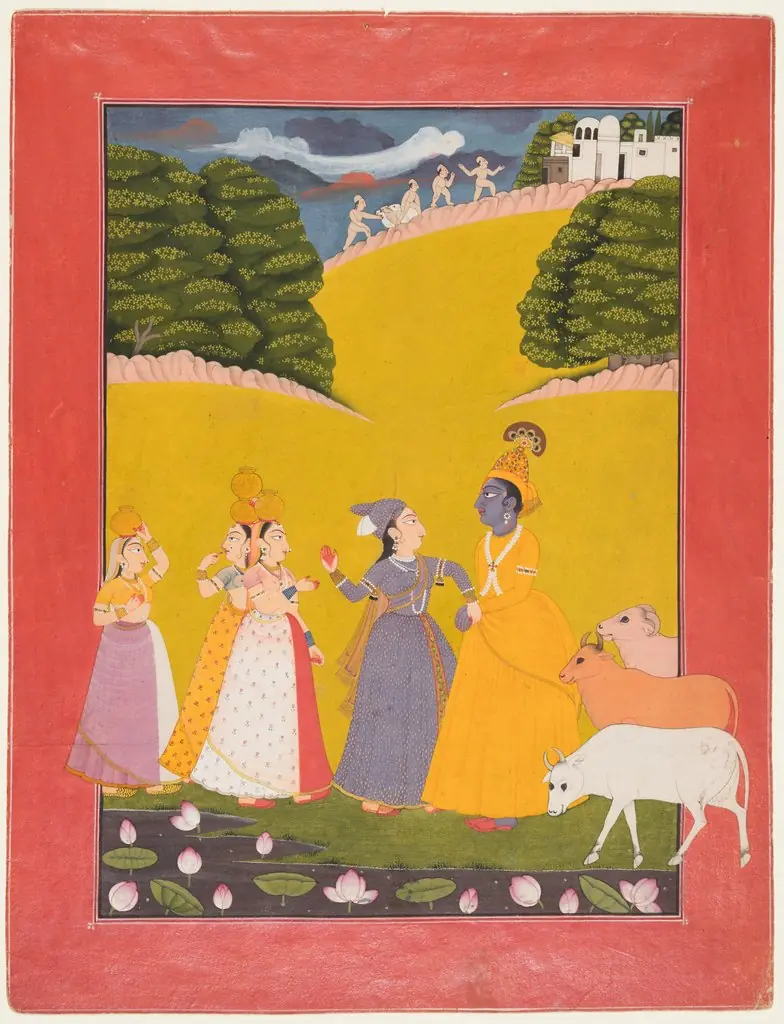
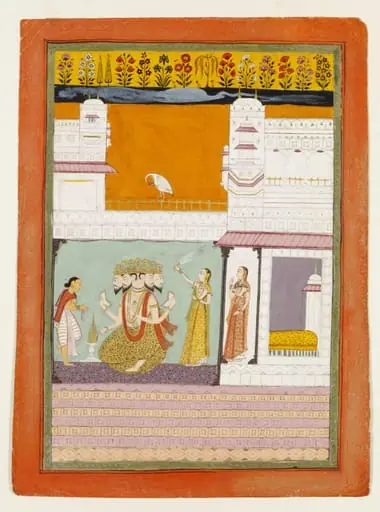
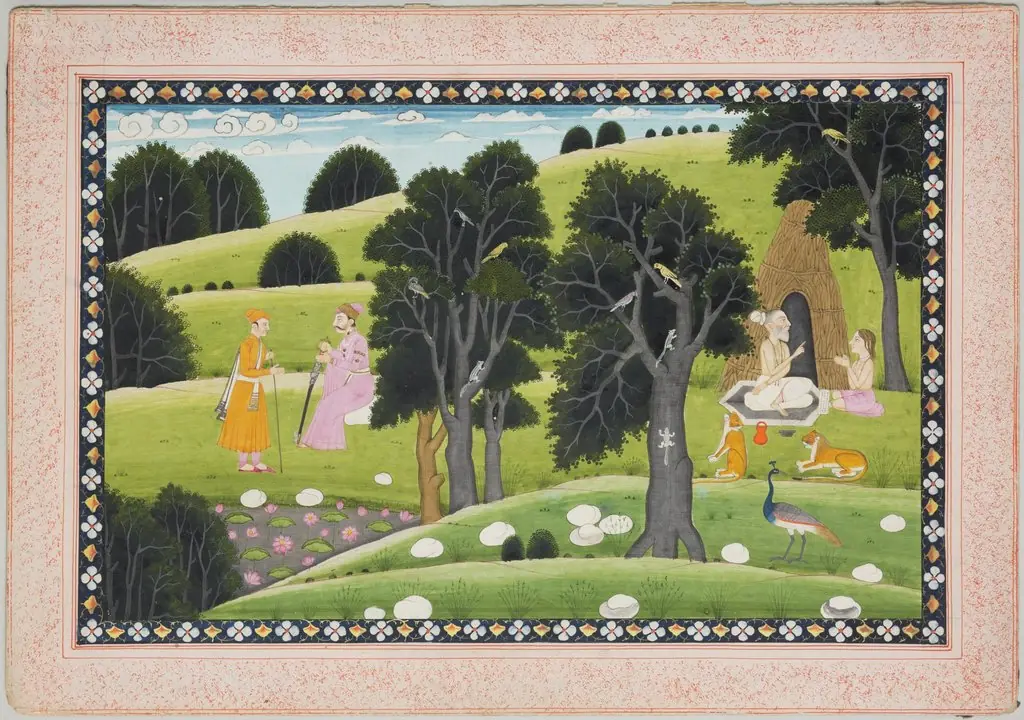
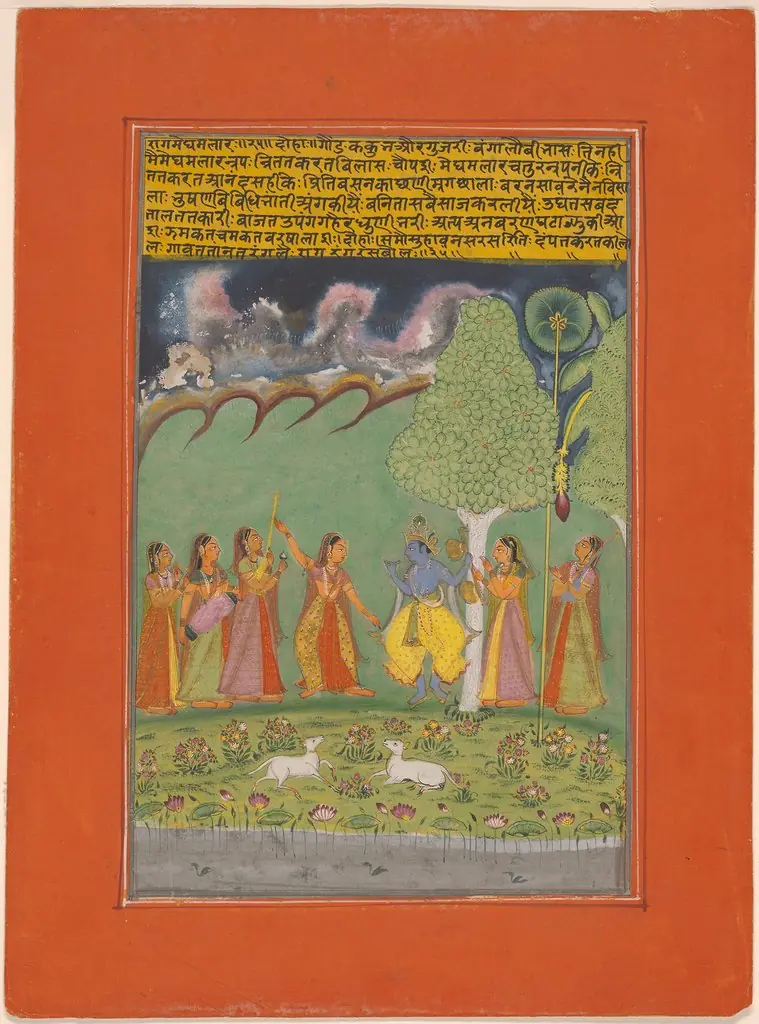
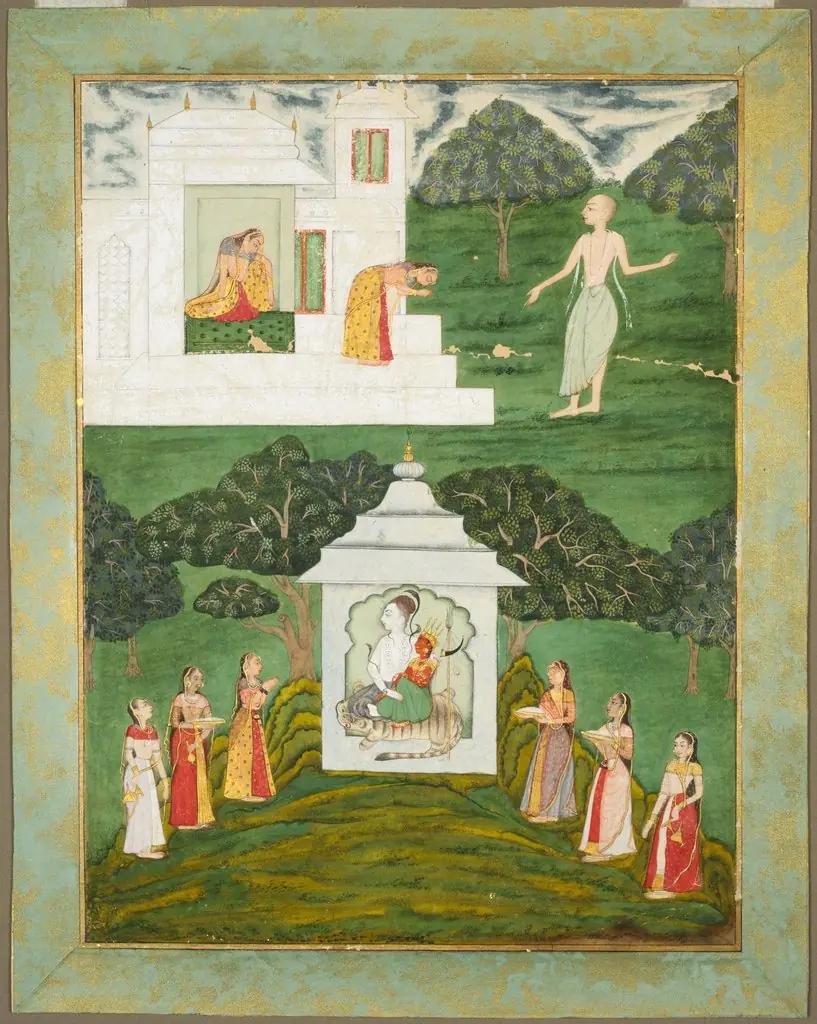
Krishna is a paint painting by Unknown. It dates from 1850 and is held in the collection of the Victoria and Albert Museum. The work is an opaque watercolor on paper, enhanced with pearl accents and framed by gold borders.
About this work
Overview
The work is an opaque watercolor on paper, enhanced with pearl accents and framed by gold borders. It is divided into two vertical registers: an upper scene of Krishna playing a flute beneath a kadamba tree, surrounded by cowherds and cattle, and a lower scene showing a seated figure on a grassy island receiving homage, with European sailing ships visible on the water.
Subject & Meaning
The juxtaposition of Indian mythological imagery with European maritime elements hints at cultural exchange or a narrative of global connectivity.
The upper register portrays the Hindu deity Krishna in a pastoral setting, emphasizing his role as a divine musician and protector of cattle. The lower register presents a princely or divine figure on an island, attended by nobles, suggesting a courtly tribute or ritual. The juxtaposition of Indian mythological imagery with European maritime elements hints at cultural exchange or a narrative of global connectivity.
Technique & Style
Rendered in opaque watercolor, the artist achieves vivid coloration and fine detail, while pearl inlays add a luminous quality to the surface. Gold framing and intricate patterning around the figures create a decorative richness. The composition balances busy activity with clear spatial divisions, using contrasting greens and blues to separate the two scenes.
History & Provenance
The painting is part of the collection of the Victoria and Albert Museum, which holds numerous works that blend Eastern iconography with Western artistic conventions. Its acquisition details are recorded in the museum’s catalog, situating the piece within the broader context of 19th‑century cross‑cultural artworks.
Context
Krishna is a central figure in Hindu mythology, often depicted playing the flute among cows, symbolizing divine love and harmony with nature. The inclusion of European sailing ships reflects the period’s fascination with trade routes and the mingling of artistic traditions during the colonial era.
Artist & collection

 Domestic Scene
 Giacomo and Cardinal Marco, investing Andrea, Abbot of San Zeno, with his Benefice
 The Nymph of Fontainebleau
 Portrait of a Woman
 Madonna and Child with Saints in the Enclosed Garden
 Venus and Minerva
 Family Group of Four on Sofa
 Wall painting from Room H of the Villa of P. Fannius Synistor at Boscoreale