Artwork
Duryodhana and Salya
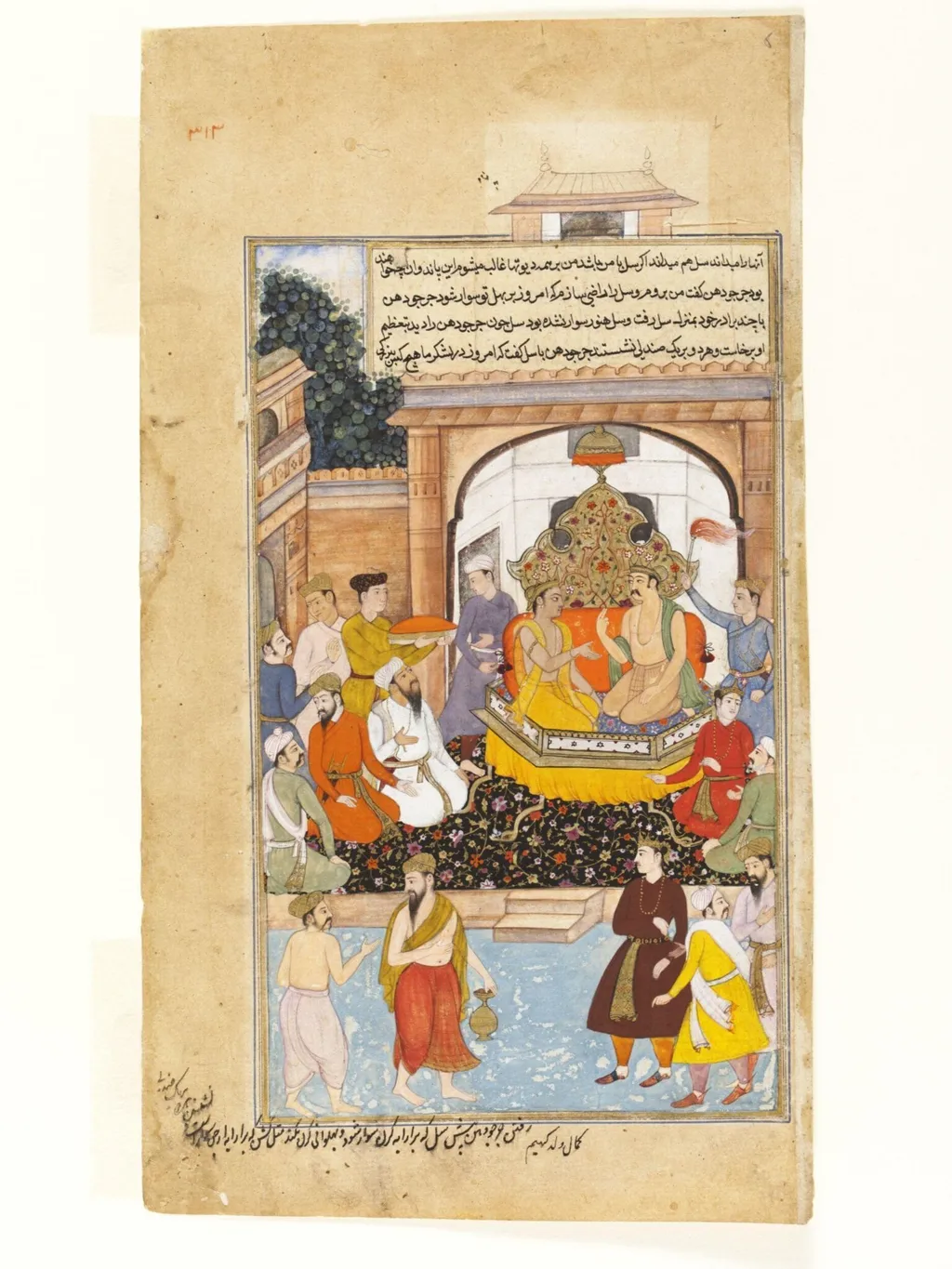
Duryodhana and Salya is a paint painting by the Mughal Painting artist Kamal. It dates from 1598 and is held in the collection of the Victoria and Albert Museum.
About this work
Overview
This detached painting originates from an illustrated Razmnama, a Persian translation of the Mahabharata, commissioned by Emperor Akbar for his Muslim courtiers. It is attributed to the artist Kamal, son of Khem.
Subject & Meaning
The scene portrays Duryodhana visiting Salya, accompanied by his brothers, to request Salya's service as Kama's charioteer in the impending war, a pivotal moment from the Mahabharata.
Technique & Style
Characterized by dramatic composition, the painting features a central figure in red with a notably twisted, awkward posture, contrasting with a calm facial expression, set against a backdrop of warriors in a dusty landscape.
History & Provenance
Part of a Razmnama manuscript illustrated by Akbar's artists, with a related piece dated to 1598; the artist's name, 'Kamal, son of Khem', is inscribed in the lower border.
Context
Created during Akbar's reign, this work reflects the emperor's effort to bridge cultural and religious divides by translating Hindu epics into Persian for his court.
Artist & collection
Artist
Kamal painted in the late 16th century, when artists in Mughal ateliers still had to balance the emperor’s taste for heroic drama with their own love of quiet detail.

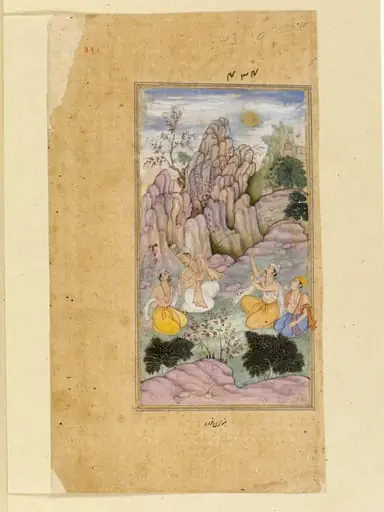
 Narada and Suka
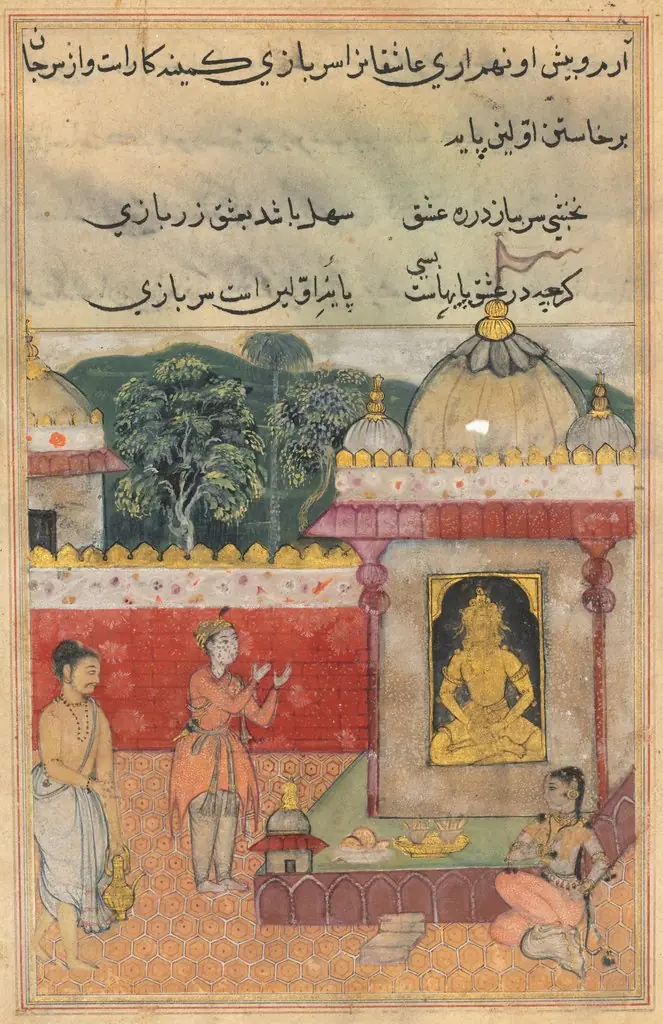 The Raja’s son vows to sever his head and offer it to the image if he is united with the princess he has seen in the temple, from a Tuti-nama (Tales of a Parrot): Thirty-fourth Night
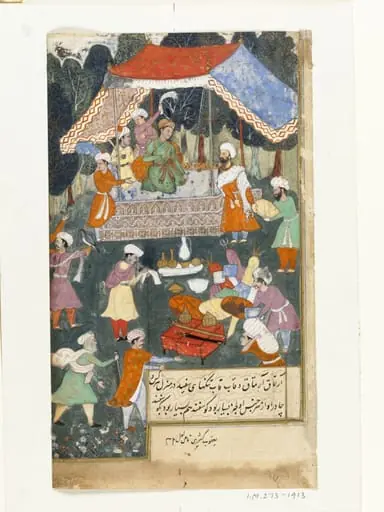 Untitled
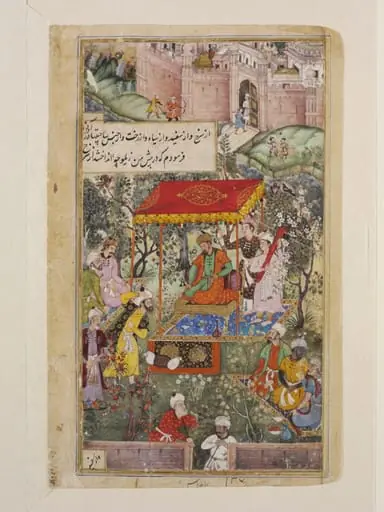 Untitled
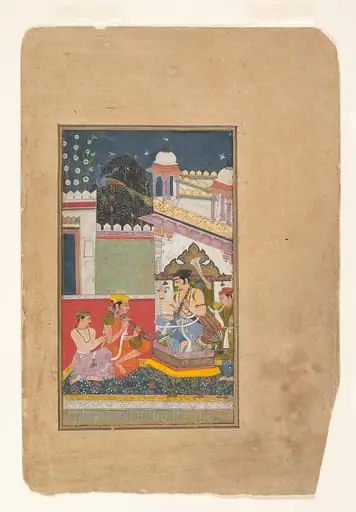 Untitled
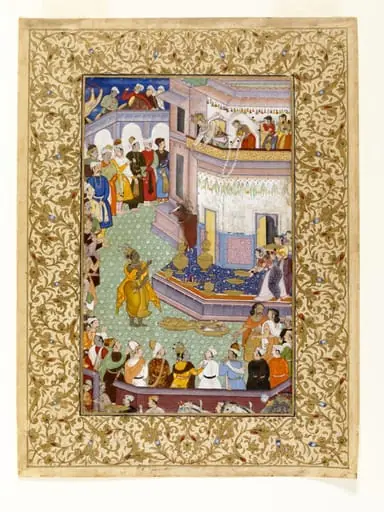
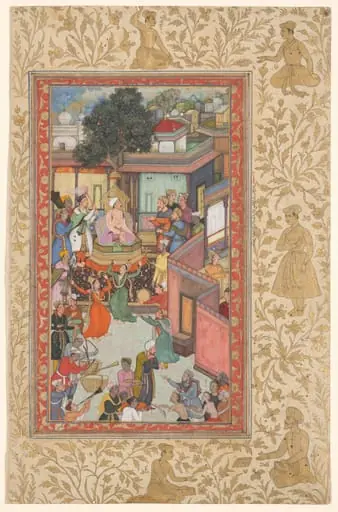 Circumcision ceremony for Akbar’s sons, painting 126 from an Akbar-nama (Book of Akbar) of Abu’l Fazl (Indian, 1551–1602)
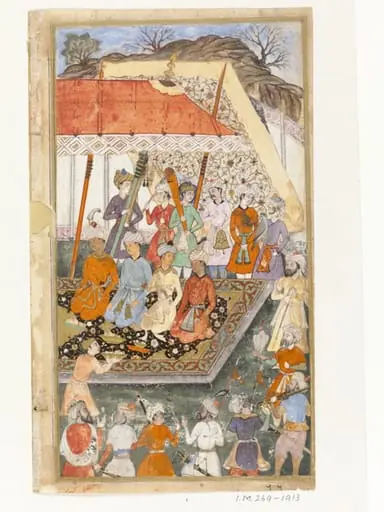 Untitled
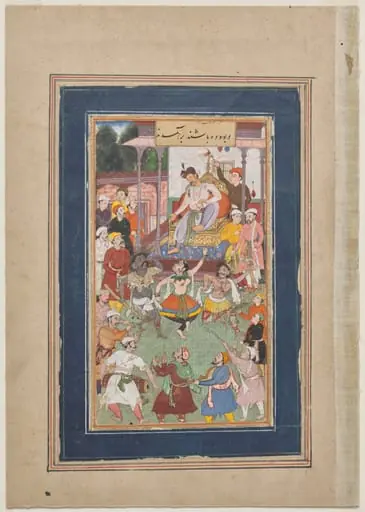 Grotesque Dancers Performing
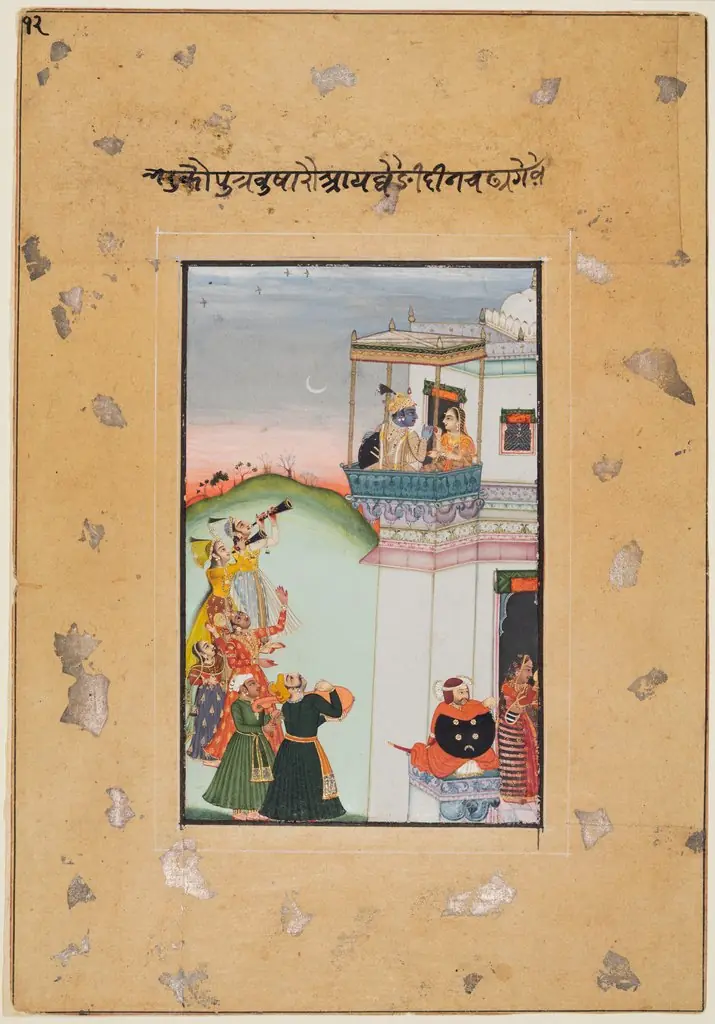 Krishna and Consort on a Palace Balcony with Musicians: Vukharo Ragaputra of Bhairav, from the “Boston Ragamala”
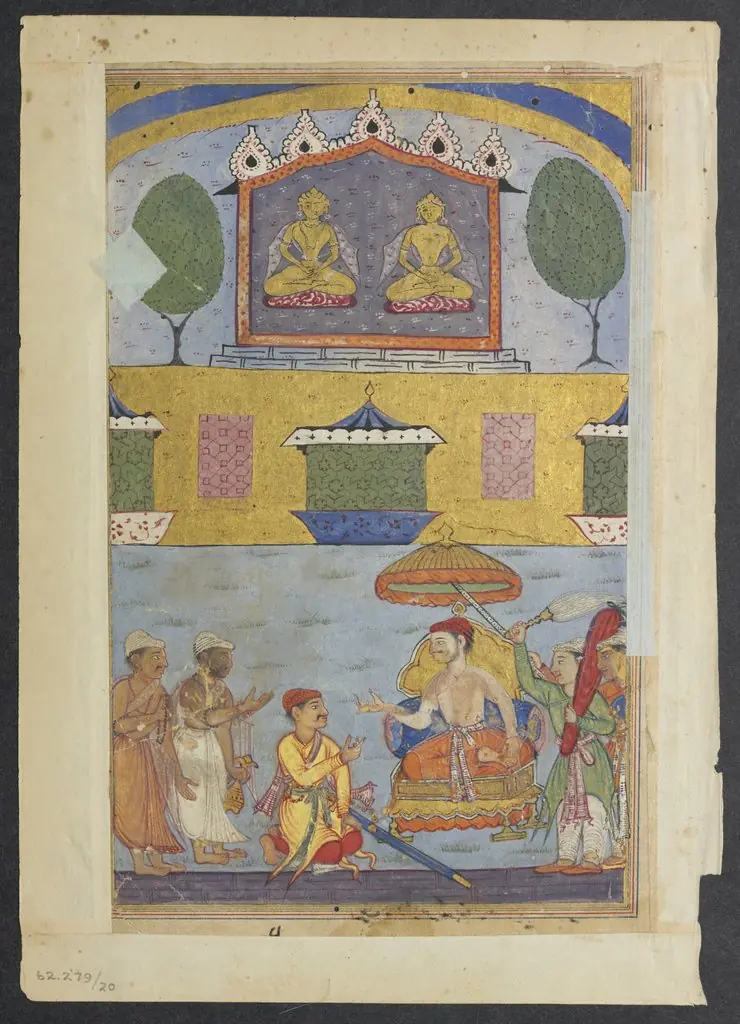 The goldsmith and the carpenter inform the king of a dream in which the golden images plan to desert the city for lack of worshippers, from a Tuti-nama (Tales of a Parrot): Third Night
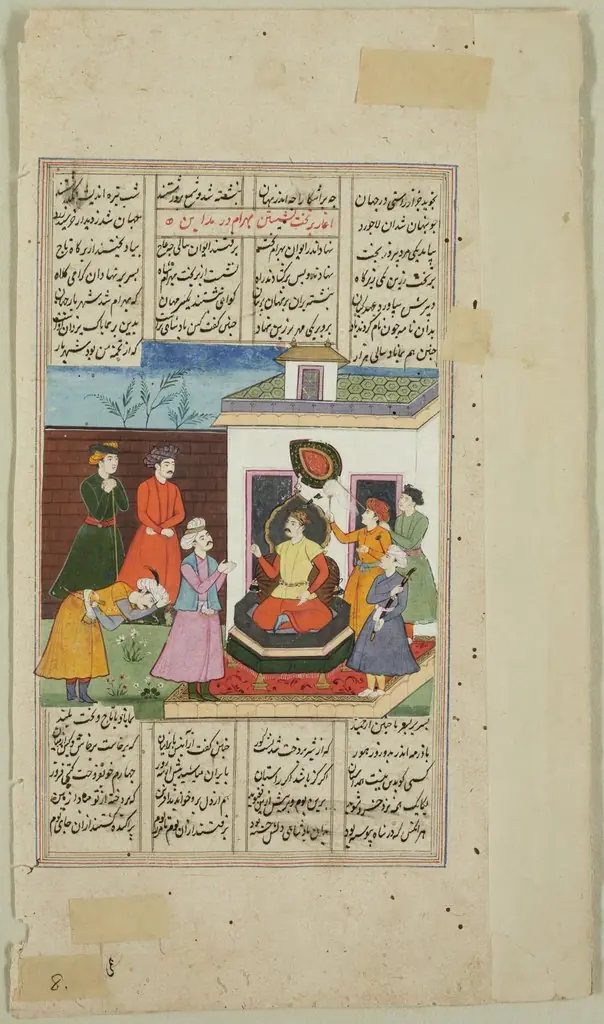 King Enthroned Outside and Standing Retainers