Artwork
Krishna as Kali, and Shiva
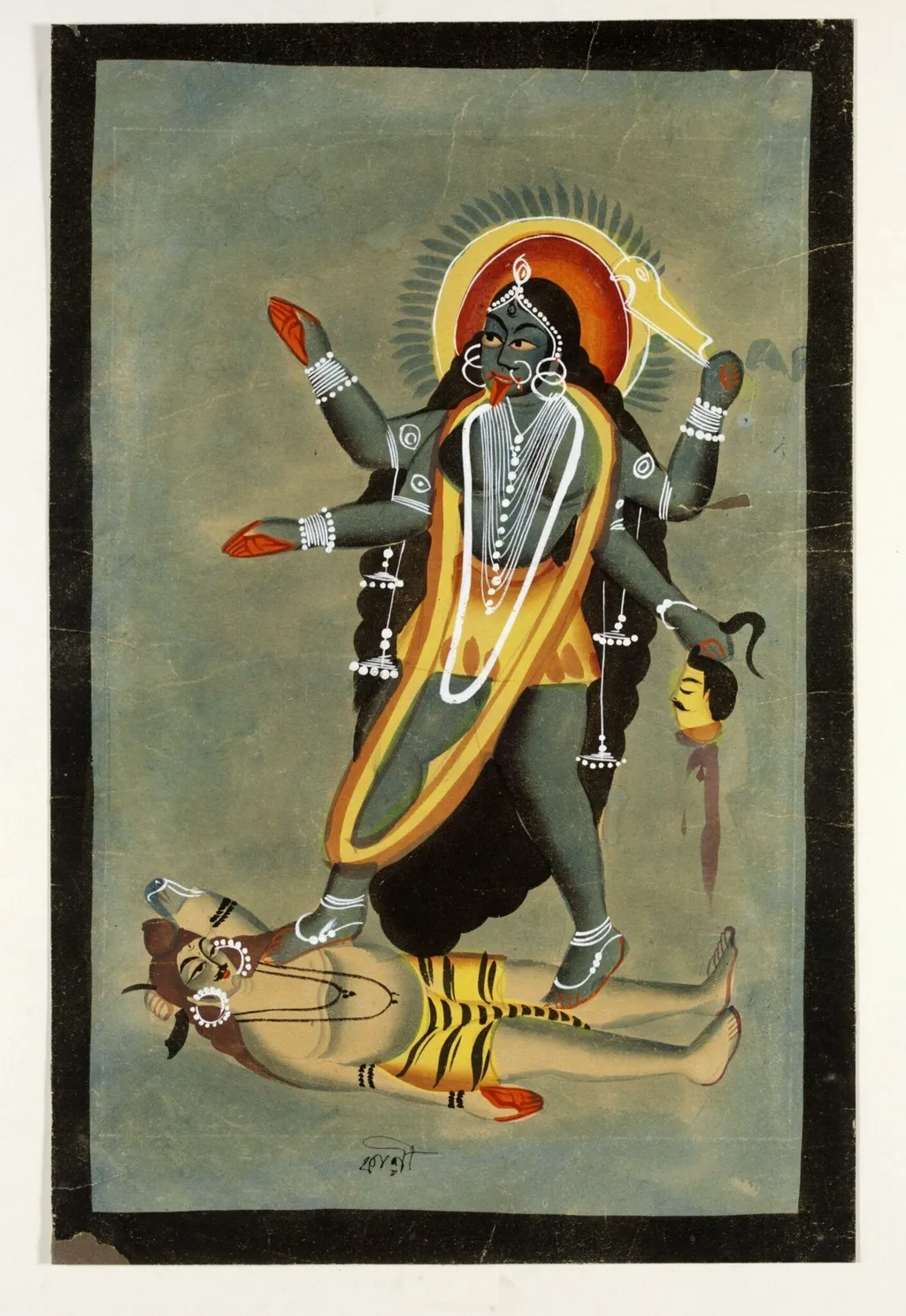
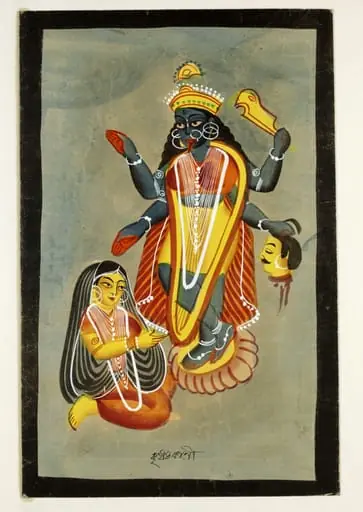
Krishna as Kali, and Shiva is a paint painting by the Impressionist artist Unknown. It dates from 1885 and is held in the collection of the Victoria and Albert Museum.
About this work
Overview
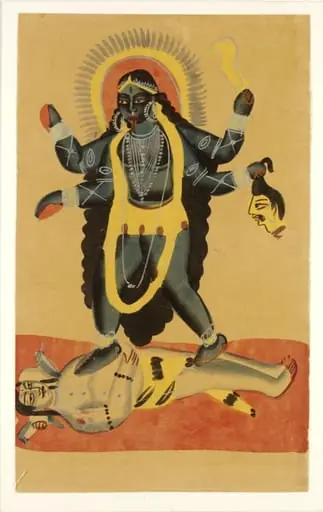
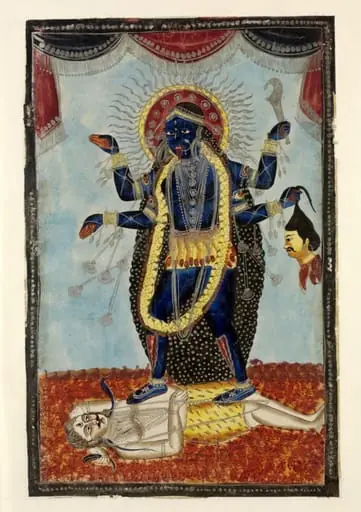
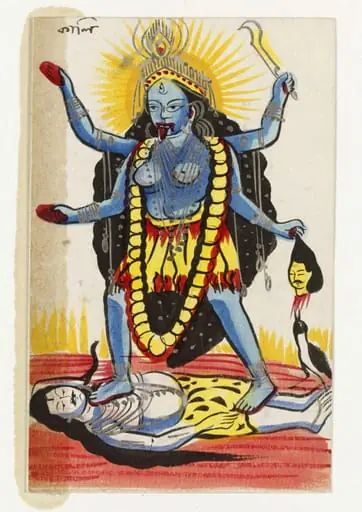
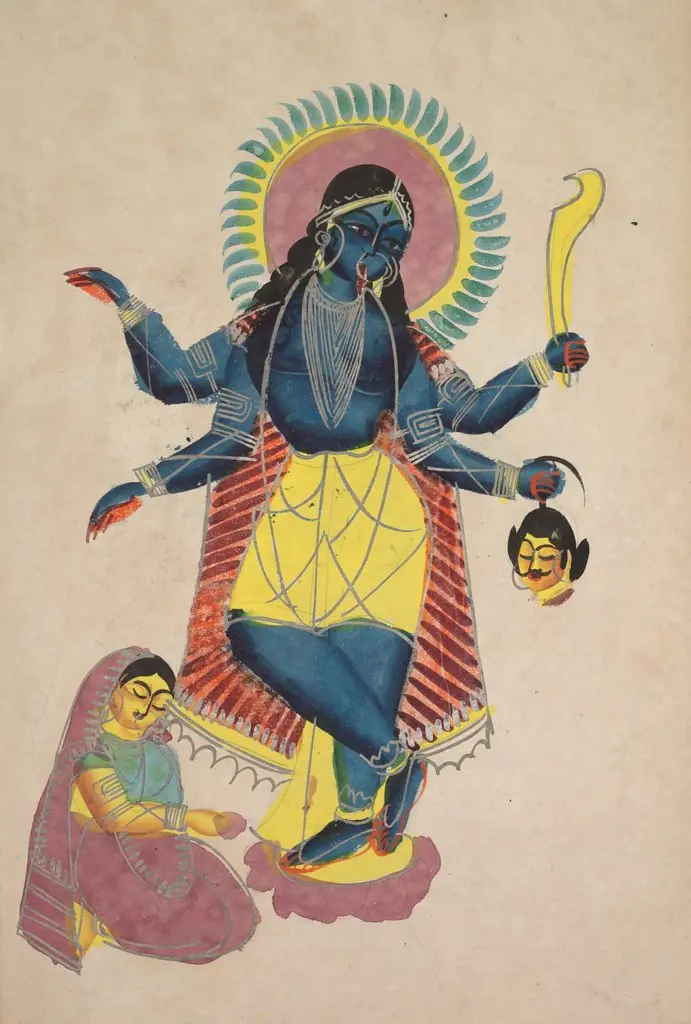
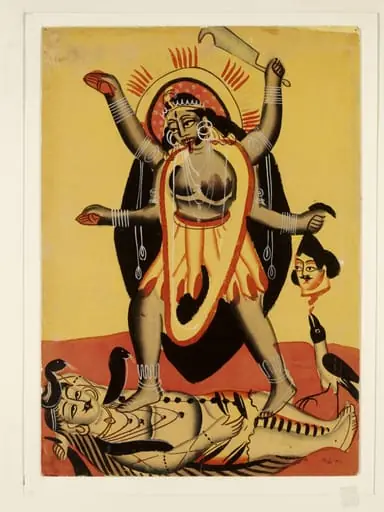
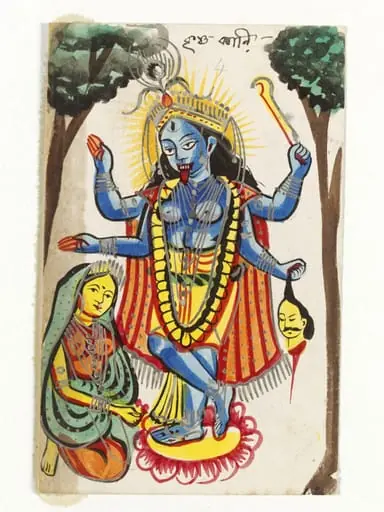
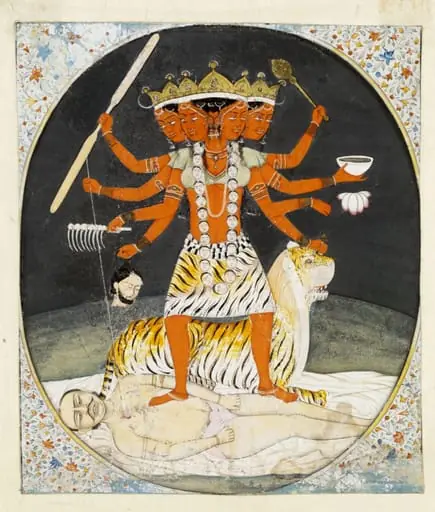
This opaque watercolor on paper, dated 1885, portrays a striking fusion of Hindu deities: Krishna is rendered in the guise of the fierce goddess Kali, poised atop the figure of Shiva. The composition, executed by an anonymous artist, measures roughly a standard sheet of paper and employs vivid pigments against a muted, earthy background.
Subject & Meaning
She brandishes a severed head in one hand and a sword in another, her tongue protruding and eyes narrowed in a ferocious expression.
The central figure is a dark‑skinned woman with four arms, clad in a yellow sari and adorned with jewelry. She brandishes a severed head in one hand and a sword in another, her tongue protruding and eyes narrowed in a ferocious expression. Beneath her, Shiva lies supine in a yellow loincloth, his chest pressed by her foot, suggesting a dramatic moment of triumph or destruction within Hindu mythic narratives.
Technique & Style
Executed in opaque watercolor, the work utilizes bold outlines and saturated hues characteristic of traditional Indian painting. The artist employs chiaroscuro to model forms, creating a sense of three‑dimensionality despite the flat paper support. The limited palette of yellows, greens, and browns enhances the dramatic contrast between the divine figures and the background.
History & Provenance
The painting entered the collection in 1894 after being purchased from Miss M. Steele. Steele’s mother, a Sanskrit scholar at Cambridge, had inherited the piece, and family lore suggests that Steele’s grandmother, who had spent time in India, may have originally acquired it. The work’s early ownership thus reflects a personal connection to Indian culture and scholarship.
Context
The late nineteenth century saw increased European interest in Indian religious art, often mediated through colonial encounters and academic study. This piece, blending iconography of Krishna, Kali, and Shiva, exemplifies the syncretic visual language that appealed to both Indian devotees and Western collectors fascinated by exotic spirituality.
Artist & collection

 Domestic Scene
 Giacomo and Cardinal Marco, investing Andrea, Abbot of San Zeno, with his Benefice
 The Nymph of Fontainebleau
 Portrait of a Woman
 Madonna and Child with Saints in the Enclosed Garden
 Venus and Minerva
 Family Group of Four on Sofa
 Wall painting from Room H of the Villa of P. Fannius Synistor at Boscoreale