Artwork
Kali and Shiva
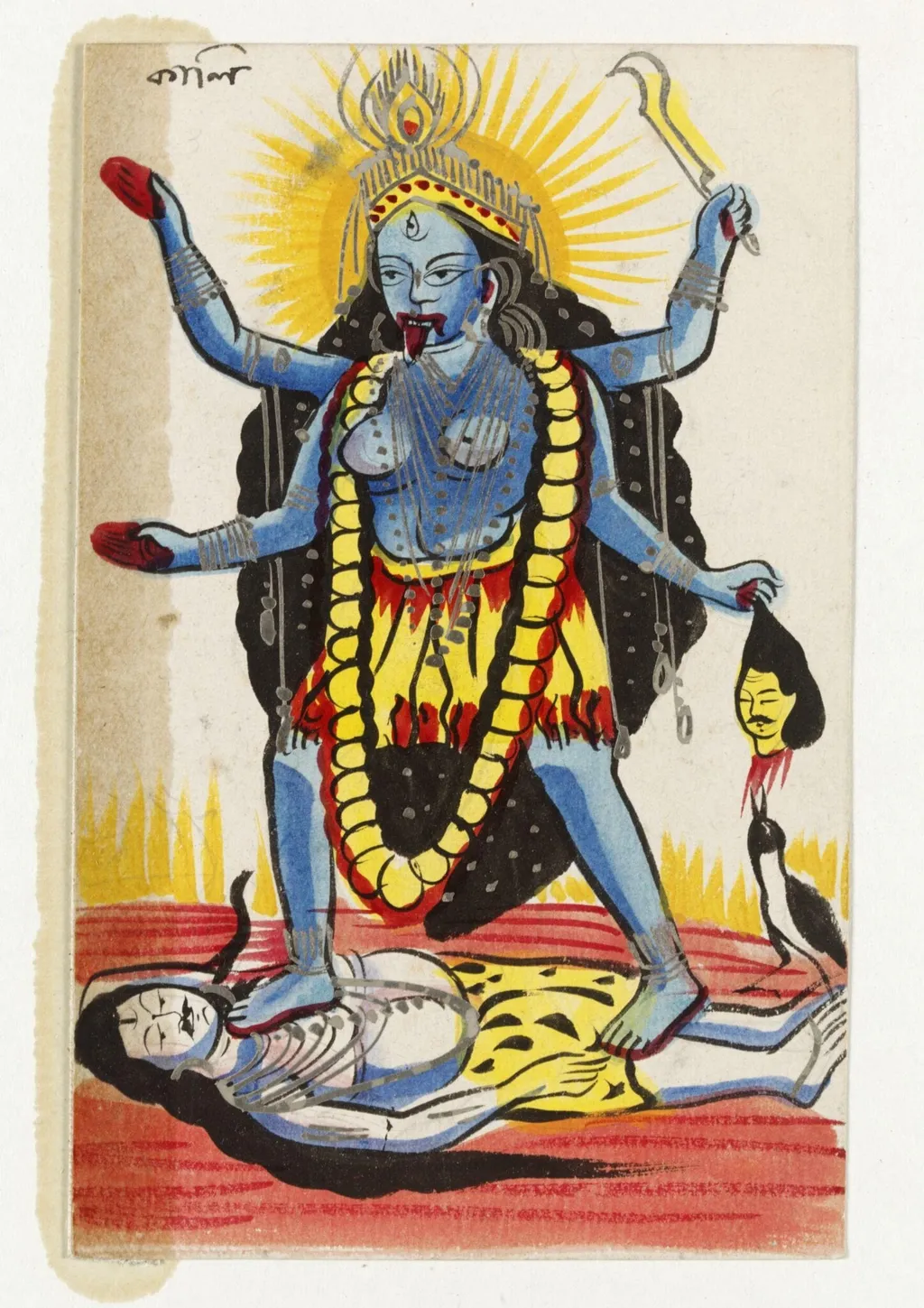
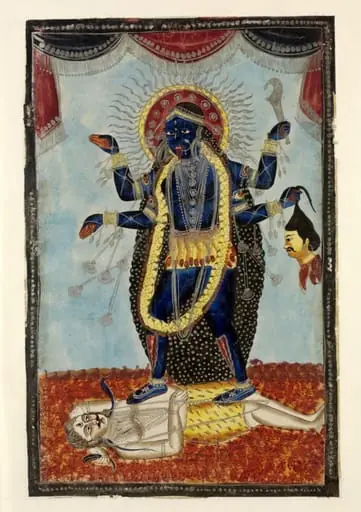
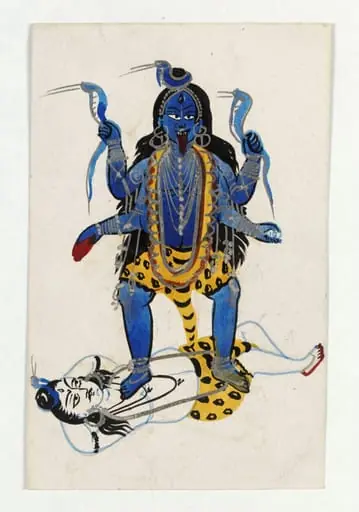
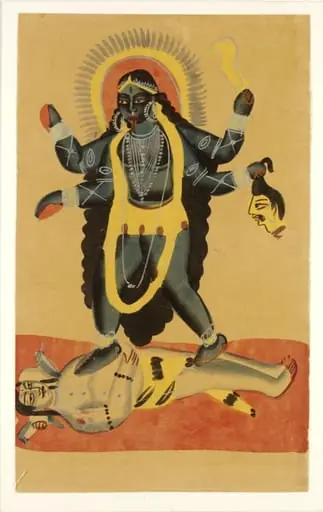
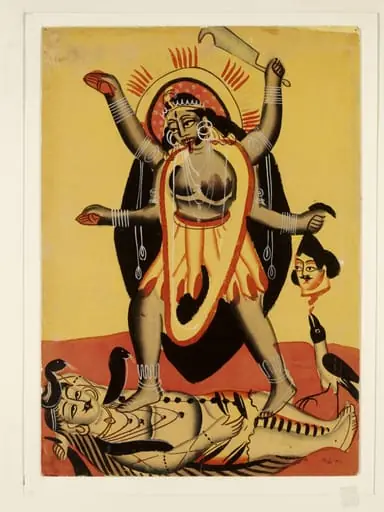
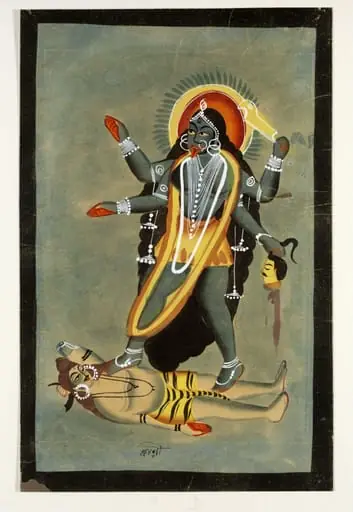
Kali and Shiva is a paint painting by the Impressionist artist Unknown. It dates from 1890 and is held in the collection of the Victoria and Albert Museum. This 1890 watercolour and tin alloy painting on cardboard portrays the Hindu goddess Kali standing over the body of Shiva.
About this work
Overview
Rendered with delicate brushwork and metallic accents, the image captures a moment of cosmic stillness amid violent symbolism.
This 1890 watercolour and tin alloy painting on cardboard portrays the Hindu goddess Kali standing over the body of Shiva. Rendered with delicate brushwork and metallic accents, the image captures a moment of cosmic stillness amid violent symbolism. The contrast between Kali’s dark blue skin and Shiva’s pale form emphasizes their opposing energies, while the materials suggest a blend of devotional intent and regional artistic practice.
Subject & Meaning
The scene illustrates a well-known myth in which Kali, in a frenzy of destruction, steps upon Shiva to regain awareness of her power. His passive form signifies surrender and the cessation of chaos, while her outstretched arms, sword, and severed head denote her role as destroyer of ego and ignorance. Her protruding tongue reflects both ferocity and self-restraint, symbolizing the moment she halts her rampage upon recognizing her consort.
Technique & Style
The artist employed watercolour for its fluidity to render Kali’s flowing hair and garments, while tin alloy was applied sparingly to highlight ornaments and edges, adding luminosity without overt gilding. The cardboard support, common in 19th-century Indian popular painting, reflects an accessible medium for devotional imagery. Figures are stylized rather than naturalistic, with bold outlines and flattened space typical of regional Pahari or Kalighat traditions.
History & Provenance
Created in 1890, the painting likely originated in eastern India, possibly Bengal or nearby regions, where depictions of Kali were widespread in folk and temple art. Its survival suggests it was privately owned, perhaps used in domestic worship or collected by British officials or missionaries. Its presence in collections like the Victoria and Albert Museum indicates early institutional interest in Indian religious art during the colonial period.
Context
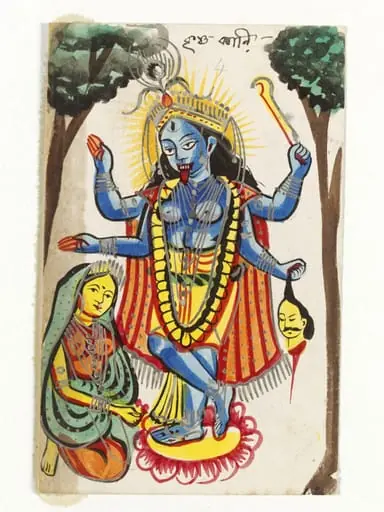
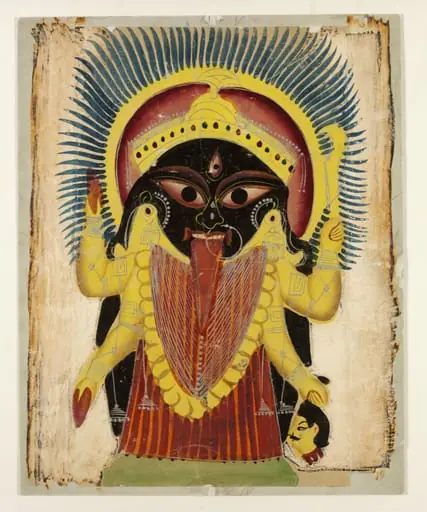
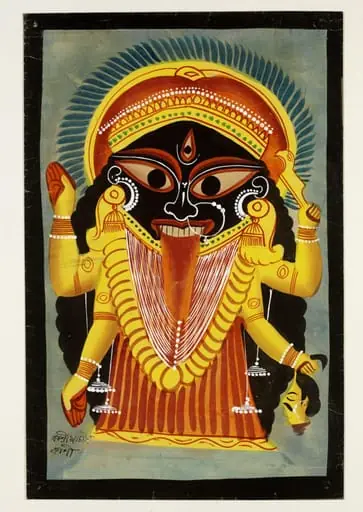
In late 19th-century India, images of Kali were both devotional and politically resonant, especially in Bengal, where her fierce form was linked to resistance and feminine power. While colonial collectors often viewed such works as exotic, local audiences understood them as expressions of cosmic balance. This painting reflects a time when traditional iconography was being documented, reproduced, and reinterpreted amid changing cultural landscapes.
Legacy
The painting contributes to a broader corpus of Indian devotional art that visually codified complex theological ideas for lay viewers. Its preservation in major collections has allowed later generations to study how Hindu deities were represented outside elite temple contexts. Though not widely known, it remains a quiet testament to the enduring visual language of South Asian religious imagery in the colonial era.
Artist & collection

 Domestic Scene
 Giacomo and Cardinal Marco, investing Andrea, Abbot of San Zeno, with his Benefice
 The Nymph of Fontainebleau
 Portrait of a Woman
 Madonna and Child with Saints in the Enclosed Garden
 Venus and Minerva
 Family Group of Four on Sofa
 Wall painting from Room H of the Villa of P. Fannius Synistor at Boscoreale