Artwork
Krishna asks for sweets, from a Sursagar of Surdas (Indian, c. 1480–1580)
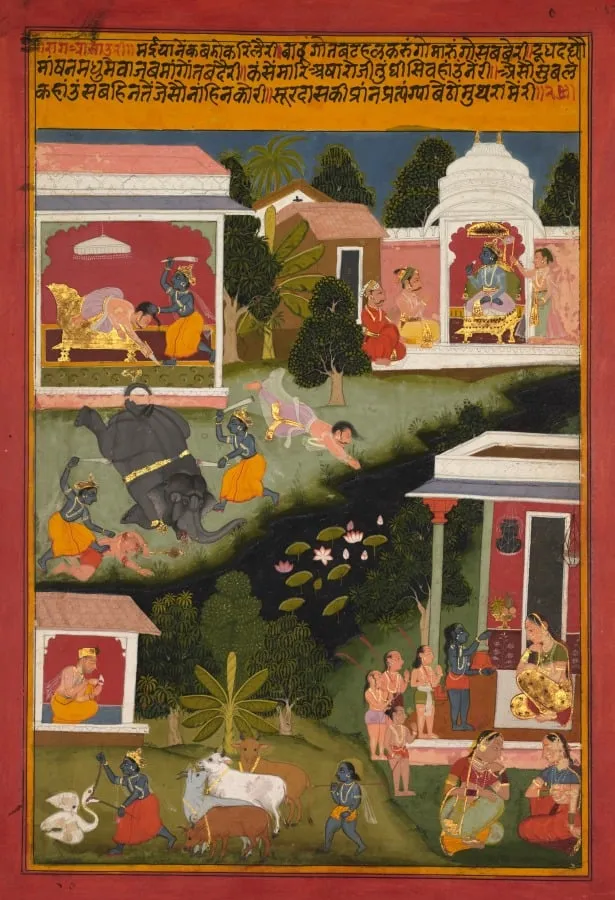
Krishna asks for sweets, from a Sursagar of Surdas (Indian, c. 1480–1580) is an unspecified painting by the Baroque artist Unknown. It dates from 1708 and is held in the collection of the Cleveland Museum of Art.
About this work
Overview
This miniature from the Sursagar of Surdas, dated between the late 15th and late 16th centuries, depicts the child deity Krishna in a single, densely populated composition. The central action shows Krishna, rendered with his characteristic blue skin, tugging at his foster‑mother Yashoda’s sari as she prepares food, while surrounding vignettes trace the hero’s later deeds.
Subject & Meaning
The narrative links Krishna’s childhood request for sweets to his future exploits: the surrounding scenes illustrate his growth into a cowherd, his battles against demons, his triumph over wrestlers, and ultimately his coronation as ruler of Mathura, replacing his tyrannical uncle Kamsa. The composition suggests that even modest desires foreshadow divine destiny.
Technique & Style
Executed in the traditional Indian miniature style, the work employs fine brushwork and vibrant pigments on paper. The blue hue of Krishna’s skin follows classical iconography, while the crowded layout resembles a continuous narrative scroll, with each episode rendered in miniature detail without formal panel divisions.
History & Provenance
The piece originates from the Sursagar, a devotional text attributed to the poet Surdas, popular in the Rajput courts of Mewar. Though the specific manuscript’s later ownership is undocumented, such miniatures were typically commissioned for royal libraries and religious collections during the period.
Context
In the late medieval Indian artistic milieu, narrative miniatures served both devotional and didactic purposes, allowing viewers to contemplate the life of a deity in a single glance. The work reflects the syncretic culture of the Rajput kingdoms, where Hindu mythological themes were rendered with Persianate artistic influences.
Legacy
The integrated storytelling technique seen here anticipates later comic‑strip formats and informs contemporary understandings of narrative art in pre‑modern South Asia. It remains a valuable example of how devotional literature and visual art were intertwined in the cultural production of the Mewar court.
Artist & collection

 Domestic Scene
 Giacomo and Cardinal Marco, investing Andrea, Abbot of San Zeno, with his Benefice
 The Nymph of Fontainebleau
 Portrait of a Woman
 Madonna and Child with Saints in the Enclosed Garden
 Venus and Minerva
 Family Group of Four on Sofa
 Wall painting from Room H of the Villa of P. Fannius Synistor at Boscoreale
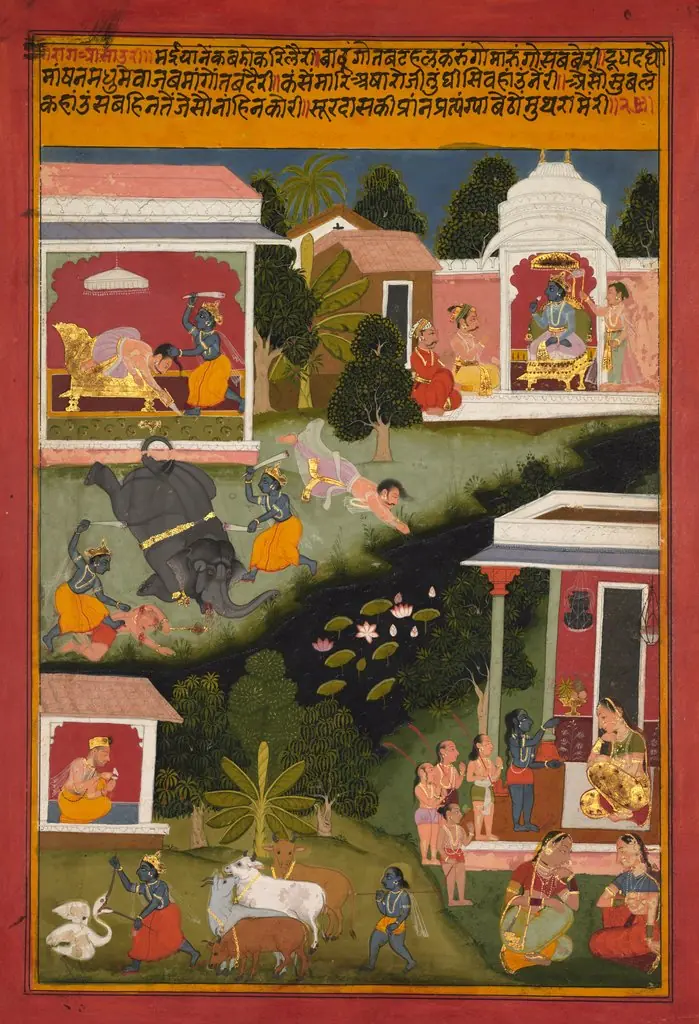 Krishna asks for sweets, from a Sursagar of Surdas (Indian, c. 1480–1580)
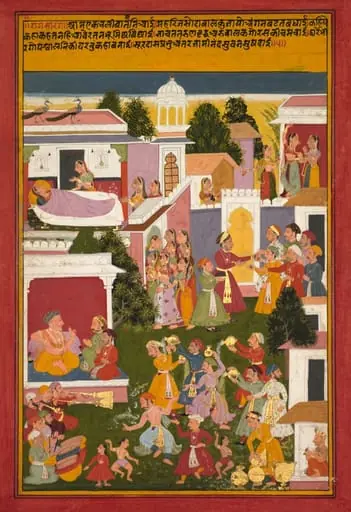 The Birth of Krishna, from a Sursagar of Surdas (Indian, c. 1480–1580)
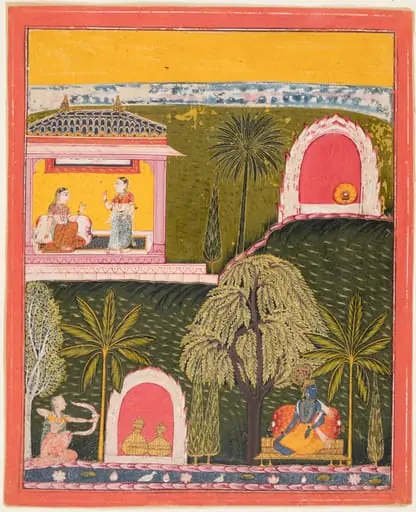 Rati, the Goddess of Erotic Love, Takes Aim at Krishna, from a Rasikapriya
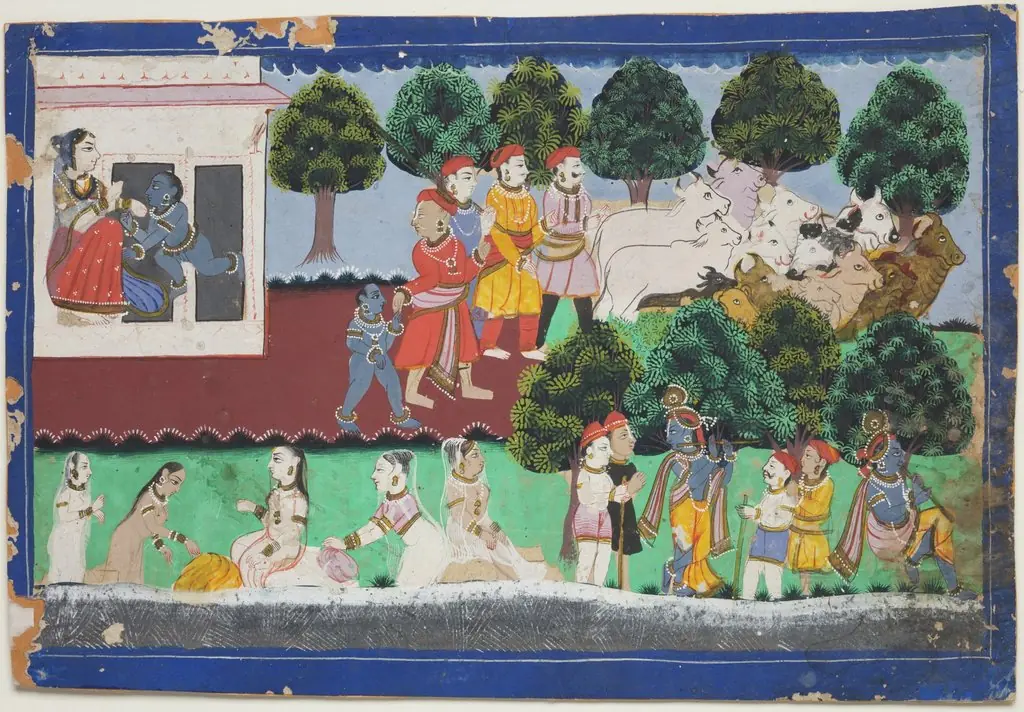 Scenes from Boyhood of Krishna
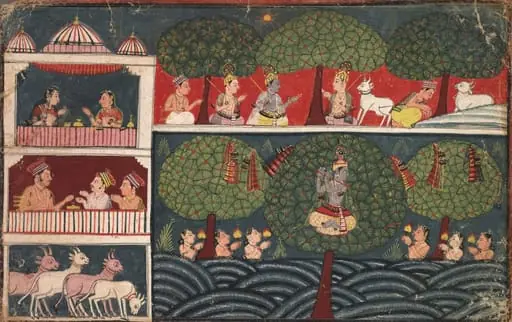 Krishna Steals the Clothes of the Milkmaids and Expounds on the Virtue of Trees, from a Braj Bhagavata Purana
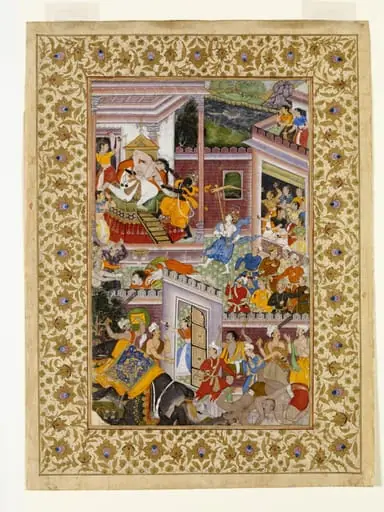 Krishna kills his uncle, the tyrant ruler Kamsa
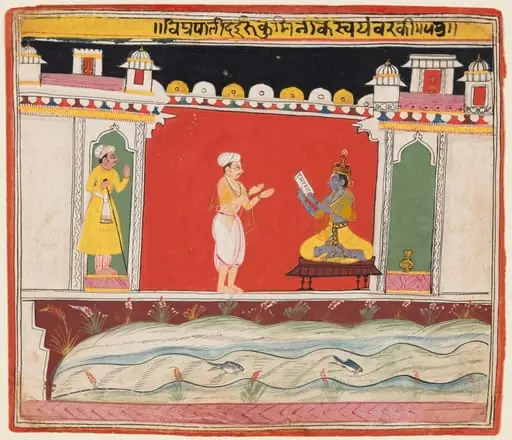 A Brahmin gives Krishna the Message or Invitation for the Competition to Rukmini’s Svayamvara, from a Bhagavata Purana