Artwork
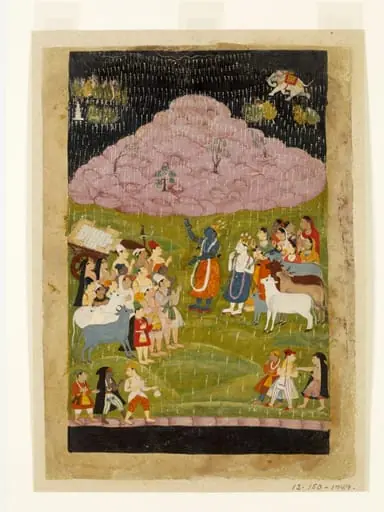
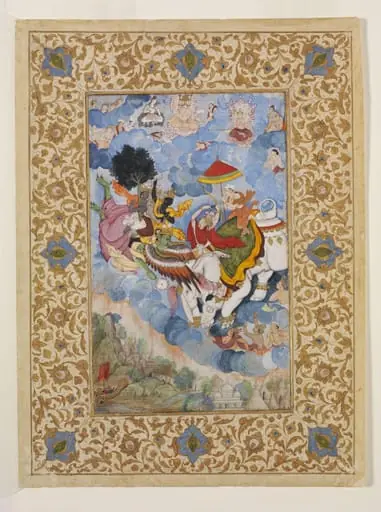
Krishna Lifting Mount Govardhan, from a Persian translation of the Bhagavata Purana, c. 1625
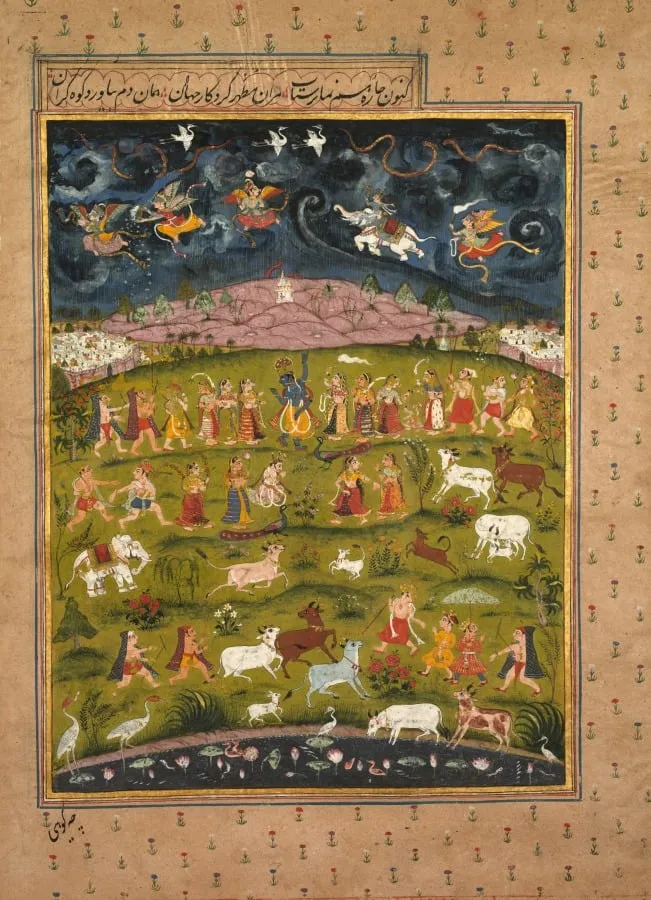
Krishna Lifting Mount Govardhan, from a Persian translation of the Bhagavata Purana, c. 1625 is an unspecified painting by the Baroque artist Unknown. It dates from 1704 and is held in the collection of the Cleveland Museum of Art. The painting depicts the Hindu deity Krishna, rendered with blue skin, hoisting the hill of Govardhan on a single finger.
About this work
Overview
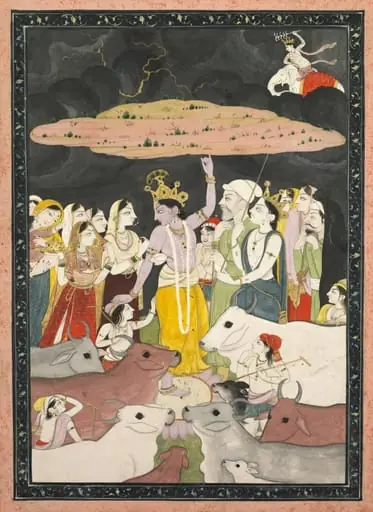
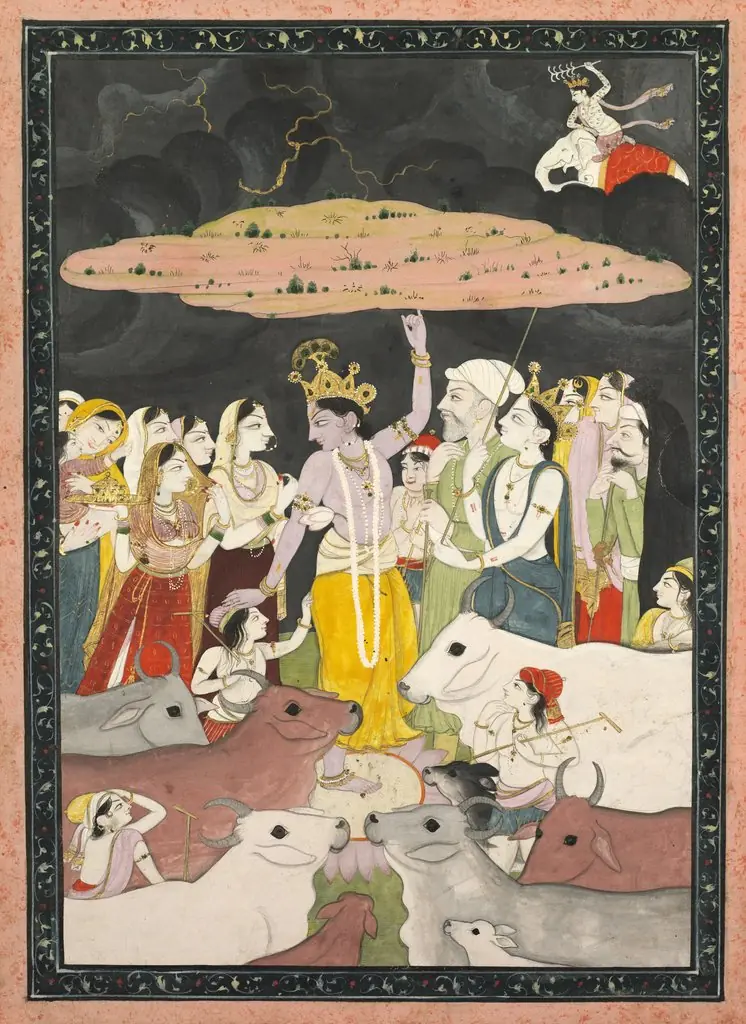
The painting depicts the Hindu deity Krishna, rendered with blue skin, hoisting the hill of Govardhan on a single finger. Beneath the lifted mountain, a stormy sky swirls, while cows, villagers, and celestial beings watch the scene. A milkmaid offers Krishna a chew, and the defeated god Indra kneels in the background, acknowledging Krishna’s supremacy.
Subject & Meaning
The composition illustrates the episode from the Bhagavata Purana in which Krishna protects his community by raising Govardhan Hill, shielding them from Indra’s wrathful rains. The gesture of the mountain as an umbrella symbolizes divine protection, while Indra’s humbled posture conveys the triumph of devotion over the forces of nature and authority.
Technique & Style
Executed in the early‑17th‑century Deccan workshop, the work combines Hindu iconography—four arms, bright pigments, and flat decorative space—with Persian manuscript aesthetics such as intricate detailing and a vivid palette. The figures are outlined with fine lines, and the scene is populated with miniature motifs that emphasize narrative clarity over naturalistic depth.
History & Provenance
Created around 1625 for a Persian translation of the Bhagavata Purana, the painting originated in the Deccan region of southern India, a cultural crossroads where Islamic and Hindu artistic traditions intermingled. It later entered private collections before being acquired by a museum, where it now serves as a representative example of syncretic Deccan art.
Context
During the early modern period the Deccan courts patronized artists skilled in both indigenous and Persianate visual languages. This piece reflects that environment, portraying a quintessential Hindu myth through a format familiar to Persian illustrated manuscripts, thereby catering to a multilingual, multicultural audience that appreciated both devotional content and courtly elegance.
Artist & collection

 Domestic Scene
 Giacomo and Cardinal Marco, investing Andrea, Abbot of San Zeno, with his Benefice
 The Nymph of Fontainebleau
 Portrait of a Woman
 Madonna and Child with Saints in the Enclosed Garden
 Venus and Minerva
 Family Group of Four on Sofa
 Wall painting from Room H of the Villa of P. Fannius Synistor at Boscoreale