Artwork
Sfinții Vasile, Grigore și Ioan
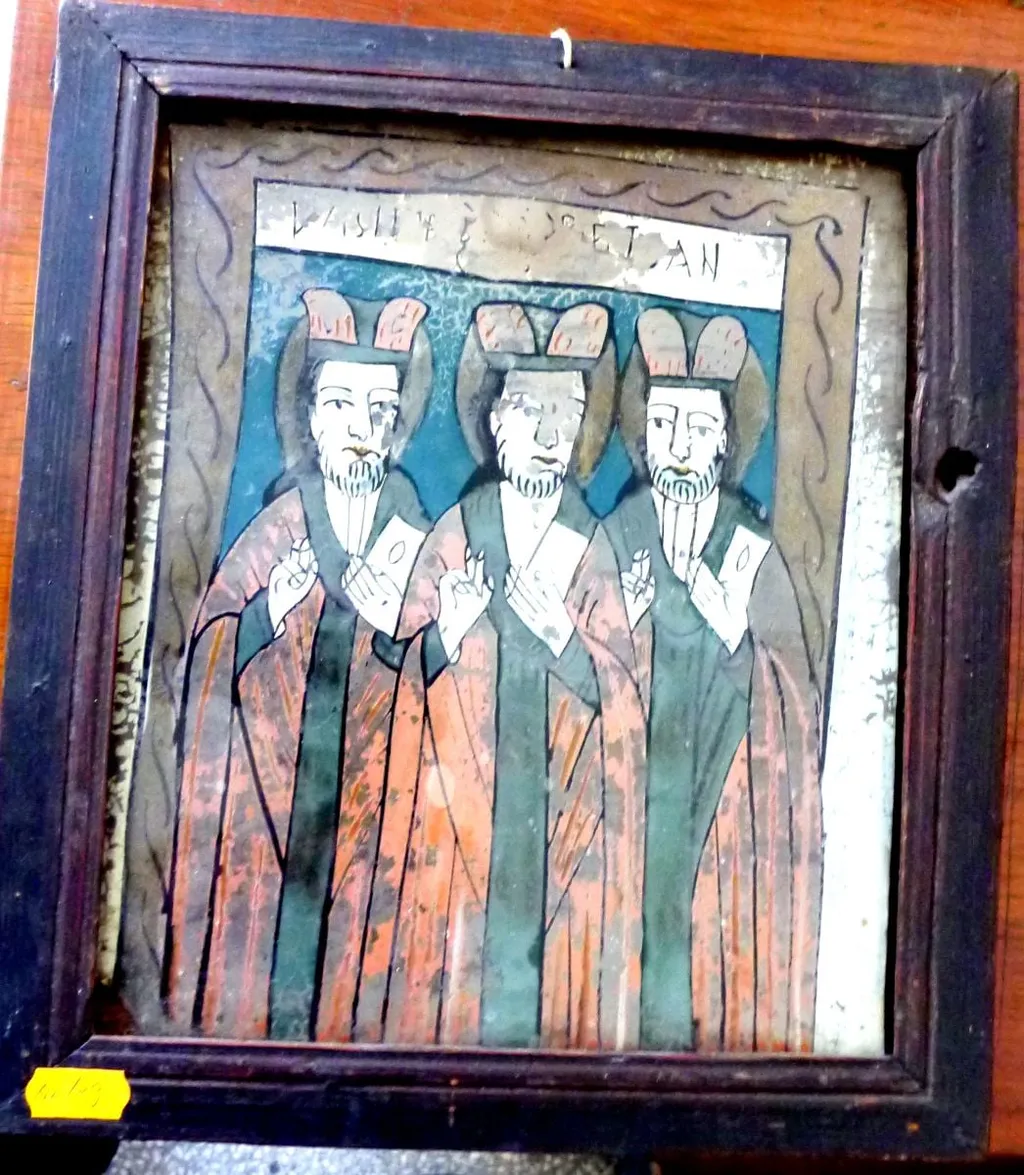
Sfinții Vasile, Grigore și Ioan is a drawing by Unknown. It dates from 1850 and is held in the collection of the Bistrita-Năsăud Museum Complex. This painted panel depicts three male figures in long robes and tall headgear, arranged in a static, frontal composition.
About this work
Overview
The surface shows signs of age, with paint loss and fading, suggesting it was once displayed in a devotional or ceremonial setting.
This painted panel depicts three male figures in long robes and tall headgear, arranged in a static, frontal composition. The figures hold white objects, possibly scrolls or books, and their expressions are solemn. The background is a flat, dark blue with a worn border, and the palette is restrained—earthy browns, muted greens, and blues. The surface shows signs of age, with paint loss and fading, suggesting it was once displayed in a devotional or ceremonial setting.
Subject & Meaning
The figures are likely saints, identified by their attire and the objects they hold, which may symbolize spiritual authority or sacred texts. The names inscribed at the top, though faded, suggest a liturgical or hagiographic purpose. Their uniform posture and lack of individualizing detail point to a standardized representation common in religious iconography, intended for veneration rather than personal expression.
Technique & Style
The painting employs a flat, two-dimensional style with no modeling or shading, typical of folk or ecclesiastical traditions that prioritize symbolic clarity over naturalism. Pigments are applied thinly and evenly, with minimal variation in tone. The brushwork is simple and deliberate, emphasizing outline and form over texture or depth, reflecting a regional aesthetic rooted in liturgical conventions rather than academic training.
History & Provenance
The painting’s worn condition and simple materials suggest it was created for local use, possibly in a church or private chapel. Its survival indicates it was preserved through generations, though its exact origin and date remain undocumented. The faded inscriptions and degraded surface hint at exposure to environmental factors or repeated handling, common in devotional objects from rural or non-urban contexts.
Context
This work aligns with Eastern European religious panel painting traditions, where saints were depicted in standardized forms for communal worship. Similar pieces, often made by local artisans, were used in homes or small chapels to support daily prayer and ritual. The absence of perspective or ornate detail reflects a focus on spiritual presence rather than artistic innovation, consistent with regional liturgical practices.
Legacy
The painting contributes to the understanding of vernacular religious art in Eastern Europe, where iconography served communal identity more than individual expression. Its preservation in institutions like the Museum of Ethnography underscores its value as a cultural artifact, offering insight into how faith was visually sustained in communities with limited access to formal artistic training or materials.
Artist & collection
 Domestic Scene
 Giacomo and Cardinal Marco, investing Andrea, Abbot of San Zeno, with his Benefice
 The Nymph of Fontainebleau
 Portrait of a Woman
 Madonna and Child with Saints in the Enclosed Garden
 Venus and Minerva
 Family Group of Four on Sofa
 Wall painting from Room H of the Villa of P. Fannius Synistor at Boscoreale
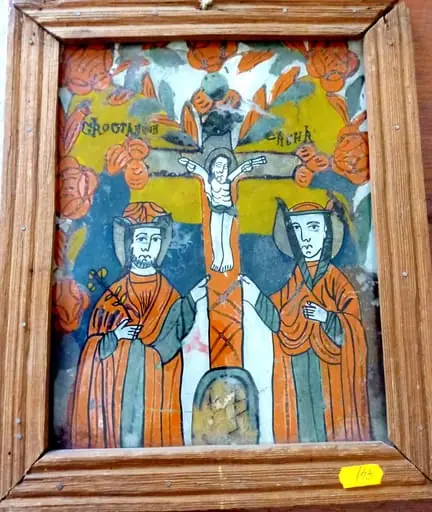 Constantin și Elena
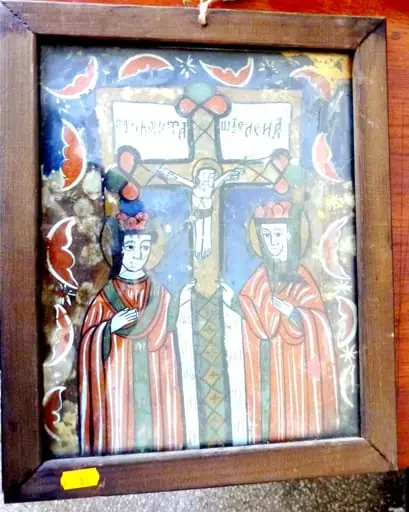 lada de haine
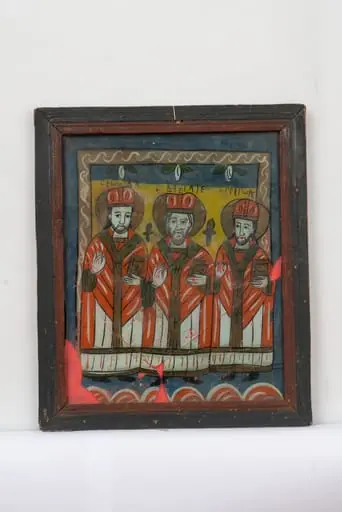 Icoana îi reprezintă pe cei trei sfinți ierarhi, Vasile cel Mare, Grigorie Teologul și Ioan Gură de Aur, pictați frontal, în picioare. Cei trei sfinți binecuvântează cu dreapta, iar în stânga țin Evanghelia. Sfinții sunt îmbrăcați în veșminte arhierești și cu mitre pe cap. Fizionomiile sunt asemănătoare, doar sfântul Vasile, pictat la mijloc, are barba mai lungă decât ceilalți doi sfinți. Compoziția e delimitată în partea superioară de un brâu ornat cu motivul torsadei. Cromatica icoanei se compune din tonuri de roșu vermillon, ocru galben, alb, verde, albastru, negru și gri. Rama icoanei e profilată, bicromă și e formată din îmbinarea a patru baghete de lemn. Sticla e spartă în mai multe fragmente, iar din partea inferioară lipsesc trei fragmente de mici dimensiuni.
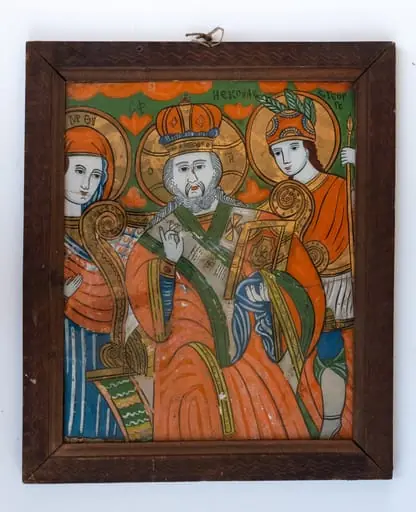 Sfântul Nicolae încadrat de Fecioara Maria și Sfântul Gheorghe
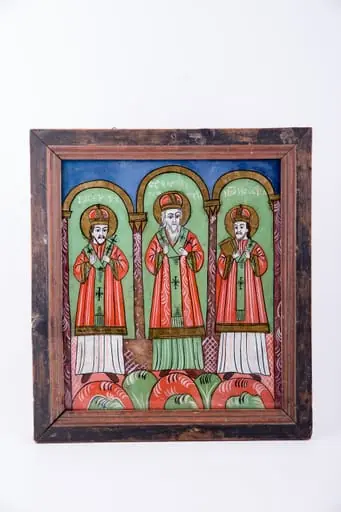 Cei Trei Sfinți Ierarhi Vasile cel Mare, Grigorie de Dumnezeu Cuvântătorul și Ioan Gură-de-Aur slujesc și săvârșesc Sfânta Liturghie împreună. Sunt înveșmântați în veșminte liturgice: sacos verde-alb-verde, felon roșu vermillon, epitrahil verde cu câte patru cruci. Sfântul Vasile cel Mare are Sfânta Evanghelie în mâna dreaptă. Sfântul Ierarh Grigorie de Dumnezeu Cuvântătorul Binecuvintează. Cei trei Sfinți Ierarhi stau cu picioarele pe perinițe rotunde de culori alternative: roșu, verde, alb. Fiecare sfânt ierarh este încadrat de două coloane și o boltă de biserică. Sunt prezente elemente arhitectură bisericească. Fondul registrului superior este albastru. Cromatica este luminoasă și armonioasă: verde, alb, roșu vermillon, roșu, albastru, negru. Este o icoană specifică picturii de Țara Făgărașului, cu un desen fin cu conturul negru și cromatica pastelată. După stilul picturii întregii compoziții, icoane poate să aparțină lui Matei Țimforea.
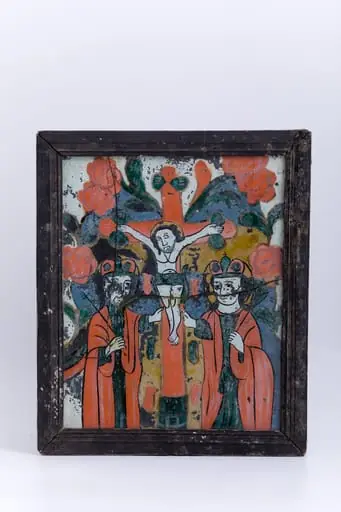 În centrul icoanei este Crucea roșie vermillon, pe care este răstignit Mântuitorul Iisus Hristos. În stânga crucii este Sfânta Împărăteasă Elena, și în dreapta este Împăratul Constantin. Veșmintele sfinților împărați sunt pictate cu roșu vermillon și verde-smarald-gri. Poartă coroane împărătești și aureole de sfinți, mantiiile de împărați le au prinse la gât cu fibulă. Crucea are capetele brațelor cu elemente decorative trilobate roșii vermillon-verzi. Fondul este cerul albastru ceruleum-regal. Întreaga compoziție iconografică este încadrată de un chenar decorativ fitomorf, format dintr-o bogată ghirlandă de trandafiri-bujori, formată din 6 ruje roșii mari. În interiorul icoanei este un spațiu galben luminos cu umbre roșii paralele. Cromatica este armonioasă: roșu vermillon-cărămiziu, albastru ceruleum-regal, verde smarald, gri, bej, crem, bronziu, brun, ocru, alb, negru. Inscripția în româno-chirilică se traduce Constantin și Elena. Icoana este din Nordul Transilvaniei, Nicula.
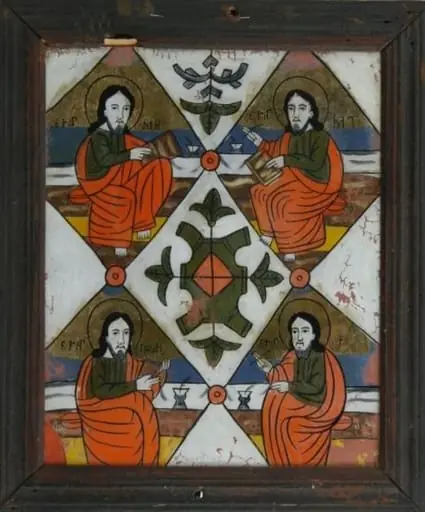 Cei patru Evangheliști
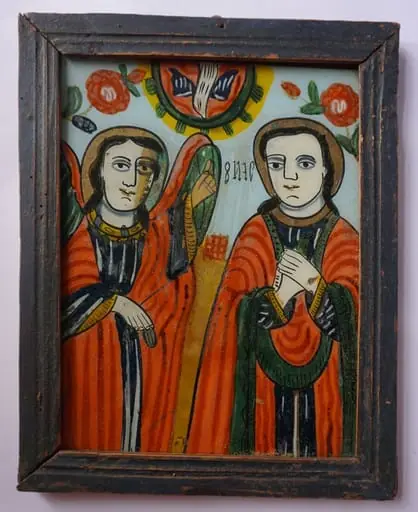 Icoană „Buna Vestire”
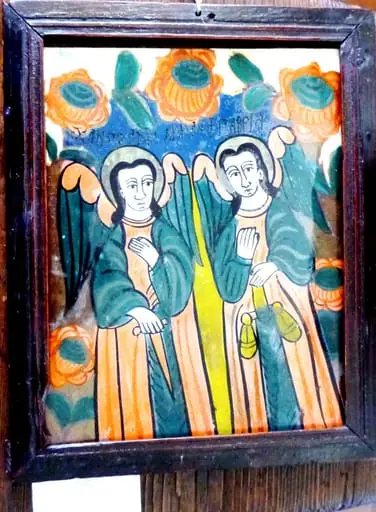 Sfinții Arhangheli