Artwork
Lakshmi
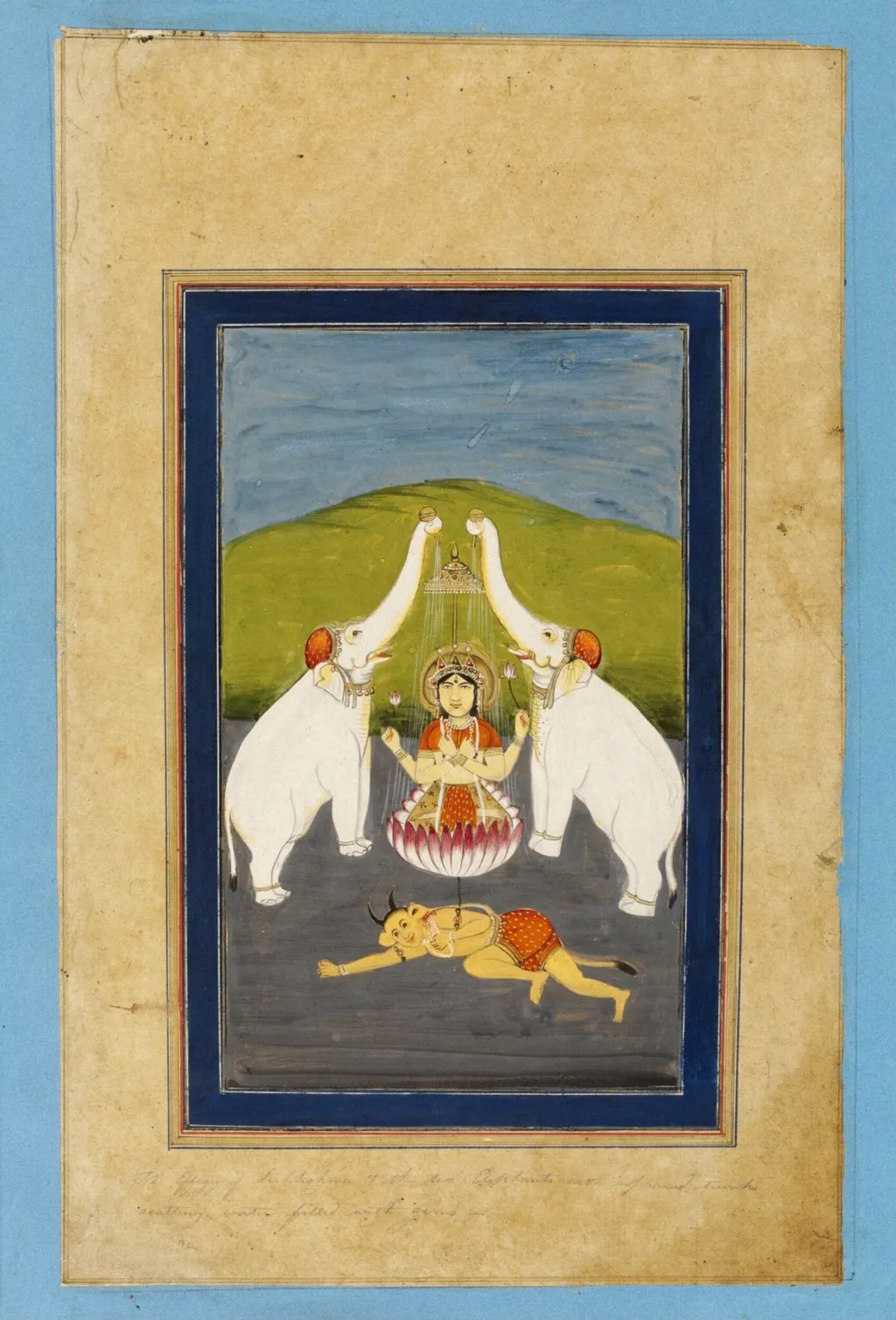
Lakshmi is a paint painting by Unknown. It dates from 1850 and is held in the collection of the Victoria and Albert Museum.
About this work
Overview
This painting, created around 1850, portrays the Hindu goddess Lakshmi in opaque watercolour and gold on paper.
This painting, created around 1850, portrays the Hindu goddess Lakshmi in opaque watercolour and gold on paper. It was originally part of a collection held by the Department of Engraving, Illustration & Design, later transferred to museum custody with the reference RP 51/2237. The composition centers on Lakshmi seated atop a lotus, flanked by two elephants, with symbolic elements rendered in vivid, flat hues and delicate metallic accents.
Subject & Meaning
Lakshmi, goddess of wealth and prosperity, is depicted in a moment of divine grace, elevated on a lotus—a symbol of purity and spiritual emergence. The two elephants, traditionally associated with rain and fertility, pour water from their trunks in a ritual act of anointment. Below her, a bull-headed figure, likely representing the earth or a guardian spirit, reaches upward, reinforcing themes of cosmic order and divine benediction.
Technique & Style
The artist employed opaque watercolour with gold leaf to create luminous, flat planes of color, typical of late Mughal and Rajput manuscript traditions. Forms are simplified, with minimal shading, emphasizing clarity and symbolic presence over naturalism. The use of gold highlights the sacred nature of the scene, while the restrained palette—dominated by red, white, and gold—enhances the painting’s serene, ritualistic tone.
History & Provenance
The painting originated in a regional atelier likely influenced by Mughal court aesthetics, produced during a period when devotional imagery was widely circulated in northern India. It was catalogued and preserved by the Department of Engraving, Illustration & Design before being transferred to institutional care. Its survival reflects the continued value placed on such devotional works within colonial-era collections.
Context
This work belongs to a broader tradition of Indian miniature painting that illustrated religious narratives for private devotion and royal patronage. Around 1850, as British colonial influence grew, regional styles persisted, blending indigenous iconography with refined techniques. Such images served both spiritual and cultural functions, reinforcing religious identity amid shifting political landscapes.
Legacy
The painting remains a representative example of 19th-century devotional art from northern India, valued for its adherence to traditional iconography and craftsmanship. It contributes to scholarly understanding of how Hindu deities were visually sustained in artistic practice during a time of cultural transition. Its preservation in institutional collections ensures continued access for study and public engagement.
Artist & collection

 Domestic Scene
 Giacomo and Cardinal Marco, investing Andrea, Abbot of San Zeno, with his Benefice
 The Nymph of Fontainebleau
 Portrait of a Woman
 Madonna and Child with Saints in the Enclosed Garden
 Venus and Minerva
 Family Group of Four on Sofa
 Wall painting from Room H of the Villa of P. Fannius Synistor at Boscoreale
 Untitled
 Raja on White Elephant with Female Attendants
 Kanhara Ragini: Song of Inspiration to Krishna for Killing the Elephant Demon, from the Ragamala Series
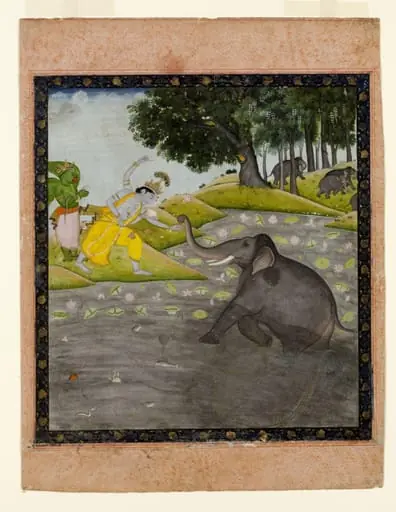 Vishnu and Gajendra
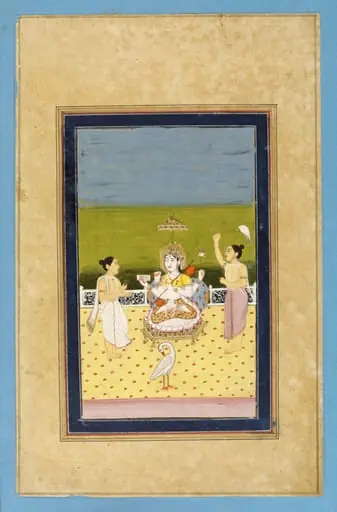 Saraswati
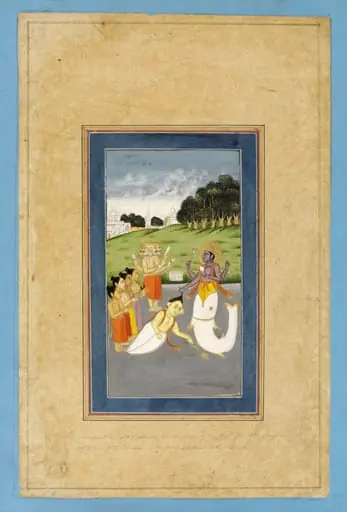 Matsya
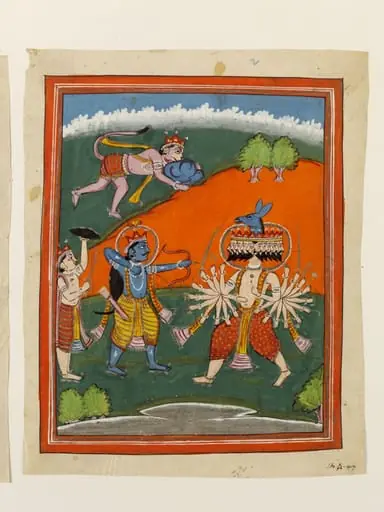 Rama and Ravana
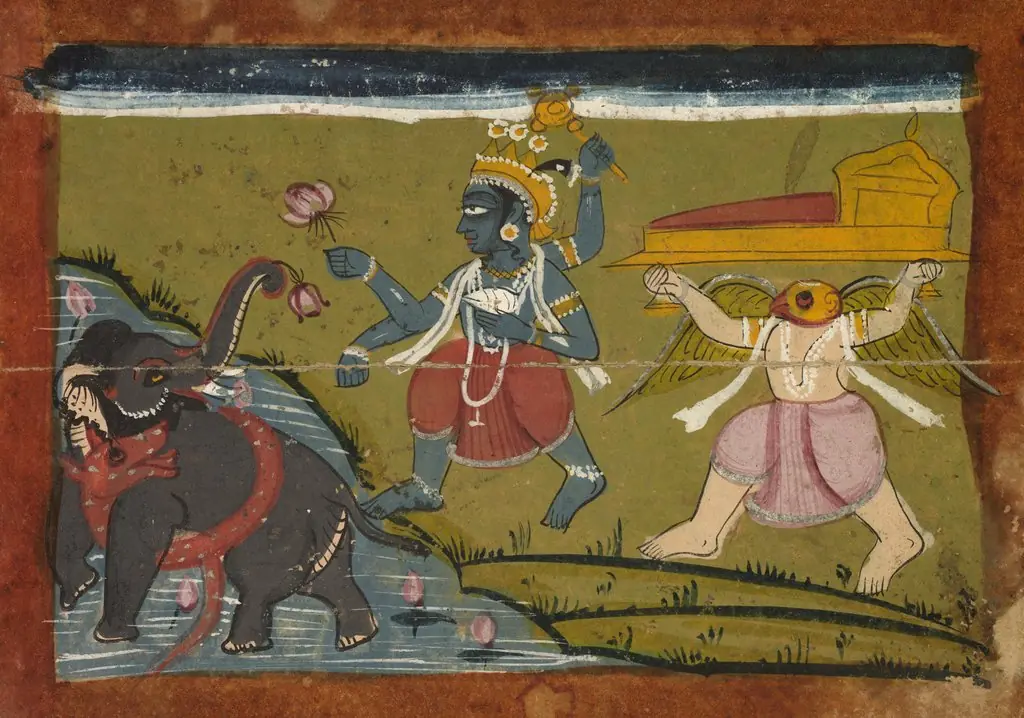 Gajendra Moksha: The Salvation of the King of the Elephants
 Pancham Ragini
 Palace Scene with Cheetah on Chain, Prince and Attendant
 Laila and Majnun
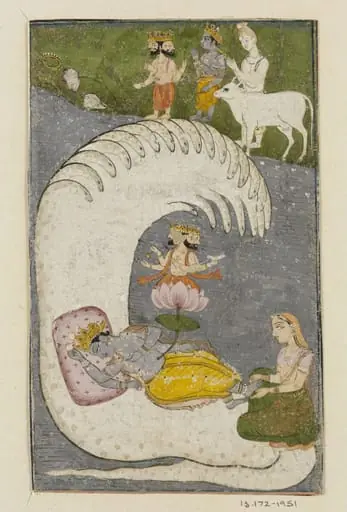 Vishnu and Lakshmi