Artwork
Matsya
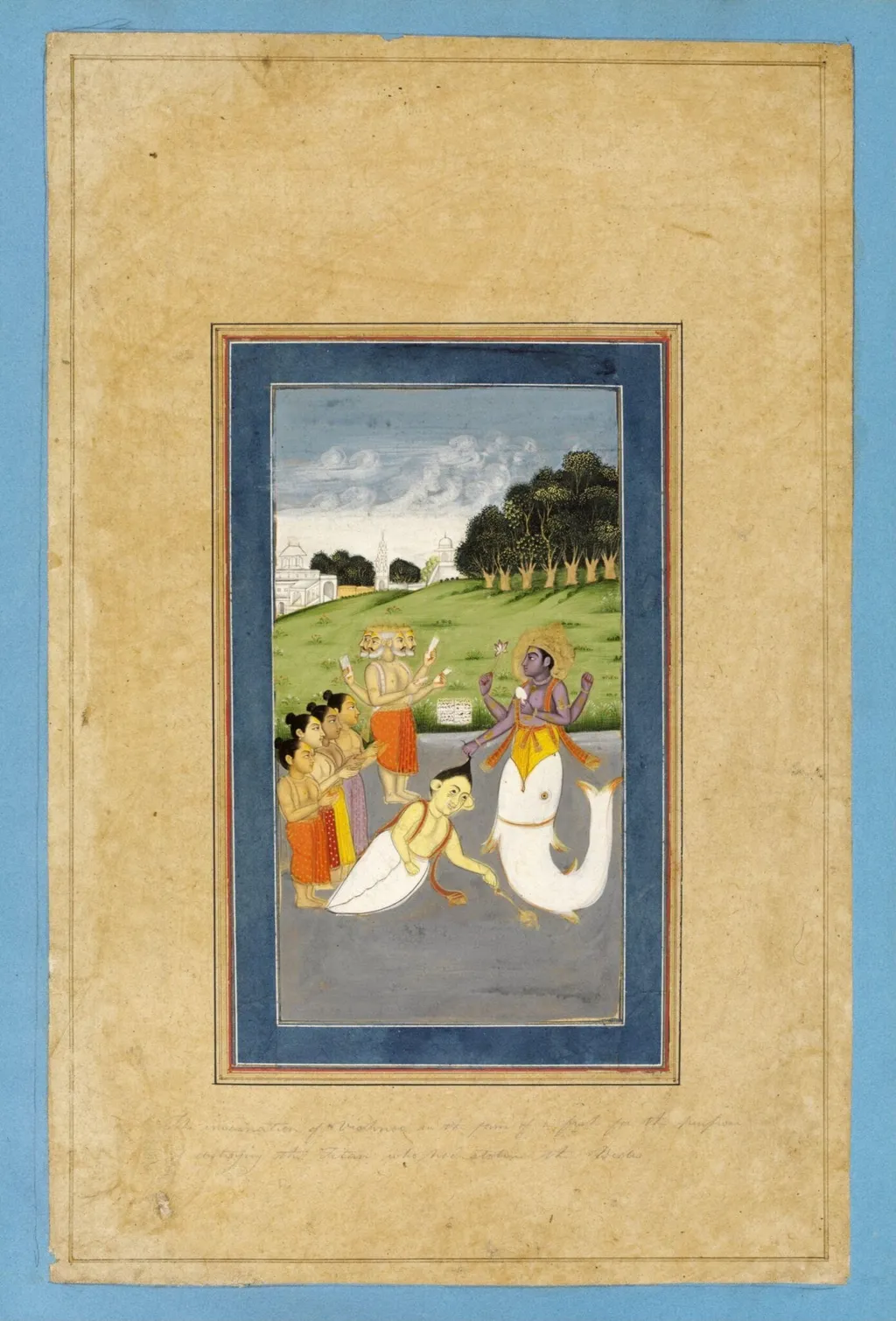
Matsya is a paint painting by Unknown. It dates from 1850 and is held in the collection of the Victoria and Albert Museum.
About this work
Overview
Its composition blends mythological narrative with lively secular elements, suggesting a devotional context infused with regional performance traditions.
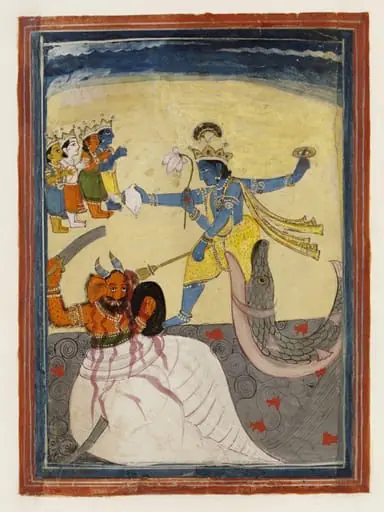
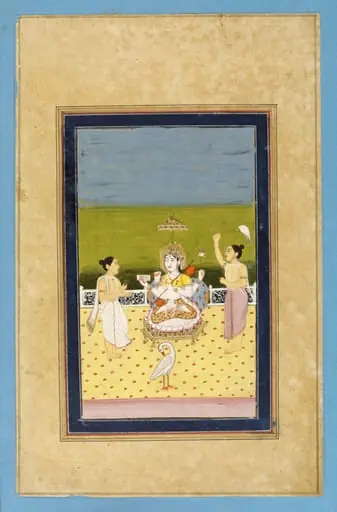
Created around 1850, this painting portrays Matsya, the first avatar of Vishnu, in the form of a hybrid human-fish figure. Executed in opaque watercolour and gold on paper, it reflects the aesthetic conventions of North Indian courtly painting. The work was transferred from the Department of Engraving, Illustration & Design, bearing the catalog reference RP 51/2237. Its composition blends mythological narrative with lively secular elements, suggesting a devotional context infused with regional performance traditions.
Subject & Meaning
Matsya, the fish incarnation of Vishnu, is depicted with a human torso and head, paired with a scaled fish tail, symbolizing divine intervention in cosmic order. The surrounding figures—dancing, observing, and engaging—suggest a festival or ritual celebration tied to the myth of Matsya saving humanity from a great flood. The inclusion of everyday activity implies the avatar’s presence as both sacred and immanent, bridging divine legend with communal life in a devotional setting.
Technique & Style
The painting employs opaque watercolour with gold accents to achieve luminous, saturated hues—reds, yellows, and greens dominate the palette. Fine brushwork details clothing, architecture, and foliage, while the flat, layered perspective is typical of regional Pahari or Rajasthani traditions. The use of gold highlights adds ritual significance to the figure of Matsya and key architectural elements, reinforcing the sacred nature of the scene without naturalistic depth.
History & Provenance
The painting entered institutional care through the Department of Engraving, Illustration & Design, with the reference RP 51/2237, indicating its prior classification among decorative or illustrative works. Its transfer suggests it was once part of a broader collection of South Asian visual materials, possibly assembled during the colonial period. While its exact origin and patronage remain undocumented, its style aligns with mid-19th century North Indian studio production.
Context
This work emerged during a period when Hindu devotional themes were commonly depicted in regional painting schools, often for temple or royal patrons. The fusion of myth with festive activity reflects a broader trend in Indian art where divine stories were rendered in relatable, earthly settings. Similar compositions appear in Pahari and Rajasthani manuscripts, where narrative clarity and symbolic color took precedence over realism.
Legacy
The painting contributes to the understanding of how Hindu iconography was visually adapted in 19th-century India, blending theological symbolism with local cultural expressions. Though not widely exhibited, it remains a representative example of devotional painting from a transitional era, preserving the continuity of narrative art forms that preceded and influenced modern Indian visual culture.
Artist & collection

 Domestic Scene
 Giacomo and Cardinal Marco, investing Andrea, Abbot of San Zeno, with his Benefice
 The Nymph of Fontainebleau
 Portrait of a Woman
 Madonna and Child with Saints in the Enclosed Garden
 Venus and Minerva
 Family Group of Four on Sofa
 Wall painting from Room H of the Villa of P. Fannius Synistor at Boscoreale
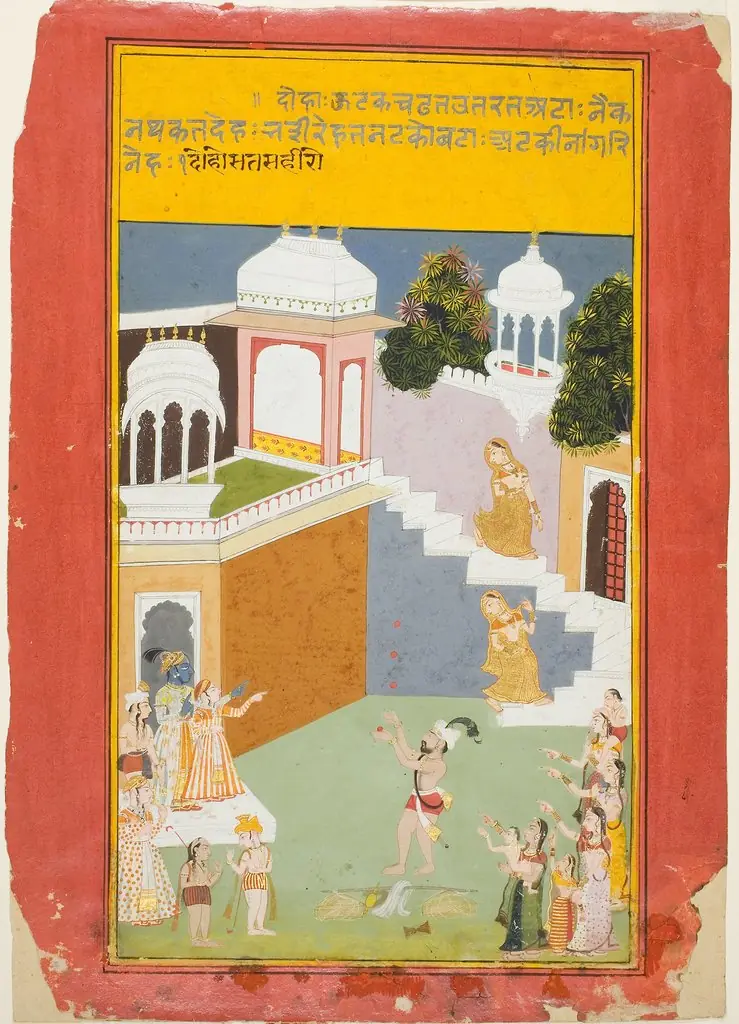 Krishna Watches A Juggler, from a copy of Bihari's Sat Sai
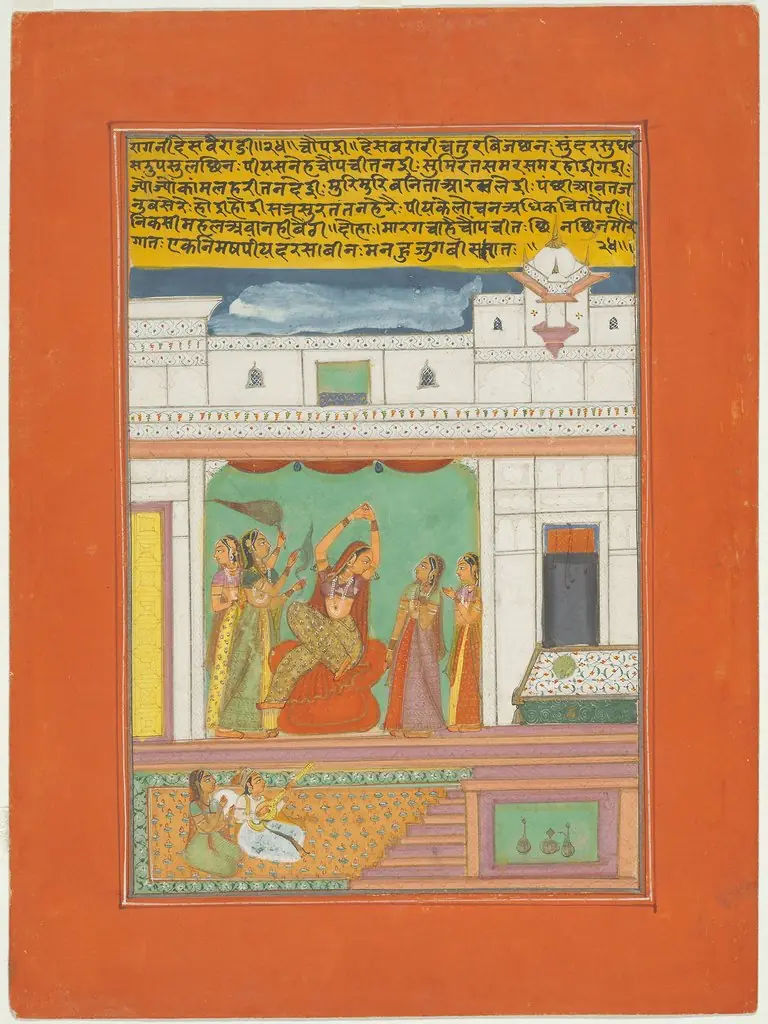 Ragini Desavaradi, Page from a Jaipur Ragamala Set
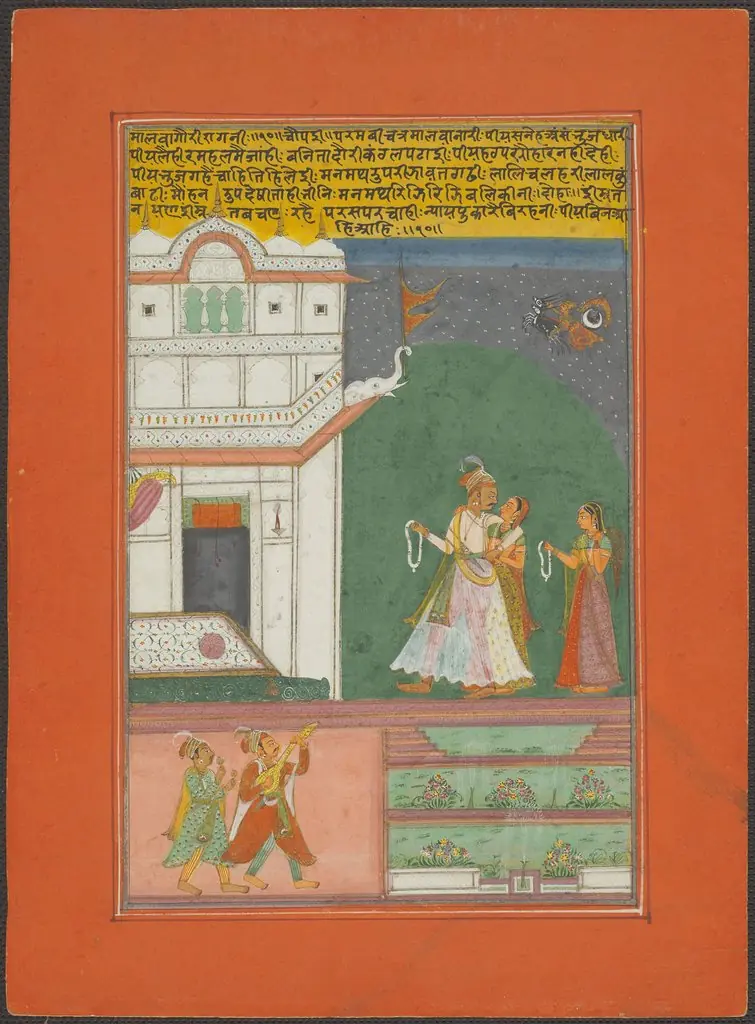 Malavagaudi Ragini, Page from a Jaipur Ragamala Set
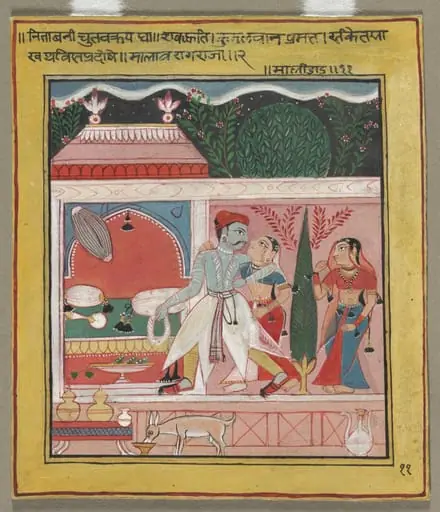 Ragini
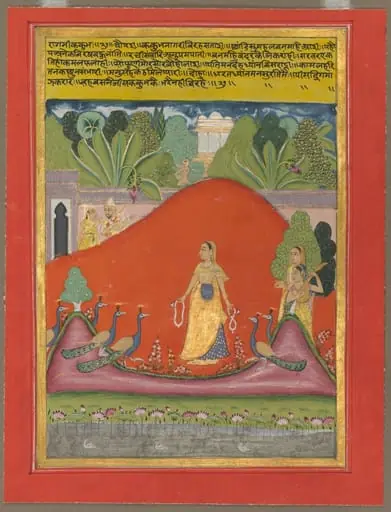 Kakubha Ragini
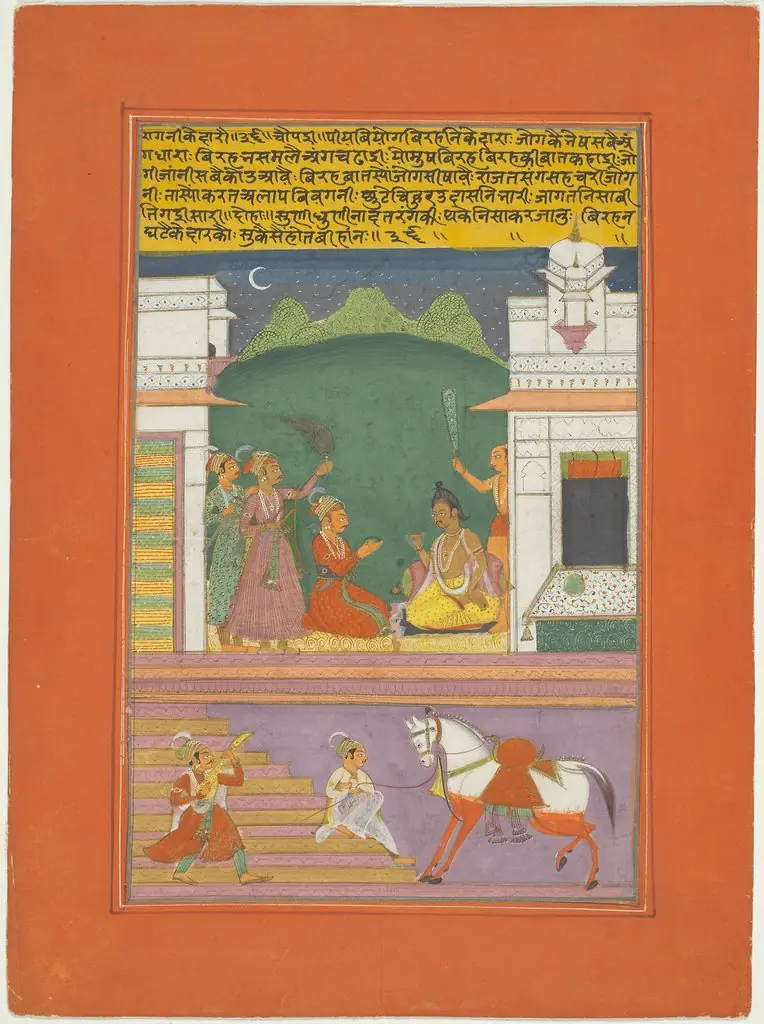 Ragini Kedara, Page from a Jaipur Ragamala Set
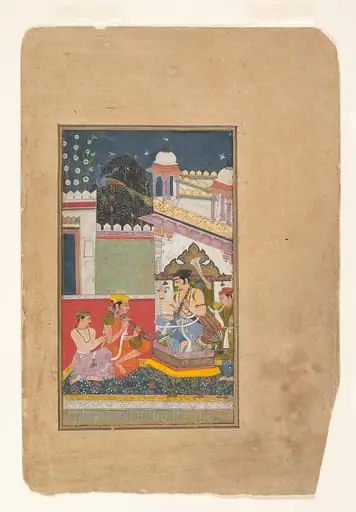 Untitled
 Vasakasajja Nayika
 Devagandhari Ragini
 Untitled
 Vishnu as Matsya
 Saraswati