Artwork
Saraswati
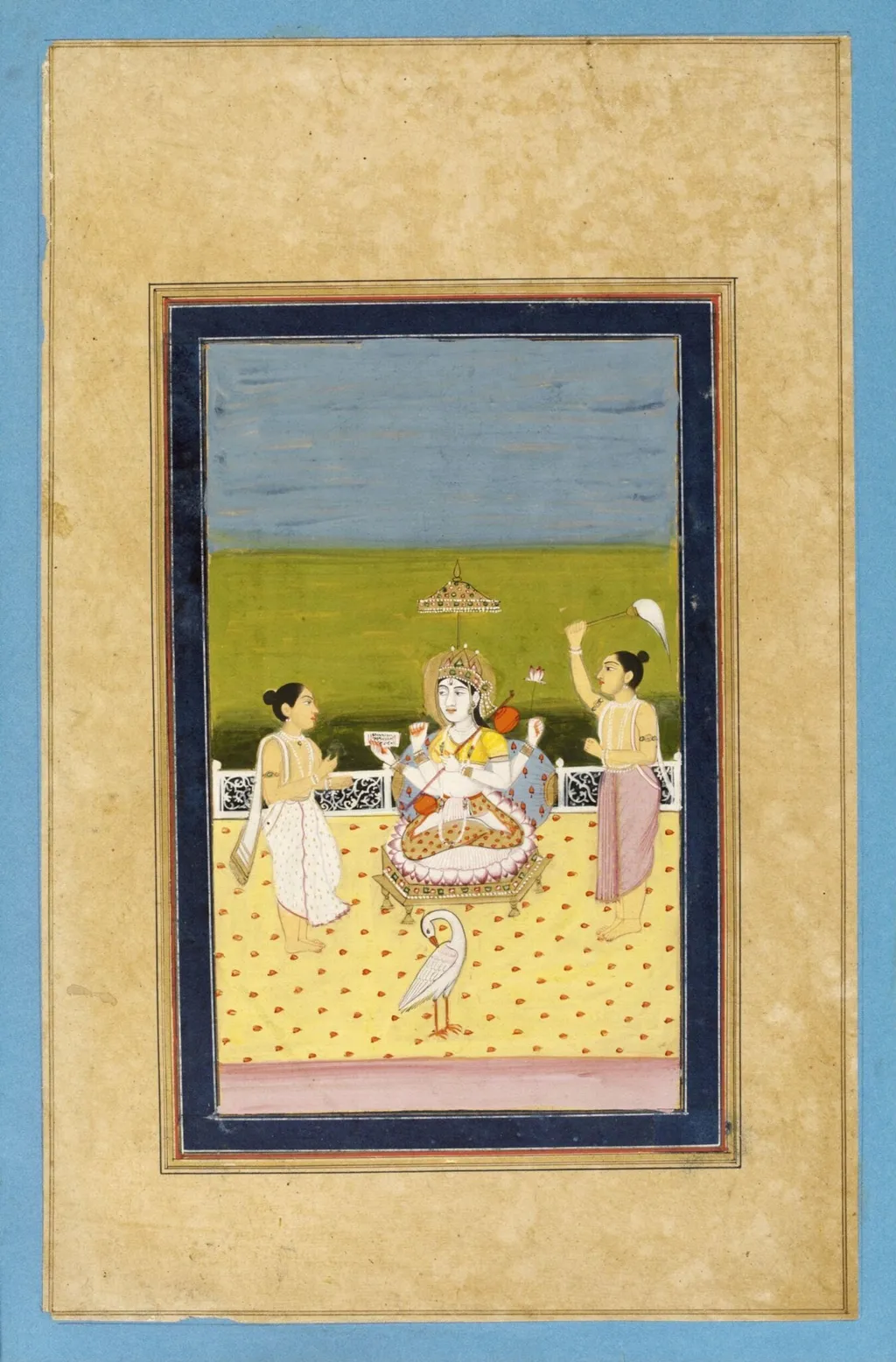
Saraswati is a paint painting by Unknown. It dates from 1850 and is held in the collection of the Victoria and Albert Museum.
About this work
Overview
The work originates from a colonial-era Indian artistic tradition, likely produced for a royal or elite patron.
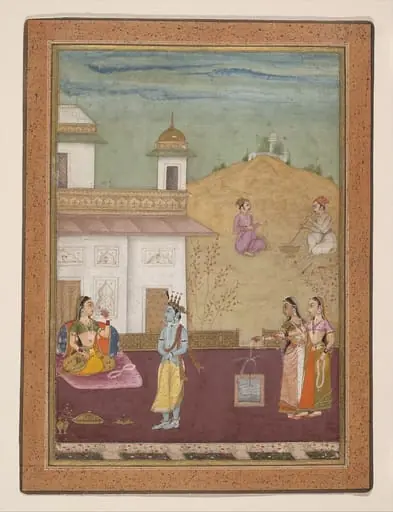
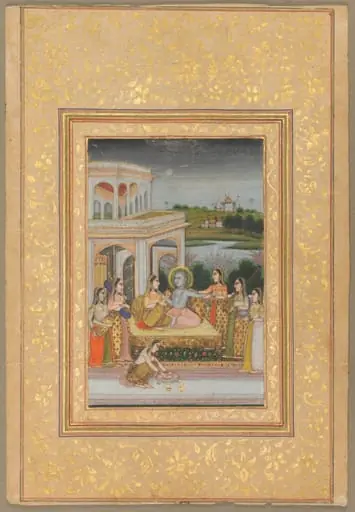
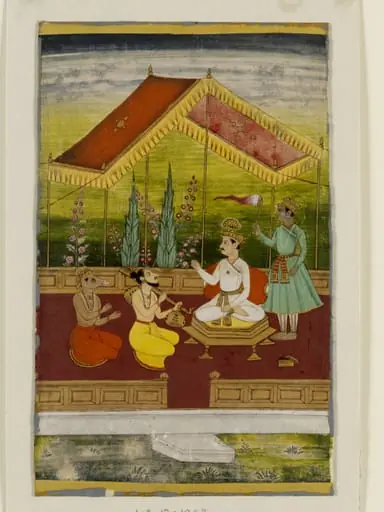
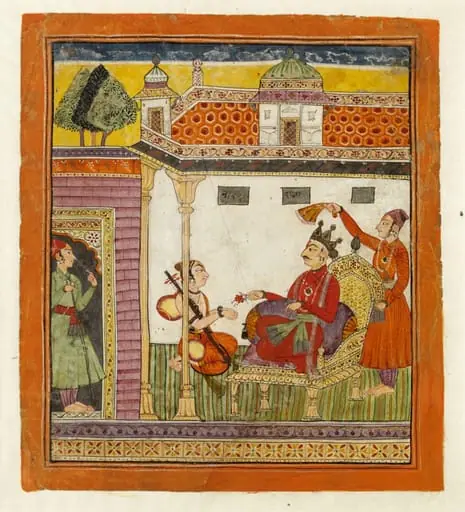
This 1850 opaque watercolour on paper portrays the Hindu goddess Saraswati in a formal, stylized composition. The work originates from a colonial-era Indian artistic tradition, likely produced for a royal or elite patron. It was once held in the Department of Engraving, Illustration & Design at the Victoria and Albert Museum under the reference RP 51/2237, reflecting its status as a documented cultural artifact rather than a folk piece.
Subject & Meaning
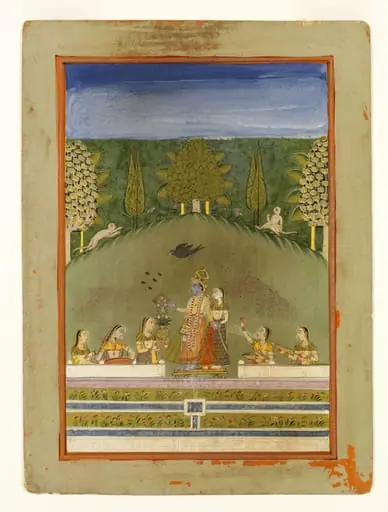
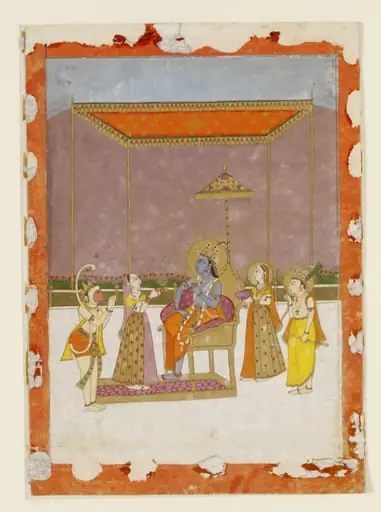
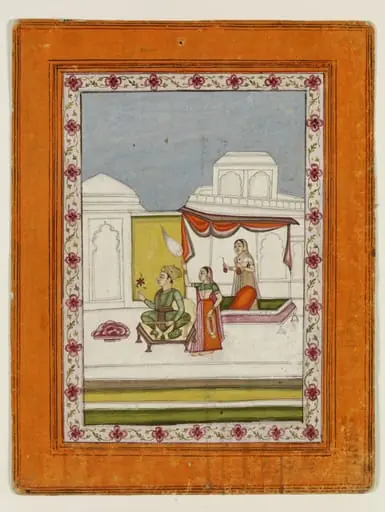
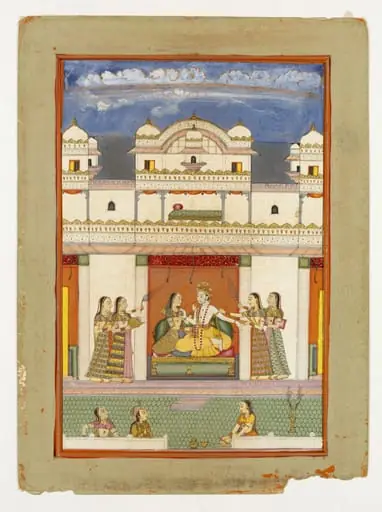
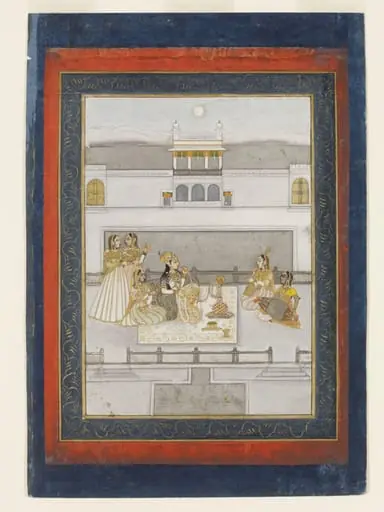
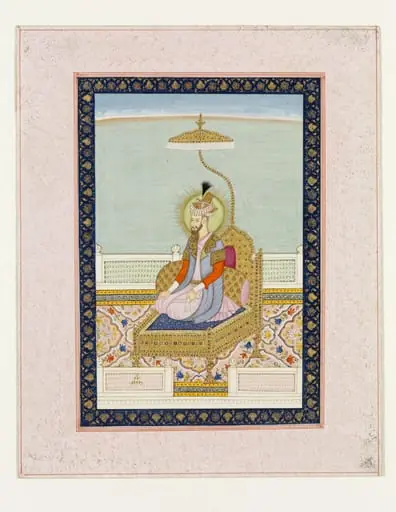
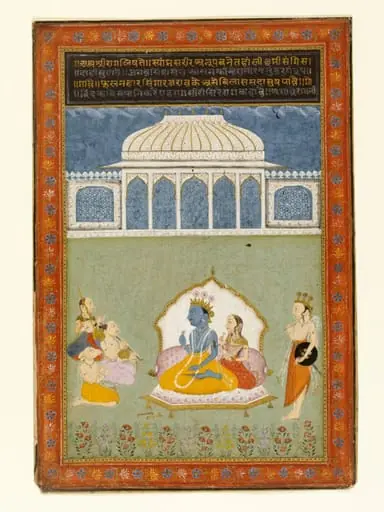
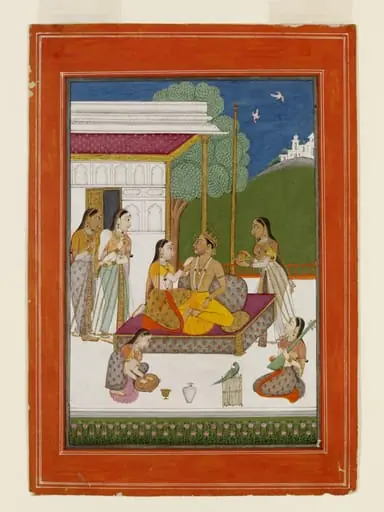
Saraswati, deity of knowledge and the arts, is depicted seated on a throne, holding a book and a stringed instrument, symbols of learning and music. A white goose, her traditional vahana, rests before her, representing discernment. Two attendants flank her: a woman in white, signifying purity, and a man engaged in play, possibly symbolizing the balance of discipline and joy in intellectual life. The scene conveys divine order and the cultivation of wisdom.
Technique & Style
Rendered in opaque watercolour, the painting employs flat, unmodulated hues and sharp outlines, typical of late 19th-century Indian courtly illustration. There is no use of chiaroscuro or perspective; forms are defined by colour fields and decorative patterns. The bright yellow platform, red dots, and bold greens create a rhythmic, symbolic landscape rather than a naturalistic one, emphasizing spiritual presence over physical realism.
History & Provenance
The painting was catalogued in the 19th century under the Department of Engraving, Illustration & Design at the Victoria and Albert Museum, suggesting it entered the collection through colonial administrative channels. Its transfer history indicates it was once part of a broader effort to classify and preserve Indian visual culture, though its exact origin within India remains undocumented. The date of 1850 places it in a period of transition between traditional patronage and colonial collecting practices.
Context
Produced during British colonial rule, this work reflects the persistence of Hindu iconographic traditions despite shifting political powers. Similar compositions appear in Pahari and Rajasthani schools, where deities were portrayed with symbolic attributes and stylized settings. The inclusion of a man playing with a bat and ball may reflect contemporary cultural elements, blending religious imagery with everyday life, a feature increasingly common in regional art of the period.
Legacy
As a documented example of 19th-century Indian miniature painting, this work contributes to scholarly understanding of how religious iconography adapted under colonial influence. It remains part of institutional collections that preserve regional aesthetics distinct from Western artistic norms. Its preservation highlights the importance of non-European visual traditions within global museum histories, even when their original contexts are partially lost.
Artist & collection

 Domestic Scene
 Giacomo and Cardinal Marco, investing Andrea, Abbot of San Zeno, with his Benefice
 The Nymph of Fontainebleau
 Portrait of a Woman
 Madonna and Child with Saints in the Enclosed Garden
 Venus and Minerva
 Family Group of Four on Sofa
 Wall painting from Room H of the Villa of P. Fannius Synistor at Boscoreale