Artwork
Landscape with a lotus pool, from a Tuti-nama (Tales of a Parrot): Eighth Night
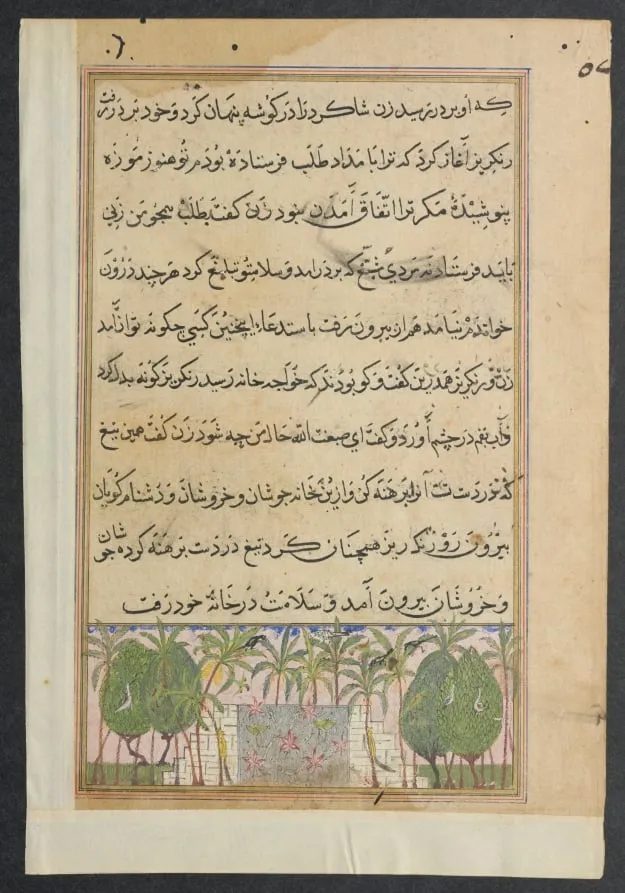
Landscape with a lotus pool, from a Tuti-nama (Tales of a Parrot): Eighth Night is an unspecified painting by the Mughal Painting artist Unknown. It dates from 1560 and is held in the collection of the Cleveland Museum of Art. The painting depicts a tranquil pool of blue water edged with lotus leaves, surrounded by date palms and a modest assortment of fauna.
About this work
You see a quiet blue pool ringed with lotus pads, date palms, and small animals—a squirrel, birds, fish.
You see a quiet blue pool ringed with lotus pads, date palms, and small animals—a squirrel, birds, fish.
Most pages in the *Tuti-nama* tell parrot stories with busy figures. This one is different: no people, no plot, just nature. The water looks like woven straw, a trick artists used to show light dancing on the surface.
If you like this calm scene, look up Mughal India, court of Akbar (reigned 1556–1605).
Overview
The painting depicts a tranquil pool of blue water edged with lotus leaves, surrounded by date palms and a modest assortment of fauna. Bright yellow squirrels scale the slender trunks, birds settle among the foliage, and stylized fish glide beneath a surface rendered in a woven‑basket pattern. The composition is notable for its lack of human figures or narrative elements, focusing solely on a natural setting.
Subject & Meaning
Absent of any storytelling, the work presents an idealized vision of a peaceful garden, emphasizing harmony between flora and fauna. The inclusion of lotus, a symbol of purity, alongside the playful squirrels and birds, suggests a contemplative appreciation of nature’s quiet beauty rather than a didactic or moralizing scene.
Technique & Style
The artist employs a characteristic Mughal technique of depicting water with interlaced, straw‑like brushwork that creates a shimmering effect. Fine, linear detailing defines the palm trunks and animal forms, while the use of vivid yellow for the squirrels provides a striking contrast against the cool blues and greens of the pool and foliage.
Context
This image is one of only two purely landscape panels within the Tuti‑nama, a manuscript primarily devoted to parrot tales illustrated with crowded, narrative scenes. Its departure from the usual storytelling format highlights the courtly interest in naturalistic observation during the reign of Emperor Akbar (1556–1605) in Mughal India.
Artist & collection

 Domestic Scene
 Giacomo and Cardinal Marco, investing Andrea, Abbot of San Zeno, with his Benefice
 The Nymph of Fontainebleau
 Portrait of a Woman
 Madonna and Child with Saints in the Enclosed Garden
 Venus and Minerva
 Family Group of Four on Sofa
 Wall painting from Room H of the Villa of P. Fannius Synistor at Boscoreale
 Page from Tales of a Parrot (Tuti-nama): text page
 Page from Tales of a Parrot (Tuti-nama): text page
 Page from Tales of a Parrot (Tuti-nama): text page
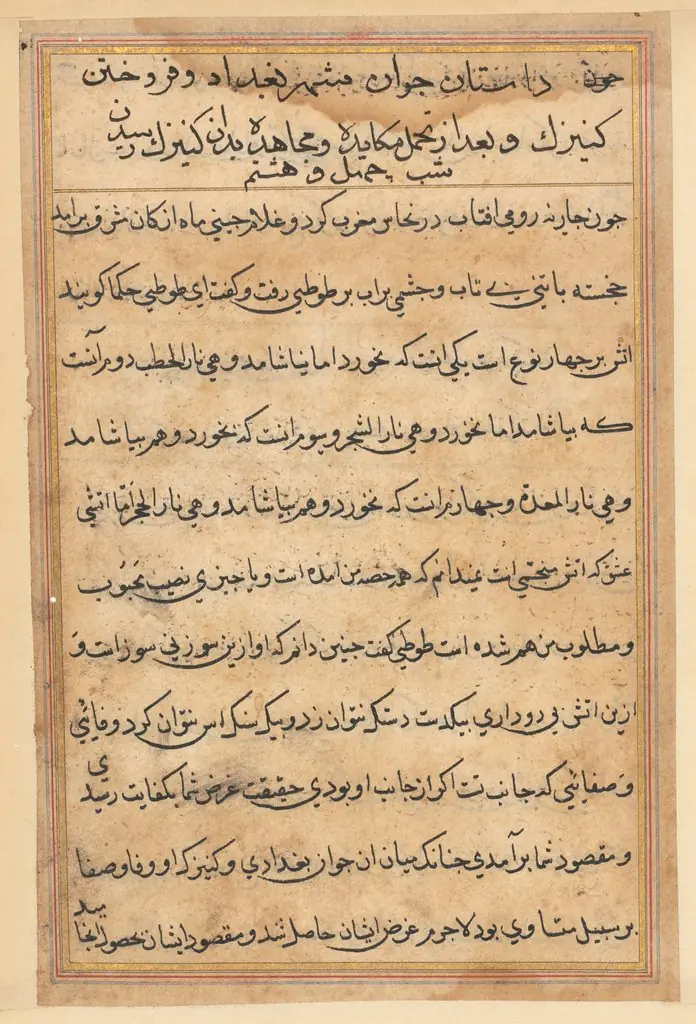 Page from Tales of a Parrot (Tuti-nama): text page
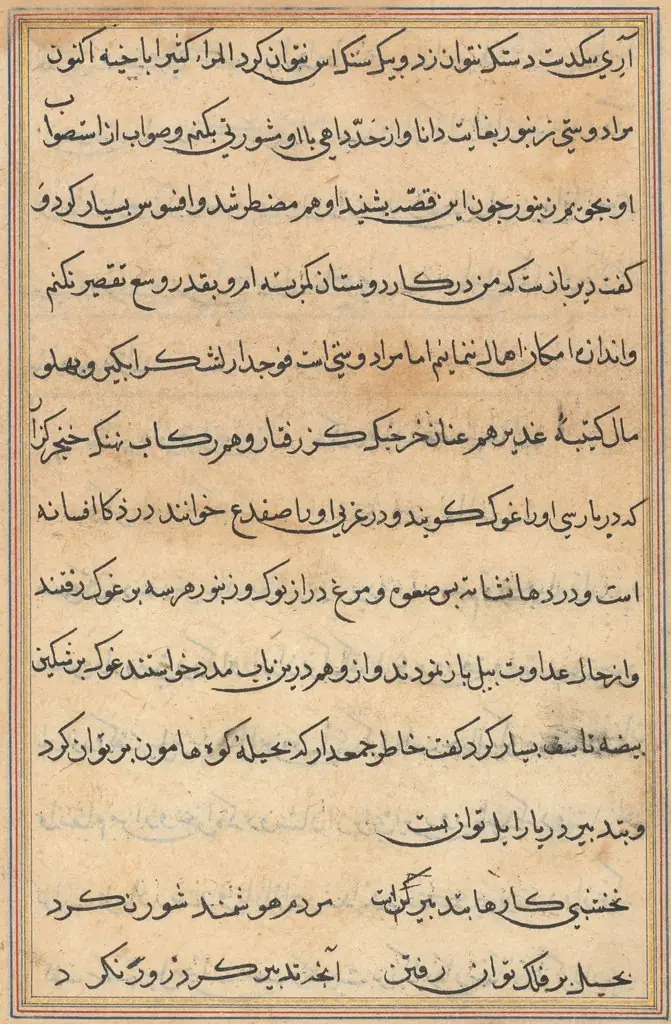 Page from Tales of a Parrot (Tuti-nama): text page
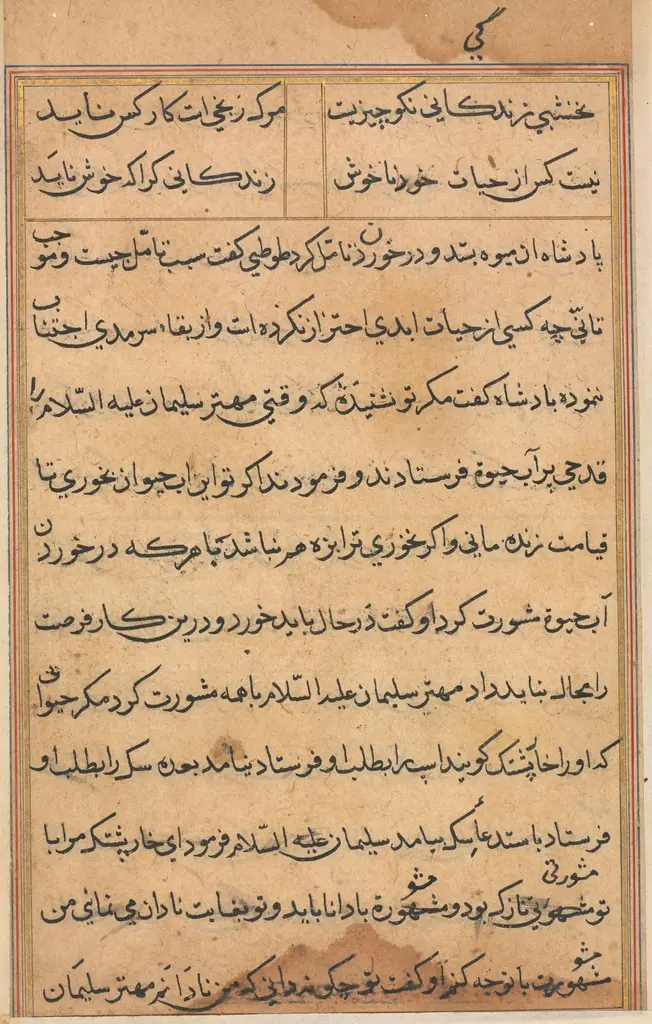 Page from Tales of a Parrot (Tuti-nama): text page
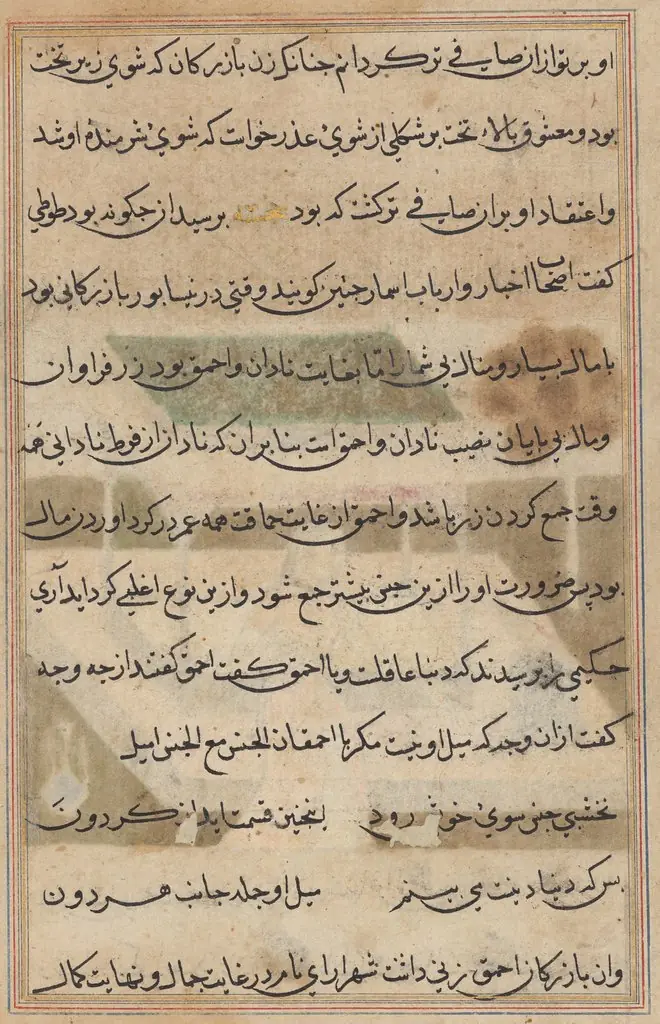 Page from Tales of a Parrot (Tuti-nama): text page
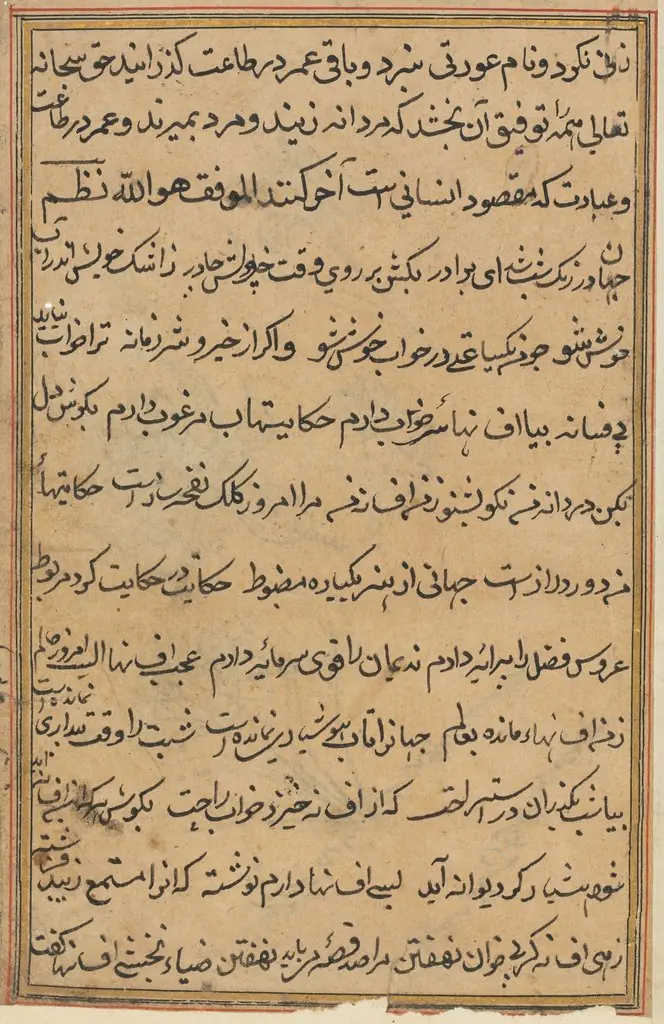 Page from Tales of a Parrot (Tuti-nama): text page
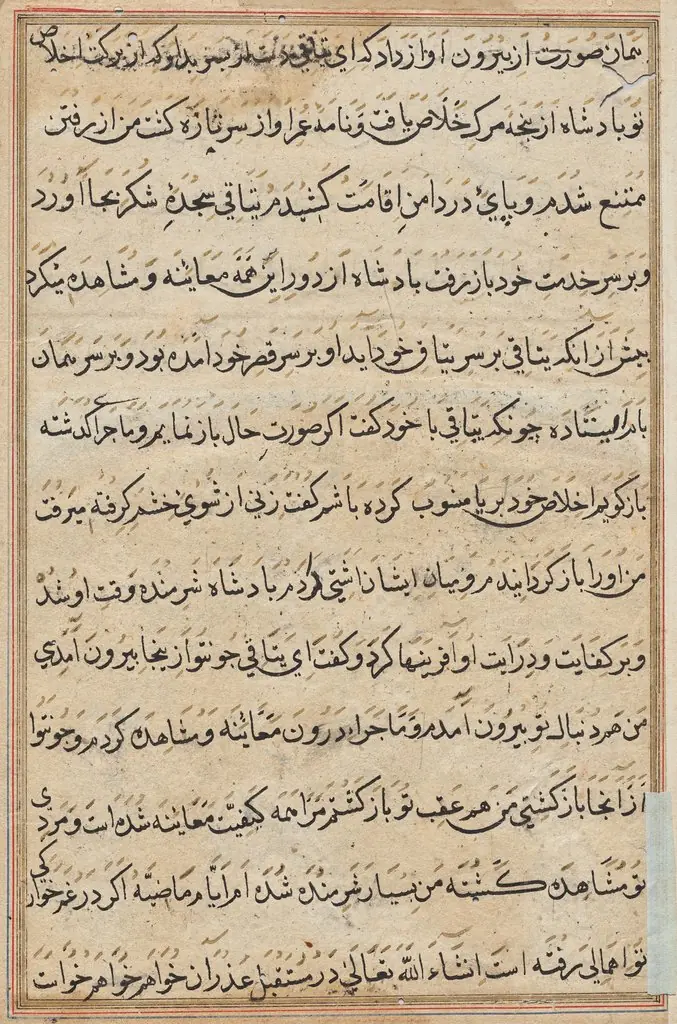 Page from Tales of a Parrot (Tuti-nama): text page
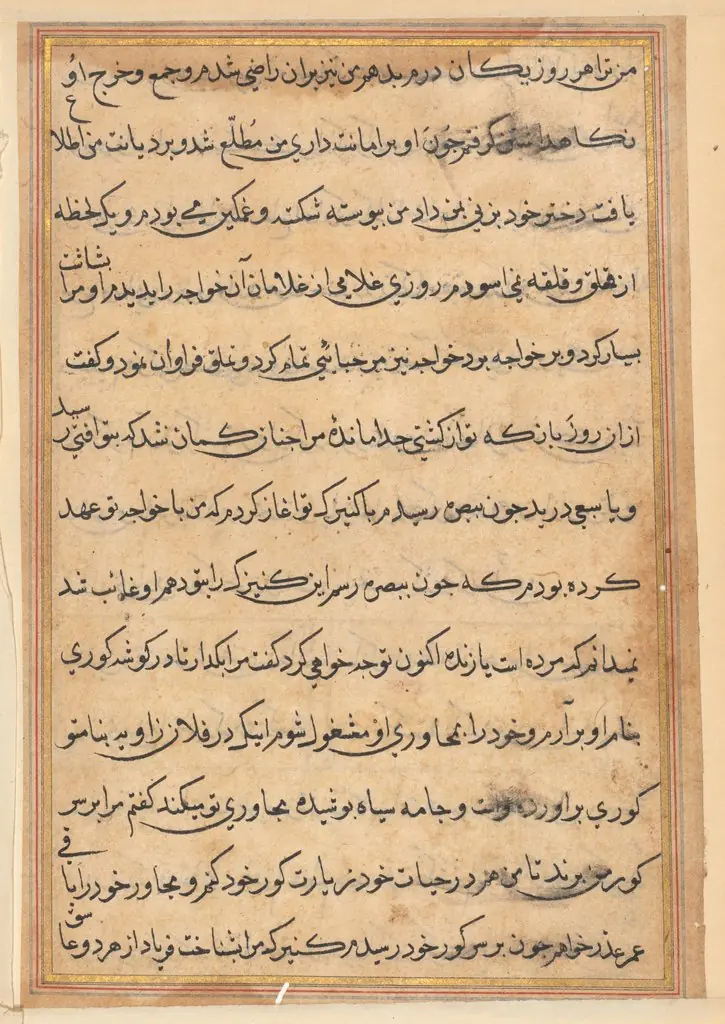 Page from Tales of a Parrot (Tuti-nama): text page