Artwork
Maharaja Ajit Singh of Jodhpur
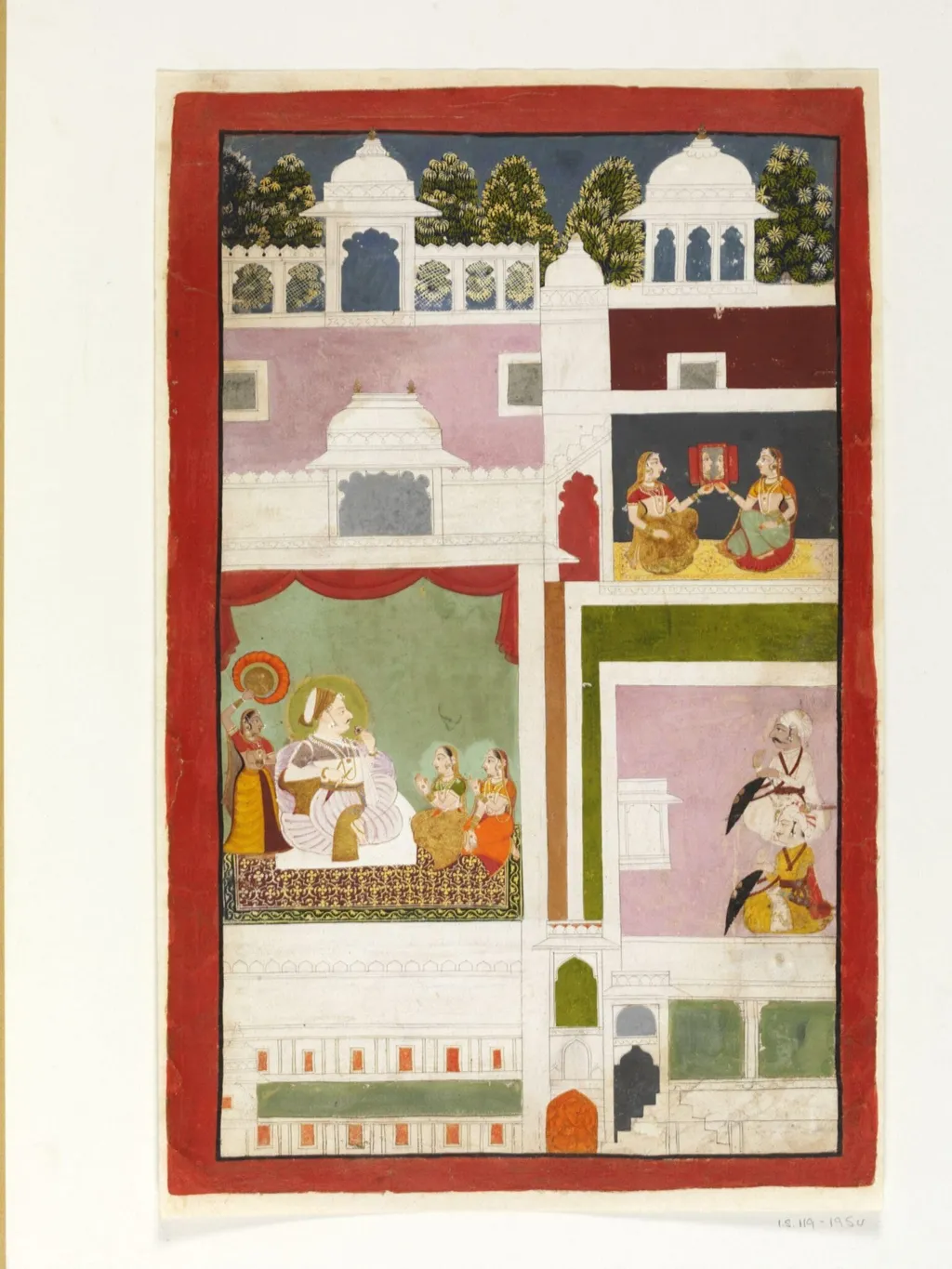
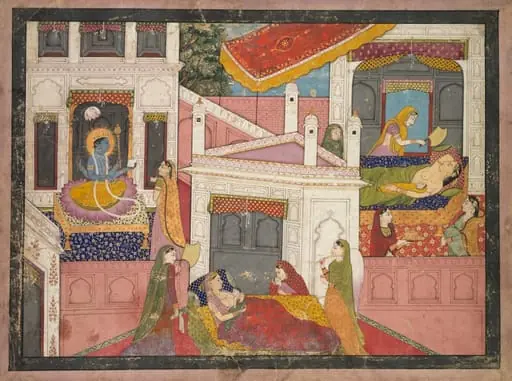
Maharaja Ajit Singh of Jodhpur is a paint painting by the Baroque artist Unknown. It dates from 1724 and is held in the collection of the Victoria and Albert Museum.
About this work
Overview
The composition is structured by architectural divisions that suggest spatial zones, a common feature in Rajput court painting.
This 1724 opaque watercolour on paper depicts Maharaja Ajit Singh of Jodhpur within a palace interior. The composition is structured by architectural divisions that suggest spatial zones, a common feature in Rajput court painting. The scene includes attendants, a musician, and other figures engaged in courtly activities, all rendered in vivid pigments against a backdrop of domed architecture and arched windows.
Subject & Meaning
The painting presents the ruler as a central figure of authority, seated with a drink and attended by servants, one of whom plays a stringed instrument. The presence of a man holding a scroll and a mirror scene suggests themes of governance, reflection, and leisure. These elements collectively reinforce the maharaja’s status and the cultivated environment of his court, where art, music, and ritual coexisted.
Technique & Style
Executed in opaque watercolour, the work employs bold, saturated hues—greens, reds, and golds—to define surfaces and figures. Fine brushwork details textiles, architecture, and facial features, while flat planes and decorative patterns replace naturalistic perspective. The architectural framing creates compartmentalized spaces, characteristic of Rajput manuscript and album painting traditions of the early 18th century.
History & Provenance
The painting entered the British Museum’s collection in 1954 as part of a group of thirty-nine works acquired from Maggs Bros. for £150. These pieces, catalogued as IS. 90–128-1954, were likely assembled from private Indian collections or European dealers. Their acquisition reflects mid-20th-century interest in South Asian decorative arts among Western institutions.
Context
Created during the reign of Ajit Singh, a prominent ruler of the Rathore dynasty, the painting aligns with the flourishing of Rajput court art in Marwar. Similar scenes appear in other regional schools, where rulers were depicted in intimate, multi-figured settings to convey power through daily ritual rather than grandeur. The style reflects both indigenous traditions and subtle Mughal influences in spatial organization.
Legacy
As part of a larger group of Rajput paintings collected in the 1950s, this work contributes to the understanding of regional court aesthetics in early modern India. It remains a reference for studies on patronage, gender roles in courtly life, and the visual language of power in pre-colonial India. Its preservation allows ongoing scholarly engagement with its formal and cultural details.
Artist & collection

 Domestic Scene
 Giacomo and Cardinal Marco, investing Andrea, Abbot of San Zeno, with his Benefice
 The Nymph of Fontainebleau
 Portrait of a Woman
 Madonna and Child with Saints in the Enclosed Garden
 Venus and Minerva
 Family Group of Four on Sofa
 Wall painting from Room H of the Villa of P. Fannius Synistor at Boscoreale
 Varara Ragini
 Ramakali Ragini
 Pancham Raga
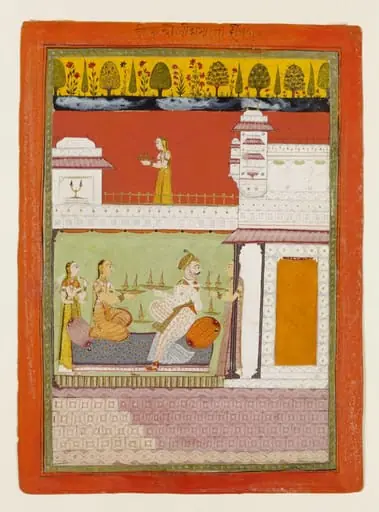 Dipak ragini
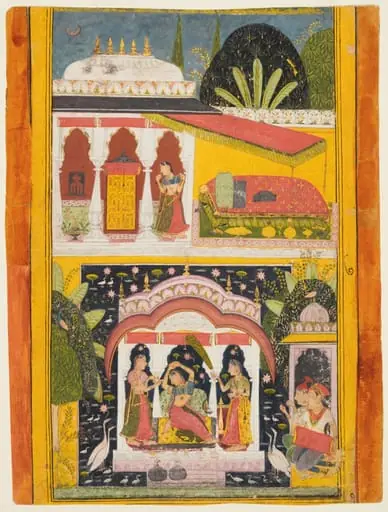 A Royal Woman in a Pavilion: Desavarari Ragini of Dipak, from a Ragamala
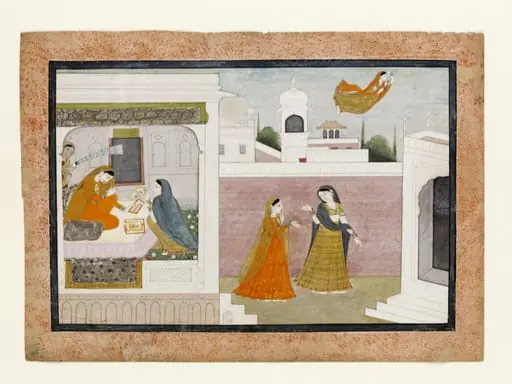 Usha viewing the portrait of Aniruddha
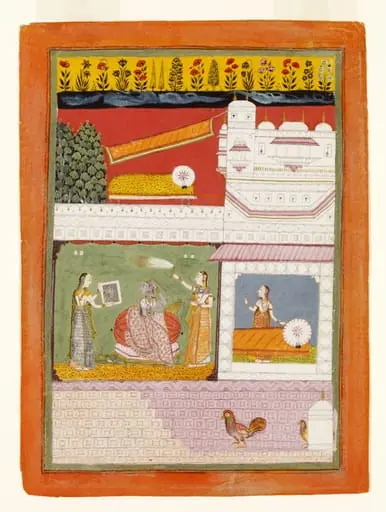 Vilaval Ragini
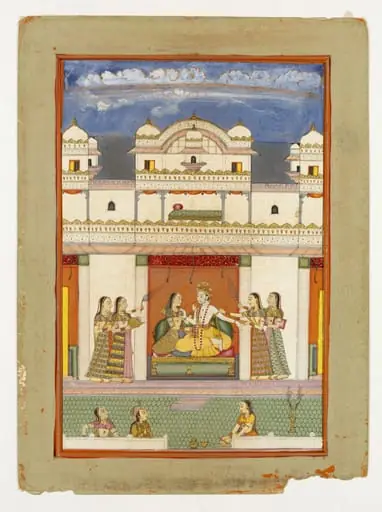 Bhairava raga
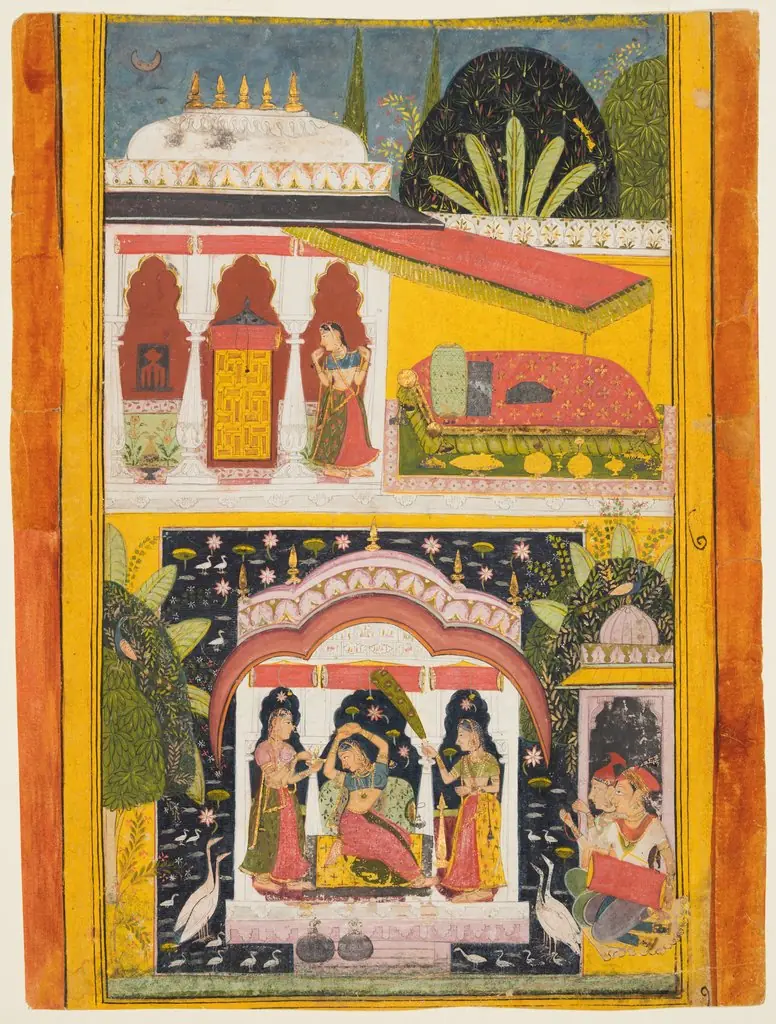 A Royal Woman in a Pavilion: Desavarari Ragini of Dipak, from a Ragamala
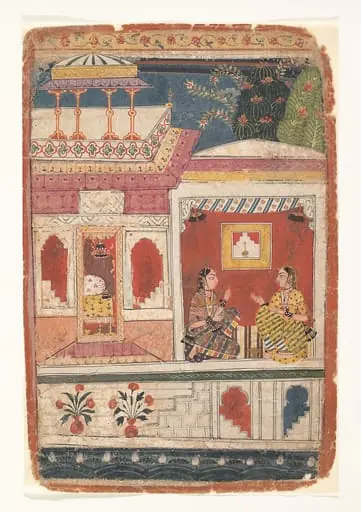 Untitled
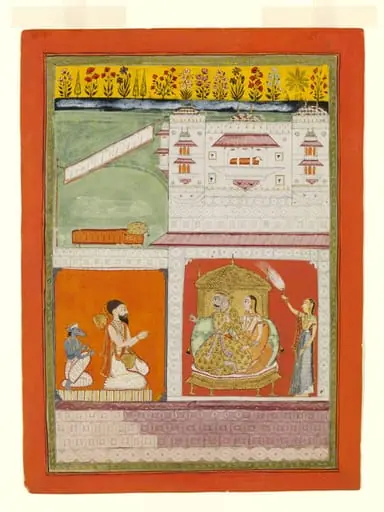 Sri Raga
 The birth of Rama and his brothers, from Chapter 17 of the Bala Kanda (Book of Childhood) of the Adhyatma Ramayana (Rama's Journey of the Supreme Spirit) from the Brahmanda Purana (Ancient Scripture of the Cosmic Egg)