Artwork
Maica Domnului ține în brațe Pruncul Iisus Hristos arătându-L ca fiind Calea, Adevărul și Viața. Este Maica Domnului Hodighitria. Maica Domnului este înveșmântată în mantie cu maforion roșu vermillon și interiorul căputușit cu albastru și sacos verde - nuanță de spanac-avocado. Pruncul Iisus Hristos este înveșmântat în albastru ceruleum, cu aureolă. Fondul icoanei este albastru cu un chenar decorativ geometrizant, format din romburi și triunghiuri albastru și ocru. Cromatică: roșu vermillon, verde, abastru, alb, ocru-brun-bronziu. Inscripția din româno-chirilică se traduce MP IC XC Maica Domnului Iisus Hristos. Icoana este de Țara Oltului. Este spartă.
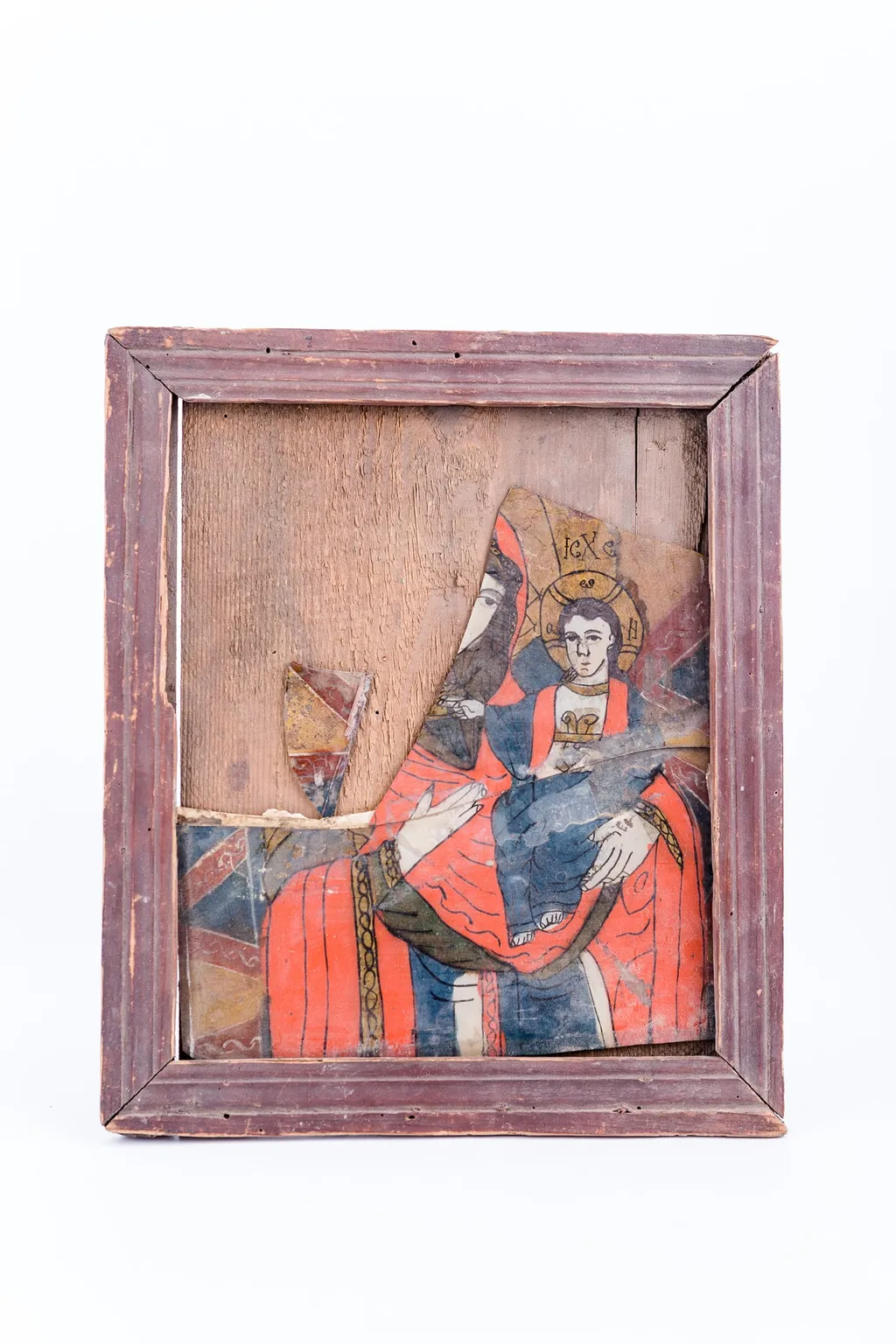
Maica Domnului ține în brațe Pruncul Iisus Hristos arătându-L ca fiind Calea, Adevărul și Viața. Este Maica Domnului Hodighitria. Maica Domnului este înveșmântată în mantie cu maforion roșu vermillon și interiorul căputușit cu albastru și sacos verde - nuanță de spanac-avocado. Pruncul Iisus Hristos este înveșmântat în albastru ceruleum, cu aureolă. Fondul icoanei este albastru cu un chenar decorativ geometrizant, format din romburi și triunghiuri albastru și ocru. Cromatică: roșu vermillon, verde, abastru, alb, ocru-brun-bronziu. Inscripția din româno-chirilică se traduce MP IC XC Maica Domnului Iisus Hristos. Icoana este de Țara Oltului. Este spartă. is a drawing by Unknown. It dates from 1850 and is held in the collection of the ASTRA National Museum Complex. The icon portrays the Virgin Mary cradling the infant Jesus, a composition typical of Eastern Orthodox devotional art.
About this work
Overview
The icon portrays the Virgin Mary cradling the infant Jesus, a composition typical of Eastern Orthodox devotional art.
The icon portrays the Virgin Mary cradling the infant Jesus, a composition typical of Eastern Orthodox devotional art. The figure of Mary is cloaked in a vivid red mantle lined with blue and accented by a green scarf, while the child is dressed in sky‑blue and surrounded by a golden halo. The backdrop is a deep blue field edged with a geometric pattern of rhombuses and triangles in blue and ochre.
Subject & Meaning
The inscription in Romanian‑Cyrillic, MP IC XC, identifies the figures as the Mother of God and Jesus Christ, emphasizing the theological concept of Mary as the conduit of divine truth. The icon’s title, referencing the “Way, the Truth, and the Life,” reinforces the belief that Christ embodies these salvific attributes, with Mary presenting him as the focal point of salvation.
Technique & Style
Executed in the traditional tempera on wood technique, the work displays the characteristic flatness and luminous color palette of Balkan icons. The palette combines vermilion red, avocado‑green, ultramarine blue, and ochre‑bronze tones, creating a striking contrast. The decorative border, formed by interlocking geometric shapes, reflects a stylized aesthetic that balances ornamental detail with the solemnity of the sacred figures.
History & Provenance
Originating from the Olt region of Romania, the icon bears the hallmarks of local workshop practices. It is currently part of the collection at the Museum of Ethnography, where it is displayed in a wooden frame. The piece is noted as being broken, indicating it has suffered damage over time, yet it remains a valuable example of regional religious art.
Context
Icons of this type were central to devotional life in Romanian Orthodox communities, serving both liturgical and private worship functions. The use of Romanian‑Cyrillic script situates the work within a period when this script was prevalent in ecclesiastical contexts, linking it to broader Eastern Christian artistic traditions while retaining distinct local characteristics.
Artist & collection

 Domestic Scene
 Giacomo and Cardinal Marco, investing Andrea, Abbot of San Zeno, with his Benefice
 The Nymph of Fontainebleau
 Portrait of a Woman
 Madonna and Child with Saints in the Enclosed Garden
 Venus and Minerva
 Family Group of Four on Sofa
 Wall painting from Room H of the Villa of P. Fannius Synistor at Boscoreale
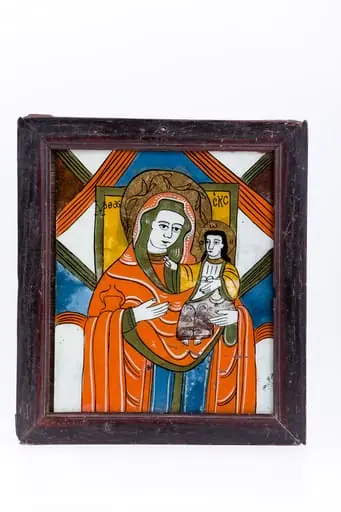 Maica Domnului îl ține în brațe pe Pruncul Iisus Hristos care Binecuvântează cu mâna dreaptă și arată înspre Maica Domnului. Maica Domnului arată calea cu mâna dreaptă, deci este Hodighitria. Maica Domnului este înveșmântată în mantie cu maforion roșu vermillon și sacos albastru, cu interiorul verde, are peste maforiom aureolă. Maforiomul este împodobit cu puncte mici albe. Pruncul Iisus Hristos este înveșmântat în gri și auriu ocru-brun-bronziu, cu interiorul căptușit cu verde și are aureolă. Fondul icoanei este format dintr-un caroiaj alb-albastru, cu marginile verzi și acajou-cărămizii. Compoziția geometrică, formată din romburi suprapuse, ne trimite gândul la nimbul de Slavă de Lumină de la Schimbarea la Față a Mântuitorului Iisus Hristos pe Muntele Tabor. Cromatica este armonioasă, tomnatică, specifică Niculei: roșu vermillon, alb, albastru cobalt, verde, kaki, auriu, ocru-brun-bronziu, brun, alb, negru. Inscripția din româno-chirilică se traduce MP IC XC Maica Domnului Iisus Hristos.
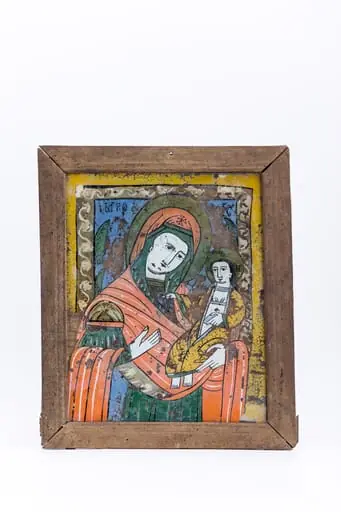 Maica Domnului îl ține în brațe pe Pruncul Iisus Hristos care are în mâna stângă un hrisov înfășurat și Binecuvăntează cu mâna dreaptă. Maica Domnului arată calea cu mâna dreaptă, deci este Hodighitria. Maica Domnului este înveșmântată în mantie cu maforion roșu vermillon și sacos albastru-vernil, are peste maforiom aureolă. Pruncul Iisus Hristos este înveșmântat în alb și auriu ocru-brun-bronziu, și are aureolă. Fondul icoanei este cerul de culoarea albastru cobalt deschis. Întreaga compoziție iconografică este încadrată de un chenar decorativ geometrizant galben-ocru, cu linia albă șerpuitoare, semnificând ideea de veșnicie, de mărturisire. Cromatica este armonioasă, tomnatică, specifică Niculei: roșu vermillon, alb, albastru cobalt, verde, kaki, auriu, ocru-brun-bronziu. Inscripția din româno-chirilică se traduce MP IC XC Maica Domnului Iisus Hristos.
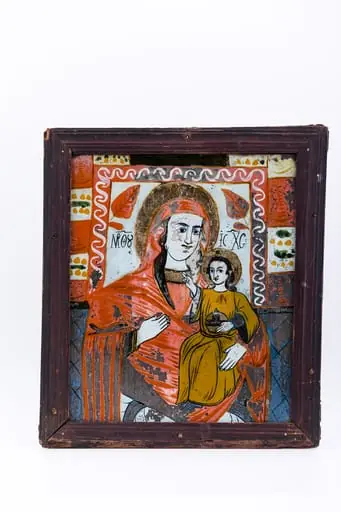 Maica Domnului este reprezentată ținând în brațe Pruncul Iisus Hristos care are în mâna stângă o sferă-globul pământesc și Binecuvântează cu mâna dreaptă. Maica Domnului arată calea cu mâna dreaptă, deci este Hodighitria. Maica Domnului este înveșmântată în mantie cu maforion roșu vermillon și sacos gri-negru, are aureolă. Pruncul Iisus Hristos este înveșmântat în verde kaki și auriu ocru-brun-bronziu, cu aureolă. Fondul icoanei este cerul de culoarea albastru bleu-ciel alburiu, senin, ca într-o fereastră adâncă. Cromatica este armonioasă și caldă: roșu vermillon, alb, albastru bleu-ciel, verde kaki, auriu, ocru-brun-bronziu. Inscripția din româno-chirilică se traduce MP IC XC Maica Domnului Iisus Hristos. Icoana este încadrată de un chenar decorativ geometrizant, format din segmente cromatice, alternativ expuse, cu elemente decorative punctiforme și linia albă șerpuită, specifică picturii de Nicula. Icoana este de Nicula, Crișana - Nordul Transilvaniei.
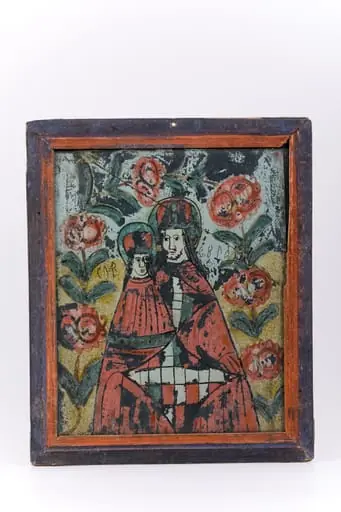 Maica Domnului este înveșmântată în maforiom roșu vermillon, cu mantia lungă, acoperitoare, strânsă în josul poalei, asemenea ca la arhierei și este împodobită cu un ornament dintr-un caroiaj alb-negru. Are mâinile ascunse, sub mantie și Pruncul Iisus Hristos este, de asemenea, învelit, ocrotit de mantia maforiomului. Pruncul Iisus Hristos este înveșmântat în roșu vermillon și gri antracit și are, de asemenea, aureolă aurie. Fondul icoanei este cerul albastru bleu-ciel alburiu, în registrul auperior. În registrul inferior, este un câmp luminos de grâu copt de culoarea galben-chihlimbar. Întreaga tematică iconografică este încadrată de un chenar decorativ fitomorf, format dintr-o ghirlandă de 6 ruje roșii, cu interiorul format dintr-o zăluță neagră. Inscripția din româno-chirilică se traduce MP IC XC Maica Domnului Iisus Hristos. Tematica este mai rară, fiind inspirată dintr-o icoană rusească Maica Domnului „Sporirea minții”. Cromatica este armonioasă: roșu vermillon, albastru bleu-ciel, galben chihlimbar, gri antracit, bronziu, alb, negru. Icoana este din Nordul Transilvaniei, Nicula.
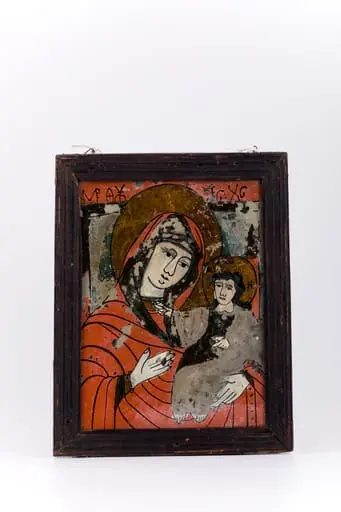 Maica Domnului este înveșmântată în maforiom roșu vermillon-corai, cu interiorul albastru ultramarin-gri, cu gulerașul și mânecuțele cu broderie bronzie, cu aureolă aurie. Maica Domnului arată calea care este Mântuitorul Iisus Hristos - Calea, Adevărul și Viața. Pruncul Iisus Hristos este înveșmântat în albastru ultramarin bleu-marin și gri și are, de asemenea, aureolă aurie. Pruncul Iisus ține în mâna stângă un hrisov înfășurat și cu mâna dreaptă arată înspre Maica Domnului. Fondul icoanei este cerul albastru ceruleum. Întreaga tematică iconografică este încadrată de un chenar decorativ geometrizant, asemenea unei rame încadratoare bronzii. Inscripția din româno-chirilică se traduce MP IC XC Maica Domnului Iisus Hristos. Cromatica este armonioasă: roșu vermillon-corai, albastru bleu-marin, ultramarin, gri, bronziu, alb, negru. Icoana este din Nordul Transilvaniei, Nicula.
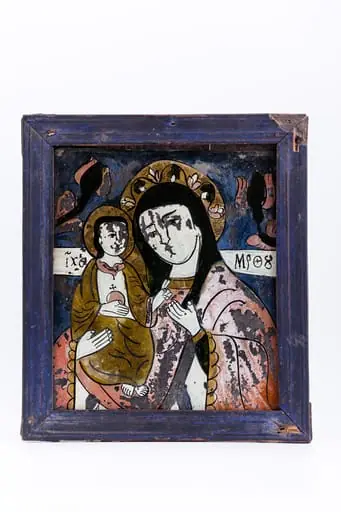 Maica Domnului Îl ține în brațe pe Pruncul Iisus Hristos care are în mâna dreaptă globul pământesc cu crucea deasupra, asemenea unui chivot de biserică, și cu mâna stângă arată înspre Maica Domnului. Maica Domnului arată calea cu mâna stângă deci este Hodighitria. Maica Domnului este înveșmântată în mantie cu maforion roșu vermillon și sacos negru-crem-ocru, cu dungi albe, cu interiorul cenușiu, are peste maforiom coroniță și aureolă. Veșmântul are broderie aurie. Pruncul Iisus Hristos este înveșmântat în ocru-alb, cu gulerașul roșu-roz și are aureolă. Fondul icoanei este cerul albastru ultramarin bleumarin închis. Icoana este încadrată în registrul superior de o ghirlandă de boboci de ruje - 2 trandafiri mari roșii. Cromatica este armonioasă, tomnatică-sobră, specifică Niculei: roșu vermillon, roz, alb, albastru ultramarin bleumarin, kaki, auriu, ocru-brun-bronziu, brun, alb, negru. Inscripția din româno-chirilică se traduce IC XC MP Iisus Hristos Maica Domnului. Icoana este de Nicula, fiind deosebită prin desenul minuțios, detalile delicate ale veșmintelor și expresivitatea chipurilor, remarcându-se tristețea și profunzimea privirilor.
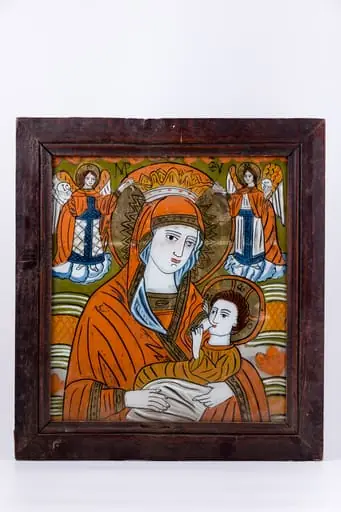 Maica Domnului ține în brațe Pruncul Iisus Hristos, pe care Îl alăptează, din sânul stâng, din dreptul inimii. Pruncul Iisus Hristos ține duios sânul cu ambele mânuțe. Maica Domnului este înveșmântată în mantie cu maforion roșu vermillon și sacos albastru dungat, asemenea unei ii cu gulerașul dantelat, poartă maforion, coroniță de împărăteasă și aureolă. Pruncul Iisus Hristos este înveșmântat în ocru-orange și gri-ivoriu, cu aureolă. În registrul superior, sunt Sfinții Arhangheli Mihail și Gavriil, ținând aureola Maicii Domnului cu mâinile. Sfinții Îngeri Arhangheli au picioarele pe mandorle de nouri alb-albaștri. Fondul icoanei este văzduhul de culoare verde văratic, împodobit cu elemente stilizat-florale, pete de roșu, ruje, în registrul superior. În registrul inferior, este un câmp luminos de verde-orange și galben-ocru. Cromatica este vie, senină și luminoasă: roșu vermillon, alb, albastru cobalt și bleu ciel, verde văratic, mușchi de pădure, verde brad, galben-ocru, alb, negru. Inscripția din româno-chirilică se traduce MP IC XC Maica Domnului Iisus Hristos. Este o icoană de Țara Oltului.
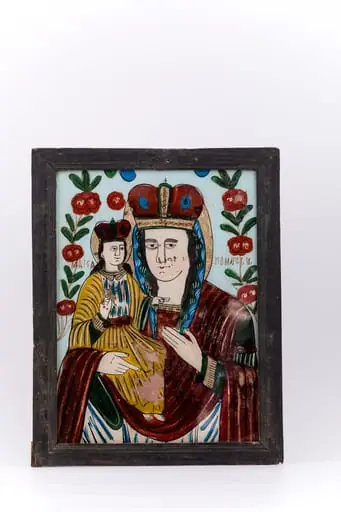 Maica Domnului este înveșmântată în maforiom roșu-vișiniu stacojiu, cu interiorul verde forest de China, cu mânecă cu altiță verde-bronzie și cruciuliță neagră pe brațul stâng, cu interiorul albastru regal, cu dungulițe albe, cu sacosul alb cu dungi albastre, cu aureolă aurie. Sacos-ul Maicii Domnului este asemănător cu o iie tradițională. Pruncul Iisus Hristos este înveșmântat în ocru-muștar, cu sacos alb, cu dungi roșii-albastre, cu mânecile verzi. Pruncul Iisus Hristos Binecuvântează cu mâna dreaptă și arată cu mâna stângă înspre Maica Domnului. Fondul icoanei este cerul albastru bleu-ciel senin. Întreaga tematică iconografică este încadrată de un chenar decorativ fitomorf, format dintr-o ghirlandă de bujori-trandafiri, 7 ruje roșii, mari, cu bobocei și frunze verzi. Inscripția din româno-chirilică se traduce Maica Domnului. Cromatica este armonioasă: roșu vișiniu-stacojiu, albastru bleu-ciel, cobalt-ceruleum, galben-solar-ocru-muștar, verde văratic-forest, brun, bronziu, alb, negru. Icoana este din Nordul Transilvaniei, Gherla.
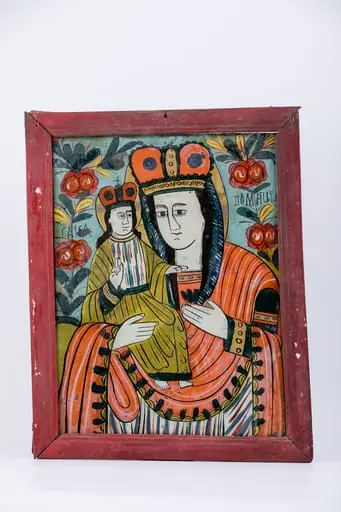 Maica Domnului este înveșmântată în maforiom roșu vermillon, cu interiorul albastru ceruleum cu dungulițe subțiri albe, cu franjuri verzi-galbene, cu aureolă aurie împodobită cu coroană orange de Împărăteasa Cerurilor. Sacos-ul Maicii Domnului este alb cu dungi roșii-albaste. Pruncul Iisus Hristos este înveșmântat în ocru-kaki-verde olive și are, de asemenea, coroană și aureolă aurie. Pruncul Iisus Binecuvântează cu mâna dreaptă, și arată înspre Maica Domnului cu mâna stângă. Fondul icoanei este albastru bleu-ciel senin, în registrul superior și galben-ocru, în registrul inferior. Întreaga tematică iconografică este încadrată de un chenar decorativ fitomorf, format dintr-o ghirlandă de bujori-trandafiri, 4 ruje roșii, mari, cu frunze verzi smarald și galbene. Cromatica este armonioasă: roșu vermillon, roz-trandafiriu, galben-ocru, crem, bej, verde brad, smarald, alb, negru. Inscripția din româno-chirilică se traduce Maica Domnului. Icoana este din Nicula.
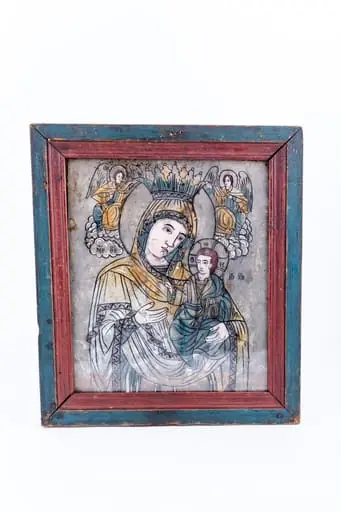 Maica Domnului este Împărăteasă, ținând în brațe Pruncul Iisus Hristos care ține cu mâna stângă pe genunchi, Sfânta Evanghelie închisă și Binecuvântează cu mâna dreaptă. Maica Domnului arată calea cu mâna dreaptă, deci este Hodighitria. Maica Domnului este înveșmântată în mantie cu maforion gri și galben-ocru-auriu cu broderie și falduri și drapaje bine conturate, poartă coroniță de împărăteasă și aureolă. Pruncul Iisus Hristos este înveșmântat în gri-albăstrui un turcoaz pal, cu coroană și aureolă. În registrul superior îndepărtat, stânga și dreapta, sunt cei doi îngeri arhangheli Mihail și Gavriil, ținând cu mâinile coroana Maicii Domnului. Arhanghelii stau pe mandorle rotunde de norișori albi, bine conturați. Fondul icoanei este gri. Cromatică: gri, alb, galben-ocru-auriu, albastru-turcoaz. Rama este pictată cu brun roșcat-acajou. Întreaga icoană este deosebită prin desenul sigur, elegant și sobrietatea luminoasă a cromaticii. Alăturarea gri-ului cu galbenul și albastru și urmele albe de desen sunt specifice Lazului și dau o eleganță aparte Văii Sebeșului, o prețiozitate prin simplitate. Inscripția din româno-chirilică se traduce IC XC MP Iisus Hristos Maica Domnului.
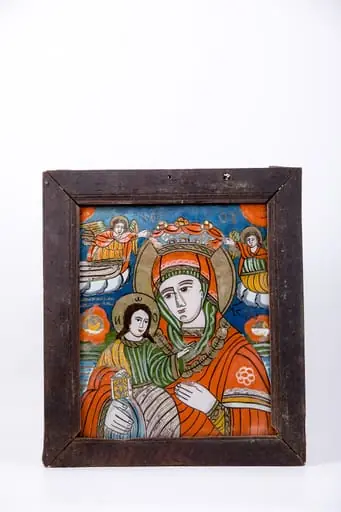 Maica Domnului Împărăteasă ține în brațe lipit pe umărul drept, pe Pruncul Iisus Hristos, care are în mâna dreaptă Sfânta Evanghelie închisă și cu mâna stângă arată înspre Maica Domnului. Maica Domnului arată calea cu mâna dreaptă, deci este Hodighitria. Maica Domnului este înveșmântată în mantie cu maforion roșu vermillon, cu interiorul verde și sacos cu mânecile galbene, poartă coroniță de împărăteasă și aureolă. Pruncul Iisus Hristos este înveșmântat în verde kaki și auriu ocru-brun-bronziu, cu coroană și aureolă. Maica Domnului poartă la gât o salbă din bănuți de aur. În registrul superior, de-a dreapta și de-a stânga Maicii Domnului, sunt Sfinții Arhangheli Mihail și Gavriil, pe câte o mandorlă de nouri rotunzi albi-crem, susținând dimpreună cu mâinile coroana de Împărăteasă a Maicii Domnului. Fondul icoanei este cerul de culoarea albastru regal. Cromatica este luminoasă, vie și armonioasă: roșu vermillon, alb, albastru regal și bleu-ciel, verde-văratic și spanac-avocado, kaki, auriu, ocru-brun-bronziu, galben-chihlimbar, negru. Inscripția din româno-chirilică se traduce MP IC XC Maica Domnului Iisus Hristos. Icoana este de Șcheii Brașovului, Țara Oltului.
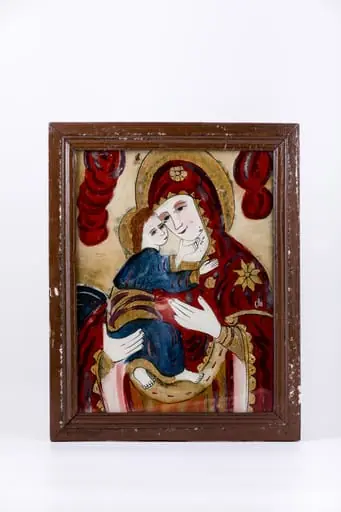 Maica Domnului ține în brațe Pruncul Iisus Hristos, îmbrățișându-L și lipindu-L în dreptul inimii. Pruncul Iisus Hristos ține duios bărbia și obrazul Maicii Domnului cu ambele mânuțe. Maica Domnului este înveșmântată în mantie cu maforiomul roșu sângeriu cu interiorul și sacosul roz-gri-bej. Pruncul Iisus Hristos este înveșmântat în brun-bronziu și albastru cobalt, cu aureolă. Fondul icoanei este cerul luminos-pal, împodobit cu elemente decorative, drapaje roșii, încadrând armonios tematica iconografică. Cromatica este vie, senină și luminoasă: roșu sângeriu, roz vermillon, alb, albastru cobalt, brun-bej, alb-ivoriu-crem, galben-ocru, alb, negru. Este o icoană din Mărginimea Sibiului.