Artwork
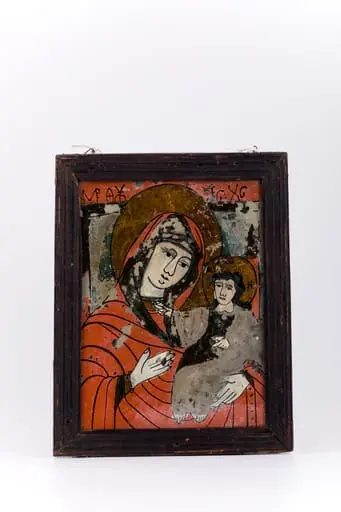
Maica Domnului Împărăteasă a Cerurilor, ține Pruncul Iisus Hristos, în brațe. Maica Domnului este îmbrăcată cu mantie cu maforion roșu vermillon, cu interiorul căptușit cu verde închis și albastru dungat cu alb. Poartă aureolă, coroniță de împărăteasă și salbă aurie din bănuți. Pruncul Iisus Hristos este îmbrăcat cu brun și verde și are aureolă și Sfânta Evanghelie închisă în mâna dreaptă și binecuvântează cu mâna stângă. În registrul superior sunt ocrotitori și păzitori Sfinții Arhangheli Mihail și Gavriil, cu mâinile atingând coronița Maicii Domnului Împărătese. Cromatica este armonioasă, caldă și luminoasă: roșu vermillon, verde spanac-avocado, galben-chihlimbar-ocru, albastru ceruleum bleu-ciel, brun, gri, alb, negru. Inscripția din româno-chirilică se traduce Maica Domnului MP Iisus Hristos IC XC. Icoana este de Șcheii Brașovului, Țara Oltului.
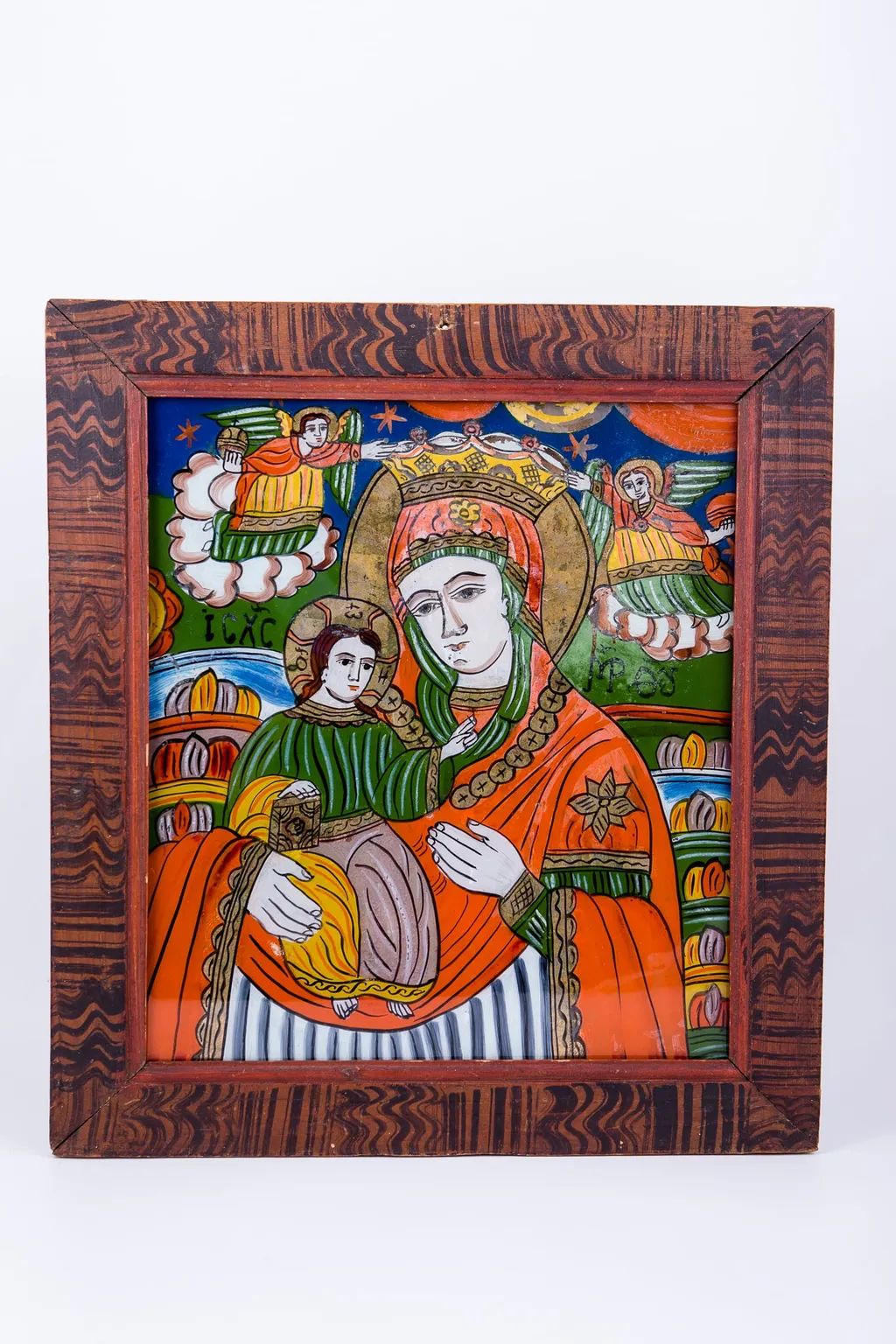
Maica Domnului Împărăteasă a Cerurilor, ține Pruncul Iisus Hristos, în brațe. Maica Domnului este îmbrăcată cu mantie cu maforion roșu vermillon, cu interiorul căptușit cu verde închis și albastru dungat cu alb. Poartă aureolă, coroniță de împărăteasă și salbă aurie din bănuți. Pruncul Iisus Hristos este îmbrăcat cu brun și verde și are aureolă și Sfânta Evanghelie închisă în mâna dreaptă și binecuvântează cu mâna stângă. În registrul superior sunt ocrotitori și păzitori Sfinții Arhangheli Mihail și Gavriil, cu mâinile atingând coronița Maicii Domnului Împărătese. Cromatica este armonioasă, caldă și luminoasă: roșu vermillon, verde spanac-avocado, galben-chihlimbar-ocru, albastru ceruleum bleu-ciel, brun, gri, alb, negru. Inscripția din româno-chirilică se traduce Maica Domnului MP Iisus Hristos IC XC. Icoana este de Șcheii Brașovului, Țara Oltului. is a drawing by Unknown. It dates from 1850 and is held in the collection of the ASTRA National Museum Complex. This icon depicts the Theotokos seated, holding the Christ Child, surrounded by celestial figures and inscribed in early Romanian Cyrillic.
About this work
Overview
This icon depicts the Theotokos seated, holding the Christ Child, surrounded by celestial figures and inscribed in early Romanian Cyrillic.
This icon depicts the Theotokos seated, holding the Christ Child, surrounded by celestial figures and inscribed in early Romanian Cyrillic. The composition follows the traditional Hodegetria type, with the Virgin presented as Queen of Heaven. Gold leaf backgrounds and rich pigments emphasize sacred presence, while the figures are arranged in hierarchical symmetry, typical of Eastern Orthodox devotional imagery from the 17th century.
Subject & Meaning
The Virgin Mary, crowned as Empress of Heaven, holds the infant Christ, who blesses with his left hand and holds a closed Gospel in his right. Above, the Archangels Michael and Gabriel gently touch her crown, signifying divine endorsement of her role. The imagery affirms her intercessory power and Christ’s dual nature as divine and human, reinforcing theological themes of sovereignty, grace, and heavenly authority central to Orthodox devotion.
Technique & Style
Painted in tempera on wood, the icon employs layered pigments to achieve luminous depth: vermilion robes, spinach-avocado greens, and cerulean blues contrast with gold leaf halos and backgrounds. Fine brushwork defines facial features and drapery folds, while the use of ochres and grays adds tonal harmony. The stylized forms and flattened space reflect Byzantine conventions adapted into regional Transylvanian iconography, prioritizing spiritual presence over naturalism.
History & Provenance
Originating from Șcheii Brașovului in Țara Oltului, this icon is linked to the Orthodox communities of southern Transylvania during the 17th century. Its inscription in Romanian Cyrillic confirms local production, likely commissioned for a parish church or private chapel. The craftsmanship suggests the work of a regional iconographer trained in Byzantine traditions but influenced by Moldavian and Wallachian stylistic currents of the period.
Context
Created during a time when Orthodox communities in Transylvania maintained religious identity under Habsburg and Ottoman pressures, this icon served both liturgical and didactic purposes. Its iconography aligns with widespread veneration of the Theotokos in Eastern Christianity, while the inclusion of archangels reflects local devotional practices emphasizing celestial protection. The use of Romanian Cyrillic underscores the cultural specificity of its audience.
Legacy
The icon remains a representative example of Transylvanian Orthodox icon painting, preserving linguistic, theological, and artistic traditions from a period of religious consolidation. Its survival offers insight into the visual language of faith among Romanian-speaking communities under foreign rule. Though not widely known outside regional collections, it continues to inform studies on the adaptation of Byzantine models in peripheral Orthodox contexts.
Artist & collection

 Domestic Scene
 Giacomo and Cardinal Marco, investing Andrea, Abbot of San Zeno, with his Benefice
 The Nymph of Fontainebleau
 Portrait of a Woman
 Madonna and Child with Saints in the Enclosed Garden
 Venus and Minerva
 Family Group of Four on Sofa
 Wall painting from Room H of the Villa of P. Fannius Synistor at Boscoreale
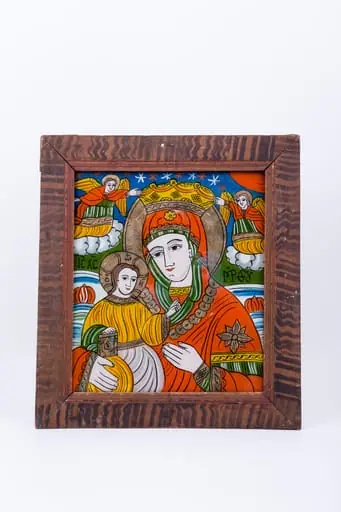 Maica Domnului Împărăteasă a Cerurilor, pe tron așezată, îl ține în brațe pe Pruncul Iisus Hristos. Maica Domnului este îmbrăcată cu mantie cu maforion roșie vermillon, cu interiorul căptușit cu verde și cu marginile manșetelor galben-aurii. Poartă aureolă și coroniță de împărăteasă, salbă aurie la gât. Pruncul Iisus Hristos este îmbrăcat cu ocru, verde și gri, are aureolă și ține pe genunchi Sfânta Evanghelie închisă și arată către Maica Domnului. În registrul superior îndepărtat sunt ocrotitori și păzitori Sfinții Arhangheli Mihail și Gavriil, așezați cu picioarele pe nori rotunzi, albi. Tematica este deosebită și frecvent întâlnită în Țara Oltului. Cromatica este armonioasă, caldă și luminoasă: roșu vermillon, verde spanac-avocado, galben-ocru, albastru bleu-ciel, alb, negru. Inscripția din româno-chirilică se traduce Maica Domnului MP Iisus Hristos IC XC
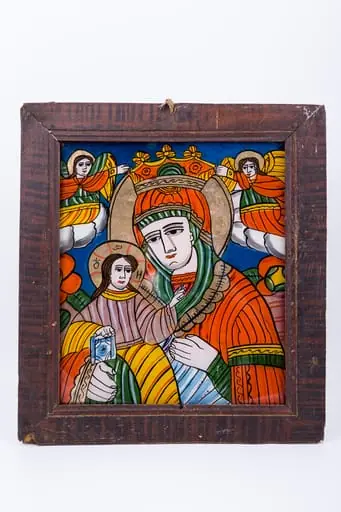 Maica Domnului Împărăteasă a Cerurilor îl ține în brațe pe Pruncul Iisus Hristos. Maica Domnului este îmbrăcată cu mantie cu maforion roșu vermillon, cu interiorul căptușit cu verde-brad și cu marginile manșetelor bej-bronzii. Poartă aureolă și coroniță de împărăteasă. Pruncul Iisus Hristos este îmbrăcat cu ocru și gri, are aureolă și ține în mâna dreaptă pe genunchi Sfânta Evanghelie și arată cu mâna stângă către Maica Domnului. În registrul superior îndepărtat sunt ocrotitori și păzitori Sfinții Arhangheli Mihail și Gavriil, așezați cu picioarele pe nori rotunzi, albi. Sfinții Arhangheli așează coronița de împărăteasă pe capul Maicii Domnului. Fondul icoanei este cerul albastru ultramarin. Tematica este deosebită și frecvent întâlnită în Țara Oltului. Cromatica este armonioasă, caldă și luminoasă: roșu vermillon, verde spanac-avocado, verde brad, galben-ocru, albastru bleu-ciel, cobalt, alb, negru.
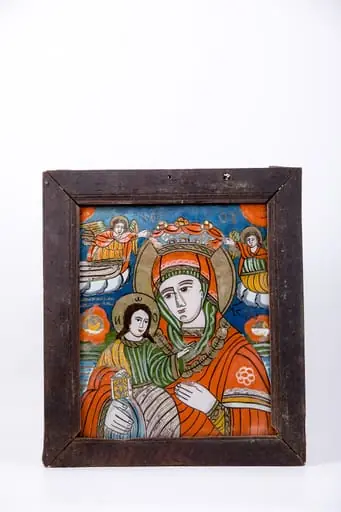 Maica Domnului Împărăteasă ține în brațe lipit pe umărul drept, pe Pruncul Iisus Hristos, care are în mâna dreaptă Sfânta Evanghelie închisă și cu mâna stângă arată înspre Maica Domnului. Maica Domnului arată calea cu mâna dreaptă, deci este Hodighitria. Maica Domnului este înveșmântată în mantie cu maforion roșu vermillon, cu interiorul verde și sacos cu mânecile galbene, poartă coroniță de împărăteasă și aureolă. Pruncul Iisus Hristos este înveșmântat în verde kaki și auriu ocru-brun-bronziu, cu coroană și aureolă. Maica Domnului poartă la gât o salbă din bănuți de aur. În registrul superior, de-a dreapta și de-a stânga Maicii Domnului, sunt Sfinții Arhangheli Mihail și Gavriil, pe câte o mandorlă de nouri rotunzi albi-crem, susținând dimpreună cu mâinile coroana de Împărăteasă a Maicii Domnului. Fondul icoanei este cerul de culoarea albastru regal. Cromatica este luminoasă, vie și armonioasă: roșu vermillon, alb, albastru regal și bleu-ciel, verde-văratic și spanac-avocado, kaki, auriu, ocru-brun-bronziu, galben-chihlimbar, negru. Inscripția din româno-chirilică se traduce MP IC XC Maica Domnului Iisus Hristos. Icoana este de Șcheii Brașovului, Țara Oltului.
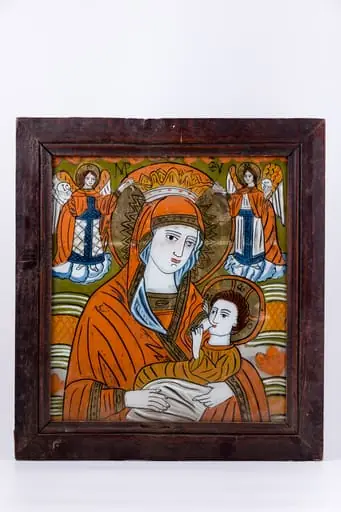 Maica Domnului ține în brațe Pruncul Iisus Hristos, pe care Îl alăptează, din sânul stâng, din dreptul inimii. Pruncul Iisus Hristos ține duios sânul cu ambele mânuțe. Maica Domnului este înveșmântată în mantie cu maforion roșu vermillon și sacos albastru dungat, asemenea unei ii cu gulerașul dantelat, poartă maforion, coroniță de împărăteasă și aureolă. Pruncul Iisus Hristos este înveșmântat în ocru-orange și gri-ivoriu, cu aureolă. În registrul superior, sunt Sfinții Arhangheli Mihail și Gavriil, ținând aureola Maicii Domnului cu mâinile. Sfinții Îngeri Arhangheli au picioarele pe mandorle de nouri alb-albaștri. Fondul icoanei este văzduhul de culoare verde văratic, împodobit cu elemente stilizat-florale, pete de roșu, ruje, în registrul superior. În registrul inferior, este un câmp luminos de verde-orange și galben-ocru. Cromatica este vie, senină și luminoasă: roșu vermillon, alb, albastru cobalt și bleu ciel, verde văratic, mușchi de pădure, verde brad, galben-ocru, alb, negru. Inscripția din româno-chirilică se traduce MP IC XC Maica Domnului Iisus Hristos. Este o icoană de Țara Oltului.
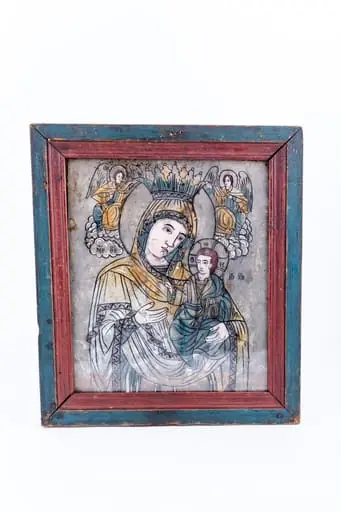 Maica Domnului este Împărăteasă, ținând în brațe Pruncul Iisus Hristos care ține cu mâna stângă pe genunchi, Sfânta Evanghelie închisă și Binecuvântează cu mâna dreaptă. Maica Domnului arată calea cu mâna dreaptă, deci este Hodighitria. Maica Domnului este înveșmântată în mantie cu maforion gri și galben-ocru-auriu cu broderie și falduri și drapaje bine conturate, poartă coroniță de împărăteasă și aureolă. Pruncul Iisus Hristos este înveșmântat în gri-albăstrui un turcoaz pal, cu coroană și aureolă. În registrul superior îndepărtat, stânga și dreapta, sunt cei doi îngeri arhangheli Mihail și Gavriil, ținând cu mâinile coroana Maicii Domnului. Arhanghelii stau pe mandorle rotunde de norișori albi, bine conturați. Fondul icoanei este gri. Cromatică: gri, alb, galben-ocru-auriu, albastru-turcoaz. Rama este pictată cu brun roșcat-acajou. Întreaga icoană este deosebită prin desenul sigur, elegant și sobrietatea luminoasă a cromaticii. Alăturarea gri-ului cu galbenul și albastru și urmele albe de desen sunt specifice Lazului și dau o eleganță aparte Văii Sebeșului, o prețiozitate prin simplitate. Inscripția din româno-chirilică se traduce IC XC MP Iisus Hristos Maica Domnului.
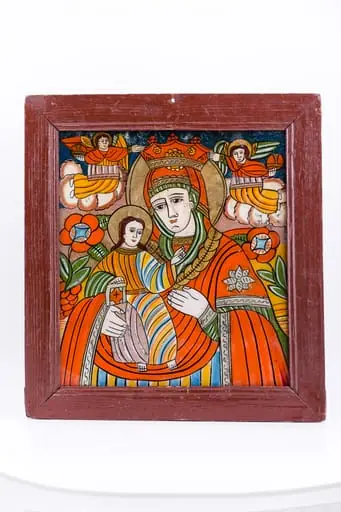 Maica Domnului este reprezentată ținând în brațe Pruncul Iisus Hristos care ține cu mâna dreaptă Sfânta Scriptură pe genunchi și Binecuvântează cu mâna stângă, arătându-ne-o pe Maica Domnului. Maica Domnului arată calea cu mâna stângă, deci este Hodighitria. Maica Domnului este înveșmântată în mantie cu maforion roșu vermillon, cu interiorul verde fin-dungat cu alb, are coroniță de Împărăteasa Cerurilor, salbă de aur și aureolă. Pruncul Iisus Hristos este înveșmântat în auriu ocru-brun-bronziu, cu fine nervuri-striații verzi și alb-albastre, are părul mai lung, până la umeri și are aureolă. Fondul icoanei este cerul de culoarea albastru ultramarin bleumarin. În registrul superior, de o parte și de alta, sunt Sfinții Arhangheli Mihail și Gavriil, susținând coronița de Împărăteasă. Sfinții Arhangheli au și globul pământesc cu crucea, simbolul chivotului sfințit. Au aripile verzi și stau îngenuncheați pe mandorle de nouri rotunzi albi-crem. Cromatica este armonioasă și caldă: roșu vermillon, alb, albastru bleu-ciel, verde kaki, auriu, ocru-brun-bronziu. Icoana este de Țara Oltului.
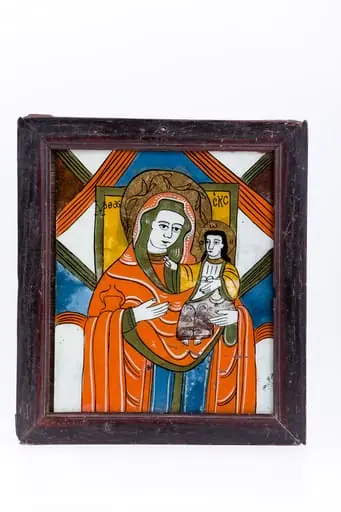 Maica Domnului îl ține în brațe pe Pruncul Iisus Hristos care Binecuvântează cu mâna dreaptă și arată înspre Maica Domnului. Maica Domnului arată calea cu mâna dreaptă, deci este Hodighitria. Maica Domnului este înveșmântată în mantie cu maforion roșu vermillon și sacos albastru, cu interiorul verde, are peste maforiom aureolă. Maforiomul este împodobit cu puncte mici albe. Pruncul Iisus Hristos este înveșmântat în gri și auriu ocru-brun-bronziu, cu interiorul căptușit cu verde și are aureolă. Fondul icoanei este format dintr-un caroiaj alb-albastru, cu marginile verzi și acajou-cărămizii. Compoziția geometrică, formată din romburi suprapuse, ne trimite gândul la nimbul de Slavă de Lumină de la Schimbarea la Față a Mântuitorului Iisus Hristos pe Muntele Tabor. Cromatica este armonioasă, tomnatică, specifică Niculei: roșu vermillon, alb, albastru cobalt, verde, kaki, auriu, ocru-brun-bronziu, brun, alb, negru. Inscripția din româno-chirilică se traduce MP IC XC Maica Domnului Iisus Hristos.
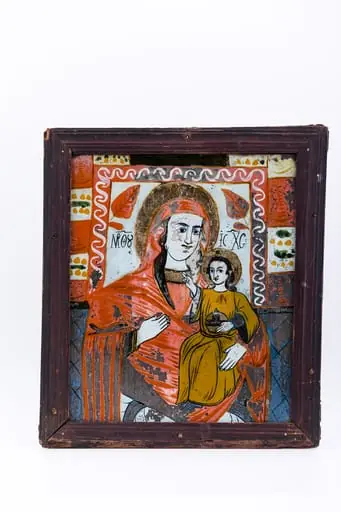 Maica Domnului este reprezentată ținând în brațe Pruncul Iisus Hristos care are în mâna stângă o sferă-globul pământesc și Binecuvântează cu mâna dreaptă. Maica Domnului arată calea cu mâna dreaptă, deci este Hodighitria. Maica Domnului este înveșmântată în mantie cu maforion roșu vermillon și sacos gri-negru, are aureolă. Pruncul Iisus Hristos este înveșmântat în verde kaki și auriu ocru-brun-bronziu, cu aureolă. Fondul icoanei este cerul de culoarea albastru bleu-ciel alburiu, senin, ca într-o fereastră adâncă. Cromatica este armonioasă și caldă: roșu vermillon, alb, albastru bleu-ciel, verde kaki, auriu, ocru-brun-bronziu. Inscripția din româno-chirilică se traduce MP IC XC Maica Domnului Iisus Hristos. Icoana este încadrată de un chenar decorativ geometrizant, format din segmente cromatice, alternativ expuse, cu elemente decorative punctiforme și linia albă șerpuită, specifică picturii de Nicula. Icoana este de Nicula, Crișana - Nordul Transilvaniei.
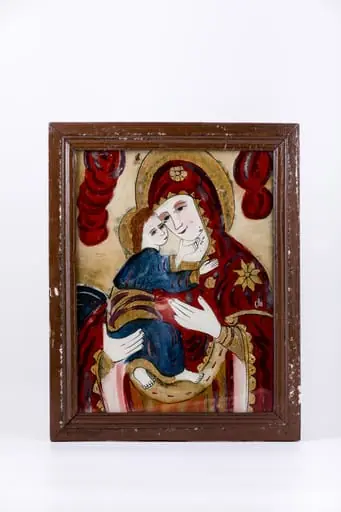 Maica Domnului ține în brațe Pruncul Iisus Hristos, îmbrățișându-L și lipindu-L în dreptul inimii. Pruncul Iisus Hristos ține duios bărbia și obrazul Maicii Domnului cu ambele mânuțe. Maica Domnului este înveșmântată în mantie cu maforiomul roșu sângeriu cu interiorul și sacosul roz-gri-bej. Pruncul Iisus Hristos este înveșmântat în brun-bronziu și albastru cobalt, cu aureolă. Fondul icoanei este cerul luminos-pal, împodobit cu elemente decorative, drapaje roșii, încadrând armonios tematica iconografică. Cromatica este vie, senină și luminoasă: roșu sângeriu, roz vermillon, alb, albastru cobalt, brun-bej, alb-ivoriu-crem, galben-ocru, alb, negru. Este o icoană din Mărginimea Sibiului.
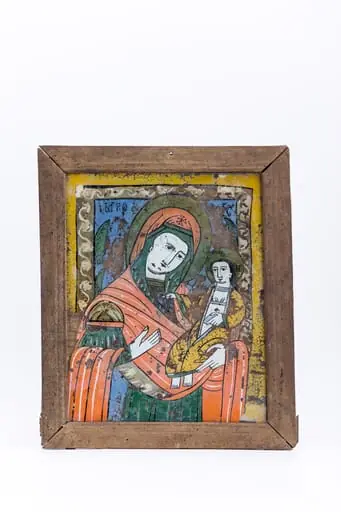 Maica Domnului îl ține în brațe pe Pruncul Iisus Hristos care are în mâna stângă un hrisov înfășurat și Binecuvăntează cu mâna dreaptă. Maica Domnului arată calea cu mâna dreaptă, deci este Hodighitria. Maica Domnului este înveșmântată în mantie cu maforion roșu vermillon și sacos albastru-vernil, are peste maforiom aureolă. Pruncul Iisus Hristos este înveșmântat în alb și auriu ocru-brun-bronziu, și are aureolă. Fondul icoanei este cerul de culoarea albastru cobalt deschis. Întreaga compoziție iconografică este încadrată de un chenar decorativ geometrizant galben-ocru, cu linia albă șerpuitoare, semnificând ideea de veșnicie, de mărturisire. Cromatica este armonioasă, tomnatică, specifică Niculei: roșu vermillon, alb, albastru cobalt, verde, kaki, auriu, ocru-brun-bronziu. Inscripția din româno-chirilică se traduce MP IC XC Maica Domnului Iisus Hristos.
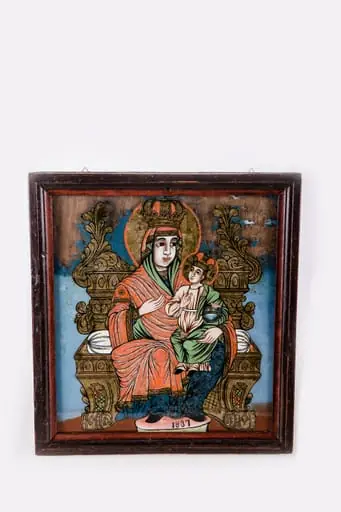 Maica Domnului este Împărăteasă pe tron, ținând în brațe Pruncul Iisus Hristos care are în mâna stângă un hrisov înfășurat și Binecuvintează cu mâna dreaptă. Maica Domnului arată calea cu mâna dreaptă, deci este Hodighitria. Maica Domnului este înveșmântată în mantie cu maforion roșu vermillon cu interiorul căptușit cu verde și sacos albastru, poartă coroniță de împărăteasă și aureolă. Pruncul Iisus Hristos este înveșmântat în verde kaki și auriu ocru-brun-bronziu, cu coroană și aureolă. Tronul este bogat geometrizant decorat. Maica Domnului stă cu picioarele pe o periniță rotundă. Fondul icoanei este cerul de culoarea albastru ultramarin cu steluțe aurii. Întreaga icoană este încadrată de un chenar decorativ geometrizant și floral. Atmosfera luminoasă și bizantină a icoanei este dată și de floricelele albe de pe veșmânt și steluțele aurii de pe albastrul cerului. Icoana este de iconostas, de aceea are dimensiunile mai mari. Și este de tip Maica Domnului Împărăteasa Cerului și a pământului. Cromatică: roșu vermillon, alb, albastru, verde kaki, auriu, ocru-brun-bronziu. Inscripția din româno-chirilică se traduce MP Maica Domnului IC XC Iisus Hristos. Icoana este datată 1831, pe fondul roz, de la picioarele Maicii Domnului. Icoana este din Țara Făgărașului, pictată fiind de Ioan Pop de Făgăraș.
 Maica Domnului este înveșmântată în maforiom roșu vermillon-corai, cu interiorul albastru ultramarin-gri, cu gulerașul și mânecuțele cu broderie bronzie, cu aureolă aurie. Maica Domnului arată calea care este Mântuitorul Iisus Hristos - Calea, Adevărul și Viața. Pruncul Iisus Hristos este înveșmântat în albastru ultramarin bleu-marin și gri și are, de asemenea, aureolă aurie. Pruncul Iisus ține în mâna stângă un hrisov înfășurat și cu mâna dreaptă arată înspre Maica Domnului. Fondul icoanei este cerul albastru ceruleum. Întreaga tematică iconografică este încadrată de un chenar decorativ geometrizant, asemenea unei rame încadratoare bronzii. Inscripția din româno-chirilică se traduce MP IC XC Maica Domnului Iisus Hristos. Cromatica este armonioasă: roșu vermillon-corai, albastru bleu-marin, ultramarin, gri, bronziu, alb, negru. Icoana este din Nordul Transilvaniei, Nicula.