Artwork
Maica Domnului Îndurerată
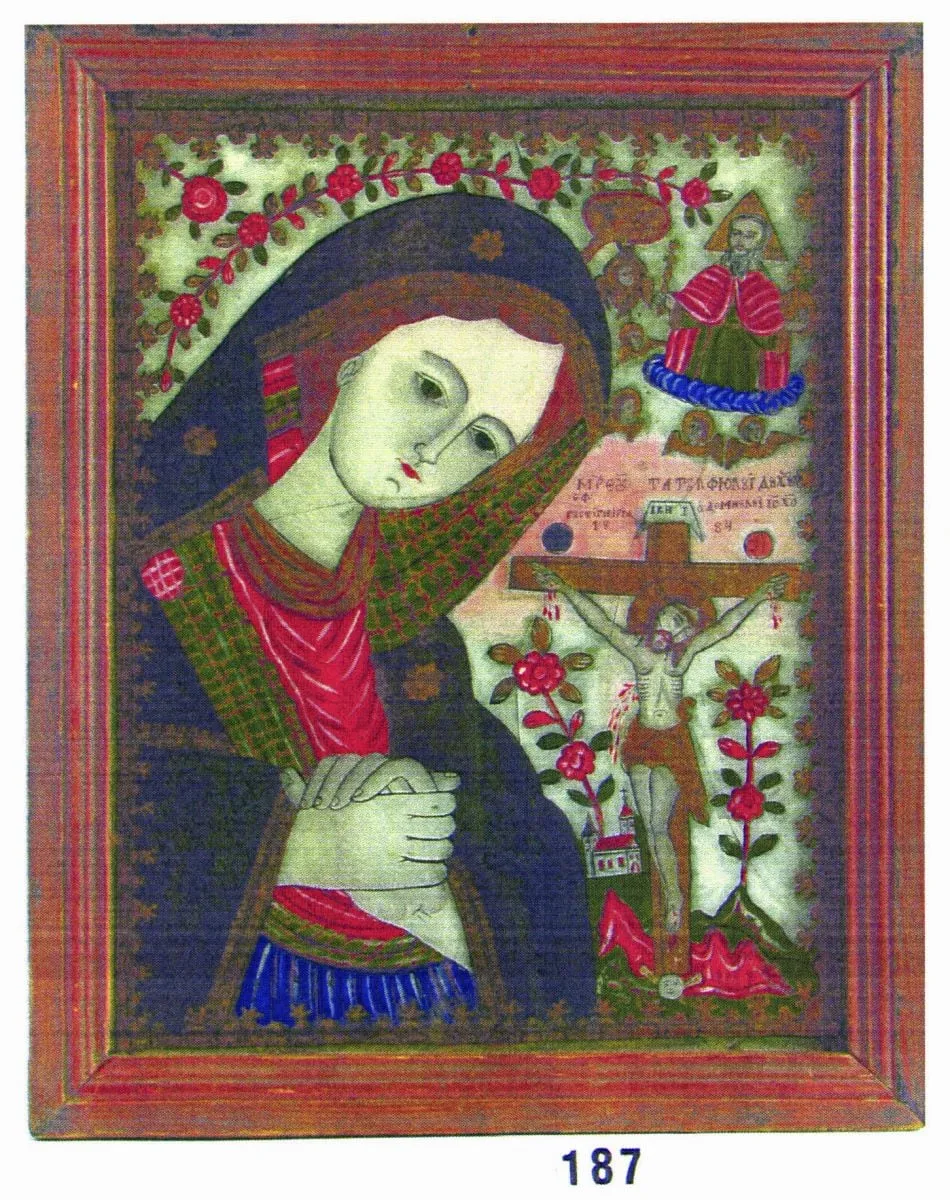
Maica Domnului Îndurerată is a drawing by the Impressionist artist Unknown. It dates from 1884 and is held in the collection of the ASTRA National Museum Complex.
About this work
Overview
Maica Domnului Îndurerată is a religious painting depicting a pivotal moment of sorrow. A woman, identifiable by her attire as the Virgin Mary, cradles an infant (Jesus) against a backdrop that prefigures his fate: a miniature crucifixion scene. The composition balances serenity in the foreground with drama in the background.
Subject & Meaning
The subject is the Virgin Mary's foreknowledge of her son's crucifixion, conveyed through her calm yet serious expression. The infant Jesus, oblivious to the future, contrasts with the somber anticipation of Mary. The cross scene, replete with red flowers (symbolizing blood or martyrdom), underscores the theme of impending sorrow.
Technique & Style
The painting exhibits a folk-art aesthetic, characterized by bright, flat colors (notably reds, blues, and greens) and minimal shading. A decorative border of roses and a gold halo around Mary's head add ornamental depth. The stylistic simplicity contributes to the work's emotive directness.
Context
While specific contextual details about the painting's creation are not provided, its themes and style suggest it may align with traditional religious art from Eastern European or Latin American folk Catholic traditions, where vibrant colors and symbolic scenes are common.
Legacy
The painting's legacy is not detailed in the provided information, though its style suggests it might appeal to those interested in folk art or religious iconography. A suggested comparison to Realism highlights its distinct, non-realistic approach to depicting a deeply personal, emotional moment.
Artist & collection

 Domestic Scene
 Giacomo and Cardinal Marco, investing Andrea, Abbot of San Zeno, with his Benefice
 The Nymph of Fontainebleau
 Portrait of a Woman
 Madonna and Child with Saints in the Enclosed Garden
 Venus and Minerva
 Family Group of Four on Sofa
 Wall painting from Room H of the Villa of P. Fannius Synistor at Boscoreale
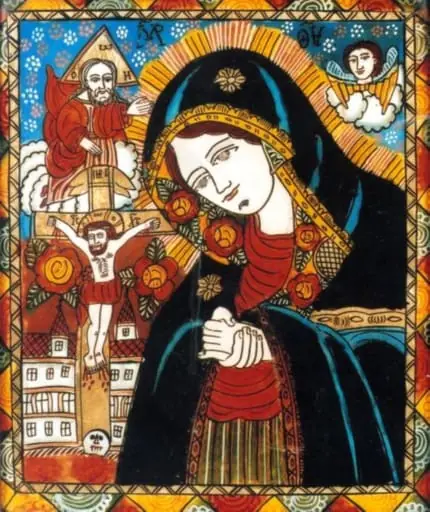 Maica Domnului jalnică
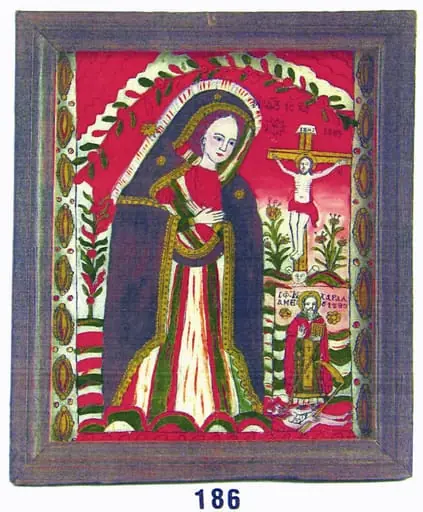 Maica Domnului îndurerată și sfântul mucenic Haralambie
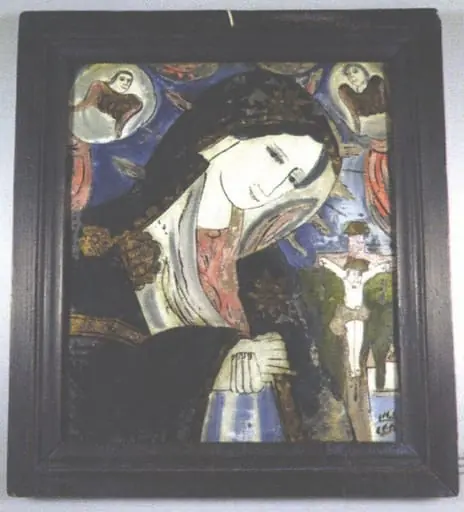 Maica Îndurerata
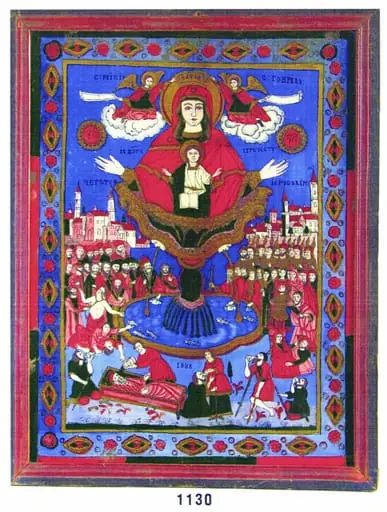 Maica Domnului în Potir - Izvorul Tămăduirii
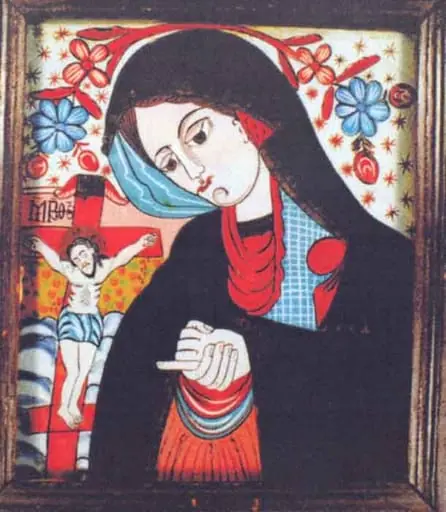 Maica Domnului
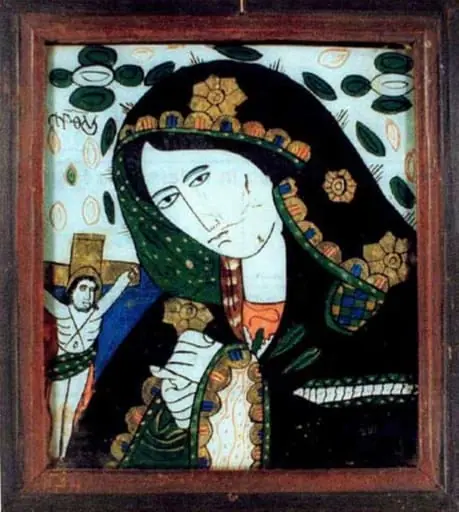 Maica Îndurerată
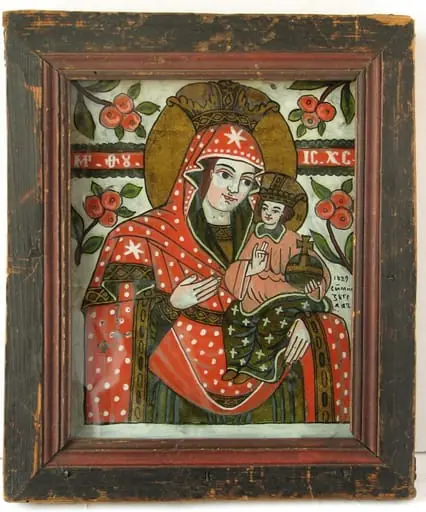 Maica Domnului cu Pruncul Iisus Hristos în brațe
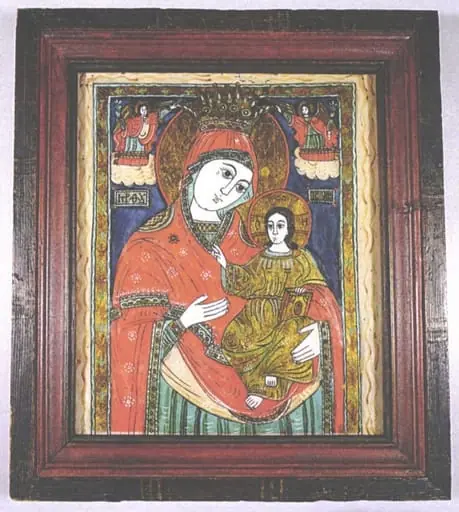 Maica Domnului cu Pruncul Hodighitria
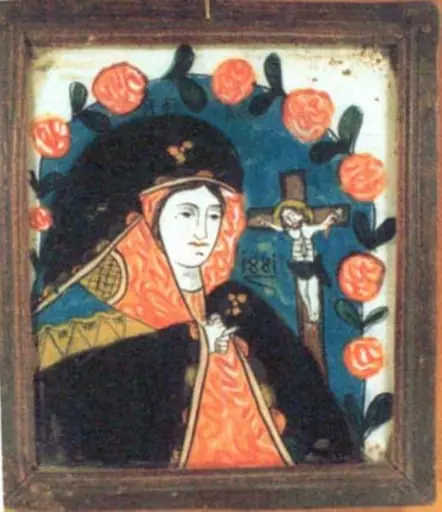 Maica Domnului Îndurerată
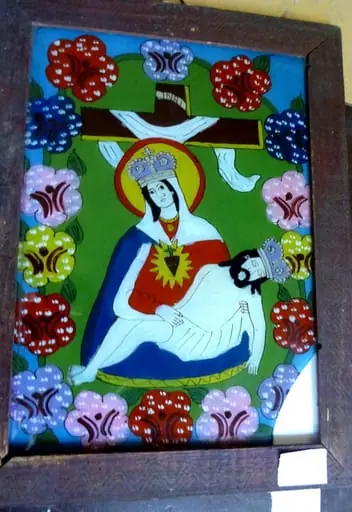 Maria Îndurerată; Pieta
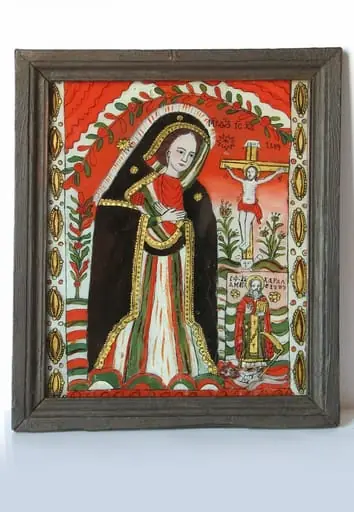 Maica Domnului Îndurerată și Sfântul Mare Mucenic Haralambie