Artwork
Maler in steinigen Sanddünen
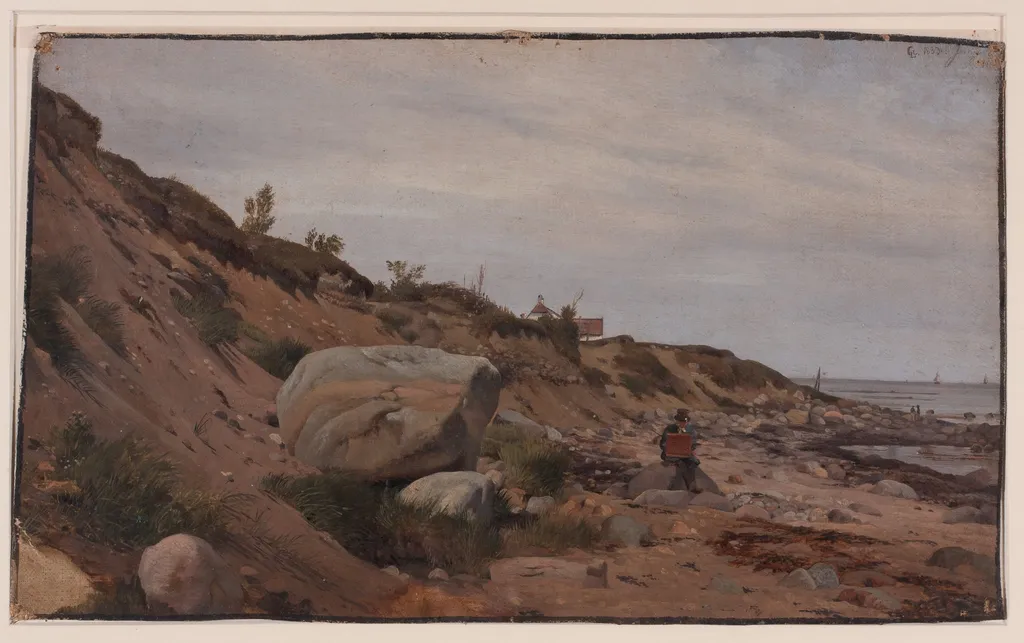
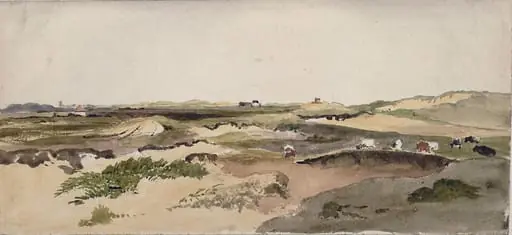
Maler in steinigen Sanddünen is a drawing by Unknown. It dates from 1850 and is held in the collection of the Art Collection of the University Göttingen. This work presents a quiet coastal landscape dominated by barren dunes and rocky outcrops.
About this work
Overview
Texture is built through meticulous hand-applied marks, not brushwork alone, suggesting a deliberate, meditative approach to surface.
This work presents a quiet coastal landscape dominated by barren dunes and rocky outcrops. A solitary figure stands at a distance, barely discernible against the terrain, emphasizing isolation rather than narrative. The palette is restrained, favoring earth tones and soft grays, reinforcing a mood of stillness. Texture is built through meticulous hand-applied marks, not brushwork alone, suggesting a deliberate, meditative approach to surface.
Subject & Meaning
The lone figure, reduced in scale, does not engage with the environment but exists within it, evoking themes of solitude and human transience. The barrenness of the terrain suggests a place untouched by cultivation or habitation. There is no indication of time of day or season, removing temporal context and reinforcing a sense of timelessness, as if the scene exists outside ordinary experience.
Technique & Style
Texture is achieved through fine cross-hatching and stippling, techniques that build tone and form incrementally rather than through blending. These methods create a granular surface that mimics the grit of sand and the fissures of stone. The absence of bold outlines or dramatic contrasts supports a subdued, contemplative aesthetic, aligning with traditions of detailed, labor-intensive draftsmanship.
History & Provenance
The work’s origin remains undocumented, with no record of exhibition, ownership, or artist attribution. Its classification as an image rather than a signed painting suggests it may have been produced outside formal art institutions, possibly as a study or private exercise. The absence of provenance limits contextual understanding but does not diminish its formal qualities.
Context
The technique echoes 18th- and 19th-century printmaking traditions, particularly in topographical and landscape studies where precision was valued over expression. Similar approaches appear in the work of draftsmen who documented remote terrains for scientific or archival purposes. This piece aligns with that lineage, prioritizing observation over emotional rhetoric.
Legacy
Though unattributed and unexhibited, the work exemplifies a quiet tradition of landscape rendering focused on materiality and spatial depth. Its methods reflect a pre-photographic mode of seeing, where texture and form were constructed by hand. It stands as a testament to the endurance of meticulous draftsmanship in the face of faster, more expressive modern styles.
Artist & collection
Museum
Art Collection of the University Göttingen
Continue through works from the same source collection.
 Domestic Scene
 Giacomo and Cardinal Marco, investing Andrea, Abbot of San Zeno, with his Benefice
 The Nymph of Fontainebleau
 Portrait of a Woman
 Madonna and Child with Saints in the Enclosed Garden
 Venus and Minerva
 Family Group of Four on Sofa
 Wall painting from Room H of the Villa of P. Fannius Synistor at Boscoreale
 Uferlandschaft
 Dutch Coast Scene
 Le Havre
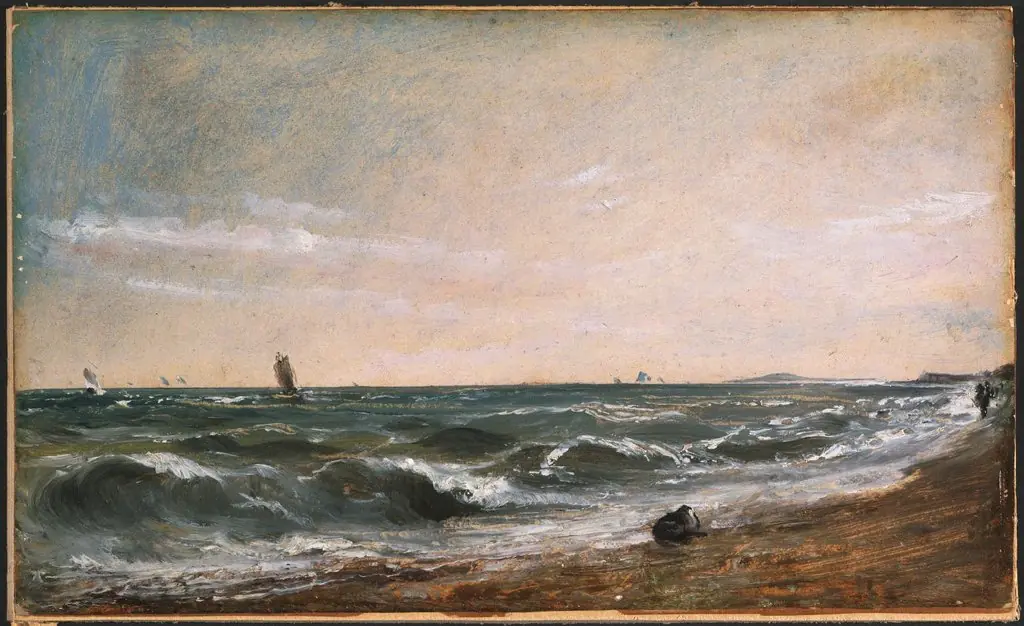 Coast Scene, Brighton
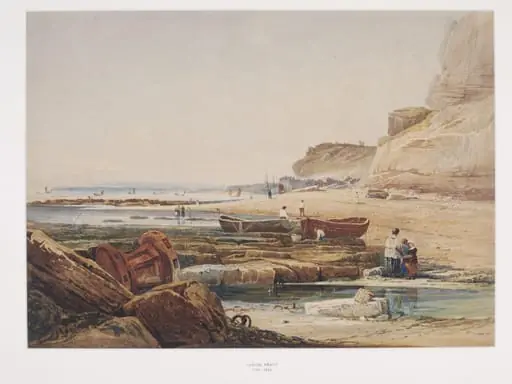 The Beach, Hastings
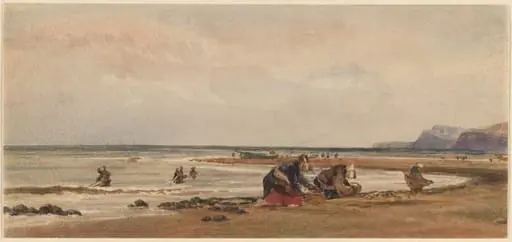 Seaweed Gatherers on the Shore at Redcar, Yorkshire
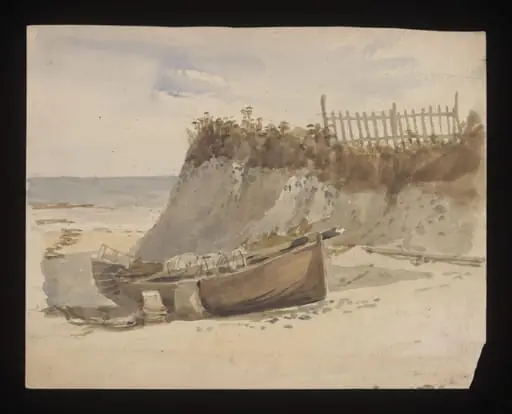 Watercolour drawing by the Grieve family, showing the beach at Kingsgate, Kent
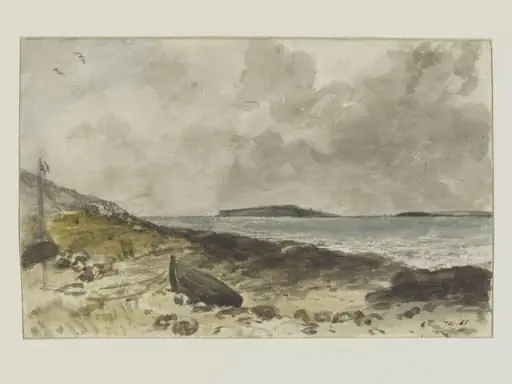 Coast scene near Osmington, with Portland Island in the distance
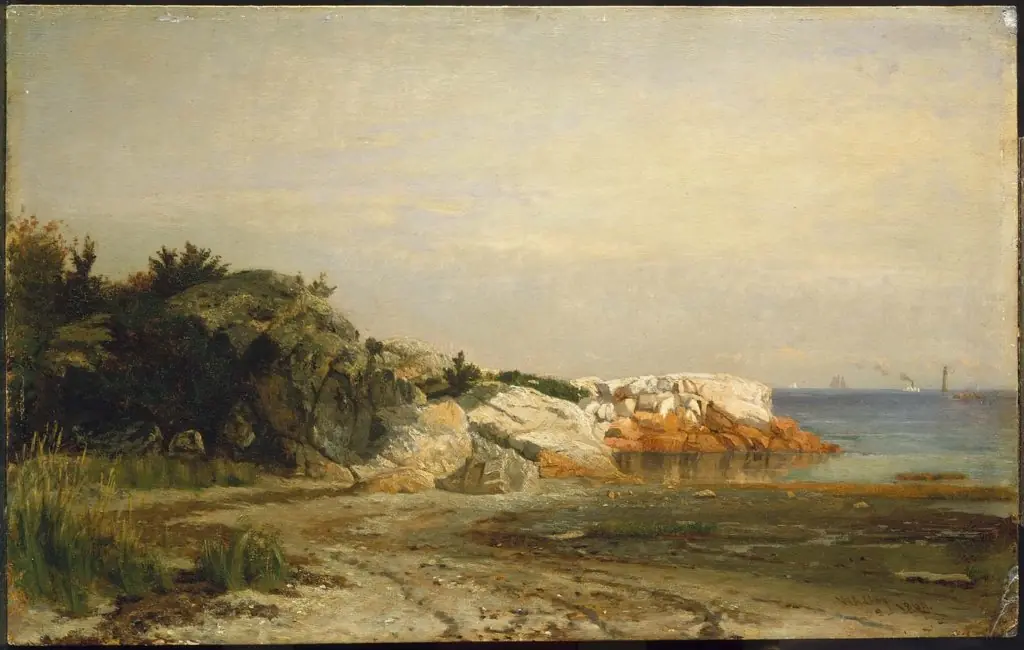 Rocks at Cohasset
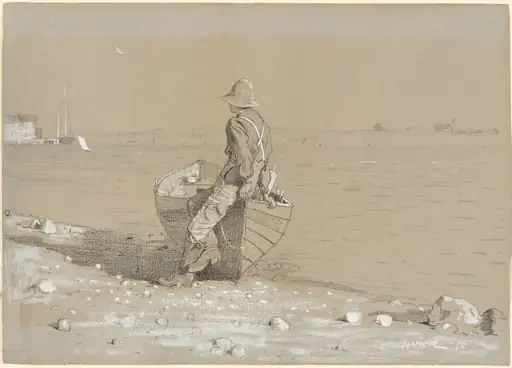 Looking Out
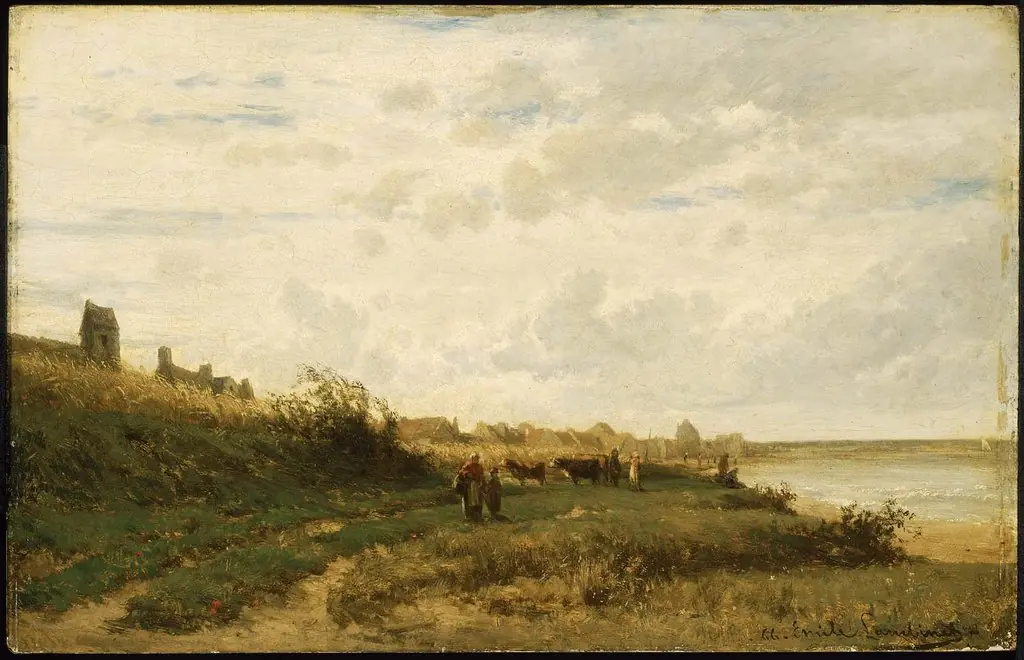 Village on the Sea
 Landscape with Sand Dunes