Artwork
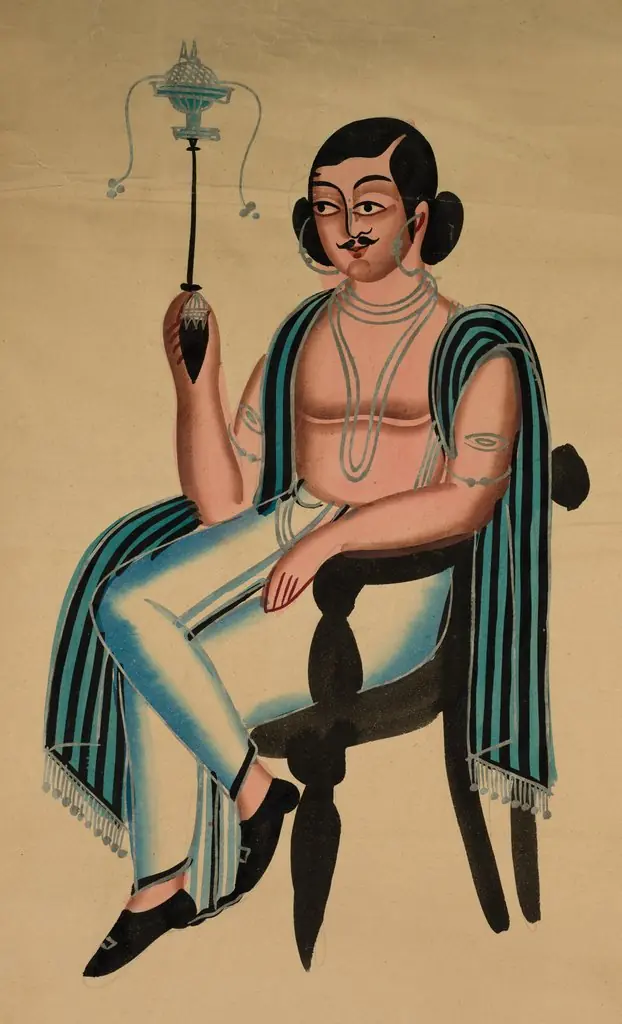
Man Seated in a European Chair Smoking a Margila Pipe, from a Kalighat album
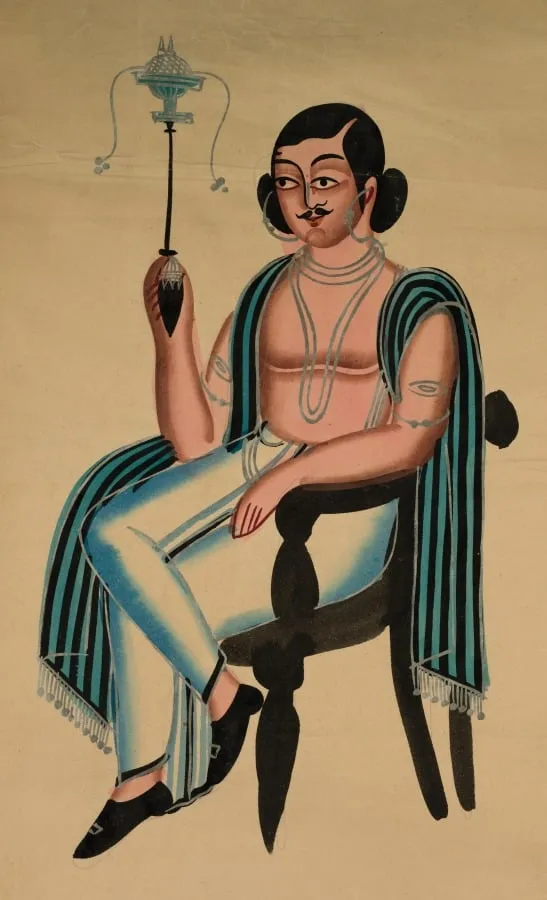
Man Seated in a European Chair Smoking a Margila Pipe, from a Kalighat album is an unspecified painting by the Patna School of Painting artist Unknown. It dates from 1880 and is held in the collection of the Cleveland Museum of Art. The work depicts a solitary figure seated on a wooden chair, holding a curved pipe in one hand while the other rests on his knee.
About this work
Overview
The work depicts a solitary figure seated on a wooden chair, holding a curved pipe in one hand while the other rests on his knee. He wears loose, striped trousers, a sleeveless upper garment, and a draped cloth over one shoulder, with bare feet touching the floor. The background is unadorned, directing attention to the seated man and his relaxed posture.
Subject & Meaning
The sitter appears as a casual, perhaps everyday individual, engaged in the act of smoking a margila pipe. The juxtaposition of traditional Indian attire with a European-style chair suggests a commentary on cultural exchange, highlighting the coexistence of indigenous customs and colonial influences within a single domestic scene.
Technique & Style
Executed in the Kalighat school’s characteristic flatness and bold outlines, the painting employs a limited palette and simplified forms. The figure’s clothing is rendered with linear patterns, while the chair’s perspective is rendered with a more realistic, three‑dimensional treatment, creating a deliberate visual tension between indigenous folk aesthetics and Western realism.
Context
Kalighat paintings emerged in 19th‑century Bengal as popular prints sold near the Kalighat temple, often portraying contemporary life and social satire. This piece reflects the genre’s interest in documenting everyday subjects while simultaneously engaging with the visual language introduced by British colonial presence, embodying the hybrid visual culture of the period.
Artist & collection

 Domestic Scene
 Giacomo and Cardinal Marco, investing Andrea, Abbot of San Zeno, with his Benefice
 The Nymph of Fontainebleau
 Portrait of a Woman
 Madonna and Child with Saints in the Enclosed Garden
 Venus and Minerva
 Family Group of Four on Sofa
 Wall painting from Room H of the Villa of P. Fannius Synistor at Boscoreale
 English Babu (Native Indian Clerk) Holding a Hookah
 Kartikeya, from a Kalighat album
 Pavana
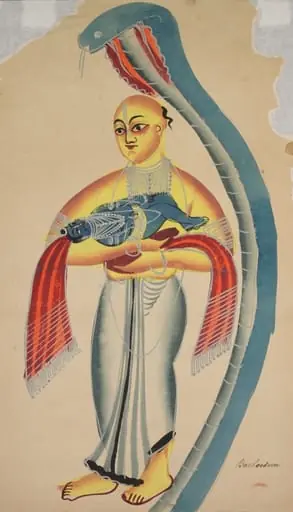 A Serpent Protects Vasudeva Taking His Infant Son Krishna to Safety
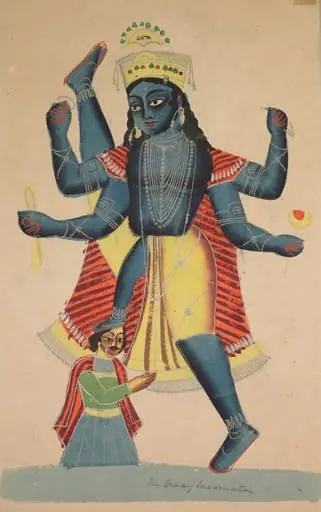 Trivikramapada (Three Steps of Vishnu)
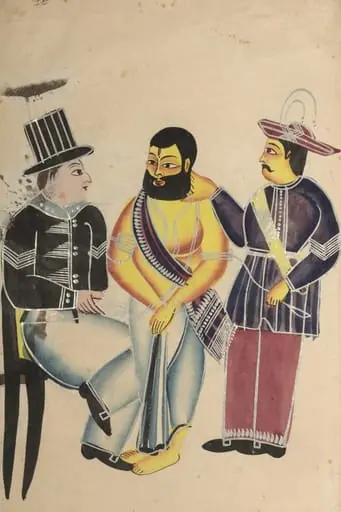 Jailer Receiving the Mahant of Tarakeshwar in Prison
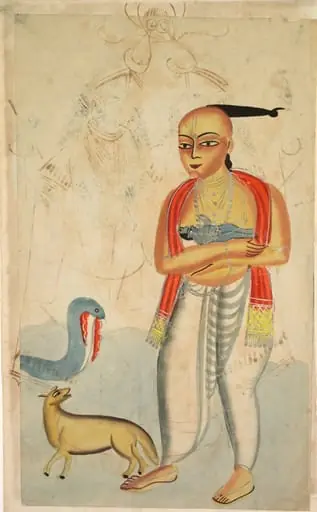 Vasudeva (Krishna's Father) Fleeing with Krishna Encounters a Cobra and a Jackal (verso), from a Kalighat album
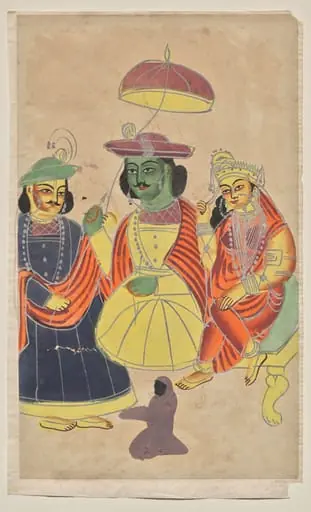 Rama and Sita enthroned with Lakshmana and Hanuman attending, from a Kalighat album
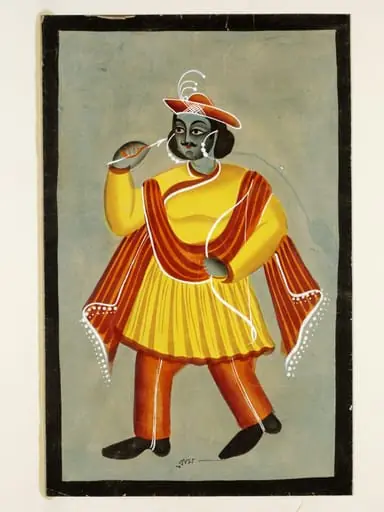 Rama
Rama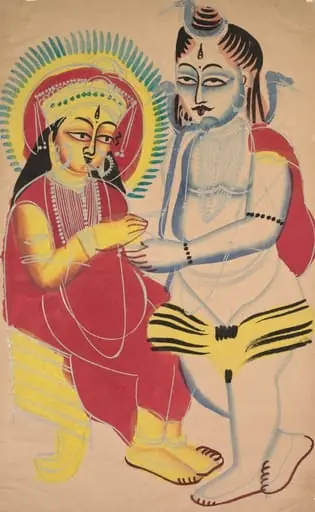 Annapurna and Shiva
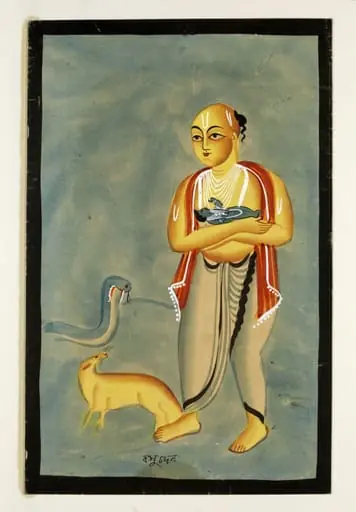 Vasudeva and Krishna
 Man Seated in a European Chair Smoking a Margila Pipe, from a Kalighat album