Artwork
Man Seated on the Ground, Seen from Behind (recto)
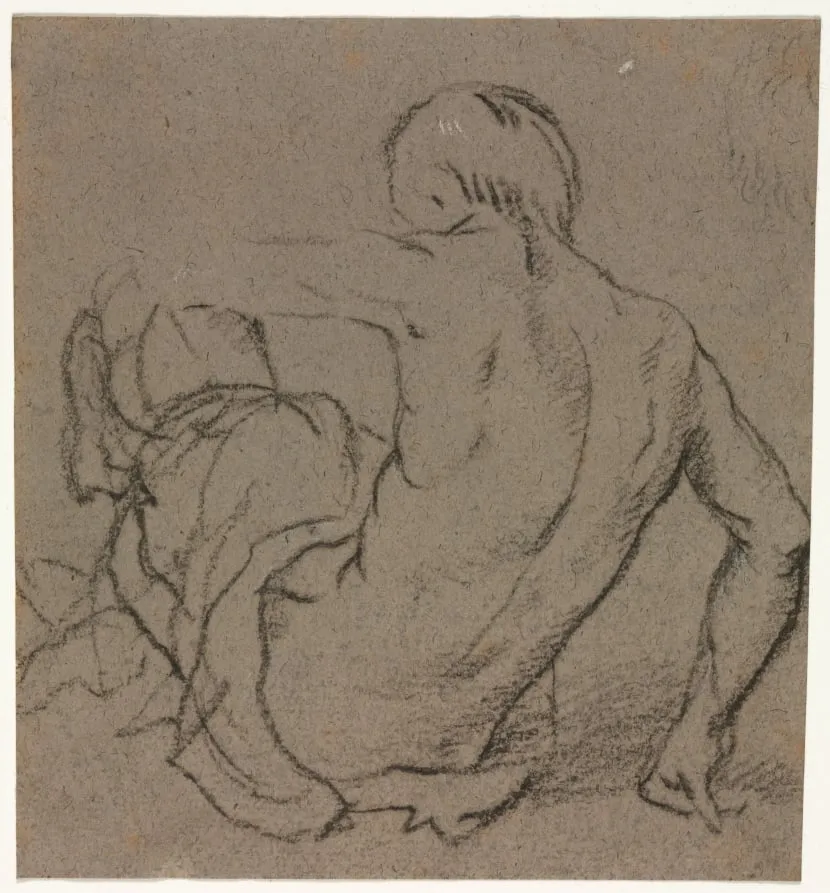
Man Seated on the Ground, Seen from Behind (recto) is a drawing by the Renaissance artist Unknown. It dates from 1504 and is held in the collection of the Cleveland Museum of Art. The work is a drawing portraying a nude male figure seated on the ground, observed from behind.
About this work
Overview
The work is a drawing portraying a nude male figure seated on the ground, observed from behind. The man's head is turned toward the right, his left arm extends forward, and his right arm is bent at the elbow. Rendered in dark line work against a light surface, the image employs shading to convey three‑dimensional form.
Subject & Meaning
The composition concentrates on the bodily pose and gesture rather than narrative detail, inviting contemplation of the figure’s physical presence and movement. By presenting the back of the nude, the drawing emphasizes the study of anatomy and the expressive potential of a simple stance, a common concern in academic figure drawing.
Technique & Style
Executed with bold, confident lines, the drawing utilizes a restrained approach that limits ornamental detail. The artist employs minimal cross‑hatching to suggest volume, allowing the silhouette and gesture to dominate the visual field. This economical use of line aligns with practices of Renaissance drawing, where the study of form often preceded elaborate finishing.
Context
The piece reflects the pedagogical traditions of the Renaissance, when artists produced quick, gestural studies to explore human anatomy and proportion. Such drawings served both as preparatory sketches for larger works and as exercises in mastering line quality and spatial representation, underscoring the period’s emphasis on observational drawing.
Artist & collection

 Domestic Scene
 Giacomo and Cardinal Marco, investing Andrea, Abbot of San Zeno, with his Benefice
 The Nymph of Fontainebleau
 Portrait of a Woman
 Madonna and Child with Saints in the Enclosed Garden
 Venus and Minerva
 Family Group of Four on Sofa
 Wall painting from Room H of the Villa of P. Fannius Synistor at Boscoreale
 Untitled
 Seated Nude Boy Seen from the Back
 Seated Male Nude
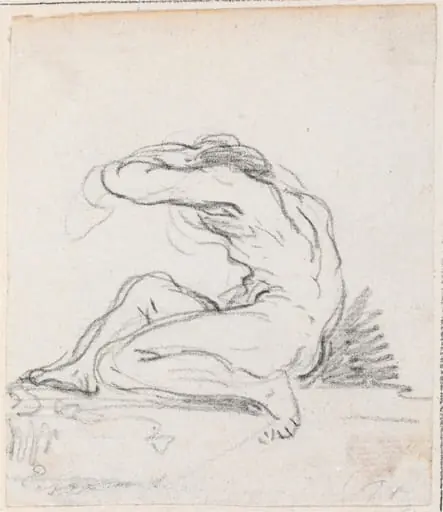 Seated Male Nude with Arm over Head, Seen from the Side
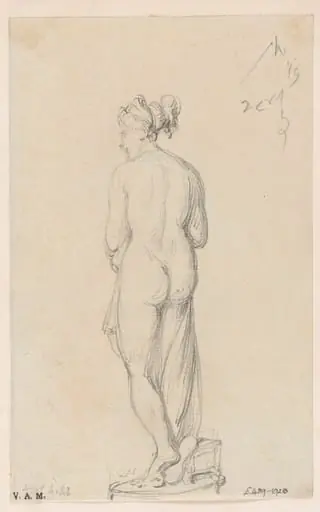 A classical statue
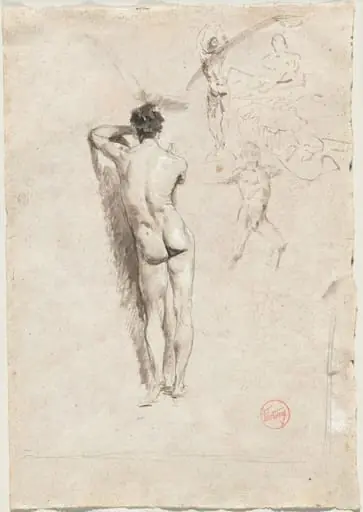 Study of a Male Nude and Other Studies
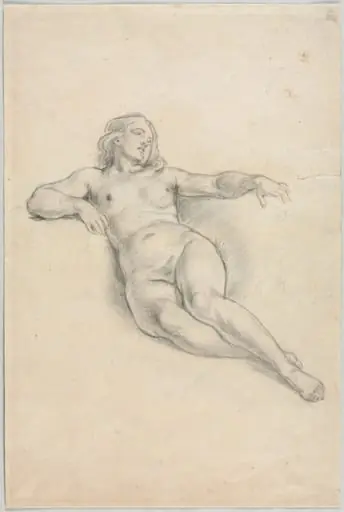 Reclining Female Nude (recto)
 Little London Model
![Two Nude Youths [recto], by Federico Barocci](https://artifactworldgallery.com/img/federico-barocci--two-nude-youths-recto--a057469b757ac46c-w320.webp) Two Nude Youths [recto]
Two Nude Youths [recto] Study for an Allegory of Painting
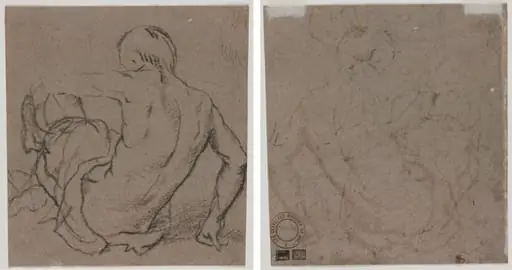 Man Seated on the Ground, Seen from Behind (recto); Sketch (verso)
 A Man Standing Seen from the Back