Artwork
Matangi Devi
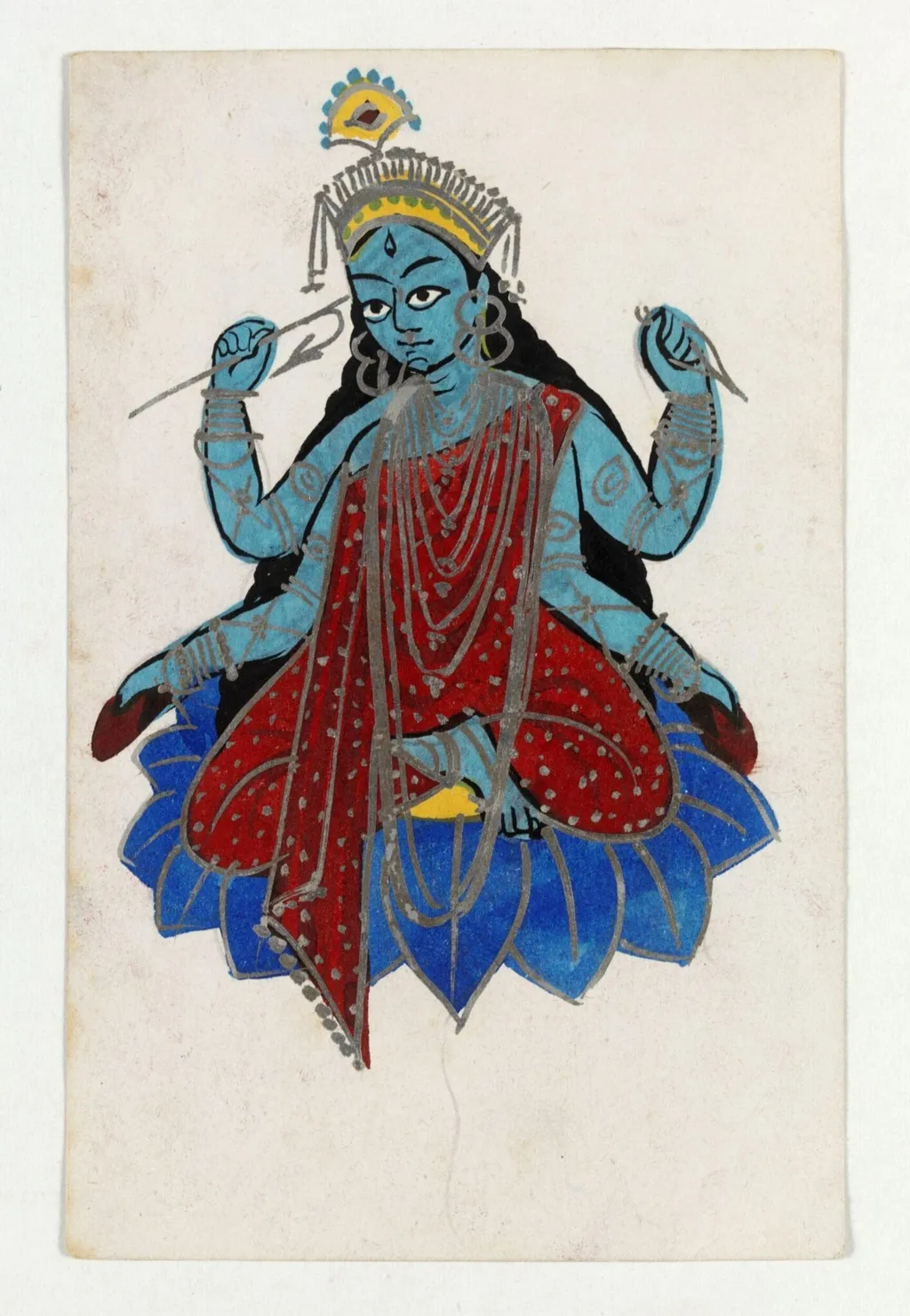
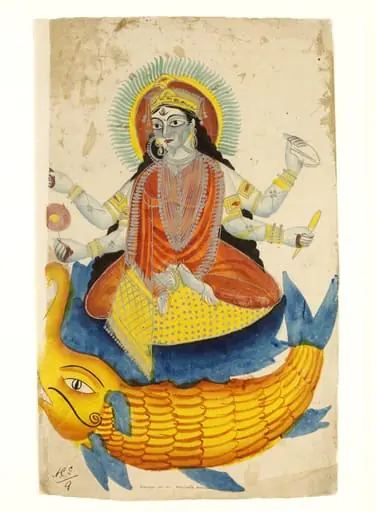
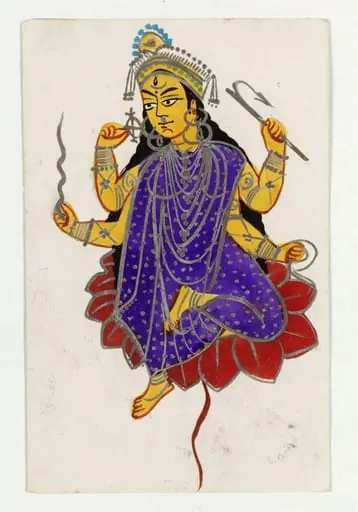
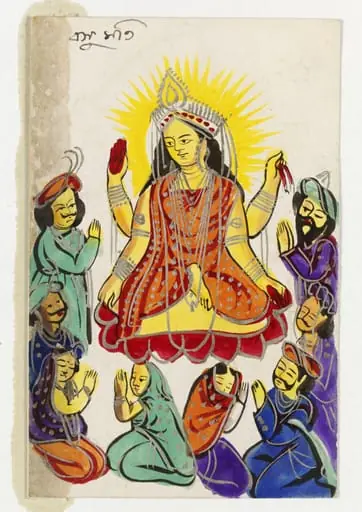
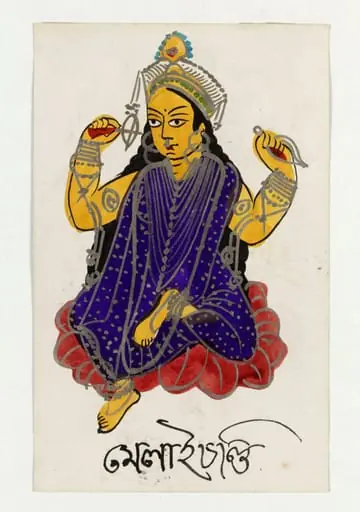
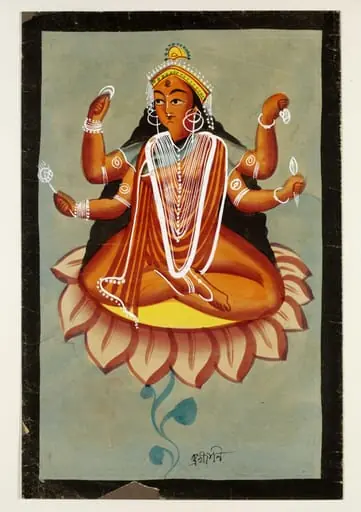
Matangi Devi is a paint painting by the Patna School of Painting artist Unknown. It dates from 1890 and is held in the collection of the Victoria and Albert Museum. The work is a watercolor and tin‑alloy composition executed on cardboard, portraying a seated female figure on a blue lotus.
About this work
Overview
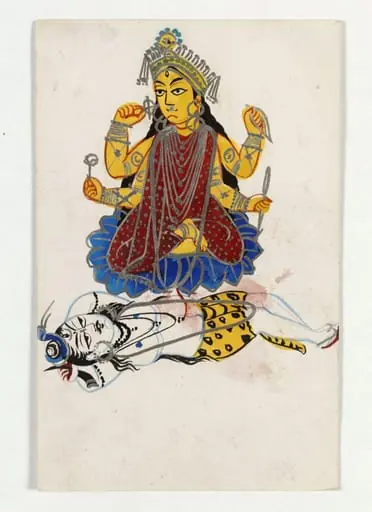
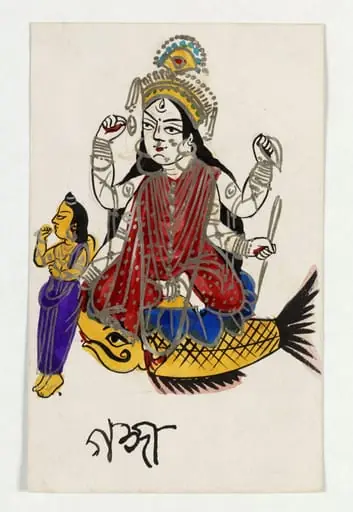
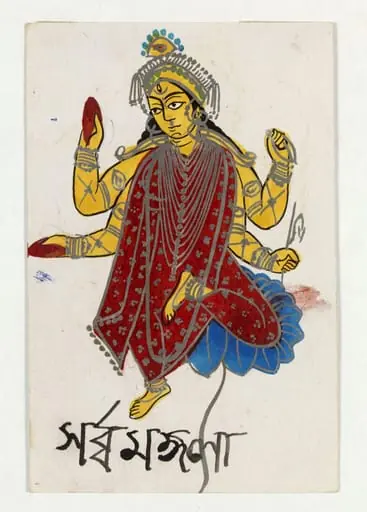
The work is a watercolor and tin‑alloy composition executed on cardboard, portraying a seated female figure on a blue lotus. She is shown in a cross‑legged posture, wearing a red sari, a yellow crown, and an array of jewelry, while her skin is rendered in blue tones.
Subject & Meaning
The figure, identified as Matangi Devi, holds a pen in her right hand and raises her left hand in a symbolic gesture. Traditional attributes such as a goad (ankusa) and a conch (sankha) accompany her, linking the image to Hindu iconography associated with the goddess of speech and learning.
Technique & Style
The artist combines watercolor washes with tin‑alloy accents, creating a luminous surface on the cardboard support. The palette balances vivid reds, yellows, and blues against a muted beige background, while fine detailing on the jewelry and facial expression reflects a realist approach to form and texture.
History & Provenance
The painting’s medium and material choices suggest a mid‑20th‑century origin, a period when mixed media on unconventional supports gained popularity among Indian artists exploring devotional subjects. Its documented provenance traces back to a private collection before entering a regional museum’s holdings.
Context
Matangi, a deity associated with knowledge and the arts, is often depicted with a lotus seat and musical or literary implements. This representation aligns with broader Indian artistic traditions that integrate symbolic objects to convey the goddess’s attributes within a realistic visual language.
Artist & collection

 Domestic Scene
 Giacomo and Cardinal Marco, investing Andrea, Abbot of San Zeno, with his Benefice
 The Nymph of Fontainebleau
 Portrait of a Woman
 Madonna and Child with Saints in the Enclosed Garden
 Venus and Minerva
 Family Group of Four on Sofa
 Wall painting from Room H of the Villa of P. Fannius Synistor at Boscoreale