Artwork
Manda Ragini
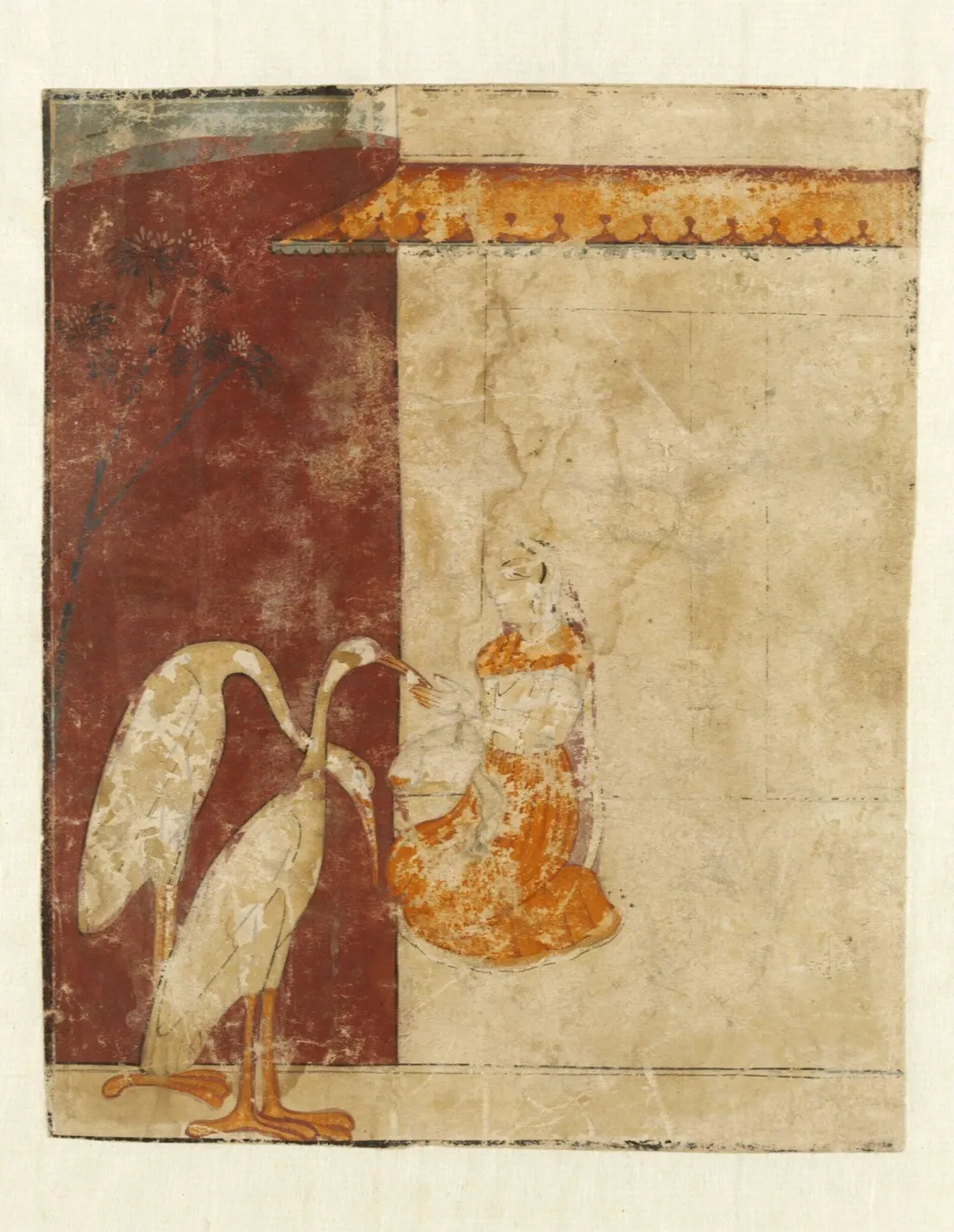
Manda Ragini is a paint painting by the Baroque artist Unknown. It dates from 1700 and is held in the collection of the Victoria and Albert Museum.
About this work
Overview
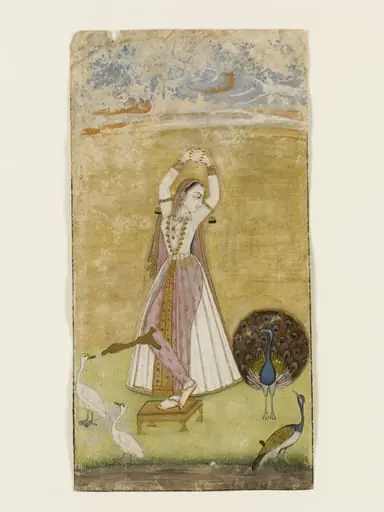
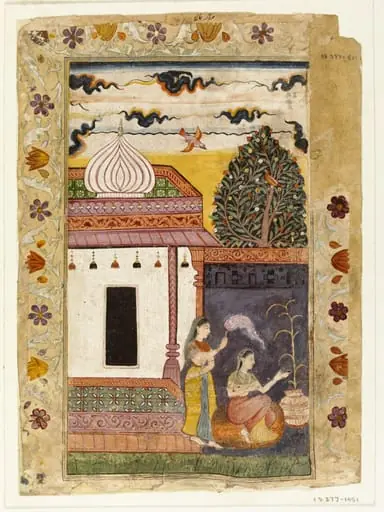
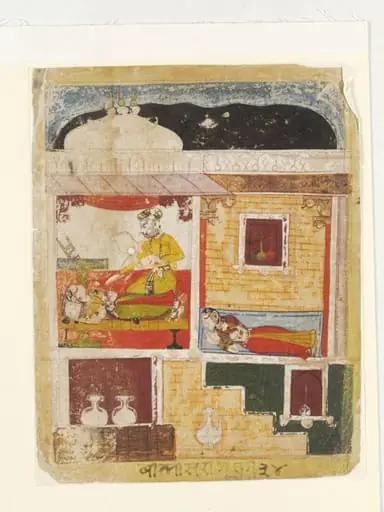
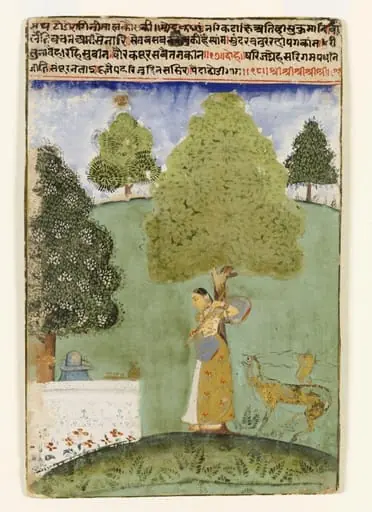
Created circa 1700, this work is an opaque watercolor on paper that originally served as an illustration for the musical mode known as Manda Ragini, a variant of the Malkaus raga. The composition centers on a seated female figure engaged in the act of feeding cranes, set against a plain, deep‑red wall.
Subject & Meaning
The central figure, dressed in a vivid orange garment, is portrayed in a tranquil pose, offering sustenance to a tall white crane whose neck arches in a graceful curve. The interaction suggests a harmonious relationship between humanity and nature, a theme often linked to the contemplative mood of the associated ragam.
Technique & Style
Executed in opaque watercolor, the painting employs a limited palette of orange, red, white, and muted tones. The medium allows for smooth, flat areas of color and a softened rendering of the woman's face, while the crane’s elongated neck is delineated with precise, linear strokes that contrast with the background.
History & Provenance
The piece was produced as a visual accompaniment to a musical treatise in the early eighteenth century, reflecting the period’s practice of linking visual art with performance arts. Its subsequent ownership history is undocumented, and it now resides in a collection of Indian miniature and manuscript illustrations.
Context
Manda Ragini belongs to a tradition of Indian ragas that convey specific emotional states; the painting’s serene scene aligns with the mode’s intended mood. The use of opaque watercolor on paper was common for illustrative purposes in manuscript culture, bridging artistic and musical expression.
Artist & collection

 Domestic Scene
 Giacomo and Cardinal Marco, investing Andrea, Abbot of San Zeno, with his Benefice
 The Nymph of Fontainebleau
 Portrait of a Woman
 Madonna and Child with Saints in the Enclosed Garden
 Venus and Minerva
 Family Group of Four on Sofa
 Wall painting from Room H of the Villa of P. Fannius Synistor at Boscoreale