Artwork
Vibhasa Ragini
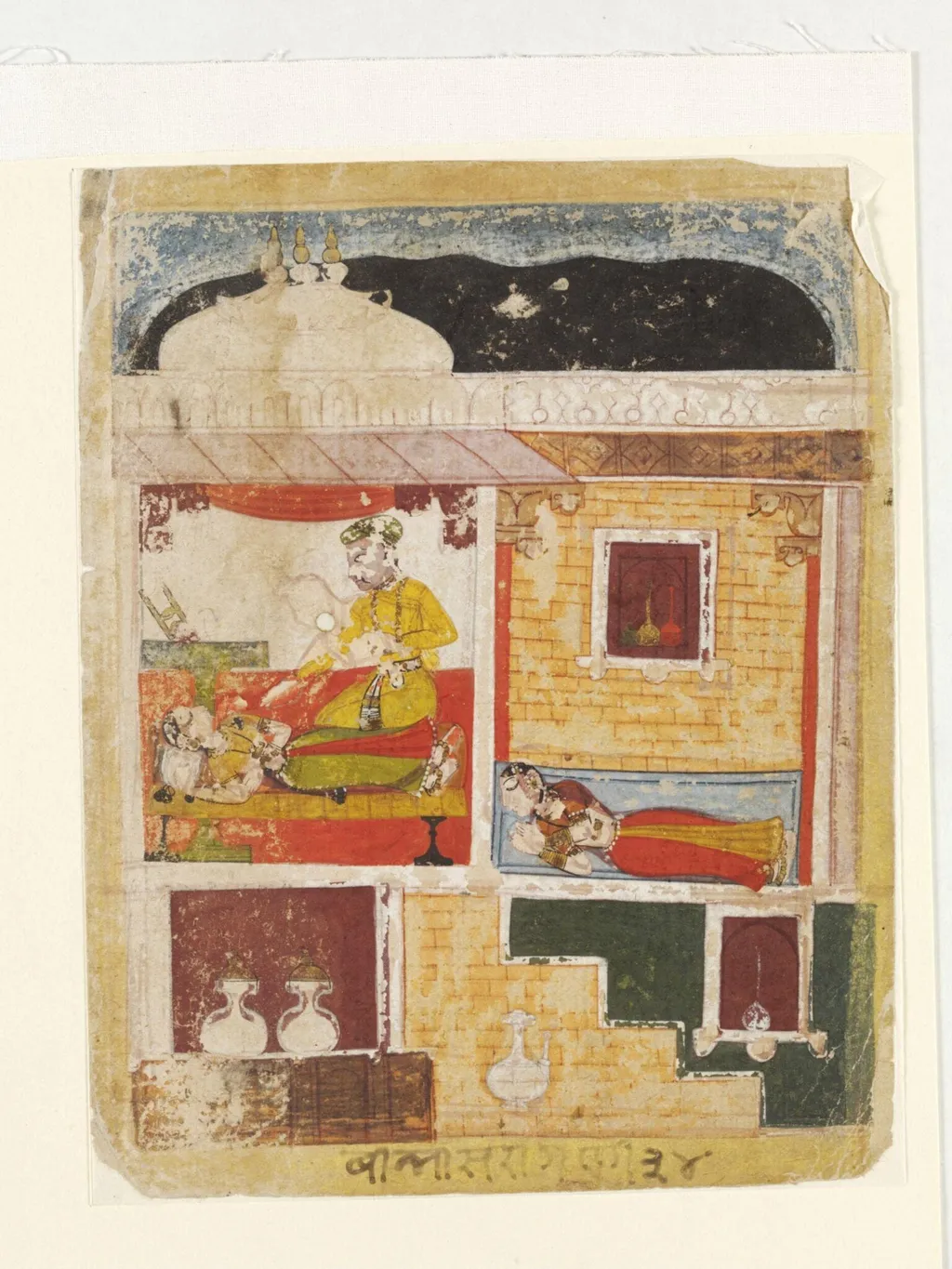
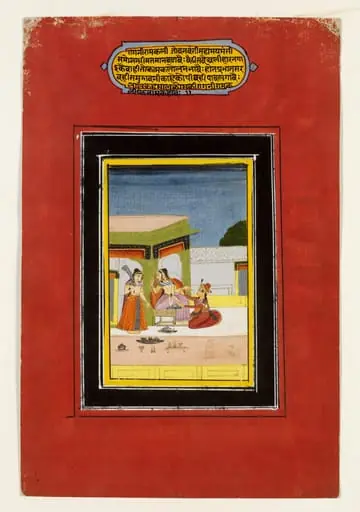
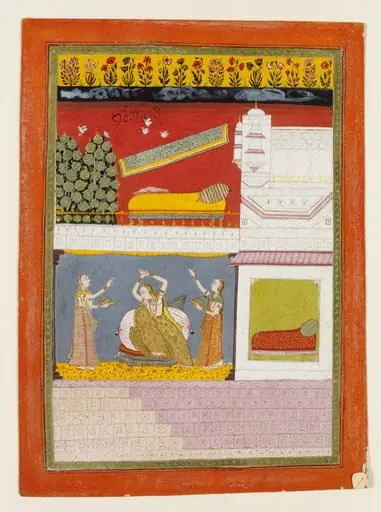
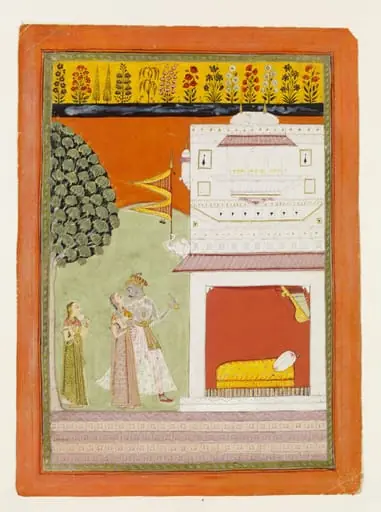
Vibhasa Ragini is a paint painting by the Mughal Painting artist Unknown. It dates from 1650 and is held in the collection of the Victoria and Albert Museum. Created around 1650, this opaque watercolor on paper portrays an intimate domestic scene.
About this work
Overview
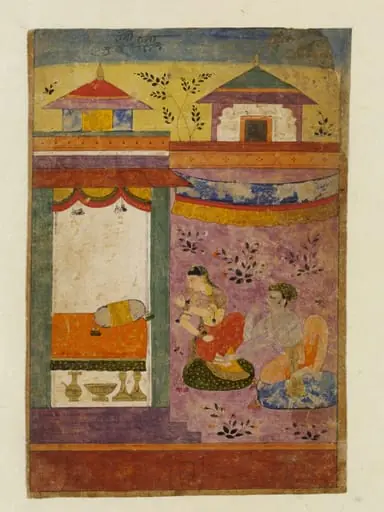
Created around 1650, this opaque watercolor on paper portrays an intimate domestic scene. A man in vivid yellow robes sits on a red cushion, holding a round object, while a small dog rests at his feet. The composition includes two white vases on a table and a modest interior that opens onto a two‑story building with a window and an adjacent bedroom.
Subject & Meaning
The narrative suggests a prince gently rousing his sleeping lover, a motif common in courtly love imagery. A maid, depicted still asleep outside the chamber, underscores the private nature of the encounter and adds a subtle contrast between duty and desire.
Technique & Style
Executed in opaque watercolor, the work employs flat, bold hues without gradated shading, giving the figures a graphic clarity. The limited palette—bright yellows, reds, and whites—highlights the figures against a simplified architectural backdrop, characteristic of mid‑seventeenth‑century Indian court painting.
History & Provenance
The piece originates from the mid‑17th century, a period when watercolor on paper was a favored medium for courtly commissions. Its current condition shows areas of fading and minor damage, indicating age and previous handling, though specific ownership records remain undocumented.
Context
During the 1650s, princely courts often employed artists to illustrate romantic and domestic episodes, reflecting both personal affection and the cultural ideals of refined behavior. The inclusion of everyday objects—a dog, vases, and a cushion—anchors the scene in a recognizable household setting.
Legacy
While the painting is not widely reproduced, it exemplifies the aesthetic of opaque watercolors used in South Asian courtly art, offering scholars insight into the visual language of intimacy and domesticity in the period.
Artist & collection

 Domestic Scene
 Giacomo and Cardinal Marco, investing Andrea, Abbot of San Zeno, with his Benefice
 The Nymph of Fontainebleau
 Portrait of a Woman
 Madonna and Child with Saints in the Enclosed Garden
 Venus and Minerva
 Family Group of Four on Sofa
 Wall painting from Room H of the Villa of P. Fannius Synistor at Boscoreale