Artwork
Maria cu Pruncul
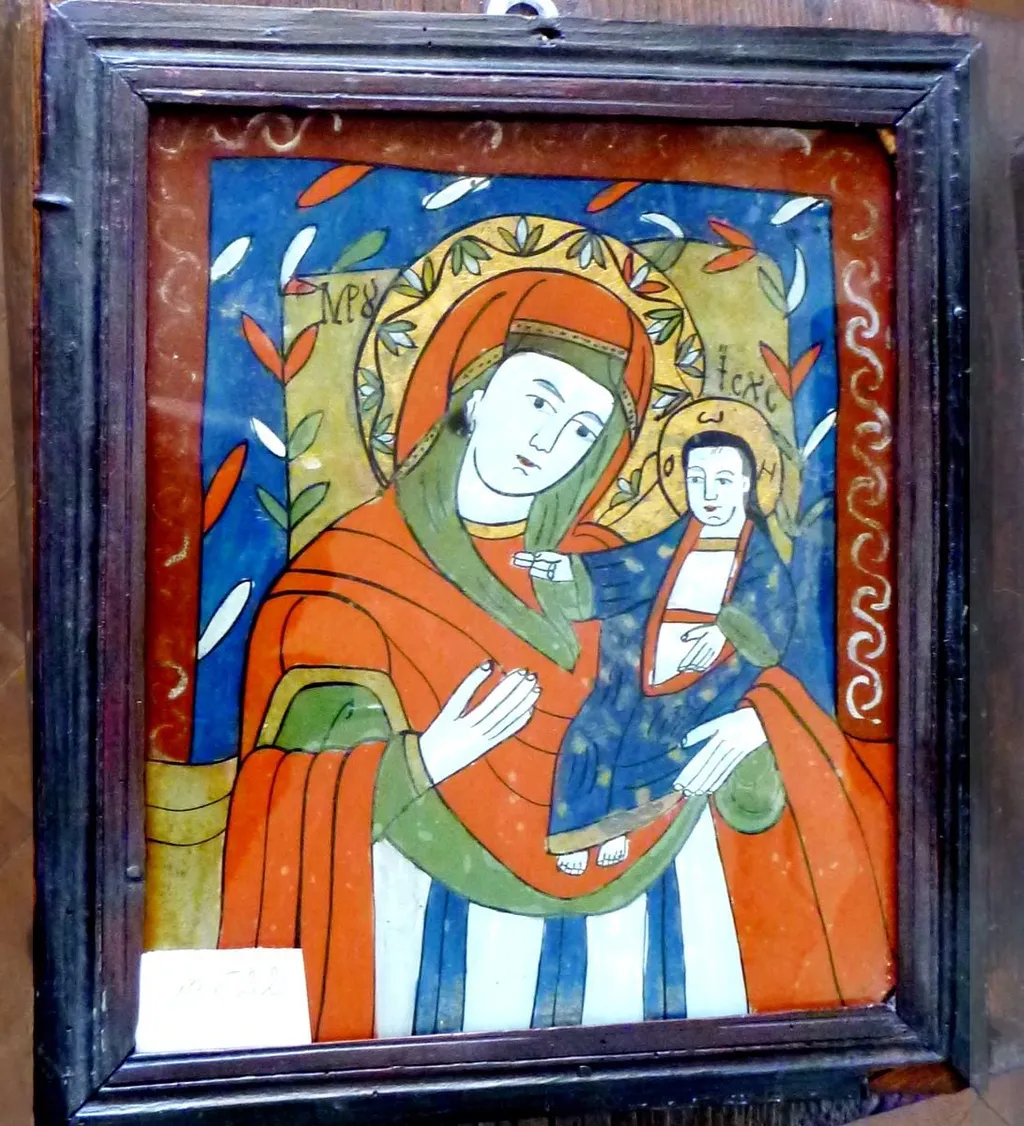
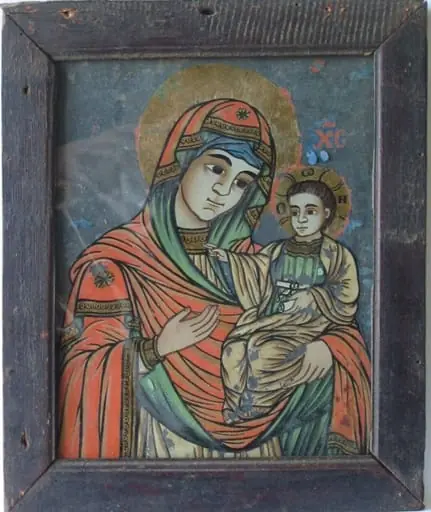
Maria cu Pruncul is a drawing by Unknown. It dates from 1850 and is held in the collection of the Bistrita-Năsăud Museum Complex. This devotional image depicts the Virgin Mary seated with the infant Jesus on her lap.
About this work
Overview
The background features a blue field with white clouds and red-orange framing, creating a structured, otherworldly space.
This devotional image depicts the Virgin Mary seated with the infant Jesus on her lap. Both figures are crowned with golden halos adorned with leaf-like motifs, suggesting divine status. The background features a blue field with white clouds and red-orange framing, creating a structured, otherworldly space. Their clasped hands and the child’s reaching gesture convey intimacy and spiritual connection.
Subject & Meaning
The figures are identified as Mary and Christ through their halos, which contain inscriptions likely referencing their sacred roles. The leaf decorations around the halos echo Byzantine traditions where foliage symbolized eternal life or divine authority. Mary’s composed posture and Jesus’s motion toward her suggest both maternal tenderness and theological themes of human-divine relationship.
Technique & Style
The painting employs flat, stylized forms typical of medieval iconography. Rich pigments—especially the vivid orange of Mary’s robe and the luminous gold of the halos—contrast with the cool blue background. The lack of perspective and emphasis on symbolic detail reflect liturgical conventions rather than naturalistic representation, prioritizing spiritual presence over physical realism.
History & Provenance
The work originates from a tradition of Eastern Orthodox or Byzantine-influenced religious art, likely produced in a monastic or workshop setting during the late medieval period. Its preservation suggests it was venerated in a church or private chapel. The presence of inscribed halos indicates it was made for devotional use, possibly as part of a larger iconostasis or portable altar piece.
Context
In medieval Christian art, halos with inscriptions and leaf motifs were standard identifiers for holy figures, especially in regions under Byzantine cultural influence. The color choices—orange for Mary’s garment, blue for the heavens—follow established symbolic codes. Such images served as focal points for prayer, reinforcing doctrinal narratives through visual language accessible to the illiterate faithful.
Legacy
This image continues a long-standing visual tradition linking Mary and Christ through symbolic adornment and gesture. Its stylistic choices reflect enduring liturgical aesthetics that persisted across centuries in Eastern Christian communities. While later Renaissance art moved toward naturalism, such icons remained central to worship, preserving their original devotional function well into the modern era.
Artist & collection
 Domestic Scene
 Giacomo and Cardinal Marco, investing Andrea, Abbot of San Zeno, with his Benefice
 The Nymph of Fontainebleau
 Portrait of a Woman
 Madonna and Child with Saints in the Enclosed Garden
 Venus and Minerva
 Family Group of Four on Sofa
 Wall painting from Room H of the Villa of P. Fannius Synistor at Boscoreale
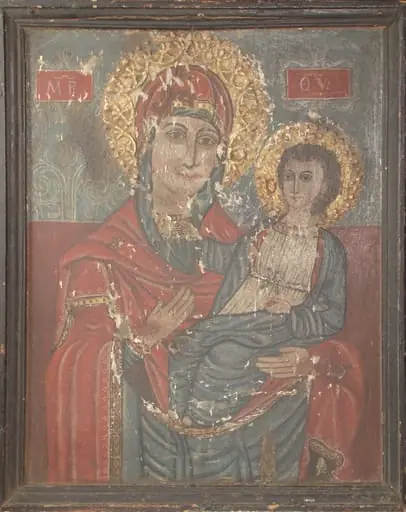 Maica Domnului cu Pruncul
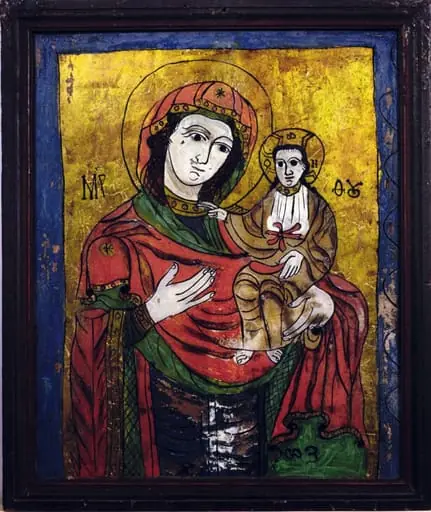 Maica Domnului cu Pruncul
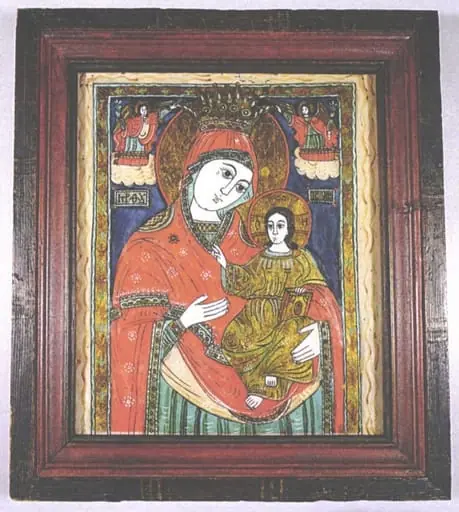 Maica Domnului cu Pruncul Hodighitria
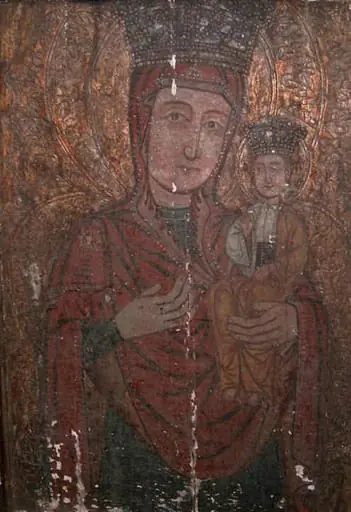 Madona cu Pruncul
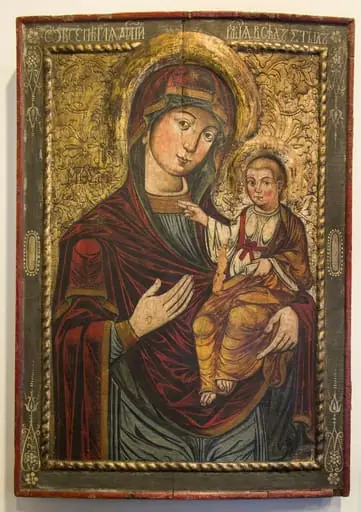 Maica Domnului cu pruncul; Icoană de catapeteasmă; Icoană împărătească
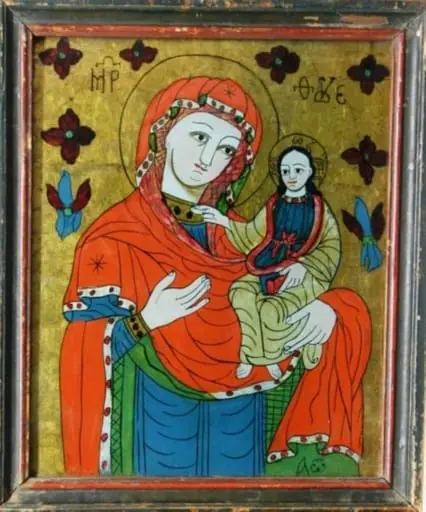 Maica Domnului cu Pruncul
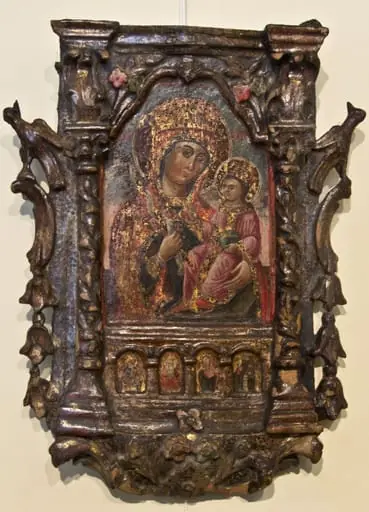 Maica Domnului cu pruncul Rodon to amaranton; Trandafirul neveștejit
 Constantin și Elena
 Maica Domnului cu Pruncul Iisus în brațe