Artwork
Transport of Porcelain Overland
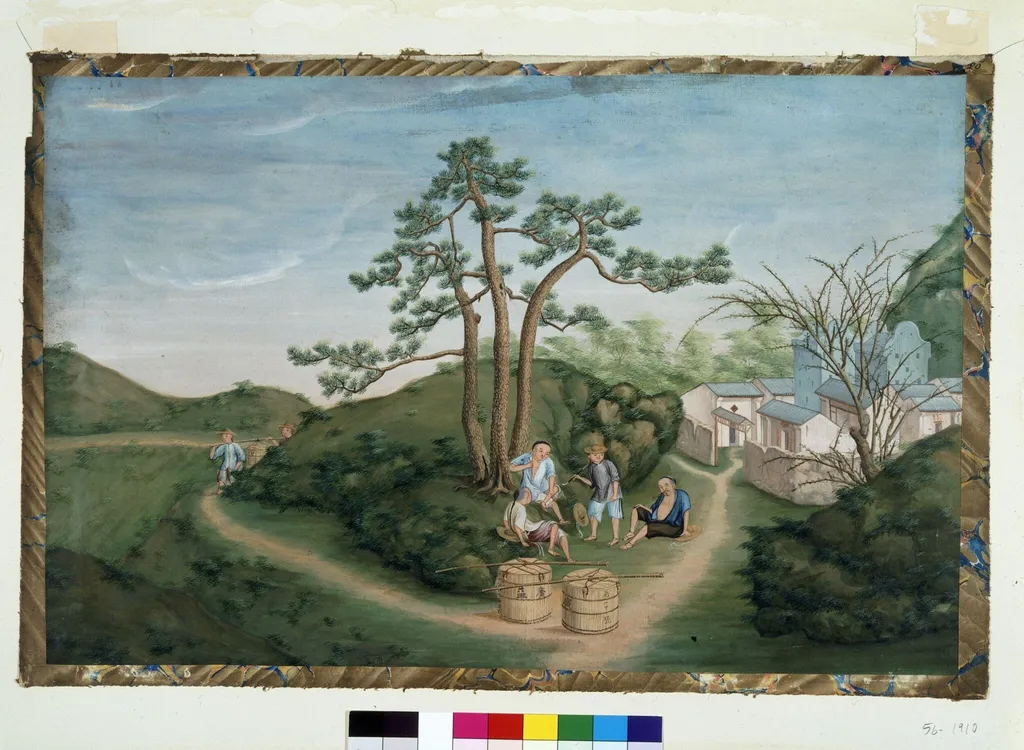
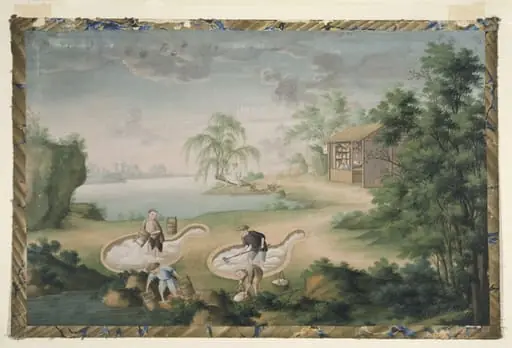
Transport of Porcelain Overland is a paint painting by the Rococo painting artist Unknown. It dates from 1780 and is held in the collection of the Victoria and Albert Museum. This painting belongs to a series of twenty-four works documenting the porcelain manufacturing process in China.
About this work
Overview
Created for a European audience, the series aimed to demystify Chinese production methods that remained inaccessible to Western artisans until the 18th century.
This painting belongs to a series of twenty-four works documenting the porcelain manufacturing process in China. It specifically illustrates the overland transport of finished ceramics, using pack animals to move fragile wares across terrain. Created for a European audience, the series aimed to demystify Chinese production methods that remained inaccessible to Western artisans until the 18th century.
Subject & Meaning
The scene depicts laborers guiding horses and donkeys laden with porcelain, emphasizing the logistical effort behind its distribution. Rather than glorifying craftsmanship, the image serves as a factual record of supply chains. Its purpose was educational: to reveal the complexity of porcelain production to Europeans, who lacked the technical knowledge to replicate it domestically.
Technique & Style
The painting employs clear, linear composition and muted tonal contrasts to prioritize clarity over dramatic effect. While some elements suggest awareness of European chiaroscuro, the style remains rooted in Chinese visual traditions, favoring descriptive accuracy over emotional intensity. Figures and animals are rendered with restrained detail, supporting the documentary intent of the series.
History & Provenance
Commissioned likely by European traders or missionaries, the full set was produced in China during the early 18th century. These works were exported to satisfy growing European curiosity about porcelain origins. Their survival in private and institutional collections attests to their role as cultural intermediaries, bridging Eastern production and Western demand.
Context
Before European mastery of high-fired porcelain, Chinese ceramics were highly prized and closely guarded. The series emerged during a period of intense interest in Chinese technology, coinciding with Jesuit reports and trade expansion. These images functioned as visual manuals, offering insights into processes Europeans could not observe firsthand.
Legacy
The series contributed to the gradual transfer of porcelain-making knowledge to Europe, aiding the eventual establishment of factories like Meissen. Though not technical blueprints, the paintings preserved a visual record of pre-industrial Chinese industry. Today, they serve as historical documents of cross-cultural exchange and the global circulation of artisanal knowledge.
Artist & collection

 Domestic Scene
 Giacomo and Cardinal Marco, investing Andrea, Abbot of San Zeno, with his Benefice
 The Nymph of Fontainebleau
 Portrait of a Woman
 Madonna and Child with Saints in the Enclosed Garden
 Venus and Minerva
 Family Group of Four on Sofa
 Wall painting from Room H of the Villa of P. Fannius Synistor at Boscoreale
 Making Basins
 Digging China Clay
 Potters Painting in Enamel Colours
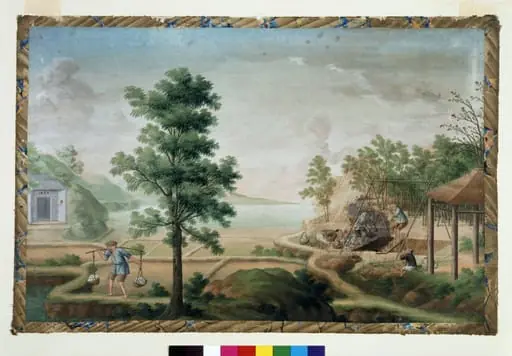 Mining China Stone
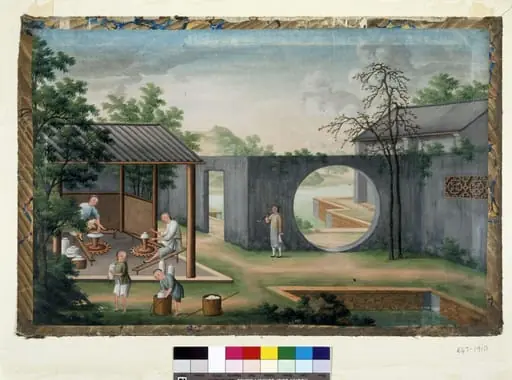 Shaping Outsides and Footrims of Bowls
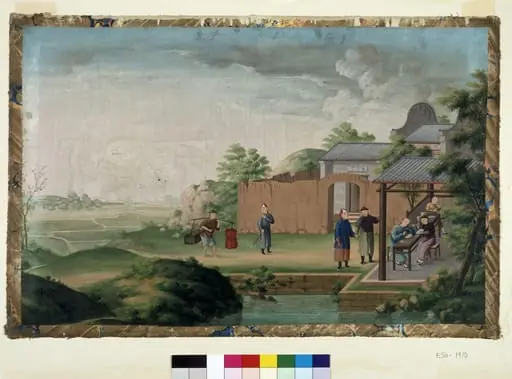 Potters Painting in Underglaze Blue
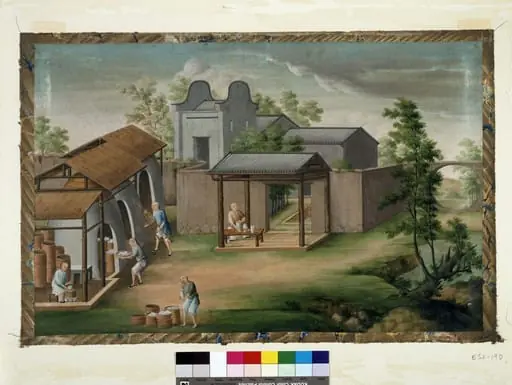 Stacking the Kiln
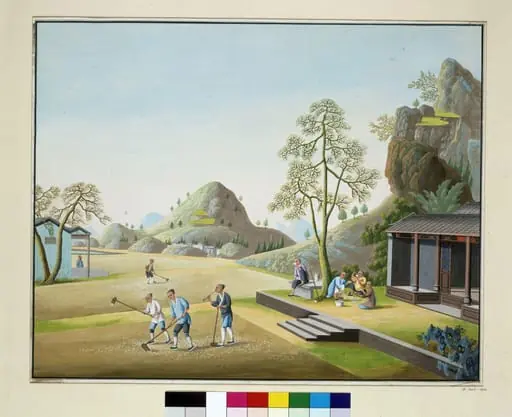 Hoeing the Ground
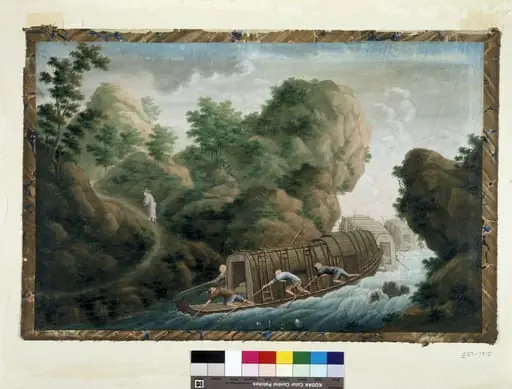 Transport of Porcelain by River
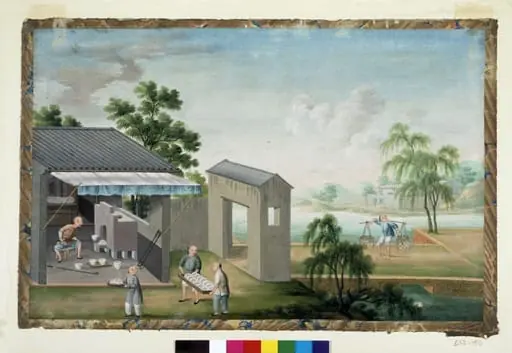 Firing Enamelled Ware in Muffle Kiln
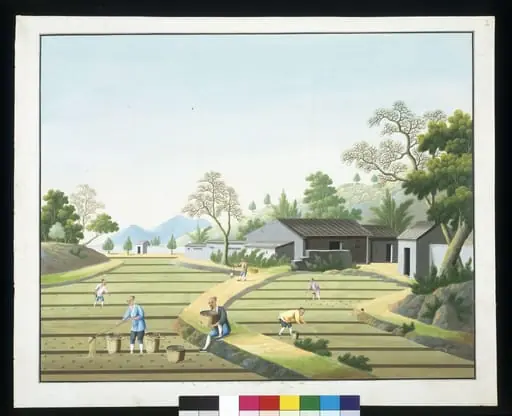 Sowing Seeds
 Men Treading China Clay in Pits