Artwork
Mercury and Argus
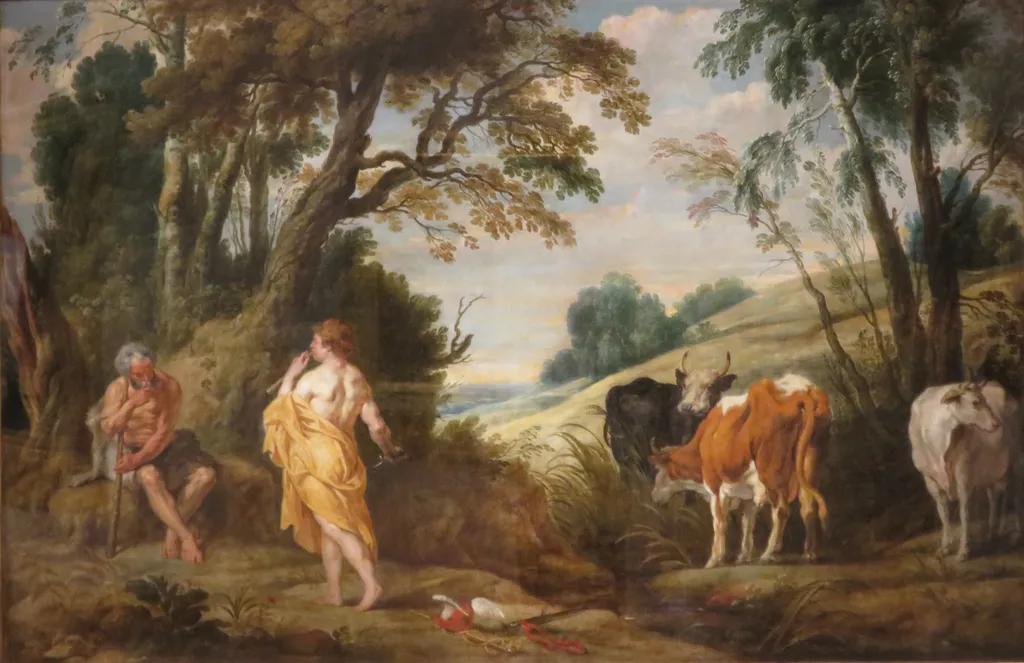
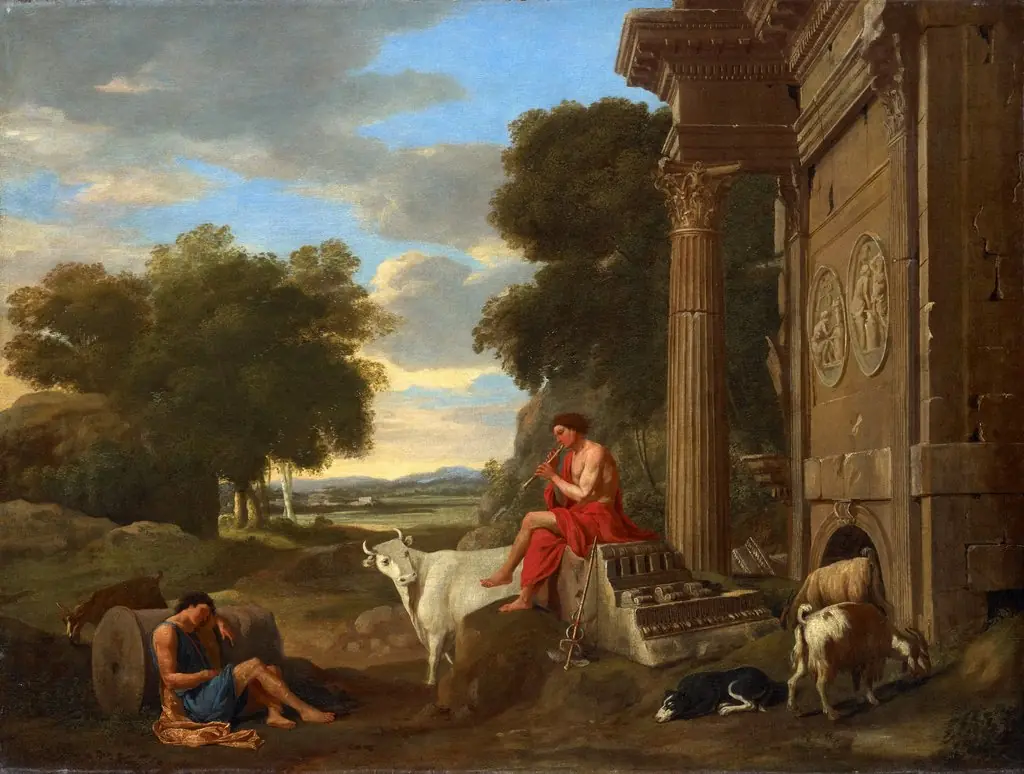
Mercury and Argus is an oil painting by the Flemish Baroque painting artist Unknown. It dates from 1640 and is held in the collection of the Norton Simon Museum. The oil painting presents a quiet encounter set in a pastoral landscape.
About this work
Overview
The oil painting presents a quiet encounter set in a pastoral landscape. A figure in a yellow garment stands beside a body of water, while an elderly man seated on a rock watches him. Cattle graze in the foreground, and trees frame the scene, all rendered in subdued earth tones.
Subject & Meaning
The central characters are traditionally identified as the messenger god Mercury and the watchful giant Argus. Mercury, indicated by his bright robe and a staff, appears poised for action, whereas Argus, with his own staff and a downcast gaze, suggests a moment of transition or negotiation between the divine and the mortal.
Technique & Style
The artist employs chiaroscuro to model forms, using contrasts of light and shadow to give volume to the figures and landscape. A restrained palette of browns, greens, and muted yellows unifies the composition, while careful handling of oil paint creates a soft atmospheric depth.
History & Provenance
The work is catalogued simply as an oil painting titled "Mercury and Argus," with no recorded date or artist attribution in the supplied data. Its provenance remains undocumented, limiting knowledge of its original ownership or exhibition history.
Context
Depictions of Mercury and Argus draw on classical mythology, where Mercury is sent to slay the many-eyed Argus. The inclusion of livestock and a tranquil setting reflects a Renaissance‑influenced interest in integrating mythological narratives within everyday rural environments.
Artist & collection

 Domestic Scene
 Giacomo and Cardinal Marco, investing Andrea, Abbot of San Zeno, with his Benefice
 The Nymph of Fontainebleau
 Portrait of a Woman
 Madonna and Child with Saints in the Enclosed Garden
 Venus and Minerva
 Family Group of Four on Sofa
 Wall painting from Room H of the Villa of P. Fannius Synistor at Boscoreale
 Mercury playing the flute for Argus
 Landscape with Polyphemus
 Diana and her Nymphs
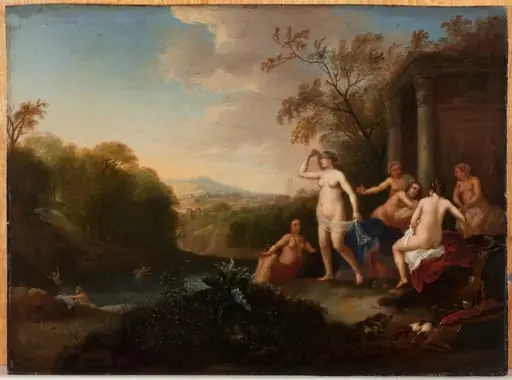 Diana und Aktäon
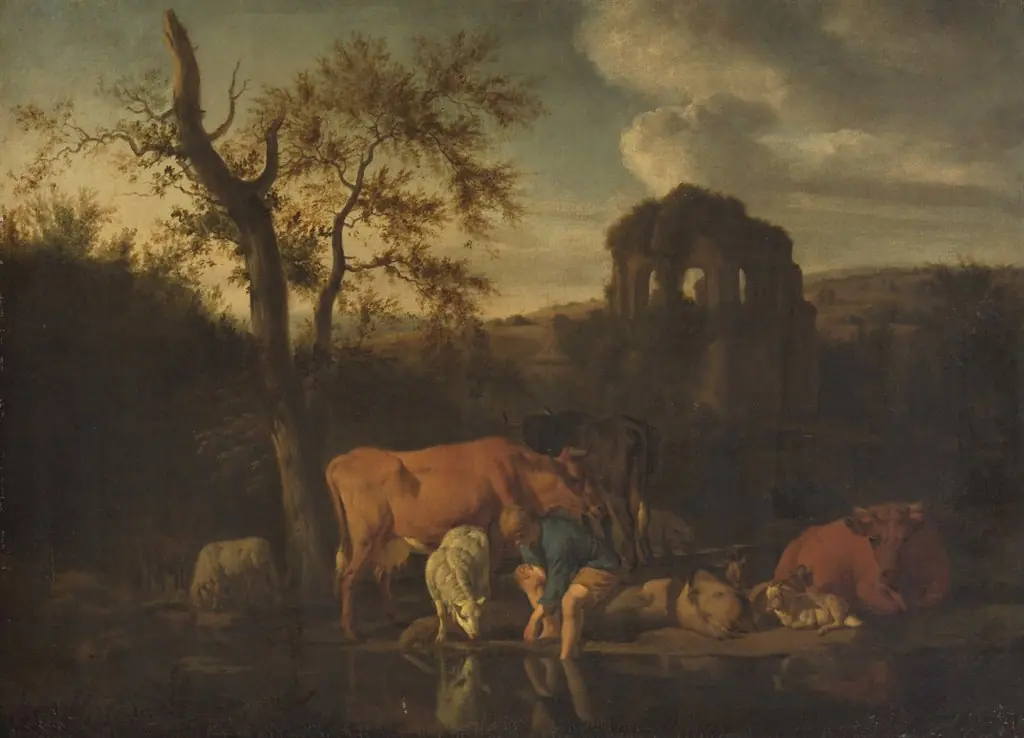 Landschaft mit Herde und Hirten
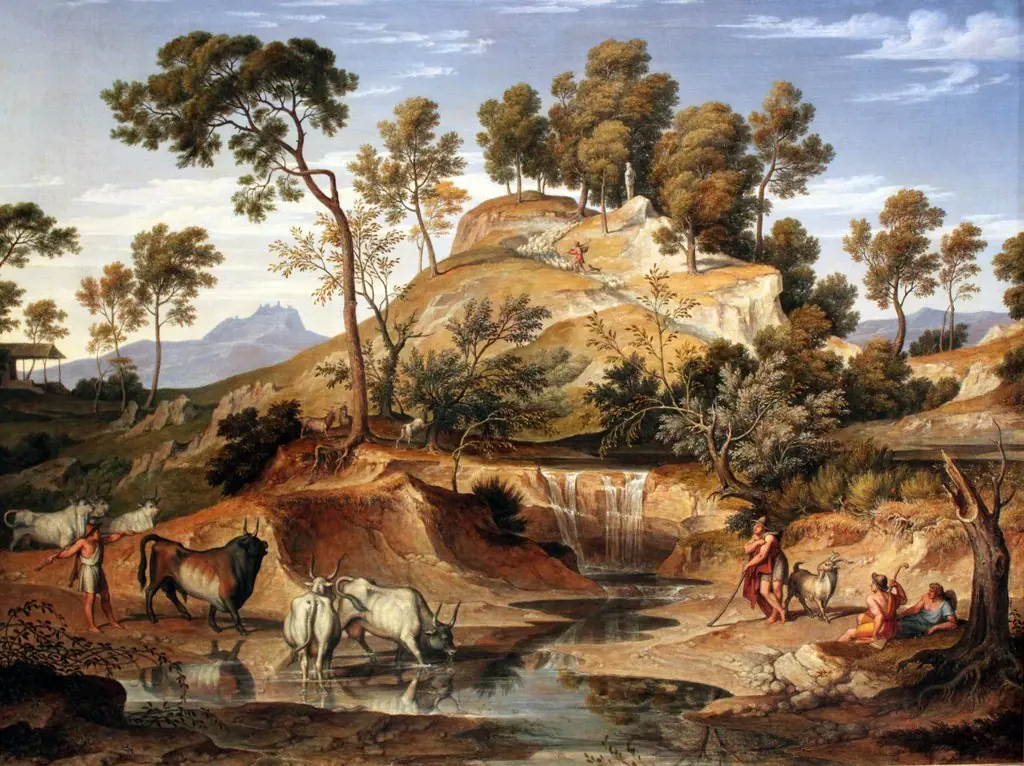 Serpentara Landscape with Herdsmen and cows at a Spring
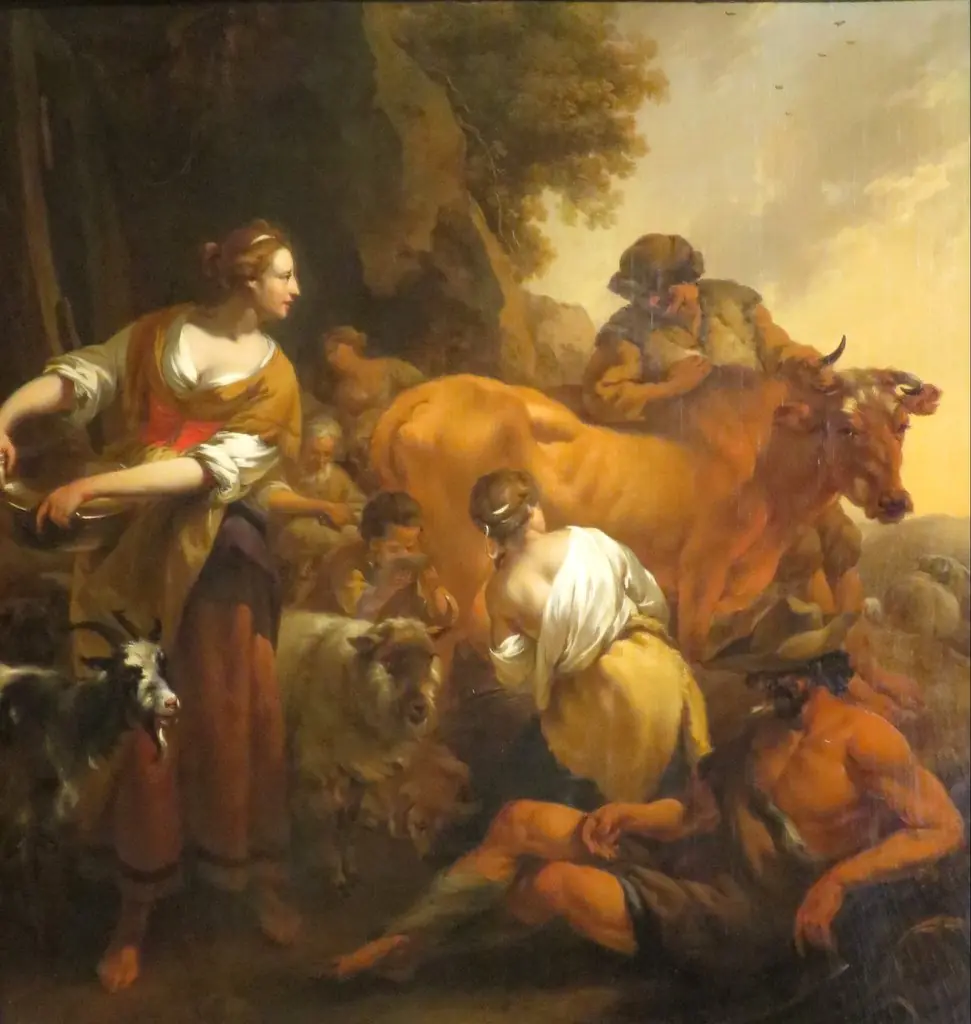 Pastoral Scene
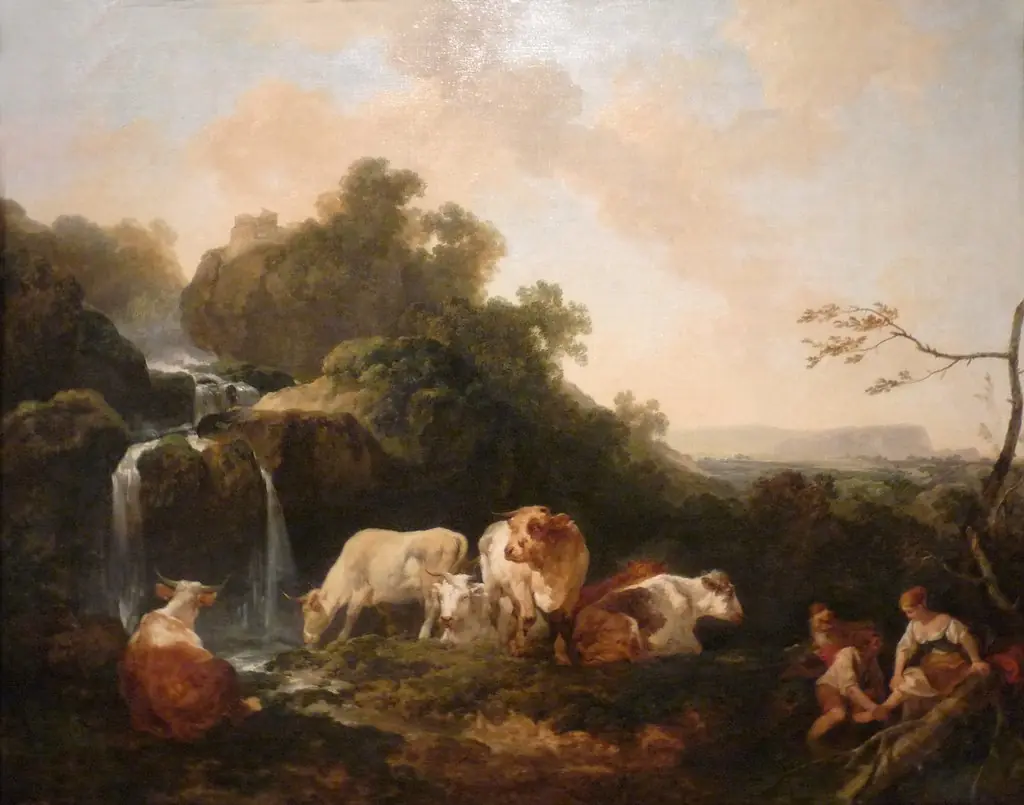 Landscape with Figures and Cattle
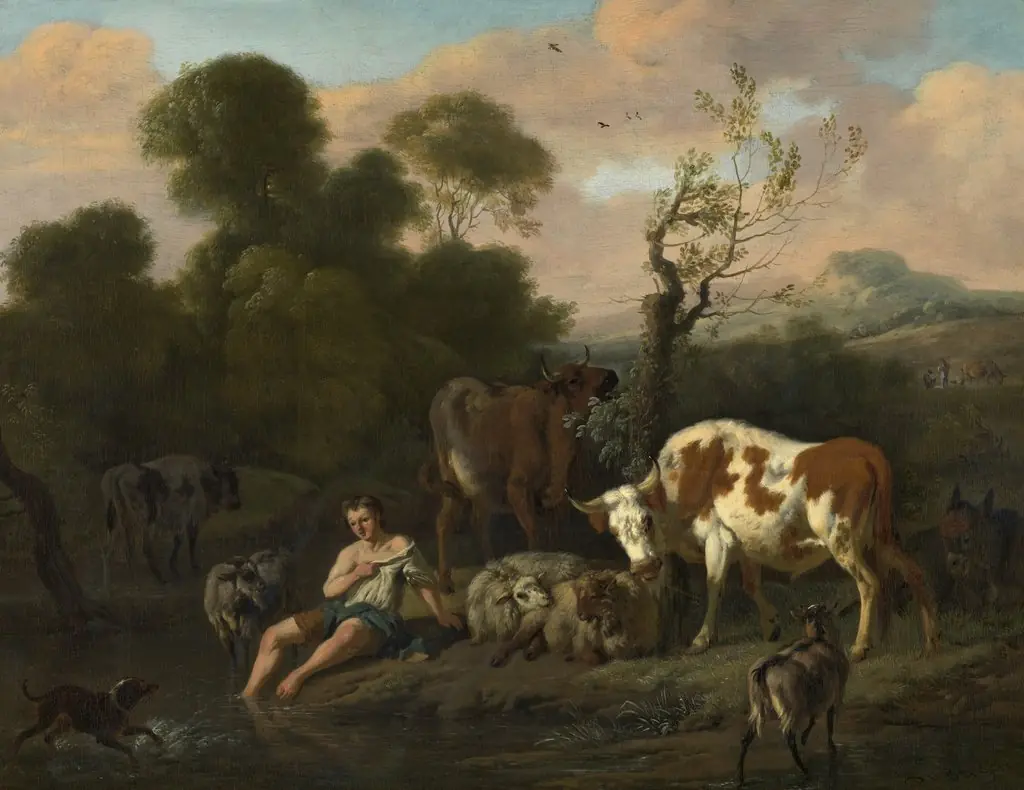 Landscape with a Shepherd
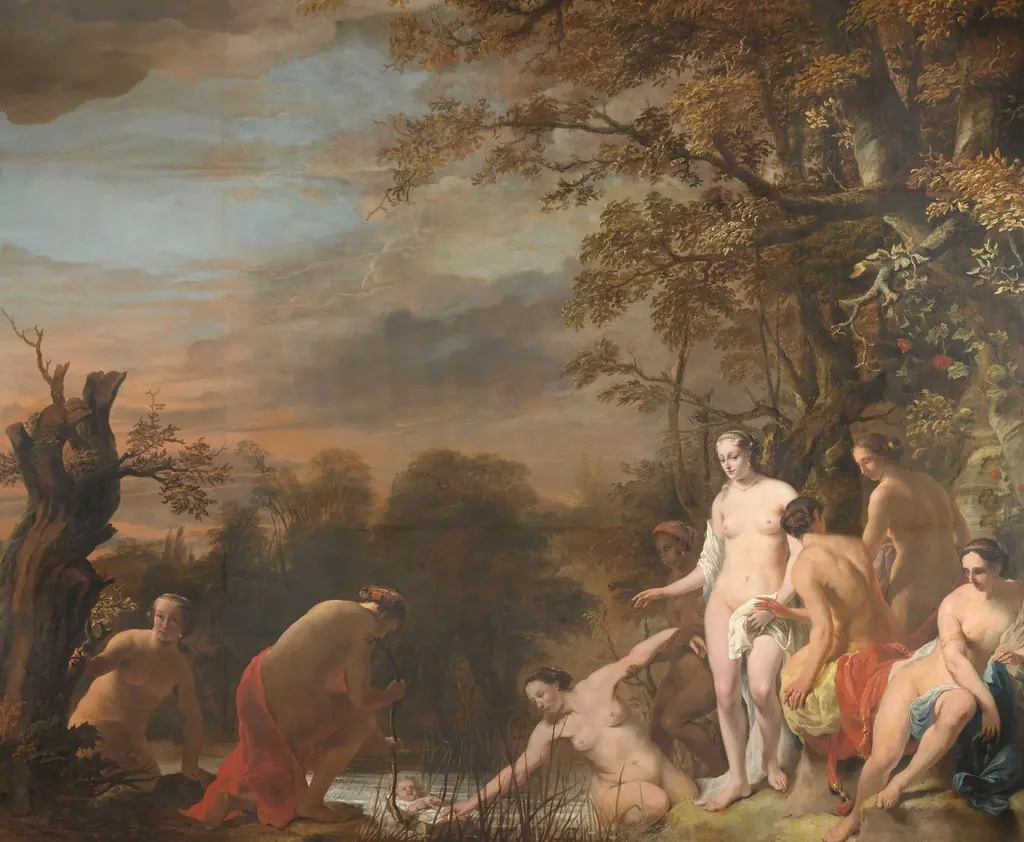 Pharaoh's daughter discovers Moses in the rush basket
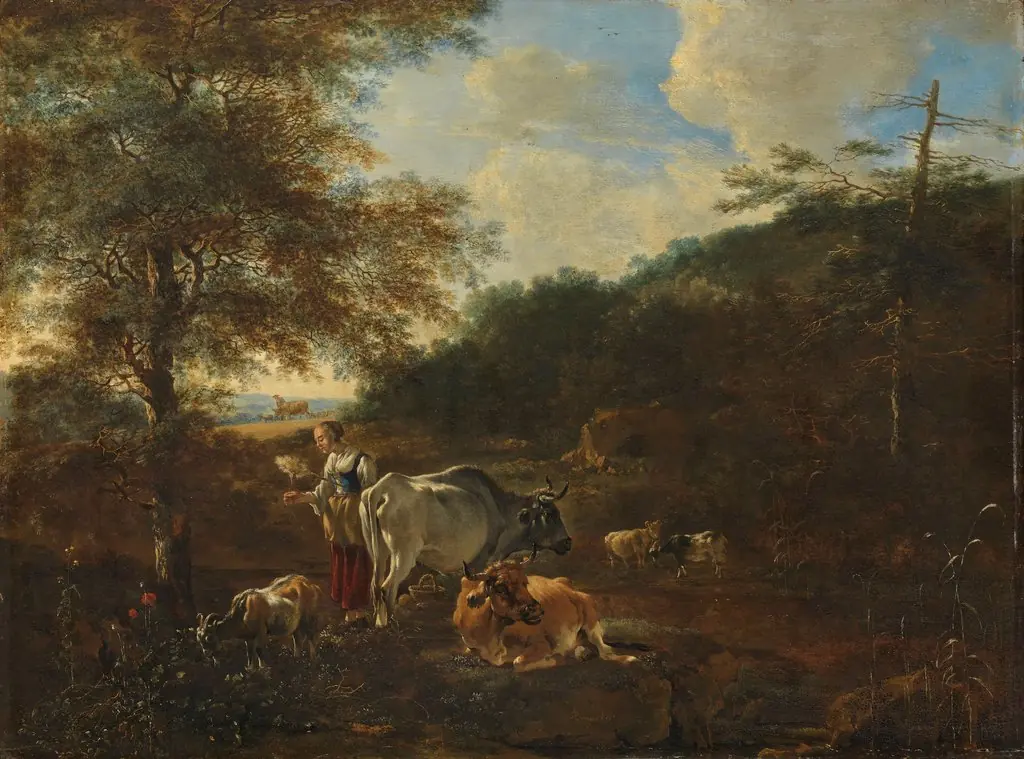 Landscape with cattle
 Mercury and Argus