Artwork
Miracle of the Dragon
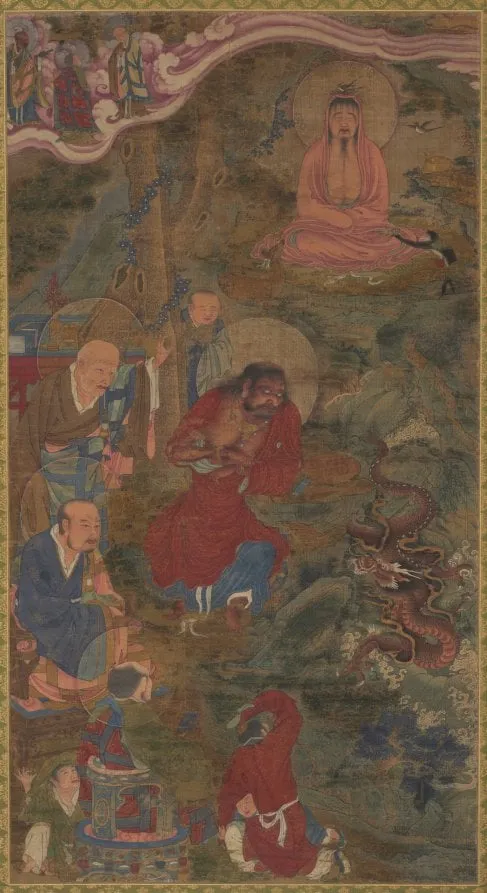
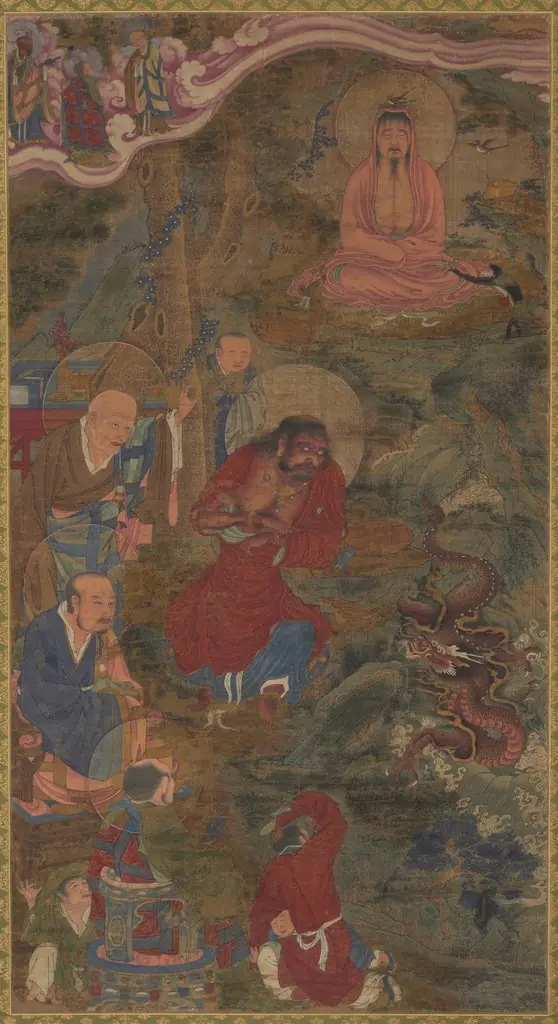
Miracle of the Dragon is an unspecified painting by the Baroque artist Unknown. It dates from 1604 and is held in the collection of the Cleveland Museum of Art. The scroll depicts a dragon emerging from water in the lower right, surrounded by a gathering of Buddhist disciples.
About this work
The calmest figure is the Buddha—he’s so deep in meditation that nature forgets he’s there.
You see a long scroll with a dragon rising from water while people watch. Some look shocked; others barely react. At the top, a man sits so still that birds are building a nest on his head.
The painting shows how different people respond to something amazing. The calmest figure is the Buddha—he’s so deep in meditation that nature forgets he’s there. The artist used thin, flowing lines to make the dragon feel alive.
If you like this, look up more works about china, ming dynasty (1368–1644).
Overview
The scroll depicts a dragon emerging from water in the lower right, surrounded by a gathering of Buddhist disciples. Their reactions range from startled to indifferent, while the historical Buddha, Shakyamuni, sits in meditation at the upper right, his posture so still that birds are nesting on his head. The composition contrasts worldly astonishment with serene spiritual focus.
Subject & Meaning
The varied postures of the disciples illustrate differing degrees of attachment to worldly concerns; the lay figures display surprise, whereas the Buddha remains unmoved, embodying detachment. In Chinese Buddhist symbolism, the dragon often represents enlightenment, reinforcing the notion that true insight is indifferent to external marvels.
Technique & Style
The artist employs delicate, flowing lines to convey the dragon’s movement, giving it a sense of vitality as it rises from the water. Fine brushwork renders the birds and surrounding fauna with subtle detail, while the figures are rendered with restrained gestures, emphasizing the contrast between motion and stillness.
Historical Context
Dragons have been integral to Buddhist iconography since early centuries, serving as metaphors for spiritual awakening. The scroll reflects this tradition, situating the miraculous creature within a Buddhist narrative and aligning it with the contemplative presence of Shakyamuni, a common motif in Chinese religious art of the period.
Artist & collection

 Domestic Scene
 Giacomo and Cardinal Marco, investing Andrea, Abbot of San Zeno, with his Benefice
 The Nymph of Fontainebleau
 Portrait of a Woman
 Madonna and Child with Saints in the Enclosed Garden
 Venus and Minerva
 Family Group of Four on Sofa
 Wall painting from Room H of the Villa of P. Fannius Synistor at Boscoreale