Artwork
Miss Lovejoy
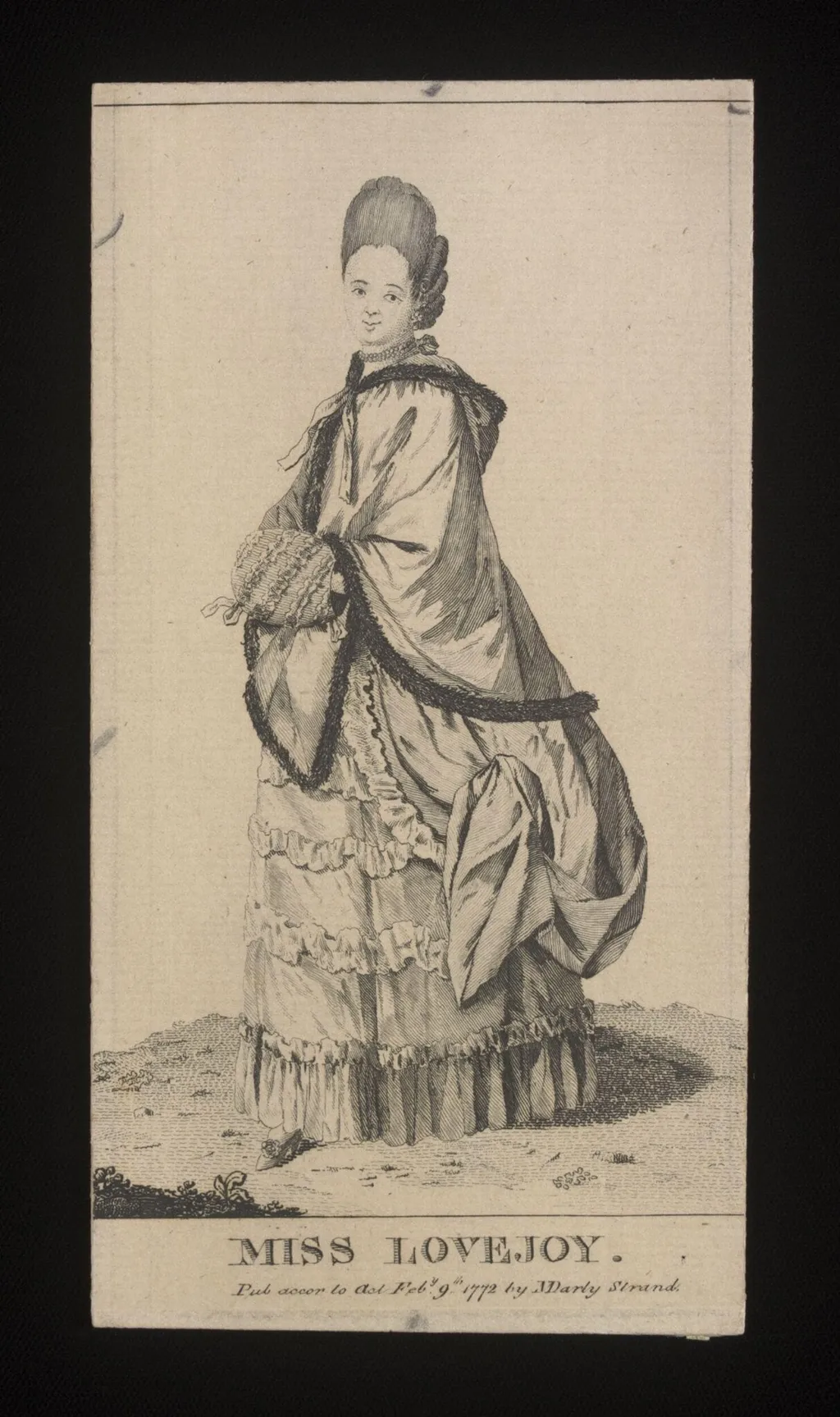
Miss Lovejoy is a print by the Romanticist artist Unknown. It dates from 9 and is held in the collection of the Victoria and Albert Museum.
About this work
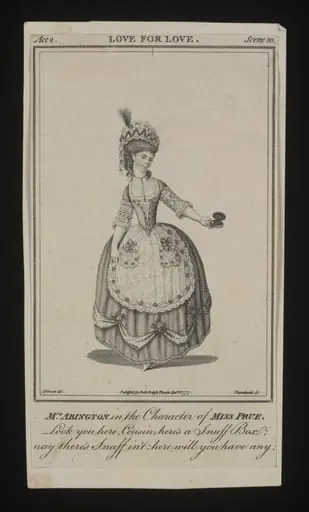
This print shows Miss Lovejoy in a simple white dress, facing left with her hands folded. The artist used clean lines and soft shading. The print looks crisp and well-made.
She wears a ribbon in her hair. The date—February 9, 1772—is printed in the corner. The publisher’s name, Marly, appears at the bottom.
See this in person at the Victoria and Albert Museum.
Overview
This print, published in London on February 9, 1772, portrays Miss Lovejoy as a figure of quiet composure. Produced by the publisher Marly, it belongs to the Harry Beard Collection now held at the Victoria and Albert Museum. The image is rendered with precision, reflecting the standards of late 18th-century portraiture in print form, intended for public circulation rather than private commission.
Subject & Meaning
The inclusion of a ribbon in her hair adds a subtle touch of personal adornment, balancing decorum with individuality.
Miss Lovejoy is depicted in a modest, unadorned white dress, her hands gently folded and gaze directed slightly away. The simplicity of her attire and posture suggests an ideal of restrained femininity common in the period. The inclusion of a ribbon in her hair adds a subtle touch of personal adornment, balancing decorum with individuality. The print likely served as a portrait for admirers or as a commercial representation of a known figure.
Technique & Style
The artist employed fine, clear lines and delicate shading to define form without heavy detail. The print’s crispness indicates skilled engraving or etching, typical of high-quality commercial prints of the era. Soft tonal transitions lend volume to the figure while maintaining a restrained aesthetic. The composition is centered and balanced, emphasizing stillness and dignity over dramatic expression.
History & Provenance
Published by Marly of London in early 1772, the print entered the Harry Beard Collection, a significant assemblage of British theatrical and social portraiture. It was later acquired by the Victoria and Albert Museum, where it remains part of their holdings in graphic arts. Its survival reflects its popularity and the value placed on such images as cultural artifacts of everyday life in Georgian England.
Context
In the 1770s, printed portraits of public figures—especially actresses and socialites—were widely distributed as affordable keepsakes. Miss Lovejoy, likely an actress or notable woman of the time, would have been recognized by London audiences. Such prints bridged the gap between elite portraiture and mass culture, offering the public visual access to figures otherwise confined to the stage or drawing room.
Legacy
This print endures as a quiet example of how personal identity was visually negotiated in the 18th century. It illustrates the role of print media in shaping public perception and preserving the likenesses of non-aristocratic individuals. Today, it contributes to scholarly understanding of gender, representation, and the circulation of images in pre-industrial Britain.
Artist & collection

 Domestic Scene
 Giacomo and Cardinal Marco, investing Andrea, Abbot of San Zeno, with his Benefice
 The Nymph of Fontainebleau
 Portrait of a Woman
 Madonna and Child with Saints in the Enclosed Garden
 Venus and Minerva
 Family Group of Four on Sofa
 Wall painting from Room H of the Villa of P. Fannius Synistor at Boscoreale
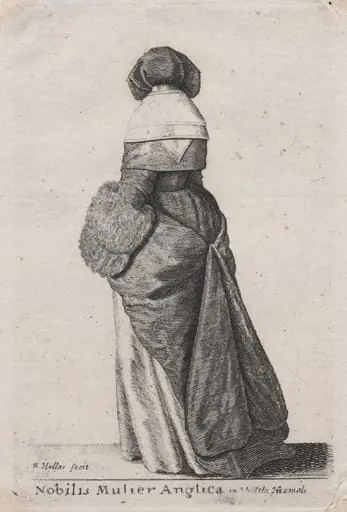 Nobilis Mulier Anglica in Vestitu Hiemali
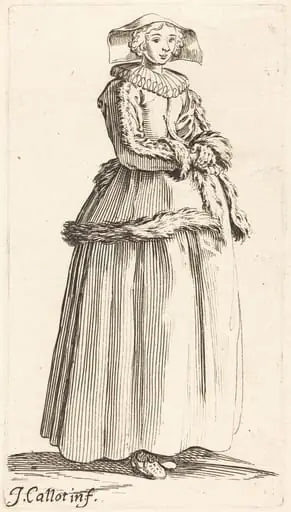 Young Woman with Hands Folded, Facing Right
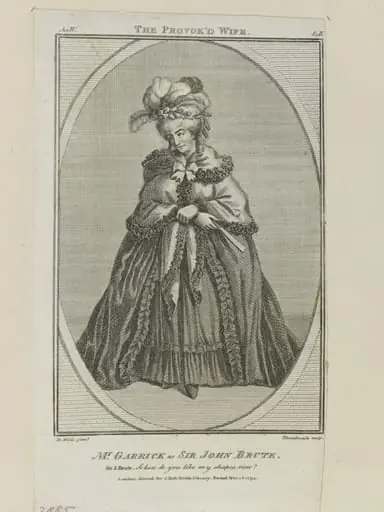 Mr. Garrick as Sir John Brute
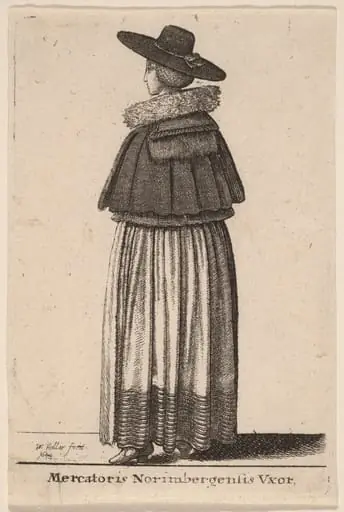 Mercatoris Norimbergensis Vxor
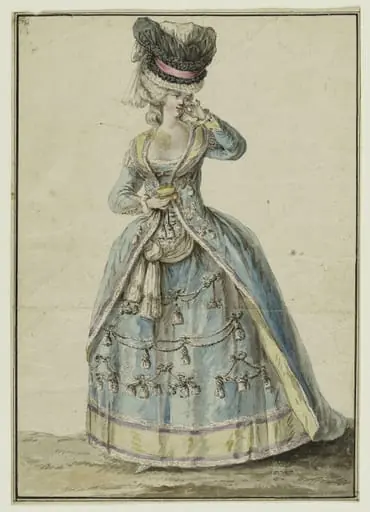 Habit en lévite enrichi de glands, d'épaulettes et de cordonets
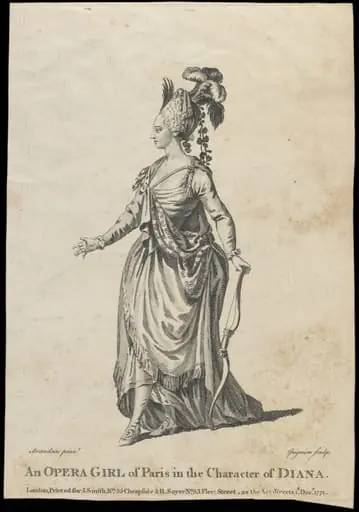 H Beard Print Collection
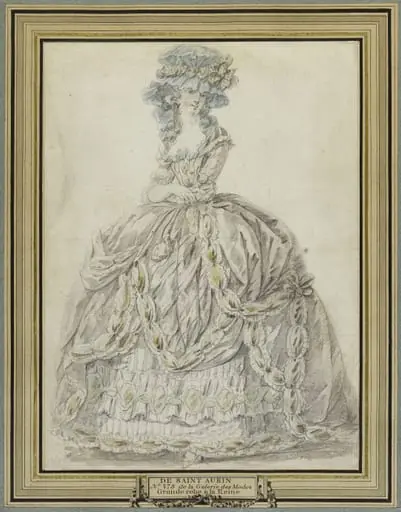 Grande robe à la reine
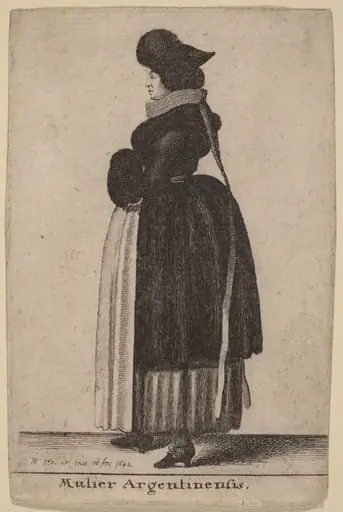 Mulier Argentinensis
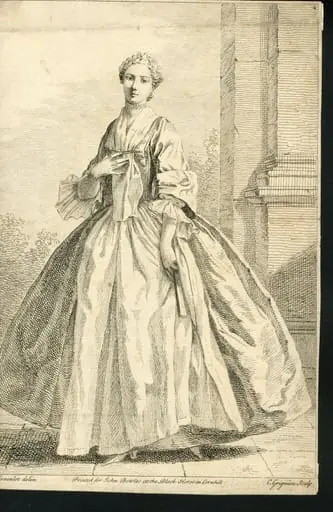 H Beard Print Collection
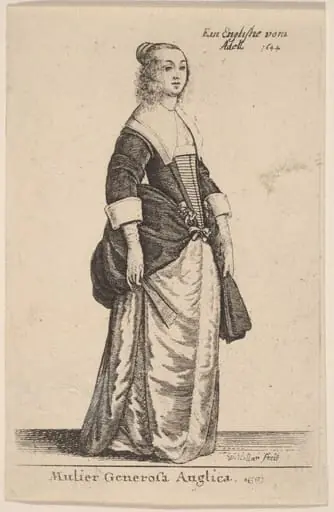 Mulier Generosa Anglica
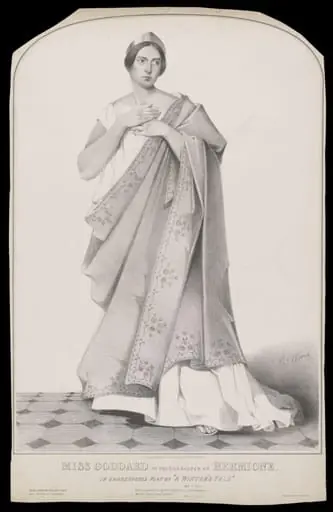 H Beard Print Collection
 H Beard Print Collection