Artwork
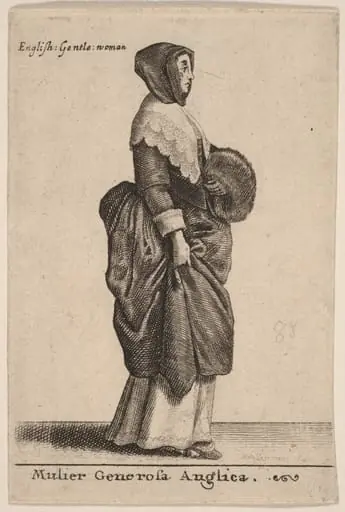
Nobilis Mulier Anglica in Vestitu Hiemali
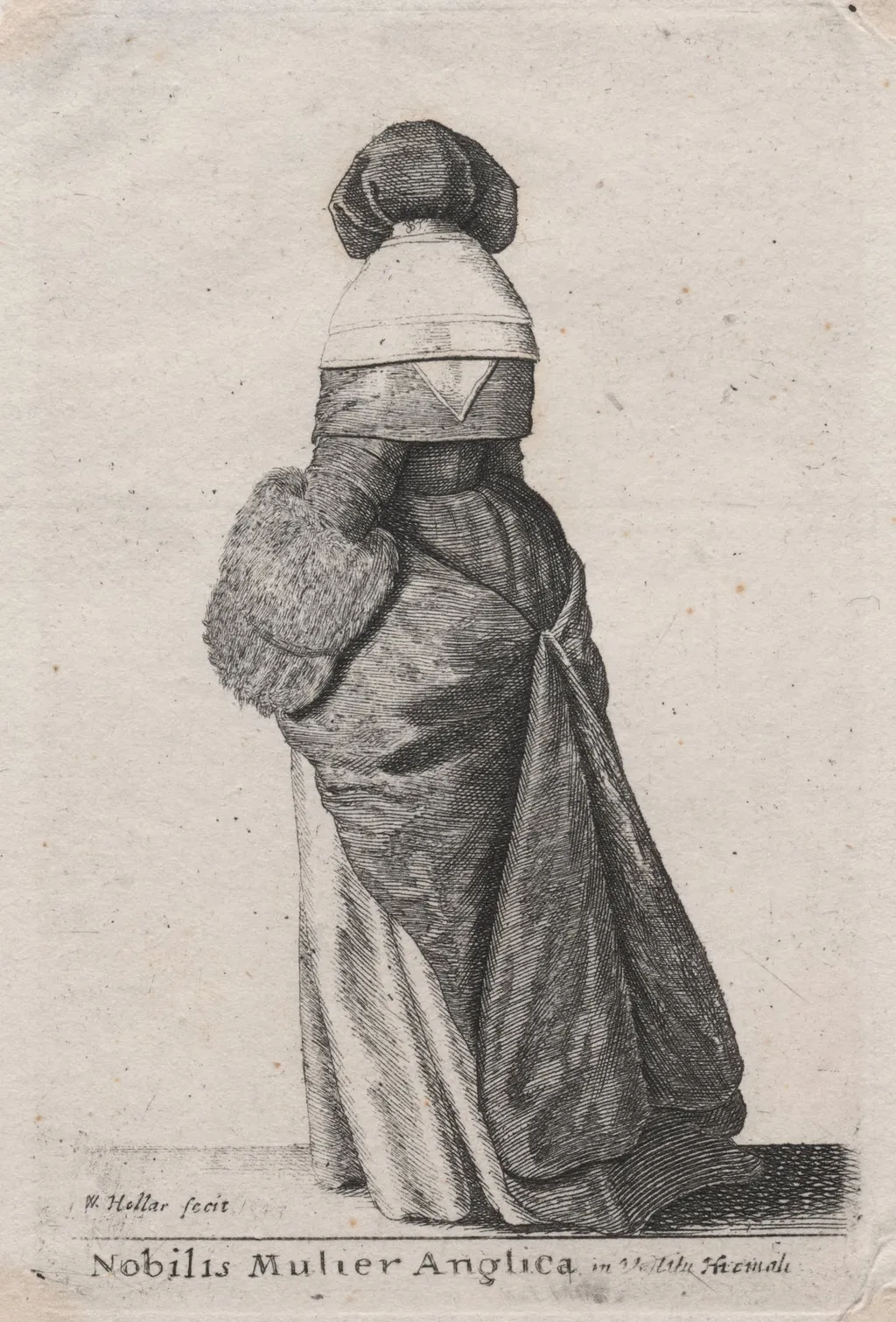
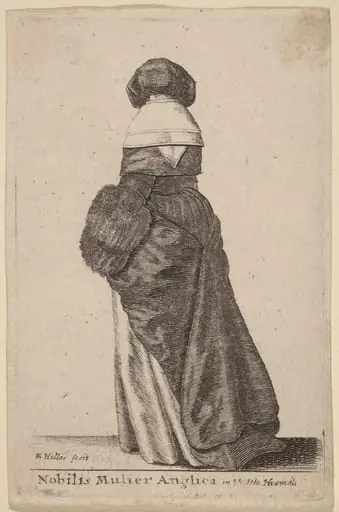
Nobilis Mulier Anglica in Vestitu Hiemali is a print by the Baroque artist Wenceslaus Hollar. It dates from 1643 and is held in the collection of the Cleveland Museum of Art.
About this work
The title at the bottom says *Nobilis Mulier Anglica in Vestitu Hiemali*—which means "A Noble English Woman in Winter Clothing.
This is a black-and-white etching of a woman from behind. She’s dressed in a long, heavy coat with thick sleeves, and her head is covered by a hood pulled tight. The fabric looks detailed, with folds and texture that make it feel real.
The title at the bottom says *Nobilis Mulier Anglica in Vestitu Hiemali*—which means "A Noble English Woman in Winter Clothing." It’s signed by Wenceslaus Hollar, who made this in 1643.
If you like this style, look up Baroque.
Overview
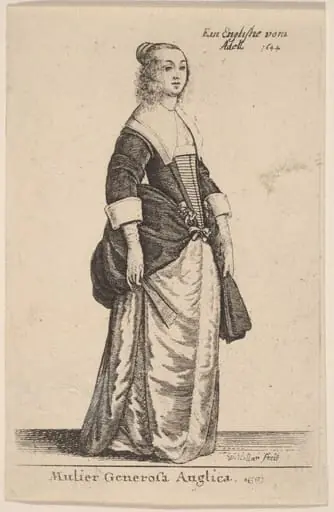
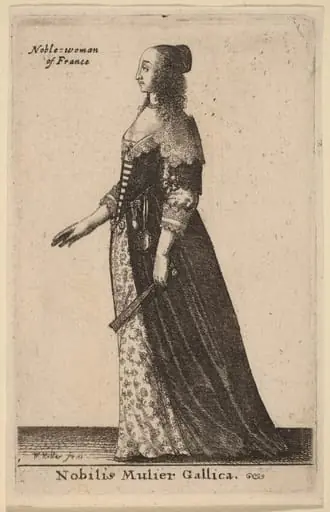
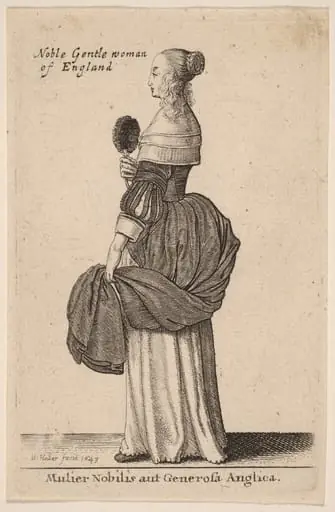
Created in 1643 by Wenceslaus Hollar, this black-and-white etching portrays a woman in winter dress, viewed from behind. Hollar, a Bohemian artist active in England, specialized in precise graphic work, often capturing costume and texture with meticulous detail. The piece is part of The Cleveland Museum of Art’s collection and exemplifies his interest in documenting contemporary dress and social types through printmaking.
Subject & Meaning
The figure is identified as a noble Englishwoman, clad in a heavy, hooded coat designed for cold weather. The tight wrapping of the hood and the layered fabric suggest both practicality and status, reflecting the modest yet refined winter attire of upper-class women in 17th-century England. The absence of facial features shifts focus to the silhouette and materiality of clothing, emphasizing social identity through dress rather than individual likeness.
Technique & Style
Hollar employed fine-line etching to render the folds, weight, and texture of woolen fabric with remarkable clarity. The contrast between light and shadow, achieved through delicate hatching, gives the garment a tangible solidity. His technique, rooted in the Baroque tradition of observational precision, avoids ornamentation, instead relying on controlled line work to convey realism and spatial depth in a two-dimensional medium.
History & Provenance
Hollar, born in Prague and later settled in London, produced this work during his years in England, where he documented urban life and social customs. The print was likely made for private circulation among collectors interested in costume studies. It entered The Cleveland Museum of Art’s collection through established acquisition channels, preserving its place within a broader archive of early modern European graphic art.
Context
In mid-17th-century England, detailed depictions of dress served both documentary and aesthetic purposes. Hollar’s work aligns with a broader European trend of recording regional attire, often for scholarly or aristocratic audiences. This print reflects the intersection of fashion, social hierarchy, and print culture during the English Civil War, a time when visual records of daily life gained renewed significance.
Legacy
Hollar’s etchings, including this one, remain valuable for their fidelity to historical dress and material culture. Though not widely exhibited as standalone works, they continue to inform costume historians and scholars of early modern life. His method of rendering texture through line influenced later generations of printmakers and contributed to the development of ethnographic illustration in print.
Artist & collection
Artist
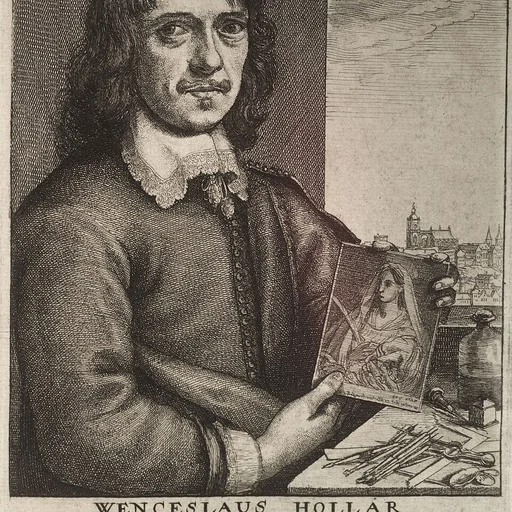
Wenceslaus Hollar (Czech: Václav Hollar (Czech pronunciation: ), German: Wenzel Hollar; 23 July 1607 – 25 March 1677) was a Czech engraver, etcher and painter.