Artwork
Grande robe à la reine
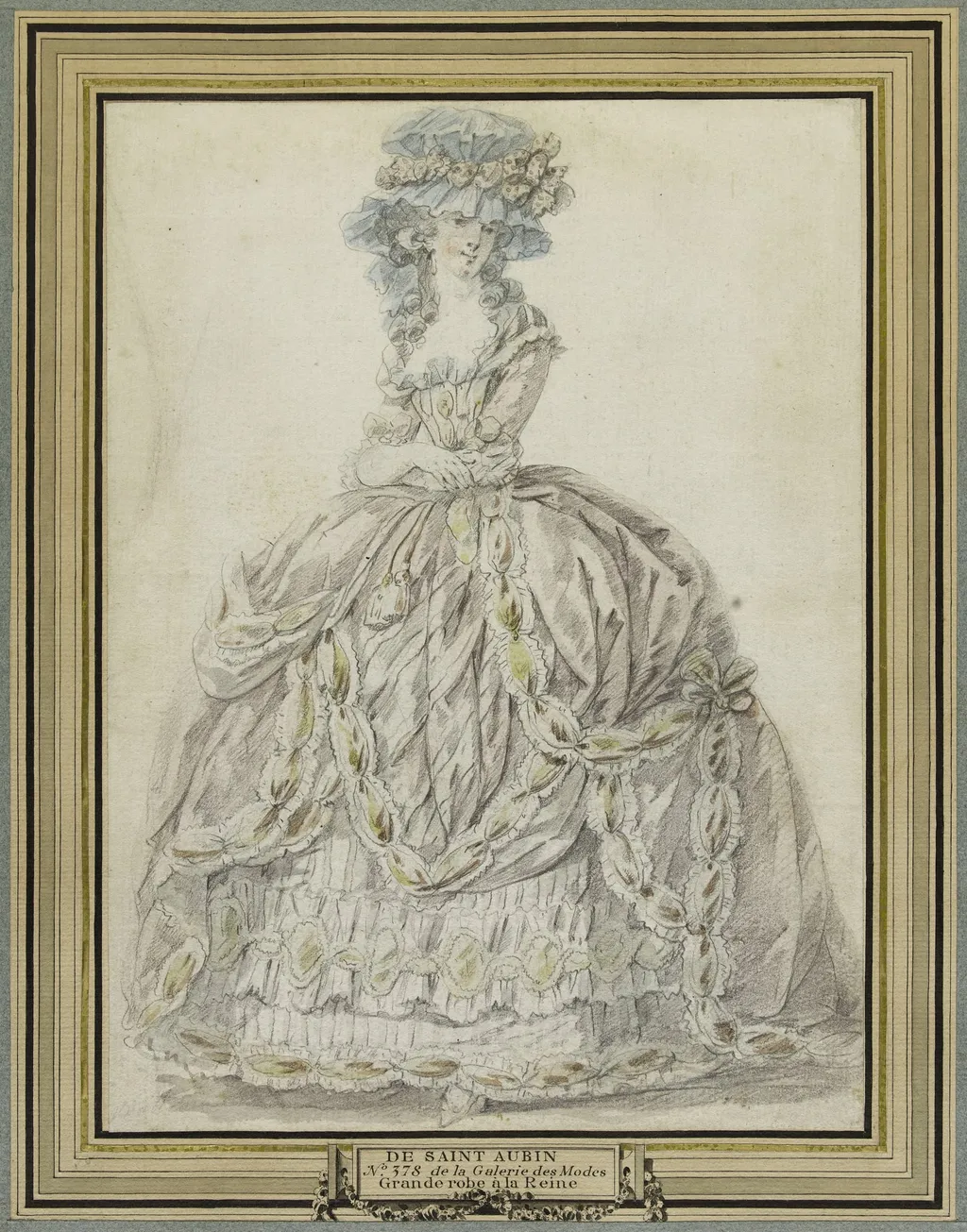
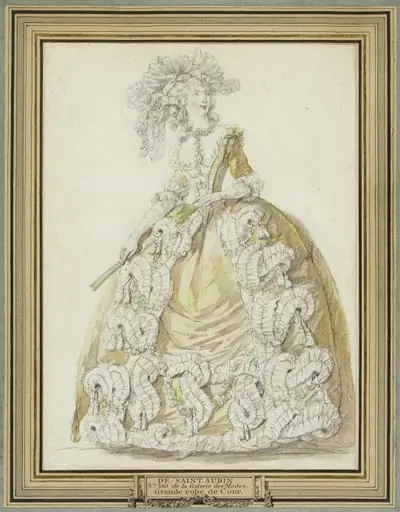
Grande robe à la reine is an unspecified work on paper by the Rococo painting artist Augustin de Saint-Aubin. It dates from 1788 and is held in the collection of the Palais Galliera - Musée de la Mode de la Ville de Paris.
About this work
Overview
Rendered in watercolor and ink, it functions as a fashion record rather than a portrait.
Created in 1788 by Augustin de Saint-Aubin, a French engraver and designer from a prominent artistic lineage, this drawing depicts an elaborate aristocratic gown. Rendered in watercolor and ink, it functions as a fashion record rather than a portrait. The work belongs to the Museum of Ethnography’s collection and reflects the precision and detail characteristic of late 18th-century French costume documentation.
Subject & Meaning
The drawing captures the silhouette of a woman’s formal attire worn at the French court, emphasizing volume and ornamentation. The exaggerated skirt, stiff collar, and tied-back sleeves signify elite status and adherence to rigid fashion codes. It does not depict a specific individual but serves as a typological record of royal dress, intended to preserve the visual language of aristocratic identity on the eve of revolution.
Technique & Style
Saint-Aubin employed fine ink lines and translucent watercolor washes to render fabric textures with subtle gradations. The muted palette of grays, tans, and pale greens is accented with delicate gold highlights, suggesting metallic thread. Soft, layered strokes mimic the weight and drape of silk and lace, while precise hatching defines the intricate folds and structural rigidity of the garment’s underpinnings.
History & Provenance
Produced during the final years of the Ancien Régime, the drawing was likely part of a series documenting contemporary fashions for aristocratic or royal patrons. It entered the Museum of Ethnography’s holdings through later acquisitions focused on material culture. Its survival reflects an emerging interest in preserving everyday objects of elite life as historical artifacts, rather than mere decorative items.
Context
In 1788, French fashion was at its most ornate, yet political tensions were mounting. The elaborate gown depicted here symbolized a world on the brink of collapse. While courtly dress remained a marker of privilege, public sentiment increasingly viewed such extravagance as out of touch. This drawing, though neutral in tone, inadvertently documents a cultural moment poised for radical change.
Legacy
As a precise visual archive of pre-revolutionary dress, the drawing informs modern studies of textile history and social hierarchy. Its technical finesse influenced later costume illustrators, and its preservation underscores the value placed on material culture as historical evidence. It remains a quiet testament to the craftsmanship and symbolism embedded in 18th-century fashion.
Artist & collection
Artist
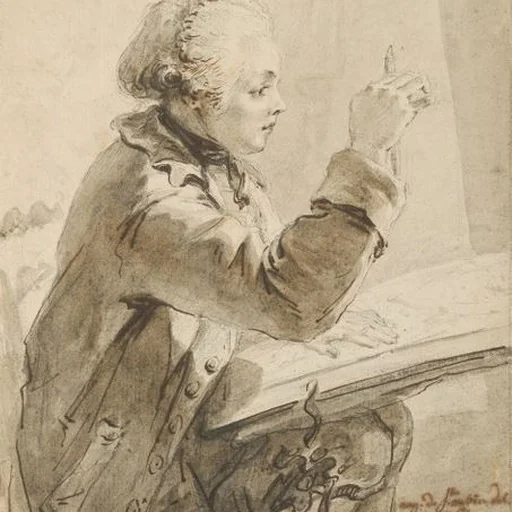
Augustin de Saint-Aubin sometimes styled Auguste de Saint-Aubin (3 January 1736 – 9 November 1807), belongs to an important dynasty of French designers and engravers.
Museum
Palais Galliera - Musée de la Mode de la Ville de Paris
Continue through works from the same source collection.
 Laban Searching for His Stolen Gods
 Parade (A Theatrical Procession in Paris)
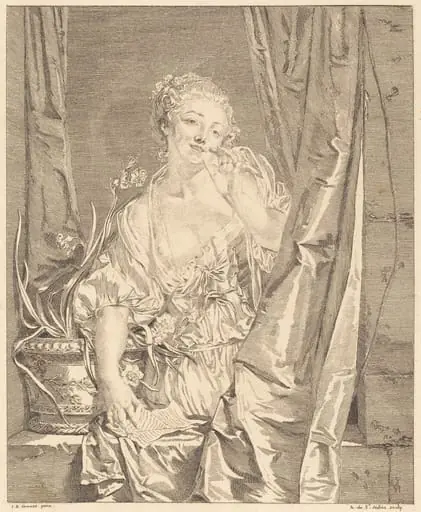 Le baiser envoyé
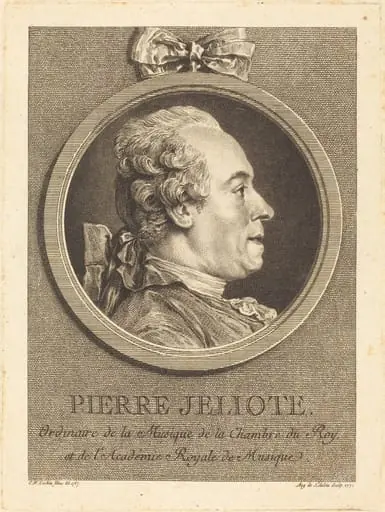 Pierre Jeliote
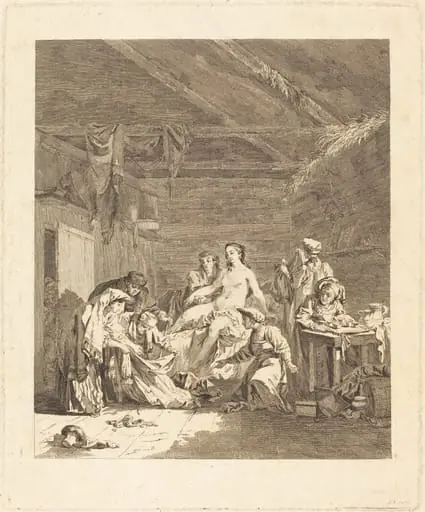 Le lever de la mariée russe (Custom of the Russians after the Marriage Ceremony and before the Wedding Feast)
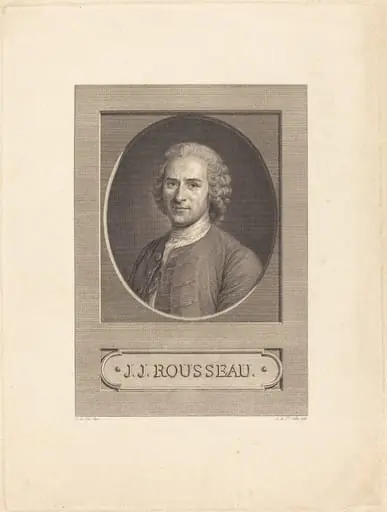 J.J. Rousseau
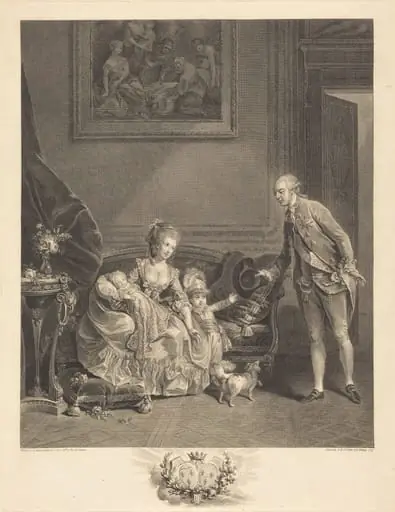 Le duc de Chartres, son epouse et ses enfants
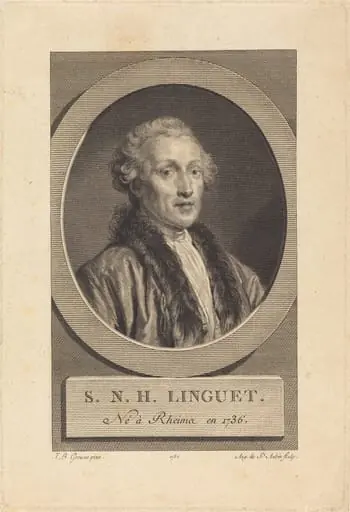 Simon-Nicolas-Henri Linguet
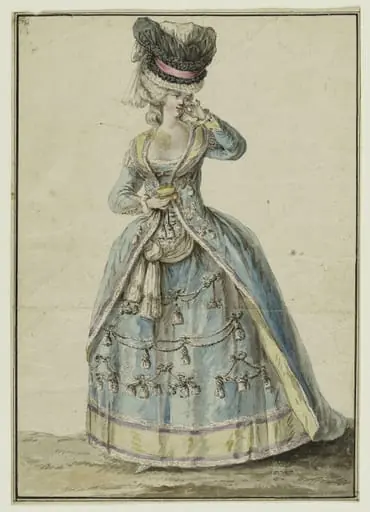 Habit en lévite enrichi de glands, d'épaulettes et de cordonets
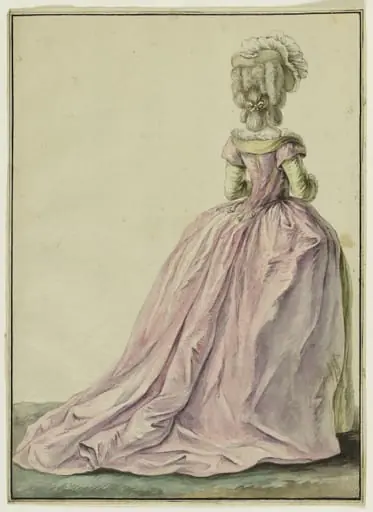 Robe dite à la turque
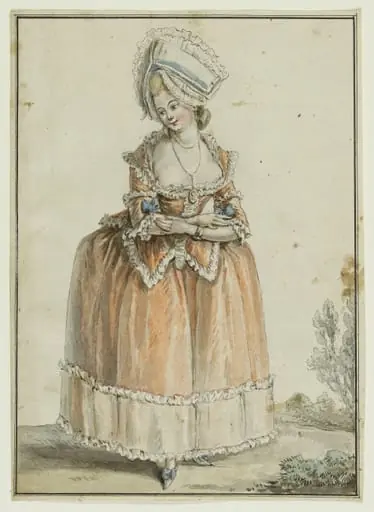 Jeune femme
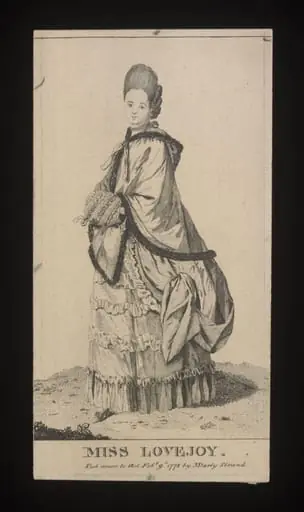 Miss Lovejoy
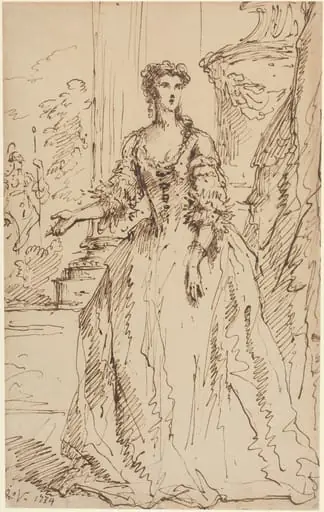 Portrait of a Standing Lady
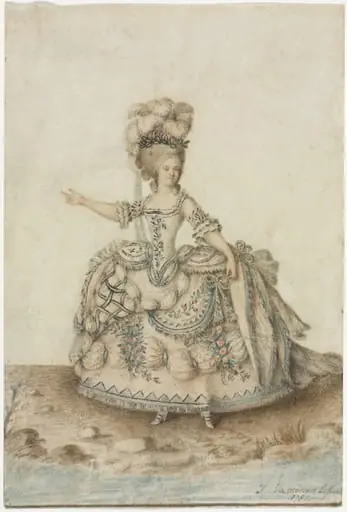 Costume Study for Opera Singer
 Fashion Study (designed for Worth)
 A woman in mid-18th century dress
 Seated Woman Sewing
 Yes or No
 Standing Woman with an Ermine Muff
 Grande robe de cour