Artwork
Music in the Jade Palace
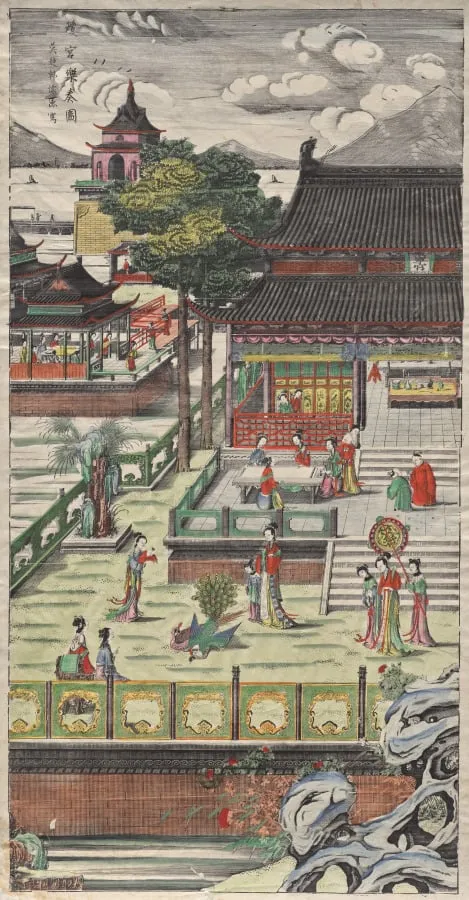
Music in the Jade Palace is a print by the Baroque artist Unknown. It dates from 1766 and is held in the collection of the Cleveland Museum of Art. Created in the 18th century, this color-printed wall decoration emerged from the thriving commercial print culture of Jiangnan.
About this work
The painting was probably made as a wall print in the 1700s, when Chinese cities started selling colorful sheets for people to hang at home.
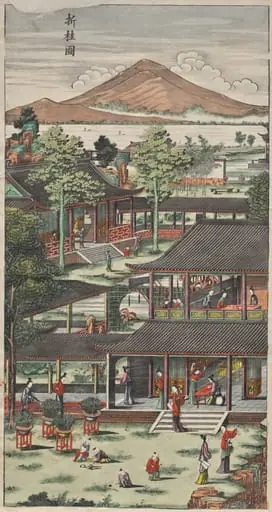
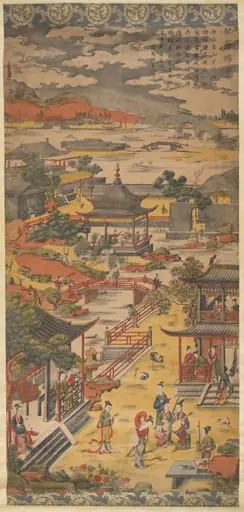
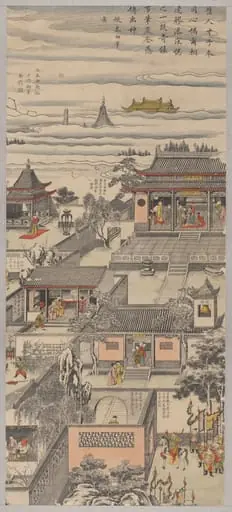
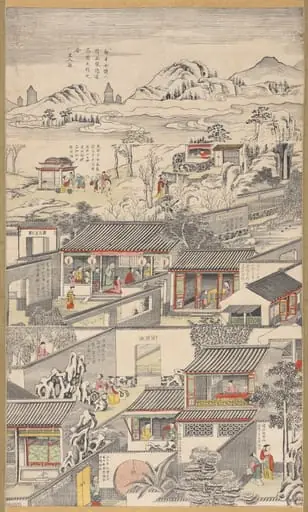
You see a room full of musicians in silk robes playing flutes, lutes, and drums under a green-tiled roof.
The painting was probably made as a wall print in the 1700s, when Chinese cities started selling colorful sheets for people to hang at home. The bright greens and reds look like they were stamped from carved wood blocks, not brushed by hand.
If you like the look of daily life in old China, search for “qing dynasty (1644–1911).”
Overview
Created in the 18th century, this color-printed wall decoration emerged from the thriving commercial print culture of Jiangnan. Unlike earlier illustrated books meant for private study, these single-sheet prints were produced for public display, reflecting a growing urban demand for decorative art. The use of woodblock stamping in vivid hues suggests mass production, aligning with the rise of consumer culture in Qing dynasty cities.
Subject & Meaning
The scene depicts a group of musicians in silk garments performing beneath a green-tiled roof, likely in an aristocratic courtyard. The instruments—flutes, lutes, and drums—suggest an intimate chamber music setting. Such imagery evokes refined leisure, celebrating the cultural sophistication of elite urban life without overt narrative or symbolism, serving instead as an aesthetic backdrop for domestic spaces.
Technique & Style
The print was made using multi-block woodcut techniques, with separate blocks for each color—primarily bold reds and greens—applied in precise registration. The flat planes, sharp outlines, and lack of brushwork distinguish it from hand-painted scrolls. This method allowed for efficient reproduction, making the image accessible to middle-class households seeking ornamental art that mimicked luxury aesthetics.
History & Provenance
Produced during the Qing dynasty, likely in a printing center such as Suzhou or Hangzhou, the print was part of a broader trend of commercial wall decorations. These sheets were sold in urban markets and displayed in homes as both decoration and cultural affirmation. Few examples survive intact, but records and fragments confirm their popularity among non-elite urban dwellers seeking refined imagery.
Context
In 18th-century Jiangnan, economic growth and literacy expanded the market for visual culture beyond scholarly circles. Printmakers responded by adapting traditional painting subjects into affordable formats. Music scenes like this one resonated with urban audiences who valued Confucian ideals of cultivated leisure, even as they embraced new forms of domestic decoration enabled by technological advances in printing.
Legacy
This print represents a transitional moment in Chinese visual culture, where art moved from elite manuscripts to accessible domestic objects. Its production methods influenced later folk prints and advertising imagery. While largely overlooked in traditional art histories, such works now offer insight into the everyday aesthetic lives of Qing-era urbanites, revealing how culture was consumed beyond the court and scholarly class.
Artist & collection

 Domestic Scene
 Giacomo and Cardinal Marco, investing Andrea, Abbot of San Zeno, with his Benefice
 The Nymph of Fontainebleau
 Portrait of a Woman
 Madonna and Child with Saints in the Enclosed Garden
 Venus and Minerva
 Family Group of Four on Sofa
 Wall painting from Room H of the Villa of P. Fannius Synistor at Boscoreale