Artwork
First Part of Story of The Western Chamber
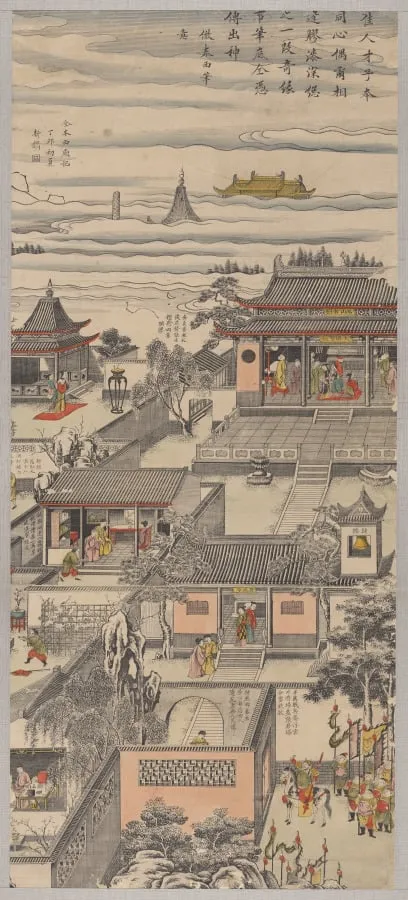
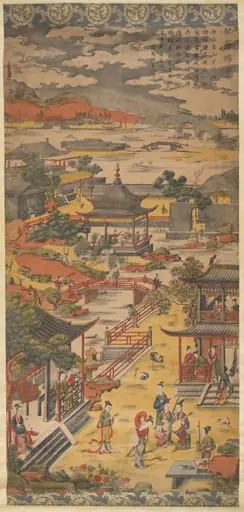
First Part of Story of The Western Chamber is a print by the Baroque artist Unknown. It dates from 1766 and is held in the collection of the Cleveland Museum of Art.
About this work
Instead of a single painting, it’s a mass-produced woodblock print—cheap enough for city homes, yet detailed enough to feel like a painting.
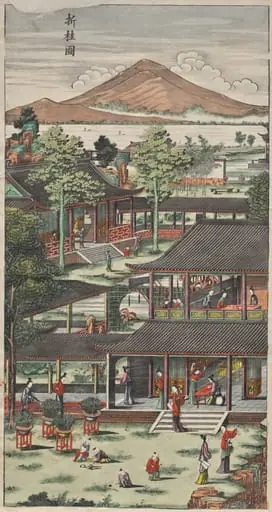
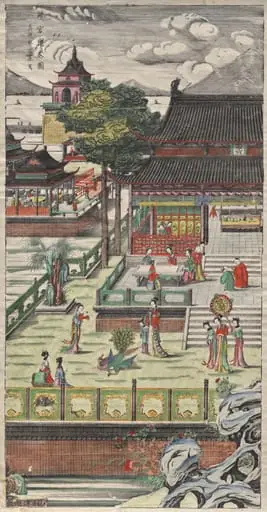
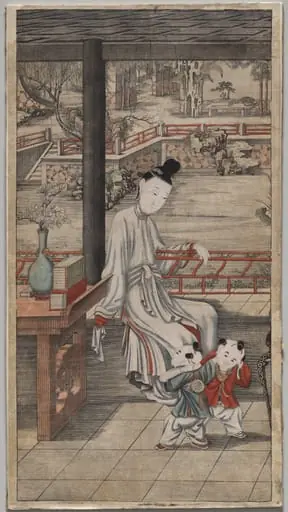
You see a busy scene: scholars, servants, and a young woman in a garden, all dressed in bright Qing-dynasty robes.
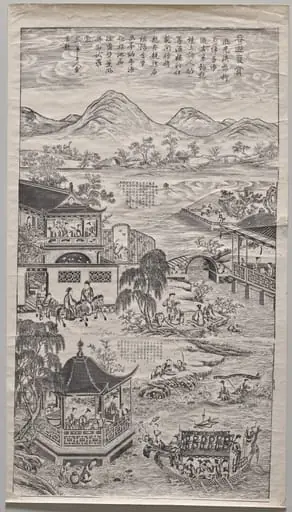
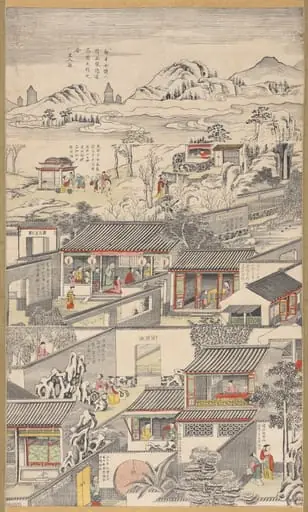
This is the first panel of a long love story printed as a wall scroll. Instead of a single painting, it’s a mass-produced woodblock print—cheap enough for city homes, yet detailed enough to feel like a painting. The colors are flat but bright, like a comic strip from the 1700s.
If you like these lively Chinese prints, look up the subject “qing dynasty (1644–1911).”
Overview
First Part of Story of The Western Chamber is a woodblock print from the 1600s, part of a serialized love story. This initial panel depicts a vibrant garden scene with scholars, servants, and a young woman, all adorned in Qing-dynasty attire.
Subject & Meaning
The print illustrates the opening of a well-known love narrative, 'The Story of The Western Chamber'. The scene showcases a moment of interaction among characters of different social standings within a garden setting, hinting at the story's themes of love, social hierarchy, and possibly the constraints of traditional roles.
Technique & Style
Executed as a mass-produced woodblock print, the work features flat yet bright colors, characteristic of 18th-century Qing-dynasty printing techniques. Despite being a commercial product, the print boasts detailed craftsmanship, blurring the line between mass-produced art and individual paintings.
History & Provenance
Originating from the flourishing Jiangnan print culture (Nanjing, Suzhou, Hangzhou, Huizhou), this print reflects the transition from private, illustrated books to commercial, single-sheet prints for urban decoration during the 1600s.
Context
This print was part of the rich visual culture in Jiangnan cities, affordable enough for middle-class city dwellers to decorate their homes, yet aesthetically pleasing enough to appeal to a broad audience.
Legacy
As part of the Qing dynasty's print heritage, it influences later Chinese illustration and storytelling methods. For similar works, exploring the broader 'Qing Dynasty (1644–1911)' provides insight into this artistic era.
Artist & collection

 Domestic Scene
 Giacomo and Cardinal Marco, investing Andrea, Abbot of San Zeno, with his Benefice
 The Nymph of Fontainebleau
 Portrait of a Woman
 Madonna and Child with Saints in the Enclosed Garden
 Venus and Minerva
 Family Group of Four on Sofa
 Wall painting from Room H of the Villa of P. Fannius Synistor at Boscoreale