Artwork
În centrul icoanei este Crucea pictată cu roșu vermillon și ornamentată cu 7 elemente ovoidale gri antracit și brațele au terminații trilobate. În dreapta crucii este Sfântul Împărat Constantin, și în stânga este Împărăteasa Elena, mama sa. Deasupra fiecăruia este inscripționat numele. În spatele Crucii, lipit de cruce, sunt două aripi ca de înger, stilizate sub formă de elemente vegetale. Veșmintele Sfinților Constantin și Elena sunt într-o combinație de roșu vermillon și gri antracit. Spațiul galben de lumină din spatele crucii duce gândul la Crucea de lumină apărută pe cer In hoc signo vinces - prin acest semn vei învinge. Icoana este bogat ornamentată de culoare, lumină și detalii semnificative, elemente decorative geometrizante și fitomorfe. Fondul icoanei este cerul de noapte, albastru ultramarin bleumarin întunecat. Întreaga compoziție este încadrată armonios de un chenar decorativ fitomorf-geometrizant, format din ruje roșii. Cromatica este armonioasă și bogată: roșu vermillon, galben-chihlimbar, albastru ultramarin bleumarin, gri antracit, alb, negru. Icoana este de Nicula. Inscripția din româno-chirilică se traduce Constantin Elena. Icoana este deteriorată, având absențe cromatice.
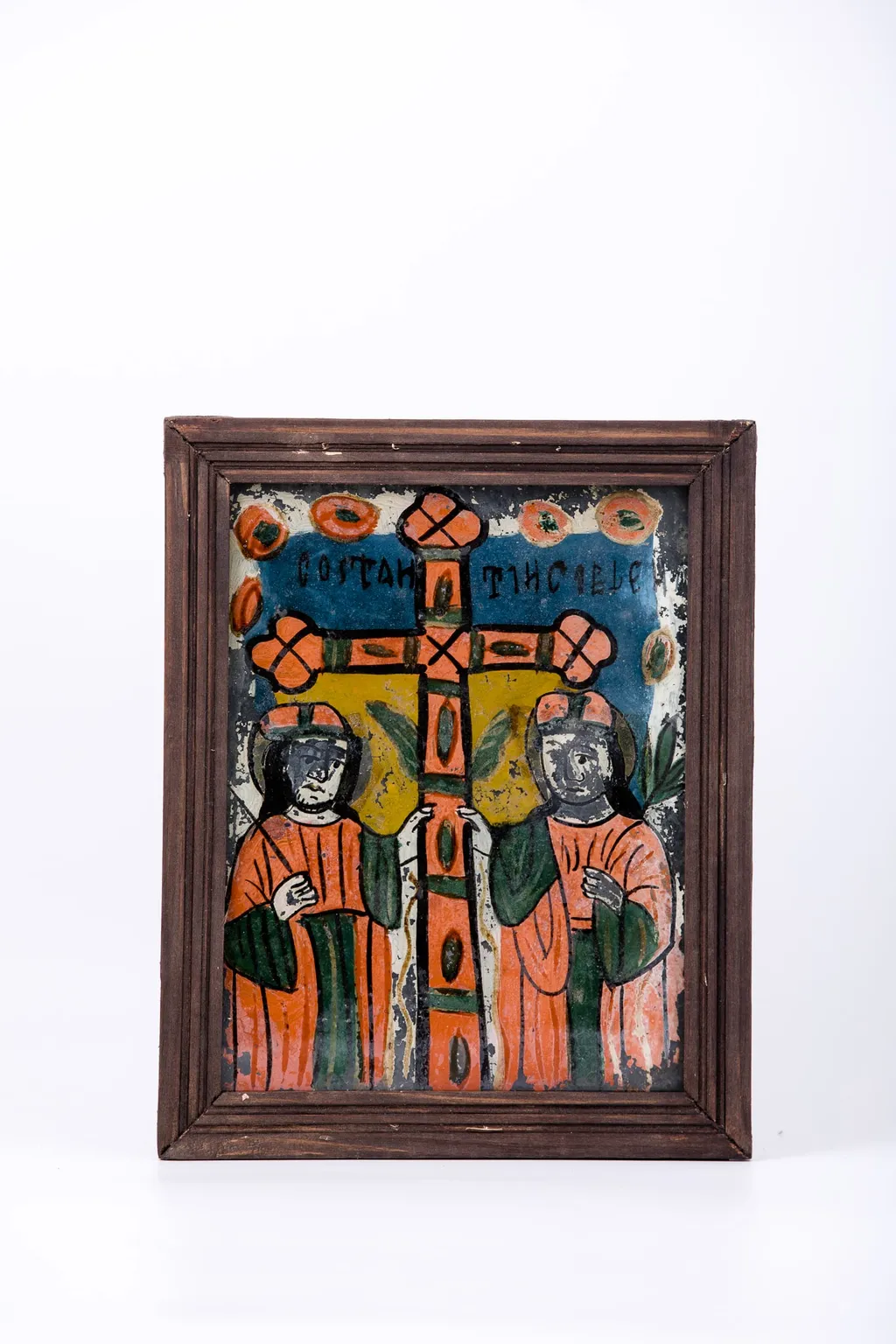
În centrul icoanei este Crucea pictată cu roșu vermillon și ornamentată cu 7 elemente ovoidale gri antracit și brațele au terminații trilobate. În dreapta crucii este Sfântul Împărat Constantin, și în stânga este Împărăteasa Elena, mama sa. Deasupra fiecăruia este inscripționat numele. În spatele Crucii, lipit de cruce, sunt două aripi ca de înger, stilizate sub formă de elemente vegetale. Veșmintele Sfinților Constantin și Elena sunt într-o combinație de roșu vermillon și gri antracit. Spațiul galben de lumină din spatele crucii duce gândul la Crucea de lumină apărută pe cer In hoc signo vinces - prin acest semn vei învinge. Icoana este bogat ornamentată de culoare, lumină și detalii semnificative, elemente decorative geometrizante și fitomorfe. Fondul icoanei este cerul de noapte, albastru ultramarin bleumarin întunecat. Întreaga compoziție este încadrată armonios de un chenar decorativ fitomorf-geometrizant, format din ruje roșii. Cromatica este armonioasă și bogată: roșu vermillon, galben-chihlimbar, albastru ultramarin bleumarin, gri antracit, alb, negru. Icoana este de Nicula. Inscripția din româno-chirilică se traduce Constantin Elena. Icoana este deteriorată, având absențe cromatice. is a drawing by Unknown. It dates from 1850 and is held in the collection of the ASTRA National Museum Complex.
About this work
Overview
This icoană (icon) from Nicula features a central red vermillion cross adorned with seven grey anthracite ovoid elements and trilobate terminations.
This icoană (icon) from Nicula features a central red vermillion cross adorned with seven grey anthracite ovoid elements and trilobate terminations. Flanking the cross are Saint Emperor Constantine (right) and his mother, Empress Helena (left), each labeled above in Romanian Cyrillic script. The composition includes stylized angelic wings behind the cross, rendered as vegetal forms, set against a dark ultramarine blue night sky. A golden light emanates from behind the cross, symbolizing the 'Crucea de lumină' (Cross of Light) associated with the legend 'In hoc signo vinces' (By this sign, you will conquer). The figures' robes combine red vermillion and grey anthracite, echoing the cross's colors. The icon is framed by a decorative, geometrized phyto-morphic border of red roses, complementing its rich, harmonious chromatic palette (red vermillon, amber-yellow, ultramarine blue, grey anthracite, white, black). Despite chromatic absences due to deterioration, the artwork retains vividness.
Subject & Meaning
The icon depicts a pivotal Christian narrative: Saint Constantine and his mother, Saint Helena, alongside the cross symbolizing the vision that led to Constantine's conversion and victory ('In hoc signo vinces'). The golden light behind the cross directly references this miraculous event. The pairing of Constantine and Helena highlights their shared religious significance, with Helena often credited with discovering the True Cross. The angelic wings integrated into the cross's design further emphasize its divine nature.
Technique & Style
The artwork showcases a blend of geometric and phyto-morphic decorative elements, characteristic of traditional iconography with a possible regional (Nicula) twist. The use of a limited, yet vibrant, color palette (notably red vermillion and grey anthracite for unity) and the stylization of natural forms (e.g., the wing-elements, rose border) indicate a deliberate balance between symbolism and aesthetics. The inscription in Romanian Cyrillic adds a layer of cultural specificity.
History & Provenance
Originating from Nicula, this icon's exact date is not specified, but its style and the presence of Romanian Cyrillic script suggest a creation within a traditional, possibly pre-20th-century, context. The deterioration and chromatic absences indicate age and potential exposure. Provenance details are not provided, leaving the icon's historical trajectory unclear beyond its Nicula origins.
Context
This icon would have been created for religious veneration, likely within an Orthodox Christian context given the subject matter and stylistic choices. The emphasis on Constantine and Helena, along with the 'Crucea de lumină', suggests it may have been used in liturgical or devotional practices, possibly around festivals commemorating these saints or the discovery of the True Cross.
Legacy
Despite its deteriorated state, the icon preserves traditional iconographic elements while offering insights into regional artistic practices (Nicula). Its legacy lies in its representation of a crucial Christian legend and its contribution to the cultural and religious heritage of the region from which it originates. The icon's design elements and color choices reflect a harmonious balance between religious symbolism and aesthetic appeal, contributing to the visual and spiritual traditions of Orthodox Christianity.
Artist & collection

 Domestic Scene
 Giacomo and Cardinal Marco, investing Andrea, Abbot of San Zeno, with his Benefice
 The Nymph of Fontainebleau
 Portrait of a Woman
 Madonna and Child with Saints in the Enclosed Garden
 Venus and Minerva
 Family Group of Four on Sofa
 Wall painting from Room H of the Villa of P. Fannius Synistor at Boscoreale
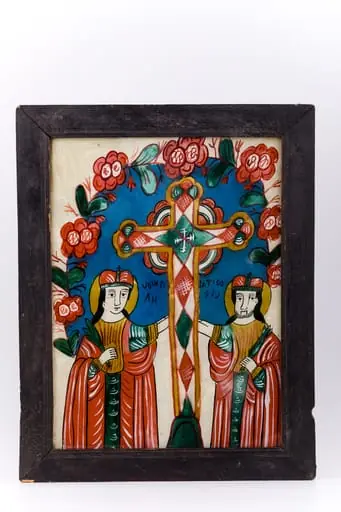 În centrul icoanei este Crucea, iar în dreapta crucii este Sfânta Împărăteasă Elena, și în stânga este Împăratul Constantin. Veșmintele sfinților împărați sunt pictate cu roșu vermillon și ocru-muștar și mânecile și epitrahile-patrafire vernil-gri. Poartă coroane împărătești și aureole de sfinți, mantiiile de împărați le au prinse la gât cu fibulă. Crucea este alb-crem cu elemente decorative geometrizante romboidale roșii-verzi și are capetele brațelor cu elemente decorative trilobate roșii vermillon-vernil. Fondul este cerul albastru ceruleum-regal foarte senin. Împrejurul Crucii este un spațiu luminos de alb-ivoriu Întreaga compoziție iconografică este încadrată de un chenar decorativ geometrizant alb-luminos și un chenar fitomorf, format dintr-o ghirlandă de 7 ruje - trandafiri și bujori roșii vermillon și 2 boboci de măceș - cu frunze gri-verzui. Cromatica este armonioasă: roșu vermillon-stacojiu-rose, albastru cobalt-regal, ocru-muștar, bronziu, brun, galben-chihlimbar, verde brad, vernil-gri, alb, negru. Inscripția în româno-chirilică se traduce Constantin și Elena. Icoana este din Nordul Transilvaniei, Nicula.
 În centrul icoanei este Crucea bronzie, iar în stânga crucii este Sfânta Împărăteasă Elena, și în dreapta este Împăratul Constantin. Veșmintele sfinților împărați sunt pictate cu roșu vermillon și gri-albăstrui. Poartă coroane împărătești și aureole de sfinți, mantiiile de împărați le au prinse la gât cu fibulă. Crucea este bronzie și are capetele brațelor cu elemente decorative trilobate roșii vermillon somon. În spatele Crucii sunt elemente fitomorfe și o cunună de Rusalii. Fondul este cerul albastru bleu-ciel regal senin. Întreaga compoziție iconografică este încadrată de un chenar decorativ fitomorf, format dintr-o bogată ghirlandă de trandafiri-bujori, formată din 9 ruje roșii cu bobocei. În interiorul icoanei este un spațiu galben luminos cu umbre roșii paralele. Cromatica este armonioasă: roșu vermillon-somon, albastru bleu-ciel regal, gri, bej, crem, bronziu, brun, ocru, alb, negru. Inscripția în româno-chirilică se traduce Constantin și Elena. Icoana este din Nordul Transilvaniei, Nicula.
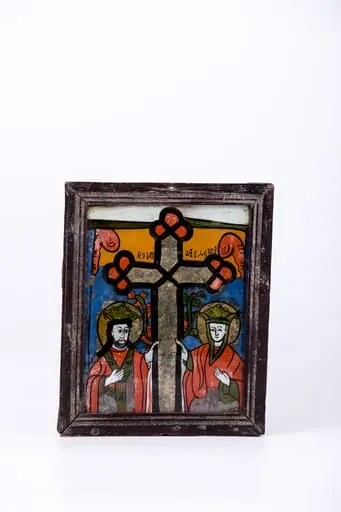 În centrul icoanei este Crucea gri-petrol, cu capetele brațelor împodobite roșu-trilobat, iar în dreapta crucii este Sfântul Împărat Constantin și în stânga este Împărăteasa Elena, mama sa. În spatele Crucii, este un vrej agățător și unduitor dintr-o grhirlandă de trandafiri, cu flori, spini și frunze și spațiul albastru regal unit cu cel galben-chihlimbar creează un izvor tainic de lumină. Crucea găsită este susținută cu bucurie de cei doi sfinți. Veșmintele Sfinților Constantin și Elena sunt într-o combinație de roșu vermillon și verde-iarbă de vară. Spațiul albastru-galben de lumină duce cu gândul la Crucea de lumină apărută pe cer In hoc signo vinces - prin acest semn vei învinge. Fondul icoanei este cerul albastru, lumina galbenă și o panglică alb-ivorie, în laterală superioară. Întreaga compoziție este încadrată armonios de un chenar decorativ geometrizant format din volute roșii. Cromatica este armonioasă, bogată și senină: roșu vermillon, galben-chihlimbar, albastru regal, verde-iarbă de vară, ivoriu, alb, negru. Icoana este de Nicula. Inscripția din româno-chirilică se traduce Constantin Elena.
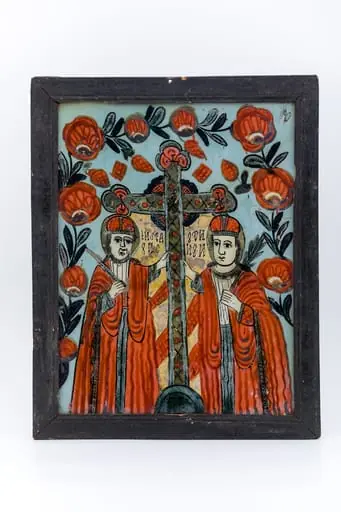
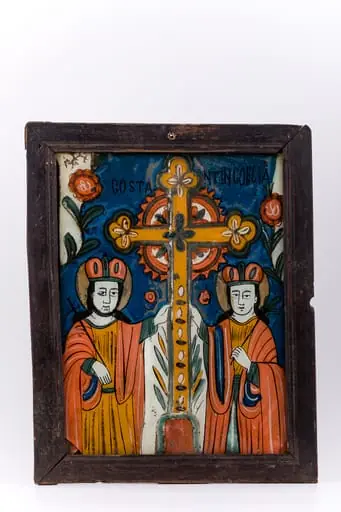 În centrul icoanei este Crucea, iar în stânga crucii este Sfânta Împărăteasă Elena, și în dreapta este Împăratul Constantin. Veșmintele sfinților împărați sunt pictate cu roșu vermillon și gri-antracit și epitrahile-patrafire gri-antracit. Poartă coroane împărătești și aureole de sfinți, mantiiile de împărați le au prinse la gât cu fibulă. Crucea este roșie-vermillon cu gri și are capetele brațelor cu elemente decorative trilobate roșii vermillon-cărămiziu. Fondul este cerul albastru bleu-ciel foarte senin, înspre alburiu. Împrejurul Crucii este un spațiu luminos de galben-chihlimbar. Întreaga compoziție iconografică este încadrată de un chenar decorativ fitomorf, format dintr-o ghirlandă de 7 ruje - trandafiri și bujori roșii vermillon și 2 boboci de măceș - cu frunze gri-verzui. Cromatica este armonioasă: roșu vermillon-cărămiziu, albastru bleu-ciel înspre alburiu, gri-antracit, bronziu, brun, galben-chihlimbar, ocru, alb, negru. Inscripția în româno-chirilică se traduce Constantin și Elena. Icoana este din Nordul Transilvaniei, Nicula.
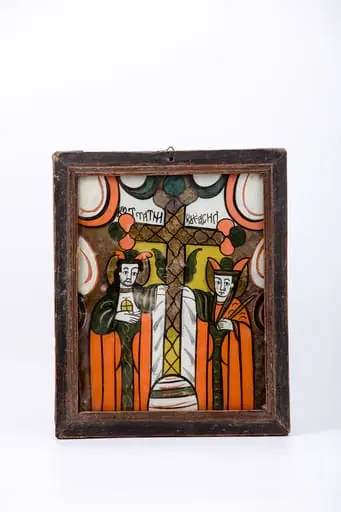 În centrul icoanei este Crucea galben-bronzie, împodobită decorativ cu linii șerpuitoare negre. În dreapta crucii este Sfântul Împărat Constantin și în stânga este Împărăteasa Elena, mama sa, cu numele lor deasupra inscripționate. În spatele Crucii este un spațiu galben izvorâtor de lumină. Crucea găsită este susținută cu bucurie de cei doi sfinți. Veșmintele Sfinților Constantin și Elena sunt într-o combinație de roșu vermillon și verde kaki-brun. Spațiul galben de lumină duce gândul la Crucea de lumină apărută pe cer In hoc signo vinces - prin acest semn vei învinge. Icoana este bogat ornamentată de culoare, lumină și detalii semnificative, elemente decorative geometrizante - romburi ondulatorii negre și brațele crucii au terminații trilobale roșii, verzi și gri. Fondul icoanei este alb și brun-bronziu. Întreaga compoziție este încadrată armonios de un chenar decorativ geometrizant, format din semisfere alb-roz. Cromatica este armonioasă și senină: roșu vermillon, roz, galben-chihlimbar, verde kaki, brun-bronziu, gri antracit, alb, negru. Icoana este de Nicula. Inscripția din româno-chirilică se traduce Sf Constantin Sf Elena.
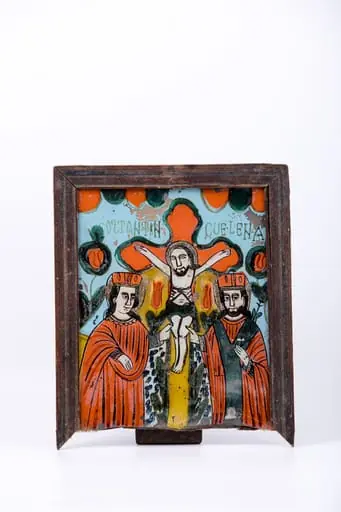 În centrul icoanei este Crucea roșie-galbenă, pe care este Răstignit Mântuitorul Iisus Hristos, iar în stânga crucii este Sfântul Împărat Constantin, și în dreapta este Împărăteasa Elena, mama sa. Deasupra fiecăruia este inscripționat numele, inversat. În spatele Crucii este un spațiu galben izvorâtor de lumină și două elemente florale, asemenea unor martori - îngeri păzitori. Crucea găsită este susținută cu bucurie de cei doi sfinți. Veșmintele Sfinților Constantin și Elena sunt într-o combinație de roșu vermillon și gri antracit. Spațiul galben de lumină duce gândul la Crucea de lumină apărută pe cer In hoc signo vinces - prin acest semn vei învinge. Icoana este bogat ornamentată de culoare, lumină și detalii semnificative, elemente decorative geometrizante. Fondul icoanei este cerul senin, albastru bleu-ciel deschis. Întreaga compoziție este încadrată armonios de un chenar decorativ geometrizant roșu stacojiu și fitomorf, format din rujele de Nicula. Cromatica este armonioasă și senină: roșu vermillon, galben-chihlimbar, albastru bleu-ciel, gri antracit, alb, negru. Icoana este de Nicula. Inscripția din româno-chirilică se traduce Constantin Elena. De menționat este că în icoană apare Mântuitorul Iisus Hristos Răstignit pe Crucea, susținută de Sfinții Constantin și Elena. Icoana este deteriorată, lipsindu-i partea inferioară a ramei.
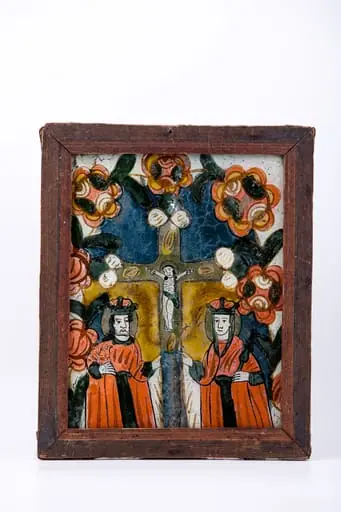 În centrul icoanei este Crucea albastră-galbenă, pe care este Răstignit Mântuitorul Iisus Hristos, iar în dreapta crucii este Sfântul Împărat Constantin și în stânga este Împărăteasa Elena, mama sa. În spatele Crucii este un spațiu galben izvorâtor de lumină. Crucea găsită este susținută cu bucurie de cei doi sfinți. Veșmintele Sfinților Constantin și Elena sunt într-o combinație de roșu vermillon și gri antracit. Spațiul galben de lumină duce gândul la Crucea de lumină apărută pe cer In hoc signo vinces - prin acest semn vei învinge. Icoana este bogat ornamentată de culoare, lumină și detalii semnificative, elemente decorative geometrizante - ovaluri galbene de lumină și brațele crucii au terminații trilobale albe. Fondul icoanei este cerul albastru ceruleum. Întreaga compoziție este încadrată armonios de un chenar fitomorf, format din rujele de Nicula, 7 trandafiri mari roșii cu striații galbene. Cromatica este armonioasă și senină: roșu vermillon, galben-chihlimbar, albastru cerulauml, gri antracit, alb, negru. Icoana este de Nicula. De menționat este că în icoană apare Mântuitorul Iisus Hristos Răstignit pe Crucea, susținută de Sfinții Constantin și Elena.
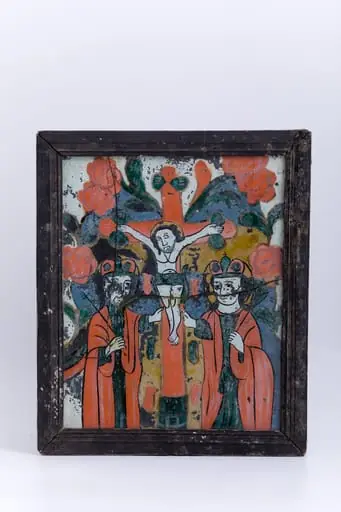 În centrul icoanei este Crucea roșie vermillon, pe care este răstignit Mântuitorul Iisus Hristos. În stânga crucii este Sfânta Împărăteasă Elena, și în dreapta este Împăratul Constantin. Veșmintele sfinților împărați sunt pictate cu roșu vermillon și verde-smarald-gri. Poartă coroane împărătești și aureole de sfinți, mantiiile de împărați le au prinse la gât cu fibulă. Crucea are capetele brațelor cu elemente decorative trilobate roșii vermillon-verzi. Fondul este cerul albastru ceruleum-regal. Întreaga compoziție iconografică este încadrată de un chenar decorativ fitomorf, format dintr-o bogată ghirlandă de trandafiri-bujori, formată din 6 ruje roșii mari. În interiorul icoanei este un spațiu galben luminos cu umbre roșii paralele. Cromatica este armonioasă: roșu vermillon-cărămiziu, albastru ceruleum-regal, verde smarald, gri, bej, crem, bronziu, brun, ocru, alb, negru. Inscripția în româno-chirilică se traduce Constantin și Elena. Icoana este din Nordul Transilvaniei, Nicula.
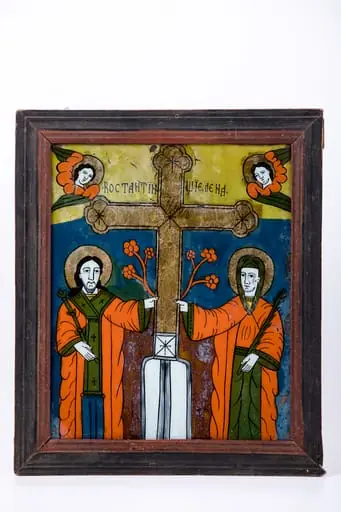 În centrul icoanei este Crucea albă la bază și bronzie în rest, cu capetele brațelor împodobite trilobat, iar în dreapta crucii este Sfântul Împărat Constantin, și în stânga este Împărăteasa Elena, mama sa. În spatele Crucii, sunt flori roșii agățătoare și unduitoare dintr-o grhirlandă de trandafiri. Crucea găsită este susținută cu bucurie de cei doi sfinți. Veșmintele Sfinților Constantin și Elena sunt într-o combinație de roșu vermillon și verde-iarbă de vară. Spațiul albastru-galben de lumină, din fondul icoanei, duce gândul la Crucea de lumină apărută pe cer In hoc signo vinces - prin acest semn vei învinge. Fondul icoanei este cerul albastru cobalt, lumina galbenă și o panglică albă, în josul crucii. În registrul superior, în colțurile stânga-dreapta sunt 2 îngeri serafimi. Cromatica este armonioasă, bogată și senină: roșu vermillon, galben-ocru, albastru cobalt, verde-iarbă de vară nuanță spanac-avocado, alb, negru. Icoana este de Nicula. Inscripția din româno-chirilică se traduce Constantin Elena.
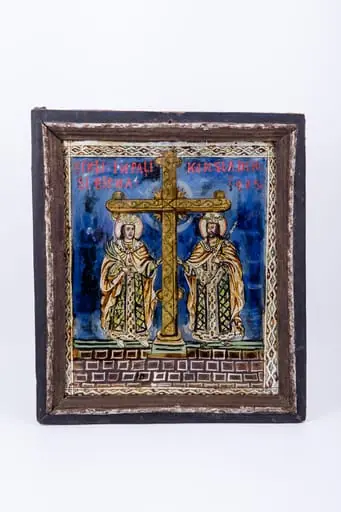 În centrul icoanei este Crucea, iar în stânga crucii este Sfântul Împărat Constantin, și în dreapta este Împărăteasa Elena, mama sa. Deasupra fiecăruia este inscripționat numele. În spatele Crucii, lipit de cruce, este un soare stilizat - Soarele dreptății. Soarele din spatele Crucii duce gândul la Crucea de lumină apărută pe cer In hoc signo vinces - prin acest semn vei învinge. Icoana este specifică Văii Sebeșului, tușele de culoare fiind mărturii clare. Inscripțiile în româno-chirilică sunt traduse Sfinții Împărați Constantin Elena. Veșmintele sfinților împărați sunt pictate cu brun, verde, kaki, absint, bronziu, alb și negru. Simbolurile, din mâinile împăraților sunt pene de scris, instrumente de scris, condei și aripă de înger, armele cu care s-au luptat pentru Creștinism, mucenici ai mărturisirii. Cromatica este armonioasă: verde, galben-ocru, kaki, brun, absint, olive, bej, bronziu, alb, negru. Compoziția este puternică în impactul vizual: cerul albastru cobalt și pardoseala în caroiaj, cafeniu-bej-brun, din registrul inferior. Caroiajul reprezintă o lespede de fundație puternică - reprezentând credința creștin-ortodoxă, un zid de nedărâmat. Icoana este de Laz, fiind datată 1905.
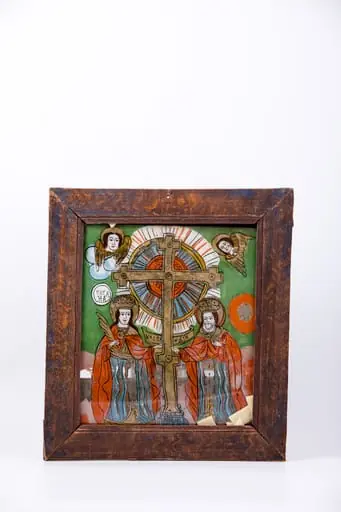 În centrul icoanei este Crucea bronzie, cu capetele brațelor împodobite trilobat, iar în stânga crucii este Sfântul Împărat Constantin și în dreapta este Împărăteasa Elena, mama sa. În spatele Crucii, este un soare mare roșu, circular, cu raze de lumină galbene și albastre, dispuse radiar. Crucea găsită este susținută cu bucurie de cei doi sfinți. Veșmintele Sfinților Constantin și Elena sunt într-o combinație de roșu vermillon, galben și albastru. Spațiul alb-galben de lumină, din fondul icoanei, duce cu gândul la Crucea de lumină apărută pe cer In hoc signo vinces - prin acest semn vei învinge. Fondul icoanei este cerul verde-văratic, în registrul superior, iar în registrul inferior, este un câmp roz-gri-acajou. În registrul superior, în colțurile stânga-dreapta sunt 2 îngeri serafimi. Cromatica este armonioasă: roșu vermillon, roz, galben-ocru, albastru cobalt, verde-iarbă de vară nuanță spanac-avocado, alb, negru. Icoana este de Țara Oltului. Inscripția din româno-chirilică se traduce Constantin Elena.
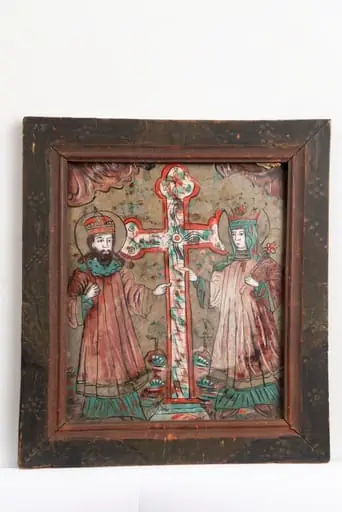 Icoana îi reprezintă pe Sfinții Împărați Constantin și Elena, pictați frontal, în picioare, ținând împreună în mână Crucea Răstignirii, ce domină central compoziția. Împărăteasa Elena ține în mâna stângă o ramură, îar împăratul Constantin are în mâna dreaptă un sceptru. Fondul icoanei e pictat integral doar în partea superioară unde apar în colțuri două ornamente din registrul vegetal, în rest e pictat cu laviuri colorate și decorat cu flori realizate din puncte, fiind vizibil fondul din hârtie argintată. Cromatica icoanei se compune din tonuri de roșu, alb, albastru, maro și gri. Rama icoanei e profilată, bicromă (latura interioară roșie, iar cea exterioară verde, decorată cu motive florale și geometrice) și e formată din îmbinarea a patru baghete de lemn. Sticla are un fragment lipsă, de mici dimensiuni, în partea stângă-sus.