Artwork
Nașterea lui Iisus Hristos
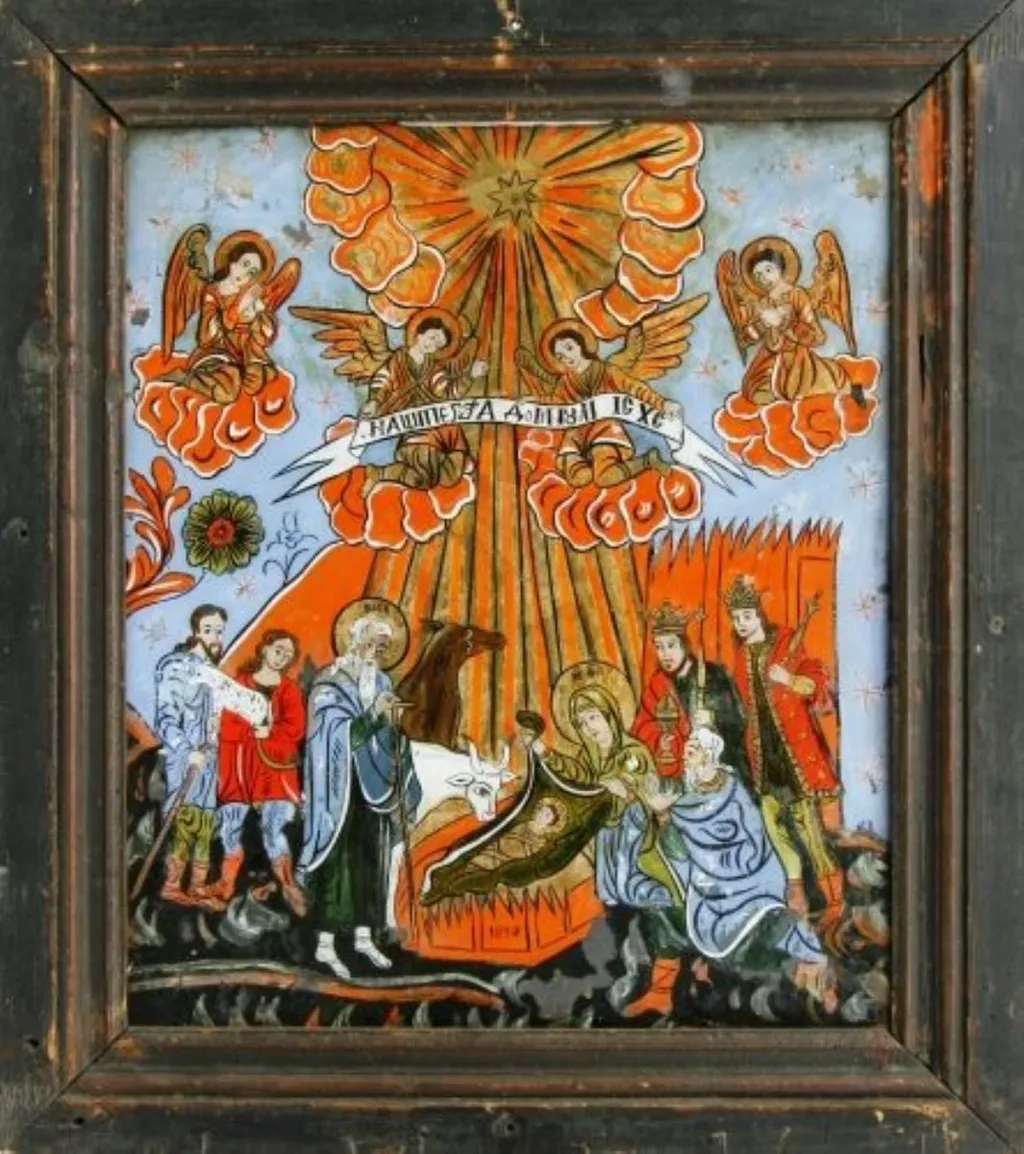
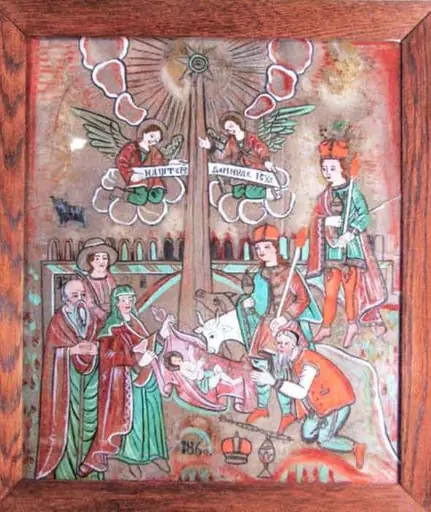
Nașterea lui Iisus Hristos is a drawing by the Impressionist artist Unknown. It dates from 1854 and is held in the collection of the Romanian Peasant Museum.
About this work
The people in the painting are dressed in old-fashioned clothes, and some of them are holding things like a staff or a book.
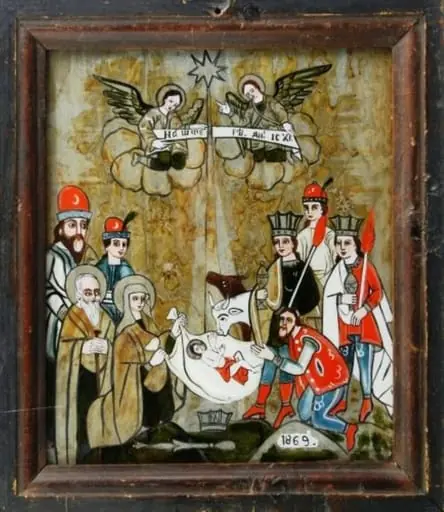
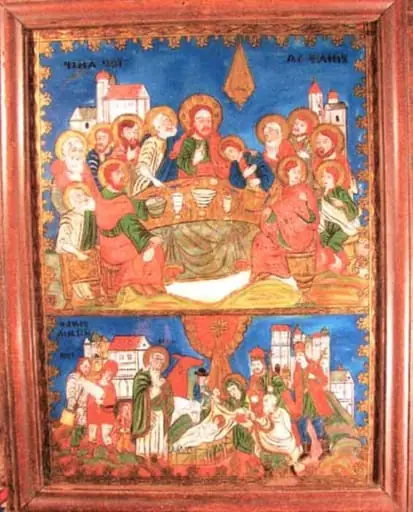
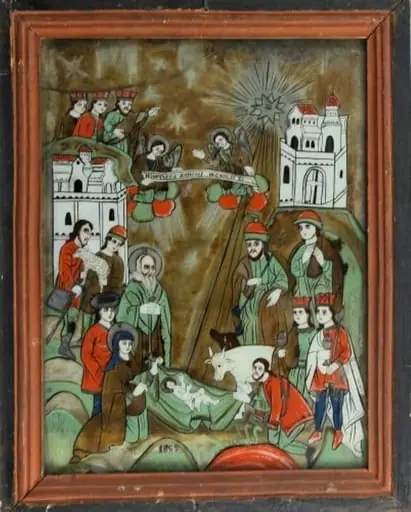
This painting shows a religious scene with a baby at the center. The baby is surrounded by people, and there are angels above. The colors are mostly orange, blue, and white.
The people in the painting are dressed in old-fashioned clothes, and some of them are holding things like a staff or a book. The angels have wings and are floating in the air. The background is light blue with some orange shapes.
The painting is detailed and colorful, with a lot of things to look at. It's a good example of religious art from the 19th century. If you're interested in learning more about this style of art, you might want to look into the movement of Realism.
Overview
This 19th-century religious painting depicts the Nativity of Jesus Christ, rendered with meticulous detail and a restrained palette of orange, blue, and white. The central figure is the infant, surrounded by figures in period attire, while winged angels hover above. The background features soft, luminous tones with abstracted orange forms suggesting architectural or natural elements. The composition reflects devotional intent, typical of ecclesiastical art of the era.
Subject & Meaning
The scene illustrates the birth of Jesus as described in Christian tradition, emphasizing humility and divine presence. The infant lies at the visual center, drawing attention to his sacred role. Figures such as Mary, Joseph, and shepherds are present, accompanied by celestial beings, reinforcing the theological narrative of incarnation. The inclusion of staffs and books hints at earthly authority and scripture, grounding the miracle in human context.
Technique & Style
The artist employs fine brushwork to render textures in fabric, skin, and wings, with careful attention to light and shadow. Colors are harmonized but not naturalistic, favoring symbolic contrast—blue for divinity, orange for warmth and earth. The figures are arranged in a stable, hierarchical composition, avoiding dramatic movement. The style leans toward academic realism, prioritizing clarity and reverence over emotional intensity.
History & Provenance
The painting’s origin is tied to a religious institution or private patron in Eastern Europe, where such imagery was common in domestic and church settings during the 1800s. It likely served as a devotional aid or altar piece. No documented exhibition history or notable collector is recorded, suggesting it was intended for local, liturgical use rather than public display.
Context
Created during the rise of Realism, this work diverges from the movement’s secular focus by maintaining traditional religious iconography. While Realist painters often depicted everyday life, this piece adapts the era’s attention to detail to sacred subjects, reflecting a broader cultural tension between modernity and enduring faith in rural and ecclesiastical communities.
Legacy
Though not widely exhibited or studied today, the painting exemplifies how religious themes persisted in 19th-century visual culture, even amid secularizing trends. Its craftsmanship and symbolic clarity offer insight into how communities maintained spiritual narratives through art, preserving visual traditions long after artistic movements had shifted focus.
Artist & collection

 Domestic Scene
 Giacomo and Cardinal Marco, investing Andrea, Abbot of San Zeno, with his Benefice
 The Nymph of Fontainebleau
 Portrait of a Woman
 Madonna and Child with Saints in the Enclosed Garden
 Venus and Minerva
 Family Group of Four on Sofa
 Wall painting from Room H of the Villa of P. Fannius Synistor at Boscoreale