Artwork
Nașterea lui Iisus Hristos
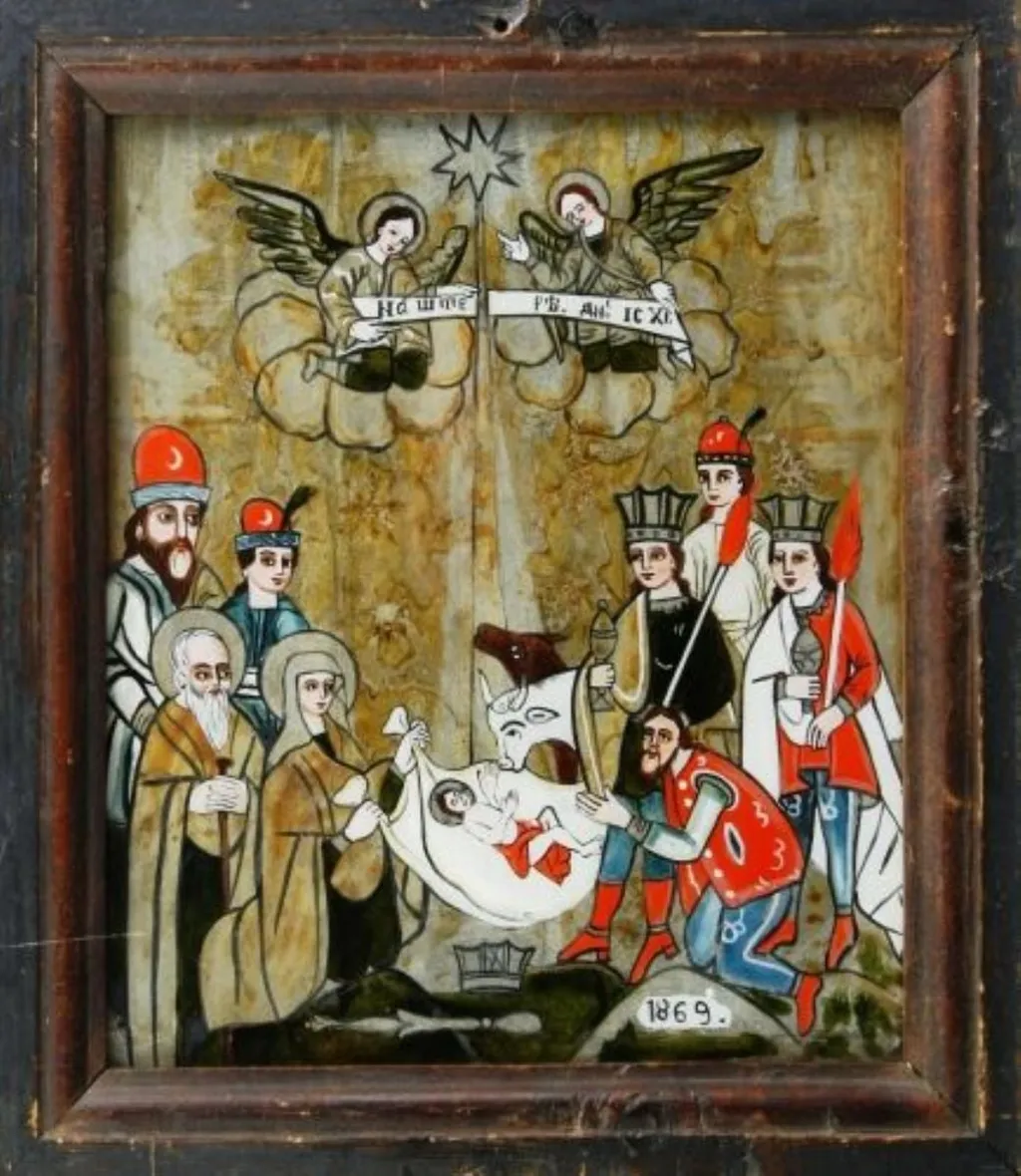
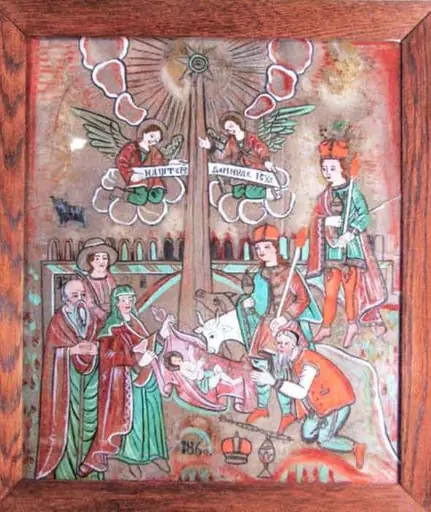
Nașterea lui Iisus Hristos is a drawing by the Impressionist artist Unknown. It dates from 1869 and is held in the collection of the Romanian Peasant Museum. Painted in 1869, this work depicts the Nativity of Jesus Christ in a stylized, non-naturalistic manner.
About this work
This painting shows a bright scene with a baby in a white cloth at the center, surrounded by people in colorful clothes.
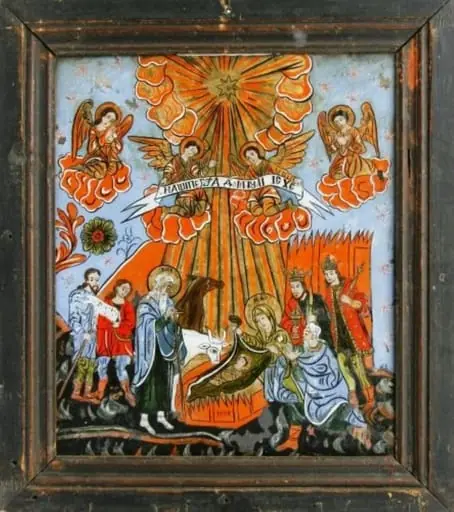
This painting shows a bright scene with a baby in a white cloth at the center, surrounded by people in colorful clothes. Two angels float above, holding scrolls with writing. Some figures wear crowns or robes, while others kneel or hold objects like staffs. The colors are flat and bold—reds, blues, and golds stand out against a faded gold background.
The date "1869" is painted in the corner, hinting this was made over 150 years ago. The style looks simple but full of meaning, with clear lines and bright colors.
If you like this, check out Realism next to see how artists focused on everyday life.
Overview
Painted in 1869, this work depicts the Nativity of Jesus Christ in a stylized, non-naturalistic manner. The composition centers on the infant wrapped in white cloth, surrounded by figures in vivid garments, with angels hovering above holding inscribed scrolls. The background, rendered in a muted gold, enhances the luminosity of the figures. Bold, flat areas of red, blue, and gold dominate the palette, suggesting a devotional rather than realistic intent.
Subject & Meaning
The scene illustrates the birth of Christ as a sacred event witnessed by both heavenly and earthly figures. The crowns and robes identify royal and priestly attendees, while kneeling postures convey reverence. The angels, bearing written messages, signify divine proclamation. The central placement of the infant underscores his spiritual significance, framing the moment as both intimate and cosmically important within Christian tradition.
Technique & Style
The painting employs simplified forms with clear outlines and unmodulated color, avoiding shading or perspective depth. Figures are arranged hierarchically rather than spatially, emphasizing symbolic presence over physical realism. The use of metallic gold tones and saturated hues reflects liturgical art traditions, while the deliberate flatness aligns with iconographic conventions common in Eastern Orthodox religious painting of the period.
History & Provenance
Created in 1869, the work likely originated in a region with strong Orthodox Christian traditions, possibly the Balkans or Eastern Europe. Its date and stylistic features suggest it was produced during a time of renewed interest in religious imagery amid broader cultural shifts. No documented provenance is provided, but its preservation implies it was commissioned for private or ecclesiastical use rather than public exhibition.
Context
In the mid-19th century, as Western Europe embraced Realism and secular themes, many Eastern Christian communities continued to produce devotional art rooted in Byzantine and medieval models. This painting reflects that continuity, resisting naturalism in favor of symbolic clarity. Its existence alongside emerging modern styles highlights the coexistence of traditional and evolving artistic languages in 19th-century Europe.
Legacy
Though not widely known outside regional religious contexts, the painting exemplifies a persistent tradition of sacred imagery that prioritized spiritual meaning over aesthetic innovation. It stands as a quiet counterpoint to the dominant trends of its era, preserving a visual language that had endured for centuries. Its survival offers insight into how faith-based art maintained its role in daily life despite changing artistic currents.
Artist & collection

 Domestic Scene
 Giacomo and Cardinal Marco, investing Andrea, Abbot of San Zeno, with his Benefice
 The Nymph of Fontainebleau
 Portrait of a Woman
 Madonna and Child with Saints in the Enclosed Garden
 Venus and Minerva
 Family Group of Four on Sofa
 Wall painting from Room H of the Villa of P. Fannius Synistor at Boscoreale